Abu Qubays, also known as Qartal, is a medieval castle ruin situated in northwestern Syria within the Hama Governorate. Located in the fertile al-Ghab plain west of the Orontes River, the site occupies a strategic position that historically controlled important routes in the region. Today, Abu Qubays is also the name of the nearby inhabited village, which had a population of 758 according to the 2004 census, predominantly composed of Alawite residents.
Historical background and strategic significance
The castle of Abu Qubays dates back to the medieval period, although precise construction dates remain uncertain due to limited archaeological excavation and historical documentation. The fortress was part of a network of fortifications in the region that played a role during the Crusades and various Islamic dynasties that controlled Syria. Its location in the al-Ghab plain, a rich agricultural area, and proximity to the Orontes River made it a valuable military and administrative site.
Throughout its history, Abu Qubays functioned as a defensive stronghold guarding the approaches to the interior of Syria from the west. The castle's position allowed control over caravan and military routes, contributing to regional security and influence.
Architectural features and layout
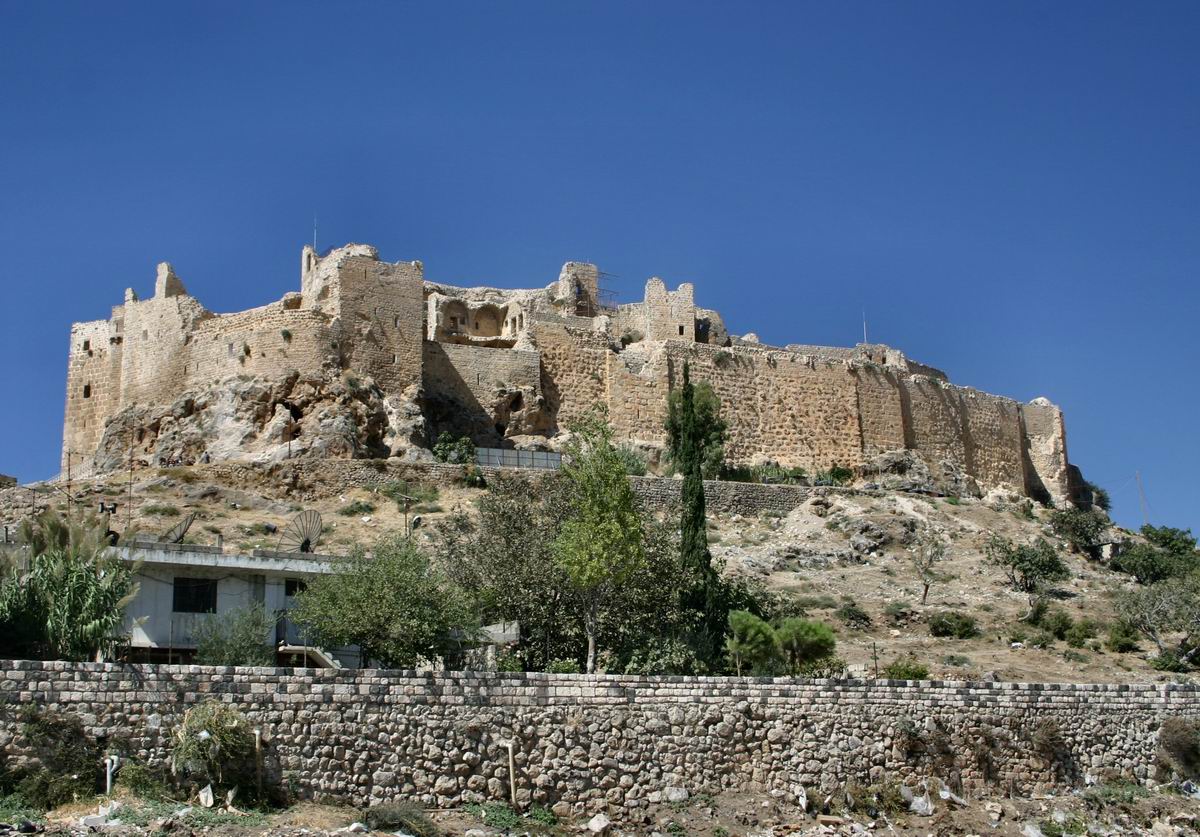
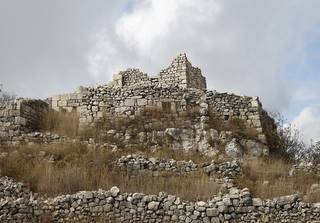
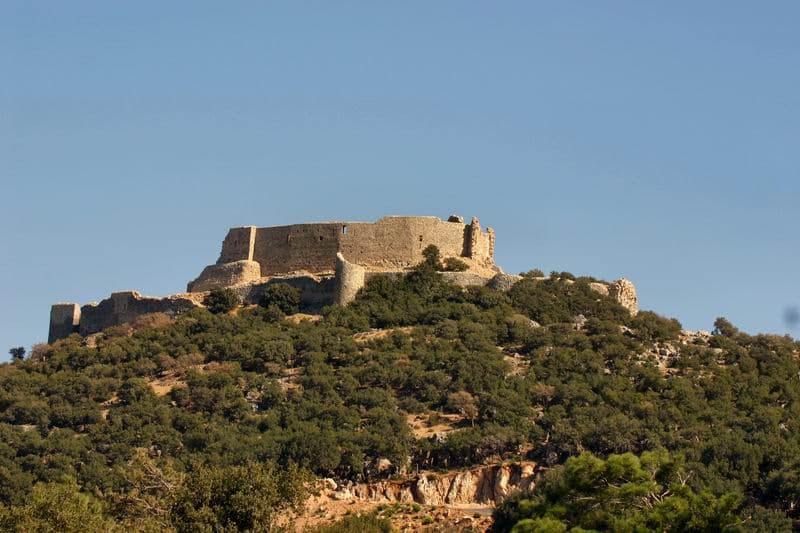
As a medieval fortress, Abu Qubays was constructed primarily from local stone materials typical of Syrian castle architecture. Although today it lies in a state of ruins, remnants of defensive walls, towers, and gate structures can still be identified.
The castle likely featured a typical hill castle design adapted to the local topography, though it is currently classified as archaeological ruins due to the extensive damage and degradation over centuries. Defensive elements would have included thick curtain walls, battlements, and possibly a central keep or donjon, although clear evidence of these is limited.
Defensive structures
Ruins indicate the presence of towers that would have provided vantage points for surveillance and defense. The walls were designed to withstand siege warfare common in the medieval Levant, with strategic embrasures and arrow slits.
Internal spaces
Inside the castle, there would have been courtyards and chambers serving military and administrative functions. The layout would have accommodated garrison troops, storage facilities, and possibly residential quarters for commanders.
Current condition and archaeological status
Today, Abu Qubays stands as a ruined archaeological site. The castle has suffered from natural decay and human impact over centuries, leaving only fragments of its original structure visible. Despite its ruined state, the site remains important for understanding medieval fortifications in Syria and the broader Levant region.
The adjacent village of Abu Qubays preserves the name and some cultural continuity, with inhabitants primarily from the Alawite community. The area around the ruins has not been extensively developed for tourism, and access may be limited due to the region's complex political situation.
Geographical context and surrounding localities
Abu Qubays is located northwest of the city of Hama, in an agricultural plain that has historically supported local populations through farming and trade. Nearby localities include Daliyah to the west, al-Laqbah to the south, Deir Shamil to the southeast, Tell Salhab to the northeast, and Nahr al-Bared further northeast.
The castle's placement within this network of villages reflects its role in regional defense and administration during the medieval period.
Significance for heritage and study
Although Abu Qubays is less well-known than other Syrian castles, it contributes valuable insight into the military architecture and historical dynamics of the medieval Levant. Its ruins offer a tangible connection to the complex history of fortification, conquest, and settlement in northwestern Syria.
Further archaeological work could reveal more about its construction phases, usage, and the daily life of its occupants. Preservation efforts would help protect this cultural asset amid ongoing challenges in the region.
Frequently asked questions (FAQ)
- What is the historical significance of Abu Qubays castle?
- Abu Qubays castle was a medieval fortress that played a strategic role in controlling routes in northwestern Syria, particularly during the Crusades and Islamic dynasties. It served as a defensive stronghold in the al-Ghab plain near the Orontes River.
- Can visitors access the Abu Qubays castle ruins?
- Access to Abu Qubays castle ruins may be limited due to the region's political situation and lack of developed tourism infrastructure. Visitors should check local conditions and travel advisories before planning a visit.
- What architectural features are notable at Abu Qubays?
- Although in ruins, Abu Qubays castle shows remnants of defensive walls, towers, and gate structures typical of medieval Syrian fortifications. These features highlight its role as a military stronghold.
- Where is Abu Qubays located geographically?
- Abu Qubays is located in the al-Ghab plain west of the Orontes River, northwest of Hama city in Syria. It is surrounded by several villages including Daliyah, al-Laqbah, and Tell Salhab.
- What is the current condition of Abu Qubays castle?
- The castle is currently in a ruined state, classified as archaeological ruins, with only fragments of its original structure remaining visible.
Photo gallery

Photo by Mewes at German Wikipedia•Public domain
Information
Loading map...
Visitor reviews
No reviews yet. Been here? Write the first review and help other travelers!
Write the first reviewVisited this castle? Share your experience
Your review helps other travelers and adds first-hand knowledge to our encyclopedia.