Invercauld Castle

Invercauld Castle in Braemar: a historic Scottish baronial estate
Renaissance (15th–17th c.)
Well Preserved

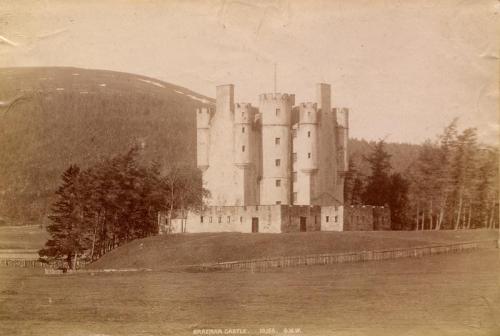
Invercauld Castle stands as a prominent historic country house located in Braemar, Scotland, set within the expansive Cairngorm National Park. The castle's origins trace back to the 16th century when the Farquharson family, who settled in the region during the 14th century, constructed a fortified tower house to establish their presence and defend their lands. This original tower house forms the core of the present building, with a notable vaulted basement dating from this early period, reflecting the defensive architectural style typical of Scottish noble residences of the time.

Architectural evolution and style

The castle underwent significant transformations beginning in the late 17th century, when the original tower house was extensively remodelled. These changes introduced more comfortable living quarters and updated architectural elements while retaining much of the fortress-like character. Further modifications in the 18th and 19th centuries reflected evolving tastes and the growing importance of Invercauld as a country estate rather than a purely defensive stronghold.

The most notable architectural intervention occurred in 1875, when the castle was extensively remodelled by architect John Thomas Wimperis. This renovation embraced the Scots Baronial style, a revivalist architectural movement that drew on medieval Scottish castles and tower houses for inspiration. Characterized by features such as turrets, crow-stepped gables, battlements, and ornamental stonework, the Scots Baronial style imbued Invercauld Castle with a romantic and picturesque appearance that aligned with Victorian tastes for historicism and national identity.

Interior and furnishings

Inside, Invercauld Castle retains many Victorian furnishings and paintings, offering a glimpse into the lifestyle and aesthetic preferences of the 19th-century Scottish aristocracy. The interiors combine elements of comfort and grandeur, with richly decorated rooms that reflect the castle's evolution from a defensive tower to a stately home.

The estate and landscape

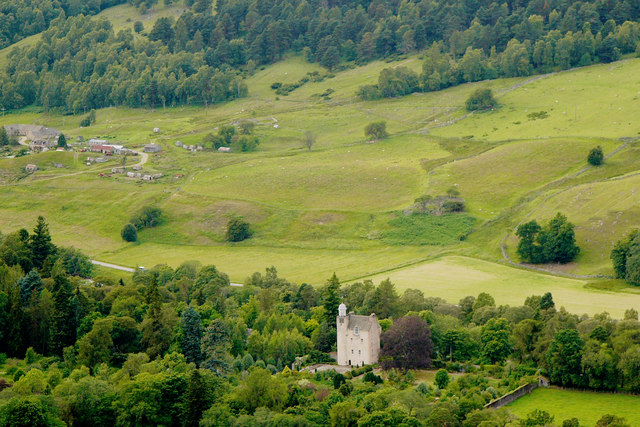
The castle estate itself covers approximately 520 square kilometers, encompassing a large portion of the surrounding landscape within the national park. It includes a stretch of the River Dee, which adds to the scenic and environmental value of the property. The grounds of Invercauld Castle are recognized in the Inventory of Gardens and Designed Landscapes in Scotland, highlighting the significance of the landscaped parkland and woodland areas.

During the tenure of the tenth laird, James Farquharson, significant afforestation efforts were undertaken to plant woodland across the estate. These woodlands were intended to supply timber for the shipyards of nearby Aberdeen, demonstrating the estate's economic as well as aesthetic importance.

Historical significance and royal connections

Invercauld Castle's location near the royal Highland residence of Balmoral Castle made it a favored retreat for Queen Victoria and her court during the 19th century. The castle's sporting estate, offering hunting and fishing opportunities, attracted members of the British aristocracy and royalty, reinforcing its status as a prestigious Highland estate.

Today, Invercauld Castle remains a significant cultural and architectural landmark within Scotland, embodying centuries of history from its medieval origins through its Victorian transformation. Its preserved interiors, extensive estate, and scenic setting continue to draw interest from historians, architects, and visitors intrigued by Scotland's noble heritage and castle architecture.

Frequently asked questions (FAQ)

How do I get to Invercauld Castle?
Invercauld Castle is located in Braemar, Scotland, and can be accessed by car or public transport. The nearest major city is Aberdeen, which is approximately 50 miles away. From there, you can take a train or bus to Braemar, followed by a short taxi ride to the castle.
What is the historical significance of Invercauld Castle?
Invercauld Castle has a rich history dating back to the 18th century and is known as a family seat of the Farquharson clan. The castle played a significant role during various historical events, including the Jacobite risings. Its architecture and preservation reflect the cultural heritage of the Scottish Highlands.
When was Invercauld Castle built?
Invercauld Castle was originally built in the early 18th century, with significant renovations occurring in the 19th century. The castle showcases elements of Scottish Baronial architecture, which became popular during that era. Its design is a testament to the grandeur and history of the period.
Can I visit Invercauld Castle?
Yes, Invercauld Castle is open to visitors during specific times of the year. It is advisable to check the official website for current opening hours and any special events. Guided tours are often available, allowing you to explore its stunning interiors and learn about its history.
Why is Invercauld Castle considered an architectural gem?
Invercauld Castle is considered an architectural gem due to its unique Scottish Baronial style, characterized by its distinctive towers and intricate stonework. The castle's design harmonizes beautifully with the surrounding landscape, making it a picturesque landmark in the Highlands. It reflects the artistic and historical significance of Scottish architecture.
Is it possible to host events at Invercauld Castle?
Yes, Invercauld Castle offers facilities for hosting special events, including weddings and corporate gatherings. The picturesque setting and historical ambiance make it an ideal venue. For more information on availability and services, it's best to contact the castle's management directly.
What are the best times to visit Invercauld Castle?
The best times to visit Invercauld Castle are during the spring and summer months when the weather is milder and the gardens are in full bloom. Additionally, special events and festivals often take place during this period, enhancing your experience. Autumn also offers beautiful foliage, making it a great time for photography.
What are the ticket prices for visiting Invercauld Castle?
Ticket prices for Invercauld Castle vary depending on the time of year and the type of tour you choose. Generally, adult tickets are reasonably priced, with discounts available for children and seniors. It is recommended to check the official website for the most current pricing and any promotional offers.
What nearby attractions are there to visit?
Invercauld Castle is surrounded by stunning natural beauty and several attractions, including the Cairngorms National Park, which offers outdoor activities like hiking and wildlife watching. The village of Braemar is also nearby, home to quaint shops and local culture. Visitors can enjoy scenic drives and explore other historic sites in the region.
What are the opening hours for Invercauld Castle?
Invercauld Castle’s opening hours vary by season, typically opening from late spring to early autumn. During peak tourist season, the castle may offer extended hours to accommodate visitors. It is advisable to consult the official website or contact the castle directly for the most accurate and up-to-date information on opening hours.

Information

Hill Castle

Loading map...

Visitor reviews

No reviews yet. Been here? Write the first review and help other travelers!

Write the first review

Visited this castle? Share your experience

Your review helps other travelers and adds first-hand knowledge to our encyclopedia.

Write a review

(5/5)

0/2000 characters

Your review will be visible after admin approval

Nearby castles

2.5 km

Kindrochit Castle

United Kingdom, United Kingdom

Kindrochit Castle stands as a significant medieval fortress located in Braemar, Scotland, embodying centuries of Scottish history and architectural evolution. Established during the late 11th century under the reign of King Malcolm III (Malcolm Canmore), the castle was strategically positioned to control a vital crossing over the Clunie Water. This crossing was further secured by a stone bridge constructed simultaneously, emphasizing the site’s importance for defense and regional control. The castle's initial construction reflects the defensive priorities of the early medieval period, with a focus on robust stonework and strategic location. Over time, Kindrochit evolved from a fortified residence into a notable royal hunting retreat, particularly during the 14th century. King Robert II of Scotland frequented the castle annually between 1371 and 1388, highlighting its role not only as a military stronghold but also as a place of leisure and royal significance within the Scottish kingdom. Historical development and royal connections The castle’s history is closely intertwined with Scotland's royal lineage and regional power struggles. The original establishment by Malcolm III laid the foundation for a fortress that would be important for centuries. In the late 14th century, Robert III granted permission on 10 November 1390 to Malcolm Drummond, his brother-in-law, to construct a new tower at Kindrochit. This addition was meant to reinforce the castle’s defenses amid ongoing regional conflicts. Unfortunately, Malcolm Drummond’s efforts were cut short by his murder, leaving the tower incomplete. Despite this, the construction represents a significant phase in the castle’s architectural evolution, marking a transition from earlier medieval fortifications to more substantial defensive structures characteristic of the late medieval period. Architectural features and ruins Original hall and defensive layout Excavations at Kindrochit have revealed a complex layout centered on a large stone hall and a later rectangular tower. The original hall, dating back to the 11th century, measured approximately 30 meters in length and between 9 and 10 meters in width. Notably, parts of this hall were vaulted and partially subterranean, indicating sophisticated adaptations to the landscape and an emphasis on secure living quarters. The hall was fortified with small square towers at each corner, providing vantage points and enhancing the castle’s defensive capabilities. Thick stone walls were a hallmark of the construction, reflecting the need to withstand attacks and control the strategic river crossing. The late medieval tower The 14th-century tower initiated by Malcolm Drummond was a substantial structure, rectangular in shape, measuring roughly 19 to 21 meters long and 13 to 14 meters wide. Its walls were approximately 3 meters thick, demonstrating the medieval emphasis on strong, defensible architecture. Today, the surviving ruins mainly consist of the tower’s ground floor remains, located on the right bank of the Clunie Water within Braemar village. This tower integrates with the earlier hall foundations, illustrating the castle’s layered construction phases and the evolving military architecture from the early to late medieval periods. Strategic significance and location Kindrochit Castle’s position near the Elsick Mounth, an ancient trackway crossing the Grampian Mountains, linked it to other important strongholds such as Kildrummy Castle and Durris Castle. This location was crucial for controlling movement through the region, especially for military and trade purposes. The castle’s proximity to the stone bridge over Clunie Water further emphasized its role as a fortified gateway overseeing river traffic and regional passage. This dual function of defense and control made Kindrochit a key asset in medieval Scotland’s network of fortifications. Decline, archaeological discoveries, and preservation By the early 17th century, Kindrochit Castle had fallen into disrepair. The English poet and traveler John Taylor documented the castle as a ruin during his Pennylesse Pilgrimage in 1618. Taylor was guided through the remains by John Erskine, the 18th Earl of Mar, who recounted the castle’s historic significance and its royal connections. In the 20th century, archaeological excavations in 1925 uncovered the foundations of the original hall and other structural elements, providing valuable insights into the castle’s layout and construction phases. These findings have been instrumental in understanding the site's historical and architectural development. Restoration efforts in the early 21st century, particularly between 2013 and 2014, have helped preserve the ruins. Kindrochit Castle is now a scheduled monument, recognized for its cultural and heritage importance. The preservation work ensures that the castle’s remains continue to offer a tangible connection to Scotland’s medieval past. Cultural heritage and visitor experience Today, Kindrochit Castle remains an evocative historical site that attracts visitors interested in Scotland’s medieval history and royal heritage. Although the ruins are modest, they provide a clear glimpse into the architectural styles and defensive strategies of the early and late medieval periods. The castle’s setting in Braemar, surrounded by the scenic landscapes of the Scottish Highlands, enhances its appeal. Visitors can explore the ruins and imagine the castle’s role in controlling strategic routes and serving as a royal hunting lodge. While no decorative inscriptions or elaborate ornamentation survive, the castle’s robust stone construction and strategic placement speak volumes about its historical function and significance.

Details
2.5 km
Braemar Castle — United Kingdom castle

Braemar Castle

Braemar, United Kingdom

Braemar Castle stands prominently in the village of Braemar, nestled within the scenic Scottish Highlands. This historic hill castle was constructed in the early 17th century by John Erskine, 18th Earl of Mar, serving both as a fortified hunting lodge and a symbol of the Earls of Mar's regional authority. The castle's strategic location overlooking the River Dee allowed its owners to control vital routes and assert dominance over the surrounding lands. The site of Braemar Castle holds a deep historical legacy dating back to the 11th century with the nearby Kindrochit Castle, considered one of Scotland's earliest stone fortifications. The present castle replaced earlier structures and was designed to meet the defensive needs of a turbulent era marked by clan rivalries and political upheaval. Architectural design and defensive features Braemar Castle is a striking example of 17th-century Scottish Renaissance military architecture, built primarily of granite and arranged in a distinctive L-plan. The castle rises five storeys high and is encircled by a star-shaped curtain wall featuring six sharply angled salients, a design influenced by contemporary European fortifications aimed at deflecting artillery fire. The curtain wall is complemented by three-storey angle turrets at key points, enhancing the castle's defensive capabilities. The central tower incorporates a round stair tower that provides vertical access. The main entrance retains its original iron yett, a latticed gate that offered formidable protection against intruders, while many windows are secured with heavy iron grilles. The ground floor contains stone-vaulted rooms situated within the salients of the outer wall. These rooms historically functioned as the guardroom, ammunition store, and the original kitchen. A second kitchen was added during Victorian renovations, reflecting the castle's transition from a military stronghold to a family residence. Notably, a passage floor features an iron grill granting access to the Laird's Pit, a dungeon used for detaining prisoners. Interior rooms and historical details The upper floors are organized with a large and a small room on each arm of the tower. The first floor houses the Dining Room and Morning Room, while the second floor contains the Laird's Day Room, the Rose Room, and a small bathroom installed in 1901. The Drawing Room on this level is notable for graffiti carved into the window shutters by British soldiers stationed at the castle, including inscriptions dating back to 1797. The third floor features the Four Poster Bedroom, and the fourth floor contains several bedrooms: the Ladies Guest Bedroom, Gentleman's Guest Bedroom, and the Principal Bedroom. These rooms were used by the Farquharson family during their visits in the 19th and early 20th centuries. Historical significance and jacobite involvement Braemar Castle played a pivotal role in Scotland's turbulent history, particularly during the Jacobite risings of the late 17th and early 18th centuries. Originally a stronghold of the Earls of Mar, the castle was targeted during the first Jacobite uprising in 1689 when John Farquharson, the Black Colonel of Inverey, set fire to it to prevent its use by government forces. During the 1715 Jacobite rebellion, the castle served as a rallying point under the leadership of the 6th Earl of Mar, who raised the Jacobite banner in Braemar. The rebellion was short-lived, ending in defeat and the forfeiture of the castle to the Crown. Subsequently, the Farquharson clan acquired Braemar Castle but left it in ruins until 1748. Following the 1745 Jacobite uprising and the decisive Battle of Culloden, government troops garrisoned Braemar Castle to maintain order in the Highlands. The military presence lasted until 1830, after which the castle returned to the Farquharson family. This period of occupation led to significant repairs and the addition of the star-shaped curtain wall to strengthen defenses. Restoration and modern stewardship After the military garrison was withdrawn, the Farquharsons undertook extensive renovations to convert Braemar Castle into a comfortable family home. Architect John Adam was commissioned for restoration work in the 19th century, which included updating living quarters and adding Victorian-era amenities. The castle gained royal prominence when Queen Victoria visited during the Braemar Gatherings, cementing its status as a notable Highland residence. Over the years, the castle hosted members of the British royal family and became a symbol of Scottish heritage. Since 2006, Braemar Castle has been leased to the local community through Braemar Community Ltd, which has spearheaded an ambitious restoration program. The castle reopened to the public in 2008 and continues to be preserved as a cultural landmark, offering visitors insight into its rich history and architectural splendor. Surrounding heritage and archaeological context Nearby, the ruins of Kindrochit Castle remain a significant archaeological site, believed to be one of Scotland's oldest stone castles. Its proximity to Braemar Castle highlights the area's long-standing strategic importance and continuous occupation since the medieval period. Braemar Castle's location near historic crossings of the Grampian Mounth underscores its role in controlling movement through the Highlands. The castle's layered history, from medieval stronghold to Jacobite bastion and Victorian residence, reflects the broader narrative of Scottish history and clan dynamics. Visitor experience and cultural significance Today, Braemar Castle offers visitors a unique opportunity to explore authentic Scottish history through its well-preserved rooms and evocative atmosphere. The castle's menacing exterior contrasts with its charmingly decorated interiors, where the echoes of past clan leaders and soldiers linger. Guided tours reveal stories of the castle's turbulent past, including its role in the Jacobite risings and its transformation over centuries. Visitors can see original features such as the iron yett, stone vaults, and prisoner dungeons, providing a tangible connection to Scotland's heritage. The castle also hosts cultural events and participates in local heritage initiatives, reinforcing its position as a vital part of the Braemar community and Scottish identity.

Renaissance (15th–17th c.)
Details
11.6 km
Abergeldie Castle — United Kingdom castle

Abergeldie Castle

Crathie, United Kingdom

Abergeldie Castle is a notable example of a Renaissance tower house situated in Crathie, Aberdeenshire, Scotland. Dating back to around 1550, it was constructed by Sir Alexander Gordon of Midmar, a scion of the influential Gordon family who acquired the land in 1482. The castle's name originates from the Pictish language, meaning the 'Confluence of Geldie,' reflecting the historical depth of this site, which includes a late Bronze Age standing stone on its grounds, underscoring the area's long human occupation. Historical background and ownership The castle holds one of the longest continuous ownership records in Scotland, having been in the hands of the Gordon family for over 600 years. This lineage has played a significant role in the castle's preservation and restoration. During the first Jacobite rising (1689-1690), Abergeldie Castle was besieged by Jacobite forces. The siege was lifted following the Battle of Cromdale in 1690, when General Hugh Mackay led Williamite forces to relieve the castle. Today, it remains the residence of the Baron of Abergeldie, maintaining its status as a private family home. Architectural features and structure The castle is an imposing four-floor tower house built in the Renaissance style, characterized by a turreted square block design typical of Scottish tower houses of the period. It features a rectangular plan with a distinctive round stair tower positioned at the south-west corner. Although tradition suggests the castle was once surrounded by a moat, no physical evidence remains today. In the 18th century, an additional wing was appended to the original 16th-century structure, expanding its footprint. The early 19th century saw further modifications, including the addition of an ogee-roofed belfry atop the stair tower and the installation of a Venetian window on the south façade, blending Renaissance elements with later stylistic influences. Geographical setting and surroundings Abergeldie Castle is strategically located on the south bank of the River Dee, at an altitude of approximately 840 feet (260 meters). It lies about five miles west of Ballater and roughly two miles east of Balmoral Castle, the royal residence. The castle's backdrop is dominated by Creag nam Ban, a rounded granite hill rising to about 527 meters (1,729 feet), while across the river stands Geallaig Hill, reaching 743 meters (2,438 feet) and topped with ancient cairns. Cultural and heritage significance The castle is protected as a category A listed building, recognizing its architectural and historical importance within Scotland's heritage. Its continuous occupation by the Gordon family and its proximity to Balmoral Castle link it closely to Scottish nobility and royal history. The preservation of its original interior, restored by a descendant of the original builder, offers valuable insight into the living conditions and architectural preferences of the Scottish Renaissance aristocracy. Visitor information and current status While Abergeldie Castle remains a private residence and is not generally open to the public, its exterior and surrounding landscape can be appreciated from nearby public areas. The castle's well-preserved structure and scenic setting make it a significant landmark in Aberdeenshire's architectural and historical landscape.

Renaissance (15th–17th c.)
Details