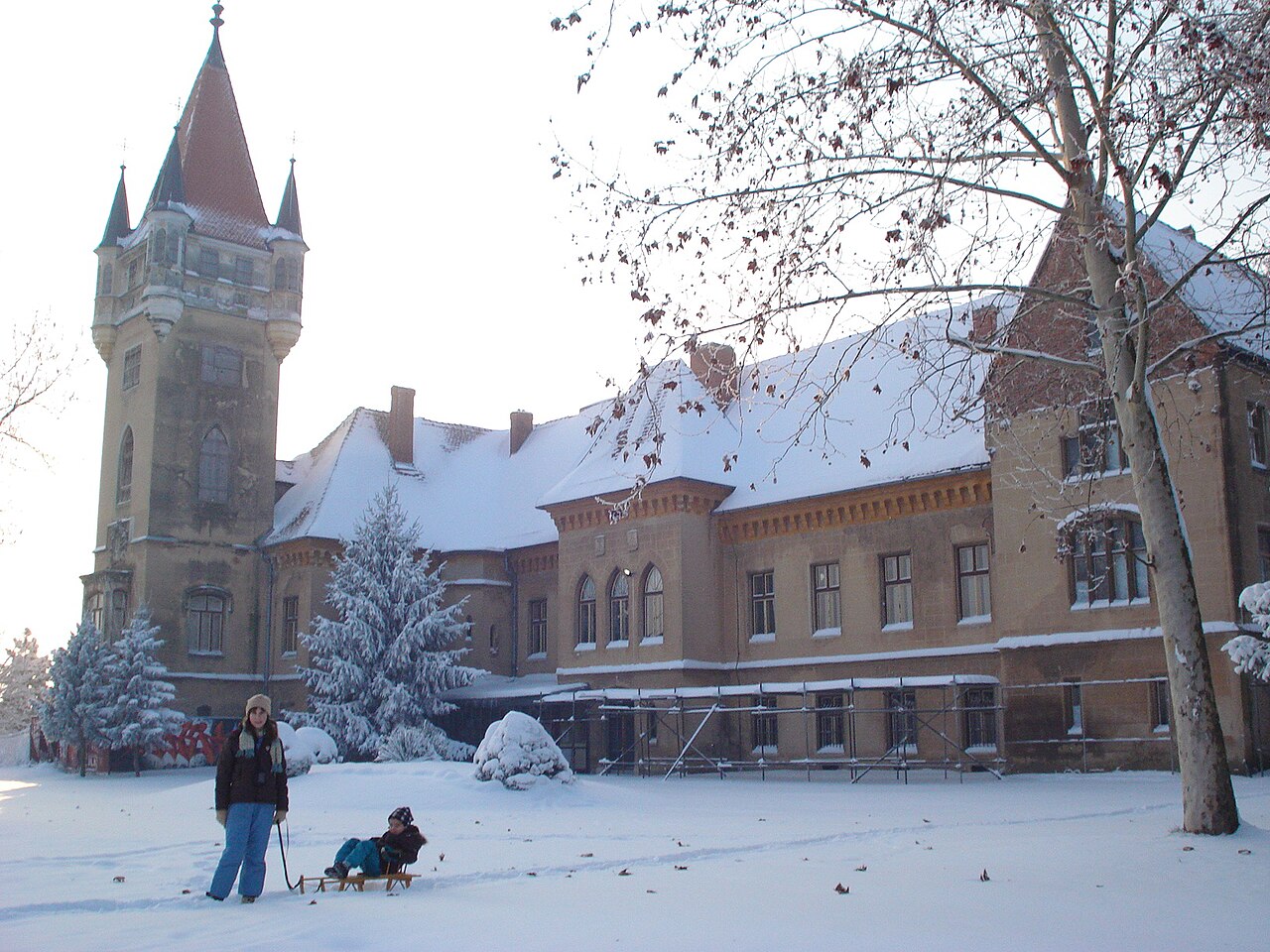
Zrinski Castle
Zrinski Castle, located in the town of Čakovec, Croatia, stands as the largest fortification in Međimurje County and a monument of profound historical and architectural significance. Its origins trace back to the 13th century, when the first fortification was erected by Count Dimitrius Csáky, after whom the town is named. Constructed primarily of hewn stone and red brick, the castle has undergone numerous reconstructions over its more than seven centuries of existence, reflecting the evolving architectural styles and defensive needs of the region.
The castle’s strategic position in northern Croatia made it a coveted stronghold for various noble families, including the House of Lacković, the Counts of Celje, the House of Ernušt, and notably the House of Zrinski, who left an indelible mark on its history. The castle’s transformation into a Renaissance fortress began in the mid-16th century under the ownership of Ban Nikola Šubić Zrinski, a celebrated Croatian viceroy and hero of the Battle of Siget against the Ottomans. Granted the castle and the surrounding Međimurje region by King Ferdinand in 1546, Nikola Šubić Zrinski initiated significant expansions including defensive bastions and a moat system.
Medieval origins and noble ownership
The earliest structure at the site was likely a wooden tower or simple fortification established by Count Dimitrije (Demeter) Čak. By the early 14th century, the castle had evolved into a recognized fortified town, or castrum, as documented in royal charters such as the 1333 confirmation by King Charles Robert of Anjou. Throughout the medieval period, the castle changed hands among prominent families, reflecting its strategic and administrative importance. The Buzad-Hahold family held it in the 13th century, followed by the Gising family in 1267, the Lacković family between 1350 and 1397, and later the Kaniški and Counts of Celje until the mid-15th century.
Renaissance transformation under the zrinski family
The most transformative period for the castle began in 1546 when Ban Nikola Šubić Zrinski acquired it. He rebuilt and expanded the fortress in the Renaissance style, incorporating modern defensive features such as bastions, thick walls, and water-filled moats. These fortifications were designed to withstand the growing threat of Ottoman incursions. The construction efforts were substantial, involving local peasant labor as recorded in 1559.
During the 17th century, under the stewardship of Nikola VII Zrinski, the castle flourished as a cultural and intellectual hub. Born in Čakovec Castle in 1620, Nikola VII was a prominent Croatian Ban and military leader known for his campaigns against the Turks. He amassed the famous Bibliotheca Zriniana, a unique collection of books that underscored the castle’s role as a center of learning and culture. The castle also hosted notable visitors such as the Ottoman traveler Evliya Çelebi in 1660 and Dutch philologist Jacobus Tollius in 1661.
Baroque reconstruction and later history
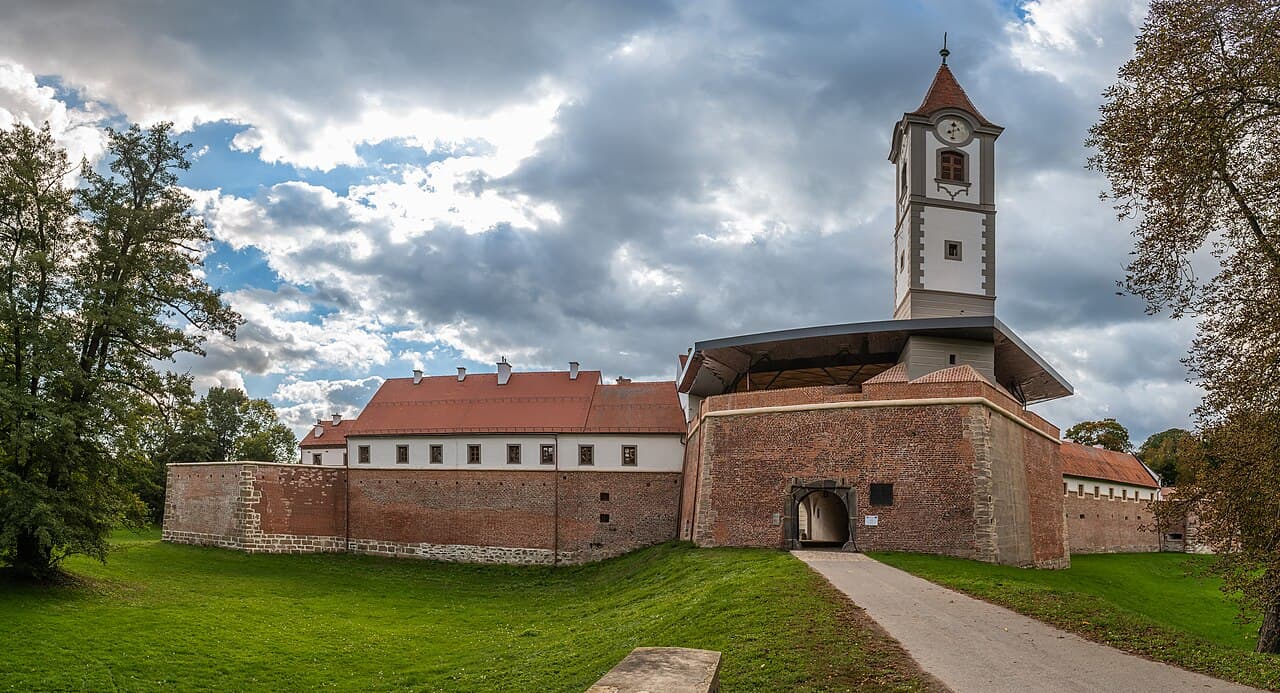
On 30 April 1738, a devastating earthquake severely damaged the castle. The subsequent reconstruction, led by the Althan family, transformed the fortress into a Baroque palace, giving it much of its present-day appearance. The Viennese court architect Anton Erhard Martinelli played a key role in redesigning the castle, adding a second floor and relocating a tower from the palace roof to the main gate tower.
The original water-filled moats that surrounded the castle were eventually drained and filled with earth due to changes in the course of the nearby Trnava river and urban development. The castle’s access evolved from a long wooden bridge to a shorter stone bridge leading to the main gate tower.
In the late 18th and 19th centuries, the castle passed through the hands of the Feštetić family, who maintained ownership until 1923. During this period, parts of the castle’s function shifted towards industrial uses, including sugar production, reflecting broader economic changes in the region.
20th century to present day use
Following World War I, the castle transitioned from noble ownership to commercial and public uses. It was owned by a timber trading company and later by a local craftsmen’s association. During World War II, Hungarian occupation forces utilized the castle. From 1946 to 1954, it served educational purposes, housing an economic school and dormitory.
Since 1954, Zrinski Castle has been the site of the Međimurje County Museum, the largest museum in the county. The museum preserves and exhibits the region’s cultural heritage, including archaeological finds, historical artifacts, and ethnographic collections. The castle’s atrium is also used as an outdoor theatre venue during summer months, continuing its tradition as a cultural center.
Architectural features and remains
The castle complex is characterized by its pentagonal layout defined by thick defensive walls and bastions constructed mainly in the 16th and 17th centuries. Notably, the bastions are built of brick, a rarity in Croatian fortifications of the period, which typically favored earthworks. The walls form an outer courtyard that acts as a defensive buffer to the central palace.
The central palace, known as Novi dvor, is a quadrangular building with origins dating back to the Ernušt family period in the 15th and 16th centuries. It was extensively remodeled during the Zrinski era and later redesigned in the Baroque style after the 1738 earthquake. The palace features a paved courtyard accessible through an elevated main entrance adorned with arcades, along with several smaller ground-level doors.
Surrounding the castle is the Perivoj Zrinskih park, a landscaped area with trees, shrubs, and flowerbeds, which also hosts monuments dedicated to the castle’s noble owners, preserving the memory of its historic lineage within the modern urban fabric of Čakovec.
Historical significance and cultural heritage
Zrinski Castle is not only a symbol of the region’s medieval and Renaissance heritage but also a testament to Croatia’s turbulent history marked by Ottoman conflicts and noble power struggles. The castle was a key site in the Zrinski-Frankopan conspiracy, an important political episode in Croatian history. Its association with prominent figures such as Nikola Šubić Zrinski and Nikola VII Zrinski enriches its cultural legacy.
Today, the castle’s status as a cultural monument of national importance ensures its preservation and continued role as a center for education, tourism, and cultural activities, bridging the past and present in the heart of Međimurje County.
Frequently asked questions (FAQ)
- When was Zrinski Castle originally built?
- Zrinski Castle was originally constructed in the 13th century by Count Dimitrius Csáky, marking the beginning of its long history.
- What architectural styles are featured in Zrinski Castle?
- The castle showcases a blend of Renaissance fortification elements from the 16th century and Baroque style from the 18th-century reconstruction.
- Can visitors tour the castle today?
- Yes, Zrinski Castle is open to the public as the Međimurje County Museum, offering exhibitions and cultural events throughout the year.
- What is the significance of the Bibliotheca Zriniana?
- The Bibliotheca Zriniana was a unique private book collection established by Nikola VII Zrinski, highlighting the castle's role as a cultural center.
- How did the 1738 earthquake affect the castle?
- The 1738 earthquake heavily damaged the castle, leading to its Baroque-style reconstruction under the Althan family, which shaped its current appearance.
Photo gallery

Information
Sources & official resources
Verify the information above using these authoritative references.
Loading map...
Visitor reviews
No reviews yet. Been here? Write the first review and help other travelers!
Write the first reviewVisited this castle? Share your experience
Your review helps other travelers and adds first-hand knowledge to our encyclopedia.