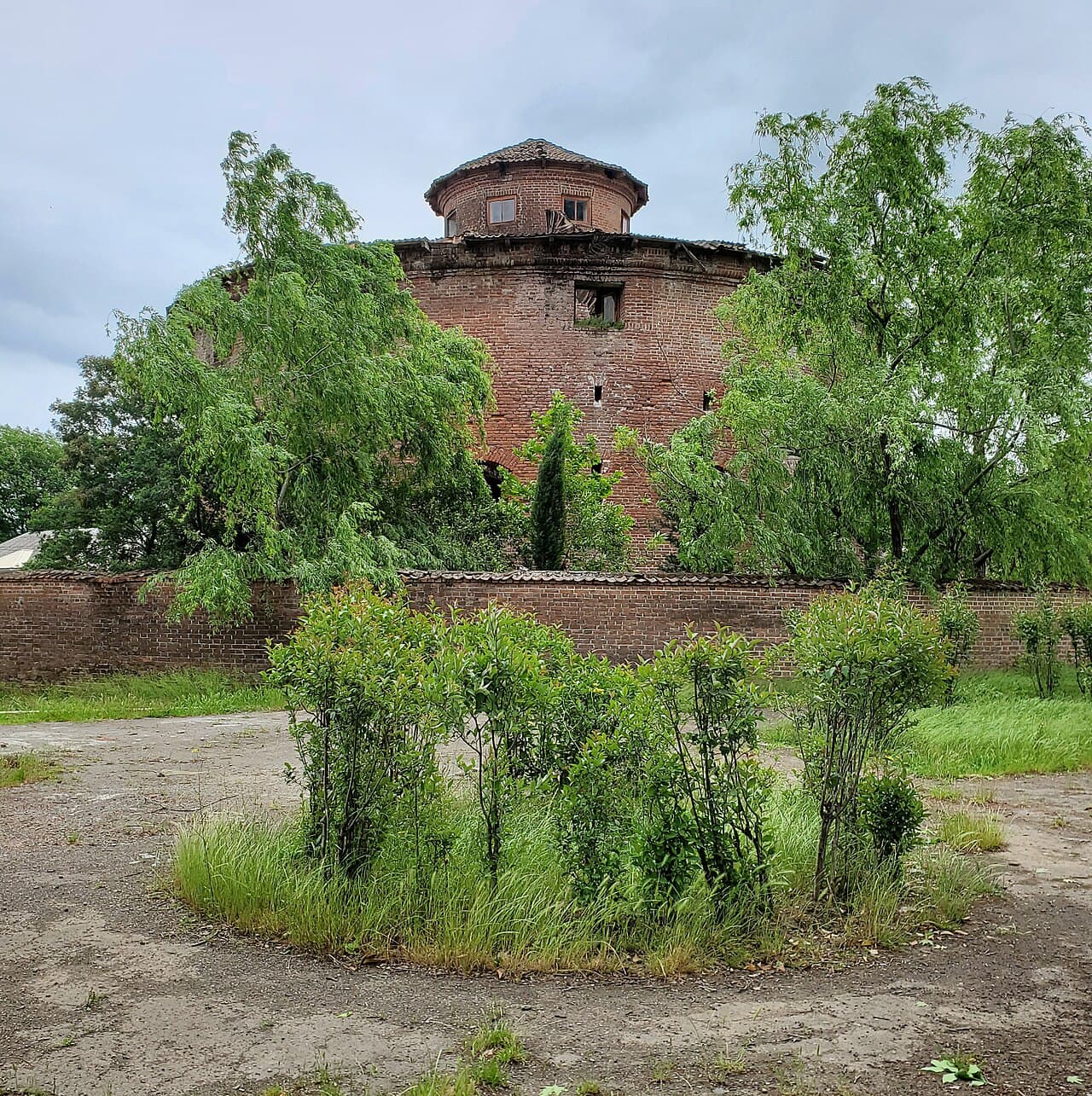
Zindan Fortress, also known as the Round Fortress (Azerbaijani: Zindan qalası və ya Dairəvi qala, Persian: قلعه زیندان یا قلعه مدور), is a significant historical bastioned fortress located in Lankaran, Azerbaijan. Constructed in the 18th century, it forms part of the larger Lankaran Fortress complex, which was an important defensive system in the region during the post-Renaissance period. The fortress was strategically designed as one of the two main strongholds—southern and northern—that guarded the Lankaran Fortress, playing a crucial role in the military architecture of its time.
Architectural design and military function
The Zindan Fortress is classified as a bastioned fortress, a style that reflects the evolution of fortification techniques in the 17th and 18th centuries, emphasizing angular bastions designed to withstand artillery attacks. Its round shape, which earned it the name "Round Fortress," was a distinctive feature that enhanced its defensive capabilities by eliminating blind spots and allowing for a comprehensive field of fire. The fortress's thick walls and bastions were constructed to absorb and deflect cannon fire, a significant advancement from earlier medieval fortifications.
Originally, the fortress was integrated into the larger Lankaran Fortress system, which was a key military installation protecting the southern borders of the region. The two strongholds, including Zindan Fortress, were positioned to control access and provide overlapping fields of defense. This system reflects the strategic military thinking of the era, combining natural geography with advanced fortification techniques.
Historical usage and transformations
Following the Russian occupation of the region in the 19th century, the Lankaran Fortress was largely destroyed, leading to the separation of its strongholds. The northern stronghold was adapted for use as a lighthouse in 1869, when a lantern was installed on its roof. This marked a significant shift from military to navigational functions, serving maritime safety in the Caspian Sea. The lighthouse remains under the jurisdiction of the Caspian Shipping Company today.
Meanwhile, the Zindan Fortress itself was repurposed as a prison from 1869 until 1959. This period of use as a detention facility is a notable chapter in its history. There are reports suggesting that Joseph Stalin may have been imprisoned here early in the 20th century, though these claims require cautious consideration due to limited documentation.
Preservation and cultural significance
Recognizing its historical and architectural value, the fortress was officially protected by the government of Azerbaijan. By the Decree No. 132 of the Cabinet of Ministers of the Republic of Azerbaijan, dated 2 August 2001, Zindan Fortress was included in the list of state-protected architectural monuments. This status ensures the preservation of its structure and promotes awareness of its cultural heritage.
Today, the fortress stands as a well-preserved example of 18th-century bastioned military architecture in Azerbaijan. Its dual historical roles—as a fortress and a prison—along with its transformation into a lighthouse, contribute to its unique character and significance in the region's history.
Location and accessibility
Zindan Fortress is situated in Lankaran, a city in the southern part of Azerbaijan near the Caspian Sea coast. Its location was strategically chosen for defense and maritime observation. Visitors to the fortress can explore its robust bastions and appreciate its historical context within the broader Lankaran Fortress complex.
Architectural features and layout
The fortress's circular form is complemented by its bastioned elements, which include thick defensive walls and protruding angular bastions designed to cover all approaches. The structure's robust masonry and elevated position allowed defenders to monitor and repel attacks effectively. The roof, adapted later for the lighthouse lantern, is a notable feature that illustrates the fortress's adaptive reuse over time.
Inside the fortress, the layout was functional for both military defense and later prison use. The interior spaces would have included guardrooms, holding cells, and storage areas, although much of the internal arrangement has changed or been lost over time due to its varied uses.
Photo gallery

Information
Loading map...
Visitor reviews
No reviews yet. Been here? Write the first review and help other travelers!
Write the first reviewVisited this castle? Share your experience
Your review helps other travelers and adds first-hand knowledge to our encyclopedia.