Zhvantsem Castle
Zhvantsem Castle stands as a remarkable example of a 15th-century hill castle located in the municipality of Н03, within the Khmel’nyts’ka oblast of Ukraine. Originally constructed by the builders of the Polish Crown, this fortress served as a vital frontier defense along the eastern borderlands of the realm, strategically positioned near the Dniester River. Its location allowed it to play a key role in the military and political struggles that shaped the region over several centuries.
The castle's initial defensive works were established in the 15th century, reflecting the urgent need to secure the border region against incursions. Over the following century, these fortifications were extensively expanded and modernized, culminating in the transformation of the castle into a pentagonal fortress with bastions at each corner during the 16th century. This design was influenced by the evolving principles of military architecture, particularly the trace italienne style, which emphasized angled bastions to provide overlapping fields of fire and better resistance against artillery.
Architectural design and fortifications
The castle’s irregular pentagonal layout was a sophisticated defensive adaptation for its time. Each of the five corners featured a pentagonal bastion, allowing defenders to cover all approaches with crossfire. The main entrance was fortified by a two-story gatehouse located in the middle of the southwestern curtain wall, combining both robust defense and controlled access.
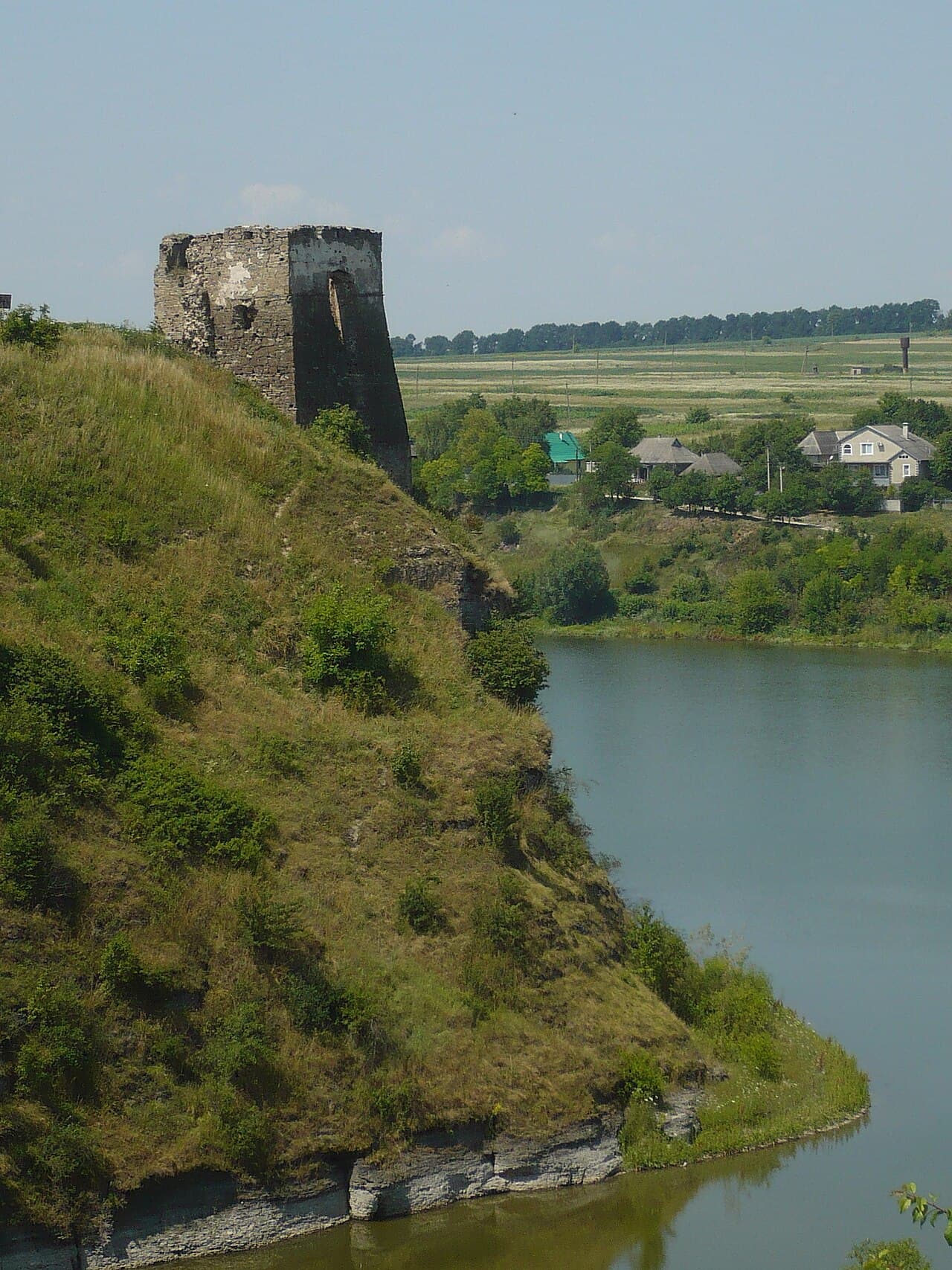
The northern pentagonal tower remains the best-preserved element of the castle. This tower, positioned on a steep slope, features four external sides measuring approximately nine meters each, with a shorter fifth side of 7.5 meters facing the castle courtyard. Its ground-floor walls are up to two meters thick, demonstrating its primary defensive role. Notably, the tower’s design includes separate entrances on each floor, facilitating internal movement and defense. The lower two floors contain rectangular embrasures—narrow openings designed for firing weapons while offering protection to defenders—each paired with small openings to admit light.
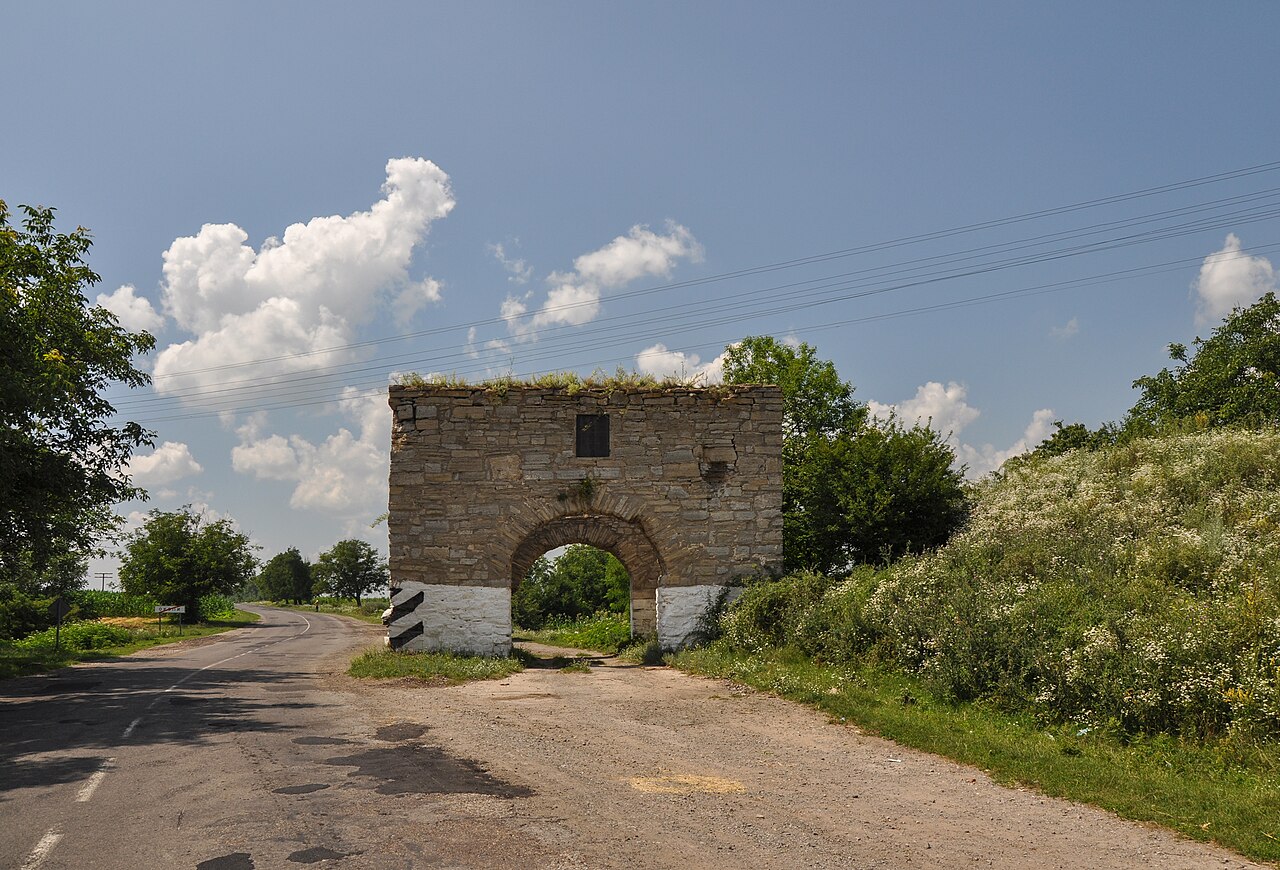
Remnants of the eastern tower and parts of the gatehouse building are still visible, while the castle’s northwestern and northeastern walls integrate natural topography by running along a cliff edge, enhancing the fortress’s defensive capabilities. Surrounding the castle was a deep dry moat, a trench without water, which separated the fortress from the adjacent settlement and further impeded attackers.
Archaeological research has revealed that the northern tower was constructed atop an earlier bastion that originally opened toward the inner part of the fortress, indicating a layering of defensive strategies over time. The primary building materials included local stone and earth, with stone casemates—covered chambers used for defensive firing—constructed beneath the earthen ramparts to protect defenders and artillery from enemy fire.
Historical significance and military role
Throughout the 17th century, Zhvantsem Castle held a critical position within the defensive network of the Polish Crown, especially due to its strategic location near the large Turkish fortress at Khotyn across the Dniester River. The castle was directly involved in several significant military engagements, including a notable siege by the Cossacks under Bohdan Khmelnytsky in 1653. This event was part of the wider Khmelnytsky Uprising, which dramatically altered the political landscape of the region.
Later, the fortress was reclaimed from Turkish control by forces loyal to King Jan III Sobieski in 1684. The castle sustained heavy damage during its recapture in the campaigns of 1673 and 1684, as well as from subsequent invasions by Turkish and Tatar forces, most notably in 1768. These repeated conflicts underscore the fortress’s enduring military importance in a region frequently contested by competing powers.
In 1769, the castle briefly served as a stronghold for the Bar Confederation, a noble uprising against foreign influence in Polish affairs. Ownership of the castle shifted multiple times over the centuries, reflecting the turbulent political history of the borderlands. In 1844, the Russian imperial government took possession with plans to convert it into a large military fortress, but this project was never completed. Following this, the castle gradually fell into decay, with its stones repurposed as building materials in the nearby area.
Modern history and preservation status
During the 20th century, Zhvantsem Castle remained heavily ruined but retained its historical significance. The site also includes a World War II-era pillbox, part of the Stalin Line defensive system. This small concrete bunker was strategically placed to oversee the valleys of the Dniester, Zhvanchyk, and Zbruch rivers, continuing the location’s long-standing military role into modern times.
Today, the castle is classified as a hill castle in a partially preserved condition. Its ruins offer valuable insights into the evolution of military architecture from the late medieval period through early modern times. The surviving structures, including bastions, towers, and gatehouses, are important cultural heritage landmarks that attract historians, archaeologists, and visitors interested in the military history of Eastern Europe.
Archaeological discoveries and architectural legacy
Extensive archaeological investigations at Zhvantsem Castle have uncovered multiple layers of construction and adaptation. The discovery of the northern tower’s foundation atop an earlier bastion reveals how defensive designs evolved to meet changing military technologies and threats. The use of local stone combined with earth ramparts and stone casemates exemplifies the hybrid construction techniques characteristic of the period.
The castle’s pentagonal bastions and dry moat illustrate advanced defensive planning aimed at maximizing protection and fields of fire. These features reflect the influence of Renaissance military architecture, particularly the trace italienne system, which was widely adopted in Eastern Europe during the 16th and 17th centuries.
Despite its ruined state, Zhvantsem Castle remains a significant monument to the region’s complex history of conflict and cultural exchange. Its architectural features provide a tangible link to the military strategies and borderland dynamics of the Polish Crown and its neighbors across centuries.
Frequently asked questions (FAQ)
- How do I get to Zhvantsem Castle and what should I expect?
- Zhvantsem Castle is located in Khmel’nyts’ka oblast, Ukraine. Visitors should be prepared for a site with partially preserved ruins situated on a hill, offering scenic views of the surrounding river valleys. Access may require some walking over uneven terrain.
- What is the historical significance of Zhvantsem Castle?
- Zhvantsem Castle played a crucial role as a frontier fortress for the Polish Crown from the 15th century, involved in key military engagements against Cossack, Turkish, and Tatar forces. Its pentagonal bastion design reflects advanced military architecture of the late medieval period.
- Can I explore the towers and bastions of the castle?
- While the northern pentagonal tower is the best preserved and visible, much of the castle remains in ruins. Visitors can view the remains of the eastern tower and gatehouse, but access inside may be limited due to safety concerns.
- When is the best time to visit Zhvantsem Castle?
- The best time to visit is during late spring to early autumn when weather conditions are favorable for outdoor exploration. This allows visitors to fully appreciate the castle’s hilltop location and panoramic views of the Dniester and surrounding river valleys.
- Are there any nearby attractions to combine with a visit to Zhvantsem Castle?
- Nearby natural attractions include the valleys of the Dniester, Zhvanchyk, and Zbruch rivers, which offer opportunities for hiking and nature exploration. The region’s rich history also includes other medieval sites and cultural landmarks worth visiting.
Photo gallery

Information
Loading map...
Visitor reviews
No reviews yet. Been here? Write the first review and help other travelers!
Write the first reviewVisited this castle? Share your experience
Your review helps other travelers and adds first-hand knowledge to our encyclopedia.