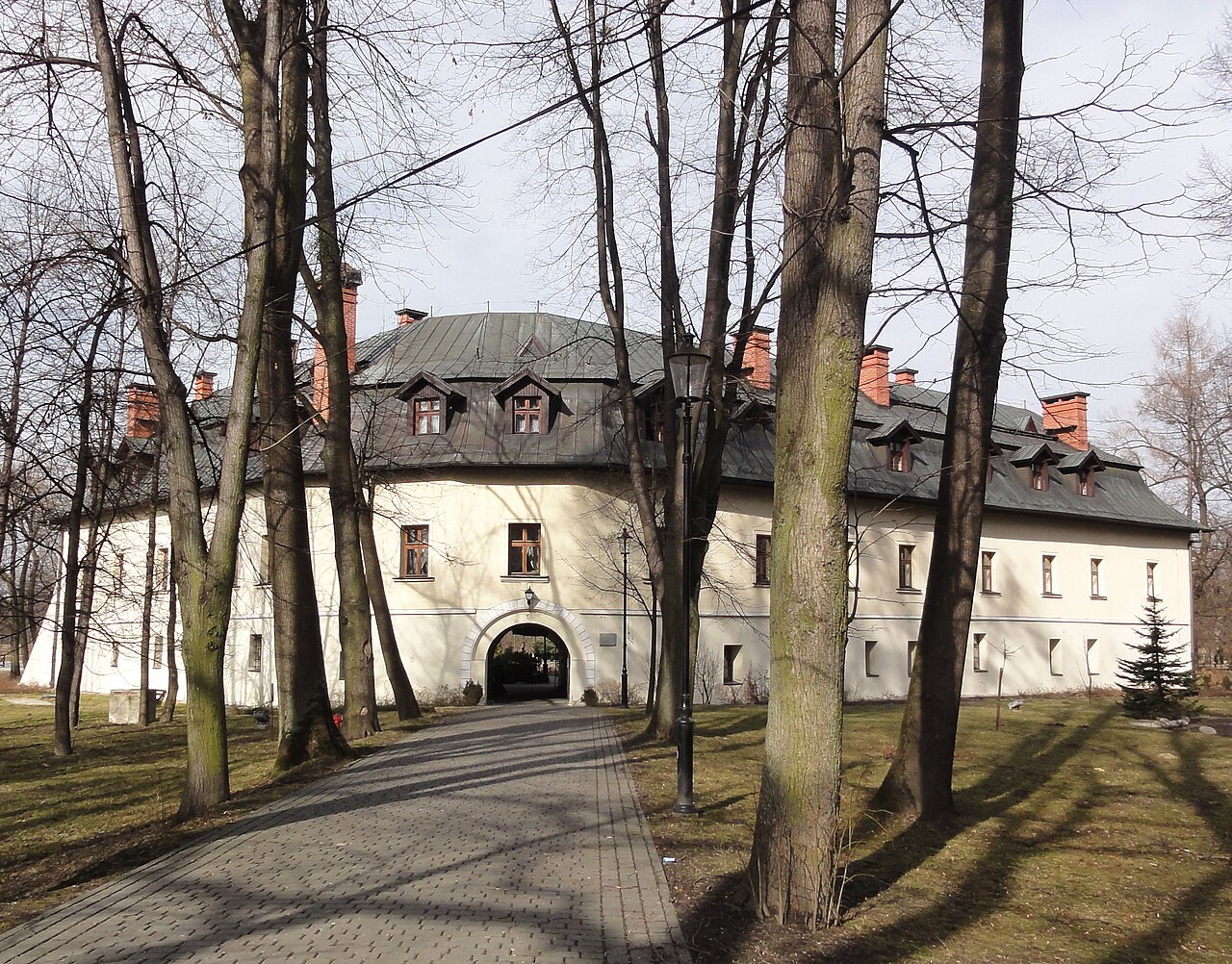
Zebrzydowice Castle
Zebrzydowice Castle stands as a significant historical monument in the village of Zebrzydowice, Poland, with origins tracing back to the late 13th century. The first recorded mention of the village dates to 1305 under the name Siffridi villa, indicating its early medieval roots within the independent Duchy of Cieszyn established in 1290. The castle's history is intertwined with the region's feudal dynamics, noble families, and architectural evolution reflecting shifting defensive and residential needs.
The origins of Zebrzydowice and its early owners
The village of Zebrzydowice initially appeared in ecclesiastical records as a tithe-paying settlement to the bishops of Wrocław. The earliest known proprietor was Przesske of Zebrzydowice, documented in 1413 during a legal dispute with the townspeople of Bielsko. By the late 15th century, the Kornic family had acquired the village, marking a new chapter in its ownership and development.
Architectural beginnings: the defensive manor or castle
Archaeological evidence suggests that around the turn of the 15th and 16th centuries, a fortified manor house or small castle was constructed in Zebrzydowice. Gothic fragments of walls discovered during later renovations indicate the medieval defensive character of the structure. Strategically positioned, the castle was naturally protected by the Piotrówka River to the east and north, a surrounding pond, and marshy meadows to the west, enhancing its defensive capabilities.
Defensive features and location
The castle's placement leveraged natural water defenses, typical of bastioned fortresses designed to withstand sieges and assaults. While later modifications obscured the original layout, the presence of moats and water barriers is consistent with late medieval fortification practices in the region.
Ownership transitions and historical events
In 1524, Hynek Bielik of Kornice sold Zebrzydowice to Jerzy Liszka from Lutynia for 1550 Hungarian ducats. Hynek Liszka, Jerzy's grandson, inherited the estate in 1575 and is credited with the earliest mention of the "Zebrzydowice fortress." Notably, in 1580, a violent altercation occurred involving Jaremiasz Szobiszowski and Hynek Liszka, resulting in serious injury and documented in court records, illustrating the turbulent nature of noble life at the time.
Financial difficulties and health issues compelled Hynek Liszka to sell the estate in 1583. Over subsequent centuries, the property changed hands frequently and was even divided into several parts, reflecting the complex inheritance and ownership patterns common in Central European noble estates.
Transformation into a Baroque residence
By the 18th century, the original defensive structure was replaced by a single-story manor house constructed using rubble stone and materials salvaged from the earlier building. This manor, located in what became known as Lower Zebrzydowice, was acquired in 1747 by Baroness Maria Agnieszka de Mattencloit. The de Mattencloit family retained ownership for approximately 140 years, during which the manor was extensively remodeled.
Baroque architectural features
The renovation transformed the manor into a rectangular palace reflecting German Baroque style, prioritizing residential comfort and representational grandeur over military defense. The ground floor was reinforced with buttresses, a nod to the building's fortified origins. The main façade featured an eight-bay layout with a prominent risalit crowned by a broad entrance gate. Above the gate, a circular stone cartouche displayed the coats of arms of the de Mattencloit and Beess families, symbolizing the union of noble lineages. Two symmetrical wings were added on the pond-facing side, enhancing the palace's balanced and elegant appearance.
19th-century ownership and decline
In 1836, Jan Baptysta de Mattencloit reunited the divided village by purchasing Upper Zebrzydowice. However, the abolition of serfdom following the 1848 Spring of Nations led to financial difficulties for the family. By 1887, mounting debts forced the estate into auction. The following year, Count Henryk Larisch von Mönnich, owner of the Karviná majorat, acquired the property. Unfortunately, the palace was relegated to a manager's residence, and the count only visited occasionally for hunting.
Damage, restoration, and current use
The palace suffered significant damage in 1945 during the final stages of World War II. Subsequent years saw widespread looting and severe deterioration, including the demolition of the palace's wings. Restoration efforts in the 1960s salvaged approximately half of the structure, though the wings and main gate were not reconstructed. During restoration, Gothic wall fragments were uncovered on the southeast façade, confirming the castle's late medieval origins. Sadly, these Gothic sections were dismantled, resulting in the irreversible loss of original medieval fabric.
Today, the restored palace serves as the Municipal Cultural Center, preserving the site's historical legacy while providing a venue for community activities. Despite the losses, Zebrzydowice Castle remains a testament to the region's layered history, architectural evolution, and noble heritage.
Architectural significance and heritage value
Zebrzydowice Castle exemplifies the transformation from a late medieval bastioned fortress to a Baroque noble residence, reflecting broader trends in Central European architecture. Its strategic location by water and marshlands illustrates medieval defensive planning, while its later Baroque modifications showcase the shift towards comfort and status display in aristocratic dwellings. The castle's layered history offers valuable insights into the sociopolitical changes and architectural adaptations spanning several centuries.
Preservation challenges
The partial preservation and reconstruction highlight ongoing challenges in maintaining historic structures affected by war, neglect, and changing ownership. The loss of Gothic elements underscores the importance of archaeological sensitivity during renovations. Nevertheless, the castle's survival and adaptive reuse contribute to regional cultural identity and tourism.
Visiting information and cultural events
Currently, Zebrzydowice Castle functions as a cultural hub hosting exhibitions, concerts, and community events. Visitors can explore the palace's historic interiors and appreciate its architectural features, although some original defensive elements are no longer visible. The site offers a unique opportunity to experience a blend of medieval and Baroque heritage in a picturesque setting.
Its location in the Silesian Voivodeship makes it accessible for travelers interested in exploring Poland's rich castle heritage and the historical Duchy of Cieszyn region.
Frequently asked questions (FAQ)
- When was Zebrzydowice Castle originally built?
- Zebrzydowice Castle was originally constructed around the late 13th century, with the first mention of the village dating to 1305 and the castle's origins linked to the establishment of the Duchy of Cieszyn in 1290.
- What architectural styles are represented in Zebrzydowice Castle?
- The castle features a blend of late medieval Gothic elements and later Baroque modifications, reflecting its evolution from a defensive fortress to a noble residence.
- Is Zebrzydowice Castle open to the public?
- Yes, the castle currently houses the Municipal Cultural Center and is open to visitors during cultural events and exhibitions.
- What defensive features did the original castle have?
- Originally, the castle was protected by natural water defenses including the Piotrówka River, surrounding ponds, and marshy meadows, typical of bastioned fortresses designed for defense.
- How has Zebrzydowice Castle changed over time?
- The castle evolved from a fortified manor in the late medieval period to a Baroque palace in the 18th century, losing its defensive characteristics in favor of residential and representational functions.
Information
Current owner
Municipality
Loading map...
Visitor reviews
No reviews yet. Been here? Write the first review and help other travelers!
Write the first reviewVisited this castle? Share your experience
Your review helps other travelers and adds first-hand knowledge to our encyclopedia.