Fryštát Castle
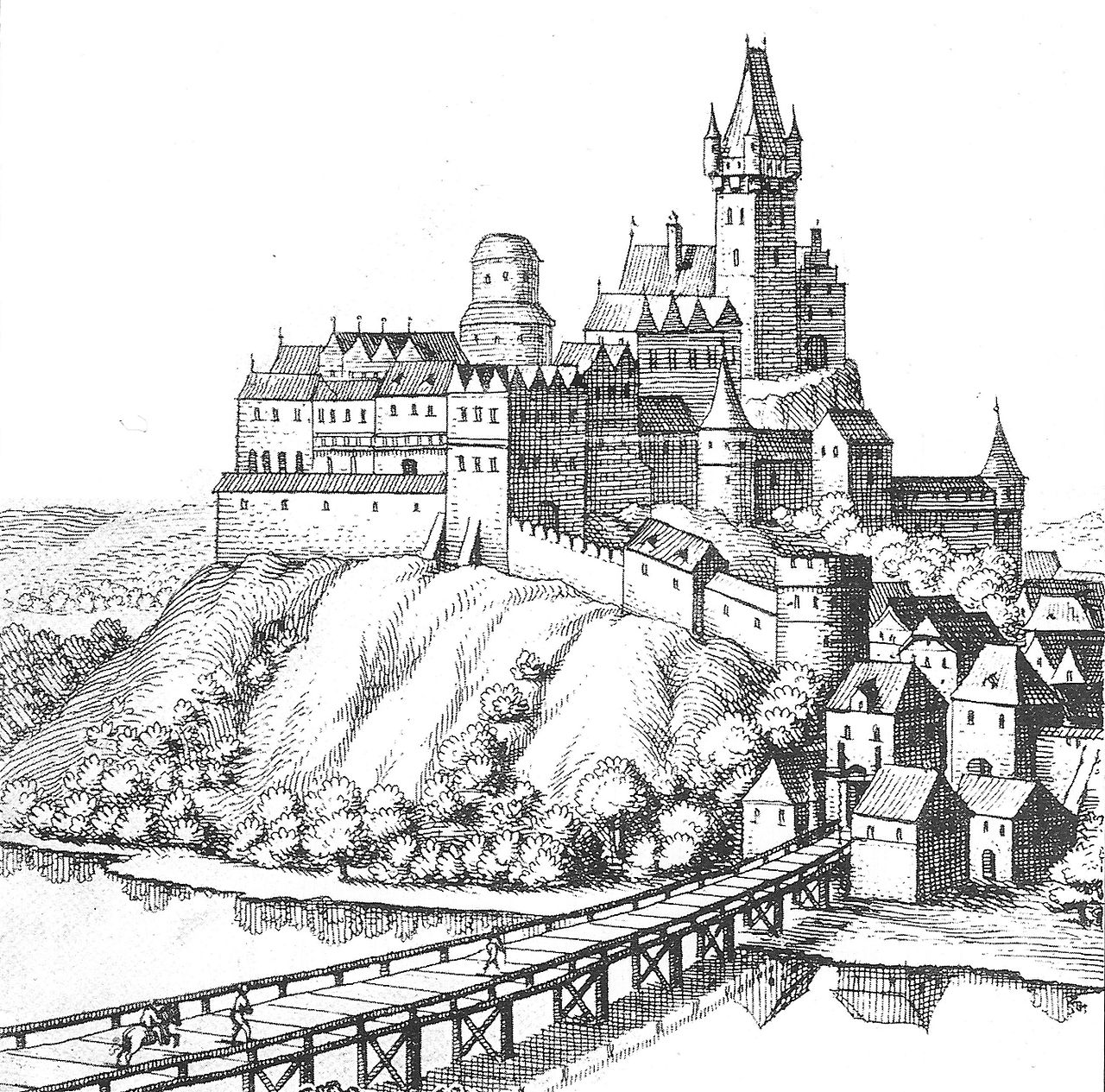
Fryštát Castle stands as a remarkable historical monument in the town of Karviná, Czechia, embodying centuries of architectural evolution and regional history. Originally constructed in the late 13th century by the Silesian Piast dynasty, this hill castle was strategically positioned on a rocky promontory overlooking the Mlýnka stream. Its location was carefully chosen to protect a vital trade route linking Hungary to the Baltic Sea, while also providing refuge from the frequent flooding that plagued the older settlement of Fryštát. The castle's foundation around 1288 by Duke Měšek III Opolský, a member of the Piast lineage, marked the beginning of a fortified complex that would grow in importance and complexity over the following centuries.
Throughout the 14th and 15th centuries, Fryštát Castle transitioned from a purely military fortress into a principal residence for the Piast dukes of the region, particularly those connected to the Těšín-Fryštát branch. During this period, the castle was under the suzerainty of the Bohemian crown from 1327 to 1573, reflecting its political significance. Notably, in 1412, Duke Boleslav I bestowed the castle as a dowry to his wife, Eufemia Mazovská, who initiated its transformation into a more comfortable and representative noble residence. Subsequent rulers, including Kazimír II, reinforced ties with the Bohemian monarchy, further elevating the castle's status until the extinction of the local Piast line in 1571.
Historical development and ownership transitions
After the Piast dynasty's demise, Fryštát Castle passed to Duke Václav Cigán ze Slupska in 1573. His Protestant heirs maintained residence until the Counter-Reformation forced their departure in 1637. Thereafter, the castle came into the hands of Catholic noble families, notably the Žampach and later the Larisch-Mönnich families. These owners undertook significant renovations, adapting the castle with Baroque and Classicist architectural elements. They also established a family crypt near the adjacent church and developed extensive landscaped gardens, reflecting the estate's transformation into a leisure and aristocratic residence.
In the 20th century, the castle complex became part of the expanding urban fabric of Karviná. The princely residence was separated from the parish church, and the entire site was nationalized following World War II. Recent archaeological excavations between 2017 and 2019 revealed significant medieval features, including Gothic foundations and cellars dating to the late 14th century, confirming the castle's historical connection to the Church of the Exaltation of the Holy Cross.
Architectural features and medieval origins
The castle's original layout reflects its dual function as a fortress and noble residence. Initially, it was surrounded by defensive stone walls and moats, portions of which remain visible today, marking the perimeter of the medieval fortification. Early construction utilized a combination of stone and wood, with the princely residence and a Gothic chapel predating 1288. This chapel, inspired by the design of the chapel in Ratiboř, formed a spiritual center within the castle complex. The presence of various economic buildings, collectively known as the parish farmyard, supported the castle's self-sufficiency.
Surviving elements from the earliest phase include the main oratory of the church and the southwestern section of the castle, which housed a representative hall. This hall was originally a separate structure until the early 16th century. By the late 14th century, extensive stone construction replaced earlier wooden buildings. This expansion introduced specialized functional spaces such as a black kitchen, an armory, and defensive terraces. These were interconnected by a covered Gothic corridor along the northern side, enhancing both defense and internal circulation.
15th-century enhancements and religious architecture
The 15th century saw further architectural developments, including the addition of a dedicated kitchen wing on the northwest side, replacing the original black kitchen. Adjacent to the chapel of the Exaltation of the Holy Cross, a new Gothic chapel dedicated to St. Anne was constructed, forming a Latin cross floor plan for the religious complex. This chapel contains valuable frescoes depicting the martyrdom of saints Catherine and Barbara, providing insight into the religious art and iconography of the period.
Renaissance reconstruction and later modifications
Following a damaging fire in 1511, Fryštát Castle underwent significant Renaissance-style reconstruction. Two previously separate buildings were merged into a larger residence featuring a mázhaus—a ground-floor chamber with direct garden access—and a first-floor hall known as the fraucimor. During this period, the castle church was enhanced with a striking 56-meter tower serving as a bell tower, which remains the castle's most prominent vertical landmark.
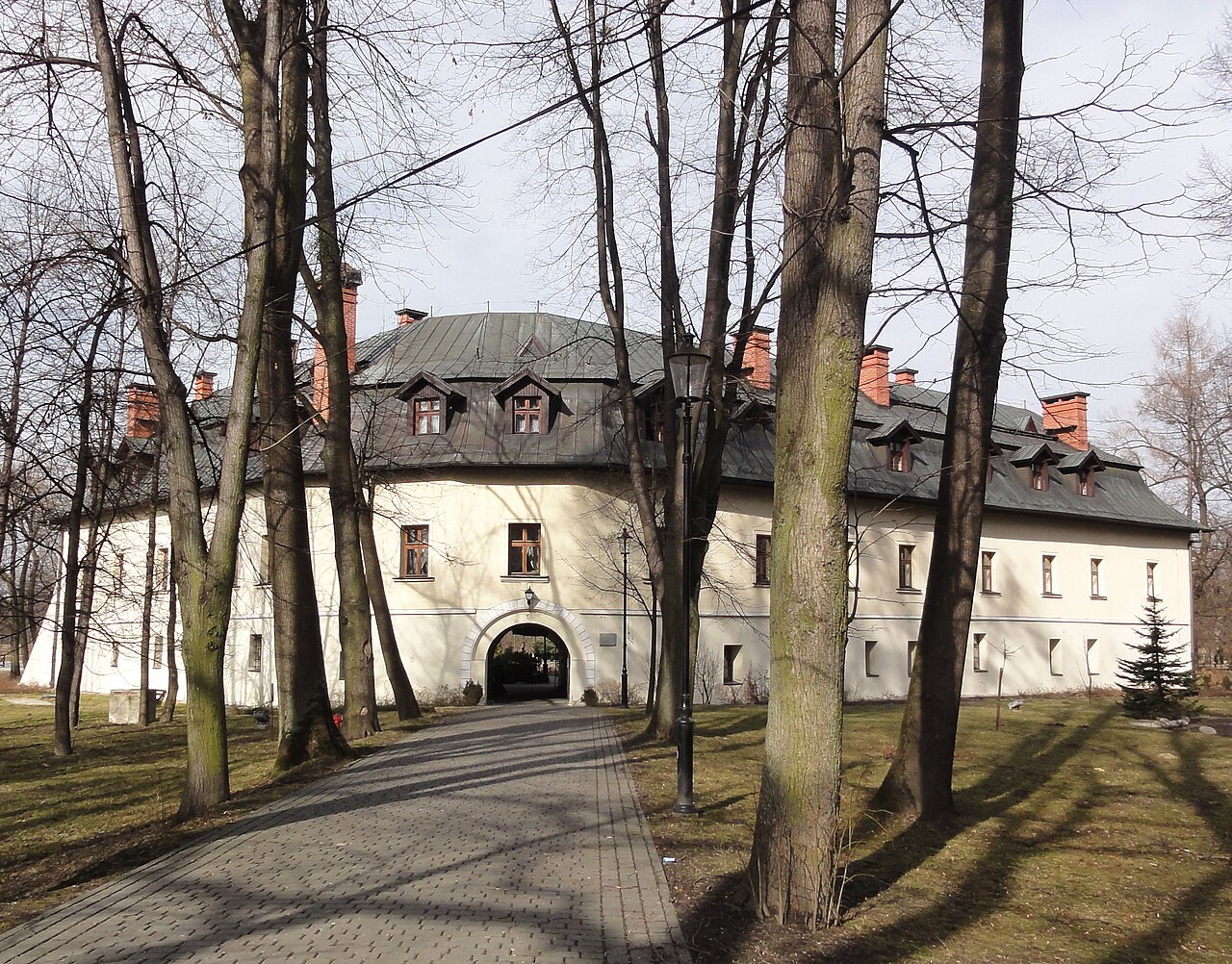
The castle's northern defensive walls were dismantled to create a more open connection with the adjacent town, reflecting changing defensive needs and a shift towards residential comfort. The castle grounds developed two courtyards: a large main courtyard dominated by the princely chateau and a smaller courtyard featuring the Garden Gate. The eastern section of the chateau combines Gothic and Renaissance elements, including the original Piast staircase, while the western section preserves its late 13th-century Gothic origins.
19th-century renovations and aristocratic estate features
Under the ownership of the Larisch-Mönnich family, the castle was expanded with the addition of the Lottyhaus, connected to the main residence by a wooden corridor. The entrance hall was remodeled in the 19th century within existing Renaissance rooms, blending historical architectural styles. The castle church, dedicated to the Exaltation of the Holy Cross, was richly decorated in the Gothic style and expanded with a Moravian Chapel to serve the spiritual needs of the diverse Protestant community in the region.
A family crypt, constructed in 1821 at the foot of the church, became the burial place for noble families associated with the castle. Additionally, an English-style landscaped park, established in 1804, occupies the lower terrain near the castle. These gardens were designed for aristocratic leisure and hunting outings, contributing to the estate's function as a noble residence and social center.
Preservation and archaeological significance
Today, Fryštát Castle preserves a rich architectural tapestry that illustrates its transformation from a medieval fortress into a Renaissance noble residence and later an aristocratic estate. Key medieval features such as Gothic cellars and foundational structures remain visible alongside the towering church spire and remnants of fortifications. The castle's layout and surviving architectural elements provide valuable insights into the region's history, architectural styles, and noble life over several centuries.
Recent archaeological investigations have been instrumental in uncovering the castle's original layout and construction phases, confirming historical records and enriching the understanding of its significance within the cultural heritage of Silesia and Czechia. The castle complex, with its blend of Gothic, Renaissance, Baroque, and Classicist elements, remains a vital monument reflecting the dynamic history and architectural evolution of the region.
Frequently asked questions (FAQ)
- What is the historical significance of Fryštát Castle?
- Fryštát Castle, dating back to the 13th century, is a significant historical landmark in Karviná, Czechia. Originally built as a defensive fortress, it has evolved through various architectural styles and played a crucial role in the region's history, particularly during the reign of the Czech kings.
- When was Fryštát Castle built?
- Fryštát Castle was first mentioned in historical records in 1260, marking its establishment as a formidable structure during the medieval period. Over the centuries, it has undergone numerous renovations and expansions, reflecting the changing architectural trends of the times.
- Can I visit Fryštát Castle and what are the opening hours?
- Yes, Fryštát Castle is open to visitors, typically from Tuesday to Sunday. The opening hours vary seasonally, so it's advisable to check the official website for the most current information before planning your visit.
- Is it possible to access Fryštát Castle with limited mobility?
- Fryštát Castle has made efforts to improve accessibility for visitors with limited mobility. However, due to its historical nature, some areas may still present challenges, so it's recommended to contact the castle administration for specific accessibility information before your visit.
- What are the ticket prices for visiting Fryštát Castle?
- Ticket prices for Fryštát Castle are generally affordable, with discounts available for students and seniors. Group rates may also apply, so it's beneficial to check the official site for the latest pricing and any special offers.
- When is the best time to visit Fryštát Castle?
- The best time to visit Fryštát Castle is during the spring and early autumn when the weather is mild and pleasant. These seasons also offer fewer crowds, allowing for a more enjoyable experience while exploring the castle and its surrounding gardens.
- What nearby attractions can I explore while visiting Fryštát Castle?
- While visiting Fryštát Castle, you can also explore the beautiful Karviná Park and the local historical sites nearby, such as the Church of St. Peter and Paul. Additionally, the city offers various cultural and recreational activities that enhance your overall experience in the region.
- How do I get to Fryštát Castle?
- Fryštát Castle is easily accessible by public transport, with several bus and train routes connecting to Karviná. If you are driving, there is parking available nearby, making it convenient for visitors coming from surrounding areas.
Information
Website
Visit websiteSources & official resources
Verify the information above using these authoritative references.
Loading map...
Visitor reviews
No reviews yet. Been here? Write the first review and help other travelers!
Write the first reviewVisited this castle? Share your experience
Your review helps other travelers and adds first-hand knowledge to our encyclopedia.