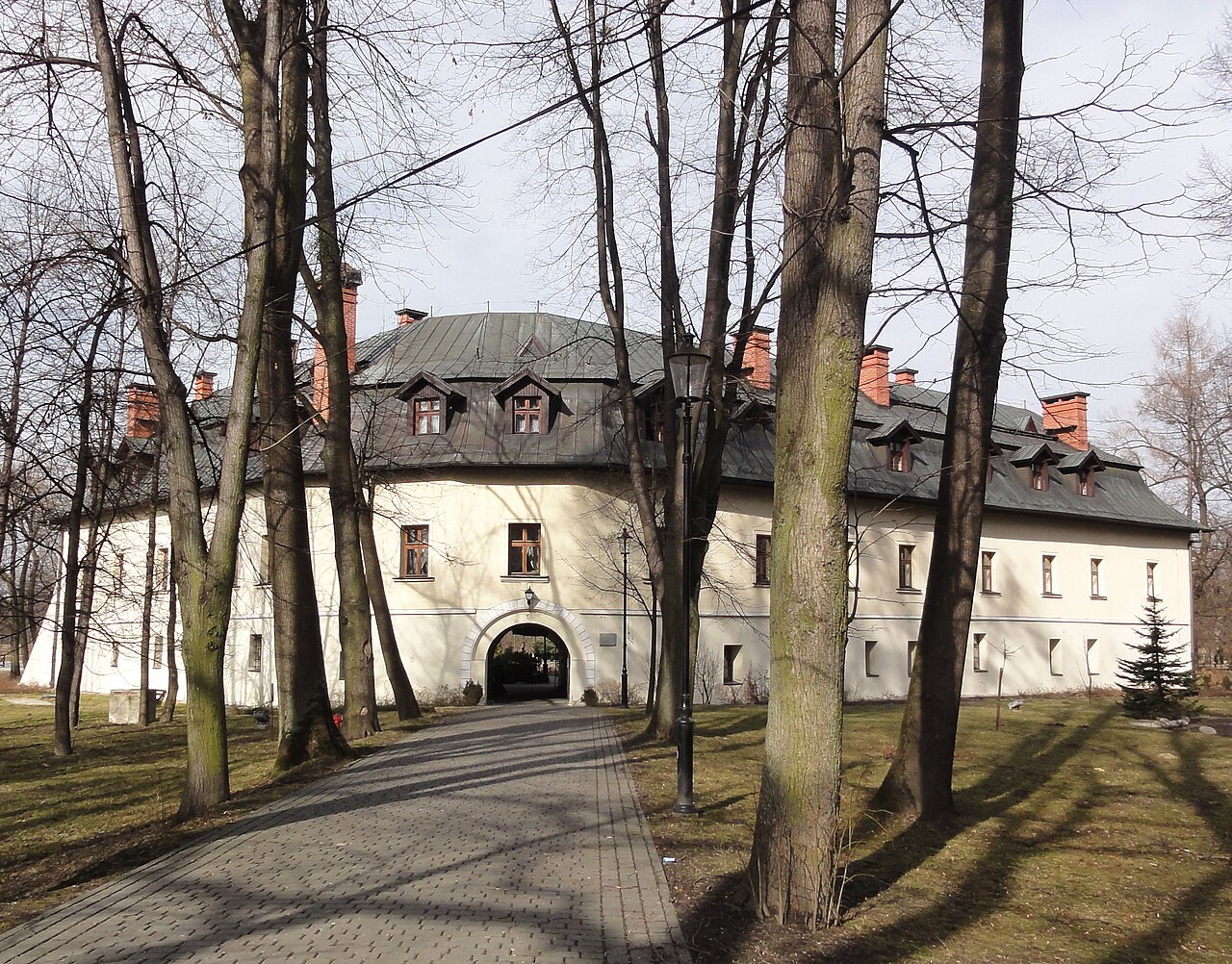
Strumień Castle
Strumień Castle is a historic manor located in the town of Strumień, Poland, with origins tied closely to the region's noble estates and evolving administrative changes from the medieval period onward. Although the village of Strumień was first mentioned in 1293, the castle itself was constructed much later, at the turn of the 17th and 18th centuries, serving as the residence of local landowners rather than a fortified military structure.
Historical background of strumień and its noble ownership
The village of Strumień has a documented history dating back to the 13th century, originally belonging to the territory known as the Land of Pszczyna. Following the division of Silesia in the late 13th century, Strumień became part of the Duchy of Racibórz, and later in the early 15th century, the Duchy of Pszczyna. Initially, the settlement was under noble ownership, with notable owners including Sobek of Kornice (1430-1446) and Machna Ogrozieńska (1450-1480). In 1480, the Duchy of Pszczyna was acquired by Casimir II, Duke of Cieszyn, and the village's ownership passed to his marshal, Mikołaj Brodecki, who played a crucial role in granting Strumień its town rights in 1482.
Architectural development and structure of the manor
The manor house commonly referred to as Strumień Castle was built around the late 17th to early 18th century. Unlike traditional medieval castles designed for defense, this structure was a modest residence, reflecting the architectural preferences and social status of its owners rather than military needs. By the mid-18th century, the manor was characterized as a rectangular building topped with a distinctive mansard roof, a style popular in European aristocratic architecture for adding usable attic space and aesthetic appeal.
Surrounding the manor were various outbuildings and a park, which complemented the residential function of the estate. The simplicity of the building and its surroundings suggests a focus on domestic comfort and estate management rather than fortification.
Post-war adaptation and current condition
Following the upheavals of World War II, the manor underwent significant changes. In 1956, the building was adapted for use as a residential facility, marking a shift from a noble residence to a communal living space. This adaptation preserved the structure but altered its original interior layout and function.
The manor remained inhabited until the year 2000, after which it was left vacant. Despite efforts by the local municipal authorities to sell the property, its deteriorating condition and lack of maintenance have led to ongoing vandalism and structural degradation. The absence of proper care threatens the survival of this historical building, which stands as a testament to the region's noble past and architectural evolution.
Cultural and architectural significance
While Strumień Castle does not possess the grandeur or defensive features of medieval fortresses, it holds cultural value as a representation of the modest noble residences typical of Silesian estates in the early modern period. Its mansard roof and rectangular form reflect architectural trends of the Baroque era, adapted to local needs and resources.
The castle's history is intertwined with the political shifts in Silesia, illustrating the transitions from feudal duchies to modern administrative units. It also exemplifies the challenges faced by many such estates in post-war Poland, where changing ownership and economic conditions have impacted preservation efforts.
Potential for restoration and heritage preservation
Given its historical and architectural importance, there is potential for restoration projects to revive Strumień Castle as a cultural landmark. Preservation would require significant investment to halt decay and restore original features, potentially transforming the manor into a museum or community center that celebrates the local heritage.
Frequently asked questions (FAQ)
- When was Strumień Castle built?
- Strumień Castle was constructed around the late 17th to early 18th century as a modest noble manor rather than a fortified castle.
- What architectural style characterizes Strumień Castle?
- The castle features a Baroque architectural style, notably its rectangular shape and mansard roof typical of the period.
- Is Strumień Castle open to visitors?
- Currently, Strumień Castle is not officially open to the public and stands vacant, with no regular visiting hours.
- What is the current condition of Strumień Castle?
- The castle is partially preserved but suffers from neglect and vandalism, with ongoing deterioration due to lack of maintenance.
- Who were the original owners of Strumień?
- The earliest known owners include Sobek of Kornice and Machna Ogrozieńska, with later ownership under the marshal Mikołaj Brodecki in the late 15th century.
Information
Current owner
Municipality
Loading map...
Visitor reviews
No reviews yet. Been here? Write the first review and help other travelers!
Write the first reviewVisited this castle? Share your experience
Your review helps other travelers and adds first-hand knowledge to our encyclopedia.