Zbiroh Castle
Zbiroh Castle stands as a monumental example of a medieval hilltop fortress that evolved through centuries into a magnificent Renaissance chateau, located in the municipality of Zbiroh in the Czech Republic. Established in the early 13th century by Bohemian nobility, it is among the oldest noble castles in Bohemia, reflecting a rich tapestry of architectural styles and historical events that shaped the region.
The castle's origins date back to the second quarter of the 13th century, with the earliest indirect mention around 1230 linked to the Sulislavic family. The founder is generally identified as Břetislav of Zbiroh, documented in 1247. Throughout the medieval period, Zbiroh Castle changed hands among influential noble families and rulers, including the Drslavici dukes, King Přemysl Otakar II, the powerful Rožmberk family, King Sigismund (Zikmund), and the Kolovrat family. This succession of ownership highlights the castle's strategic and political importance in Bohemia.
During the 15th century, the castle played a notable role in the religious and political conflicts of the era. In 1469, Hanuš II of Kolovrat proclaimed a church curse against King George of Poděbrady within the castle chapel, underscoring its significance during the Hussite Wars and the shifting power dynamics in Bohemia.
The castle endured severe damage during the Thirty Years' War when Swedish troops captured and burned it in the 17th century. Subsequently, it served as a royal prison, notably detaining six Czech nobles after the Battle of White Mountain (1620), who faced pressure to convert to Catholicism, reflecting the intense religious struggles of the period.
In the late 16th century, Emperor Rudolf II acquired Zbiroh Castle and transformed the medieval fortress into a grand Renaissance chateau. He expanded the castle to include 224 rooms, making it one of the largest residences in Bohemia. Rudolf II also established an extensive park and one of the region's largest game reserves, enhancing the castle's stature as a noble residence.
The 19th century brought further transformation when Baron Bethel Heinrich Strousberg, a German industrialist, purchased the castle in 1868. Between 1869 and 1870, architect August Orth conducted an extensive Neo-Renaissance reconstruction, adding decorative elements that blended with the castle's historic fabric. After Strousberg's bankruptcy, the castle was acquired by the aristocratic Colloredo-Mansfeld family in 1879.
From 1912 to 1928, the renowned Czech painter Alfons Mucha resided in the eastern wing of Zbiroh Castle. There, he created the monumental Slav Epic series in a spacious hall illuminated by a glass roof, providing abundant natural light. The castle also served as a meeting place for Freemasons from various countries, linking it to significant cultural and esoteric history.
During World War II, the castle was used as headquarters for the Nazi SS staff from 1943 to 1945. The SS conducted mystical rituals in the cellar beneath the hermitage, attracted by legends of mysterious earth energies emanating from a fissure in the silicified sandstone rock beneath the castle.
Post-war, the castle came under the ownership of the Czechoslovak state and was repurposed for military use, including as a secretive monitoring station during the Cold War. Its location atop silicified sandstone, known locally as buližník, naturally amplified radio signals, making it ideal for radiotechnical detectors observing NATO aircraft. Unfortunately, military occupation caused damage to parts of the castle, including the room where Mucha lived.
After the army vacated in 1997, the castle was acquired by a private company and opened to the public. It now serves multiple functions, combining hospitality with cultural preservation. Exhibitions showcase history from the Přemyslid dynasty through to the Art Nouveau period, including displays dedicated to Mucha's artistic and Masonic involvement. The vast hall that hosted the creation of the Slav Epic supports concerts and exhibitions, continuing the castle's cultural legacy.
The grounds feature one of the highest vineyards in the Czech Republic, situated at 550 meters above sea level. This vineyard, dating back to Emperor Rudolf II's era, was restored in 2018 after destruction during military occupancy. Additionally, the castle is the seat of the Sovereign Order of the Temple of Jerusalem, connecting it to contemporary chivalric traditions.
Architectural evolution and features
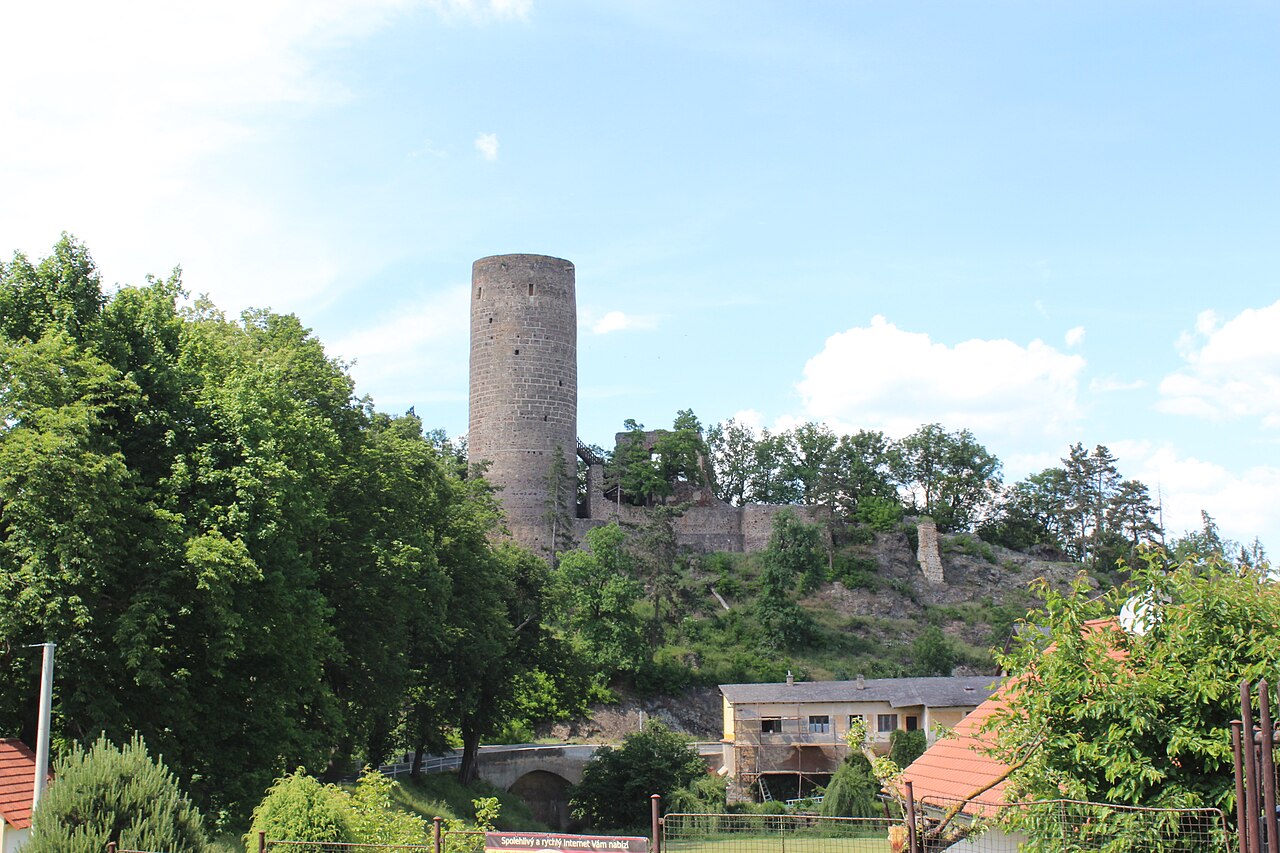
Zbiroh Castle exhibits a complex layout typical of medieval hilltop fortifications, originally designed as a bergfried-type fortress with a two-part construction. At its core lies a pentagonal structure anchored by a free-standing, round bergfried tower built in the 13th century. This tower served as a last refuge and lookout point, a characteristic feature of Central European castle architecture.
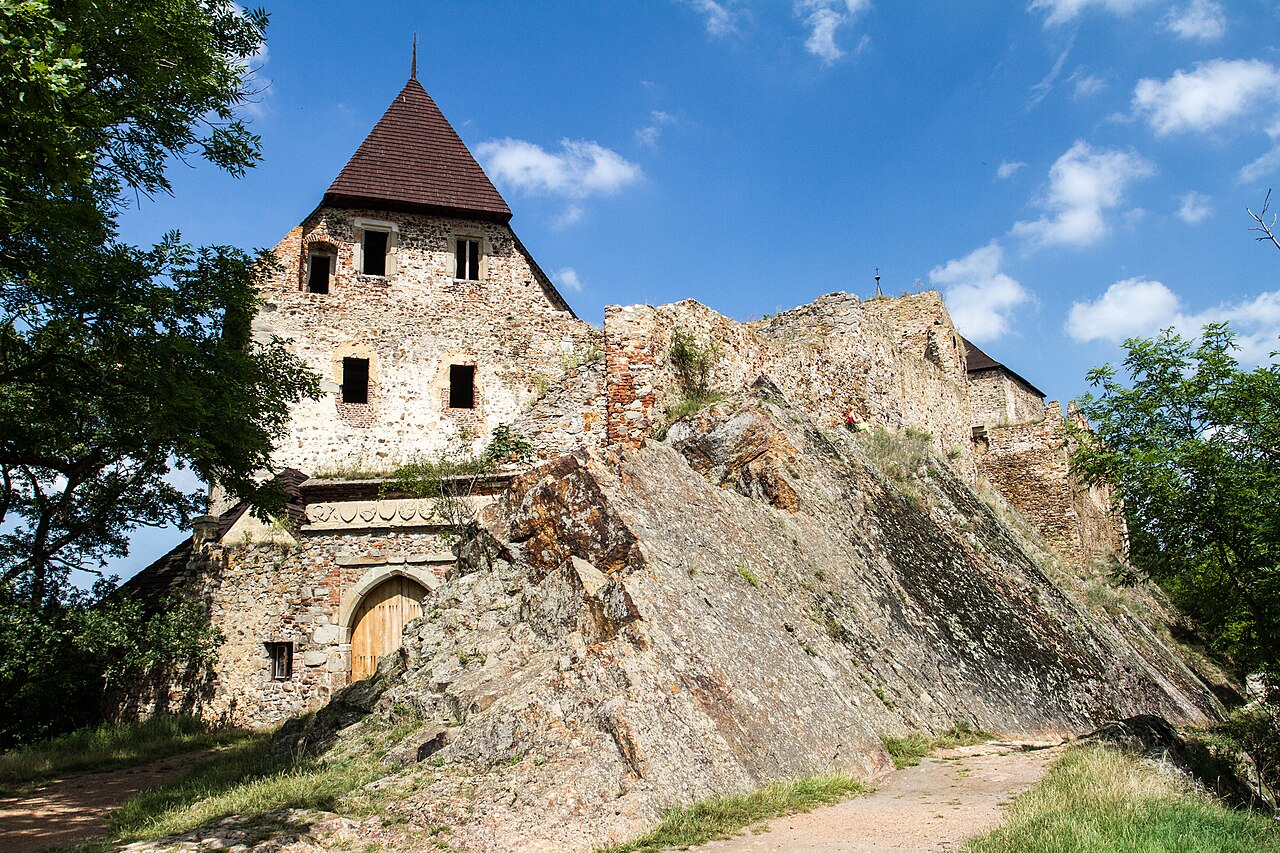
Adjacent to the core was a palace, whose first floor houses a chapel dating from the 14th century. This chapel is notable for its eastern oriel window vaulted with ribbed arches, important medieval architectural elements that provided both structural strength and decorative detail.
During the late Gothic period, the castle's outer bailey was fortified with several round artillery bastions to defend against emerging siege technologies. While most bastions have been lost or altered, one rebuilt bastion survives today, illustrating the castle's adaptation to changing military needs.
The original main entrance to the outer bailey was through a square gatehouse, removed during the 19th-century Neo-Renaissance remodeling by August Orth. The castle's internal space expanded to 224 rooms during its Renaissance transformation, reflecting its status as one of Bohemia's grandest chateaux.
One of the castle's most remarkable features is its deep, hand-dug well carved into the silicified sandstone bedrock. At 163 meters (approximately 535 feet) deep, the well was excavated during the 12th century by miners from nearby Příbram. Due to the hardness of the silicified sandstone, the well's shaft spirals vertically rather than forming a straight tunnel. Excavation took between seventy and eighty years, showcasing medieval engineering prowess.
The well today reveals layers of historical use and concealment. During military occupation, it was filled with debris including weapons and World War II archives. Below the waterline lies a sealed side tunnel, closed by Nazi forces with kaolin clay and containing visible cables, believed to have been used for storing explosives, though it remains unexplored.
Within the castle courtyard stands the oldest freestanding tower in the Czech Republic, a significant landmark attesting to the site's long defensive tradition. Several underground chambers exist beneath the castle, some sealed by thick concrete layers laid by the Nazis, preserving hidden spaces for decades.
Beneath the hermitage is a cellar transformed into a wine cellar used for tastings, linking the castle's historical past with ongoing cultural activities. Building materials throughout the site prominently feature silicified sandstone, known locally as buližník, prized for its durability and acoustic properties exploited during Cold War military uses.
Architectural details from various periods remain visible, including the 14th-century rib-vaulted oriel of the chapel and the 19th-century Neo-Renaissance decorative elements introduced by August Orth. The Renaissance park and game reserve established under Emperor Rudolf II survive as integral parts of the castle's historic landscape.
Historical significance and cultural legacy
Zbiroh Castle is not only an architectural monument but also a witness to pivotal moments in Central European history. Its connection to the Přemyslid dynasty, the Hussite Wars, the Thirty Years' War, and the religious conflicts of the 17th century reflect the castle's role in shaping Bohemian history.
The castle's transformation under Emperor Rudolf II into a Renaissance chateau symbolizes the cultural flowering of Bohemia during the late 16th century. The presence of Alfons Mucha and the creation of the Slav Epic link the site to the Art Nouveau movement and Czech national identity.
During World War II and the Cold War, the castle's use by Nazi SS forces and later the Czechoslovak military illustrate its strategic importance in modern conflicts, while also marking periods of damage and secrecy.
Today, the castle's restoration and public opening preserve its multifaceted heritage, combining medieval, Renaissance, and modern histories with cultural and artistic endeavors. Its vineyard revival and role as the seat of the Sovereign Order of the Temple of Jerusalem connect the castle to ongoing traditions and contemporary cultural life.
Visitor experience and cultural events
Visitors to Zbiroh Castle can explore its extensive historical exhibitions, including displays on the Přemyslid dynasty, Renaissance art, and Alfons Mucha's life and work. The large hall where Mucha painted the Slav Epic now hosts concerts and exhibitions, offering a vibrant cultural program.
The castle grounds and vineyard provide scenic views and opportunities for wine tastings in the historic cellar beneath the hermitage. Guided tours often include the castle's architectural highlights, underground chambers, and the deep medieval well, offering insights into its engineering and defensive features.
The castle's integration of hospitality services allows visitors to experience its historic ambiance while enjoying modern comforts. Its location on a hilltop offers panoramic views of the surrounding Czech countryside, enhancing the visitor experience.
Frequently asked questions (FAQ)
- How do I visit Zbiroh Castle and what are the opening hours?
- Zbiroh Castle is open to the public with guided tours available. Opening hours vary seasonally, so it is recommended to check the official website or contact the castle directly before planning your visit.
- What is the historical significance of Zbiroh Castle?
- Zbiroh Castle is one of the oldest noble castles in Bohemia, with a history dating back to the 13th century. It played important roles during the Hussite Wars, the Thirty Years' War, and was transformed into a Renaissance chateau by Emperor Rudolf II.
- Can I see Alfons Mucha's work at Zbiroh Castle?
- While the original Slav Epic paintings are housed elsewhere, Zbiroh Castle features exhibitions about Alfons Mucha's life and his time at the castle, including the hall where he painted the Slav Epic series.
- Is Zbiroh Castle accessible for visitors with mobility issues?
- Due to its medieval hilltop location and historic architecture, some areas of Zbiroh Castle may be challenging for visitors with mobility issues. It is advisable to inquire in advance about accessibility options.
- What are the notable architectural features of Zbiroh Castle?
- Key features include the 13th-century bergfried tower, the 14th-century chapel with rib-vaulted oriel, the Renaissance expansions, and the deep medieval well carved into silicified sandstone.
Information
Website
Visit websiteSources & official resources
Verify the information above using these authoritative references.
Loading map...
Visitor reviews
No reviews yet. Been here? Write the first review and help other travelers!
Write the first reviewVisited this castle? Share your experience
Your review helps other travelers and adds first-hand knowledge to our encyclopedia.