Tocnik Castle
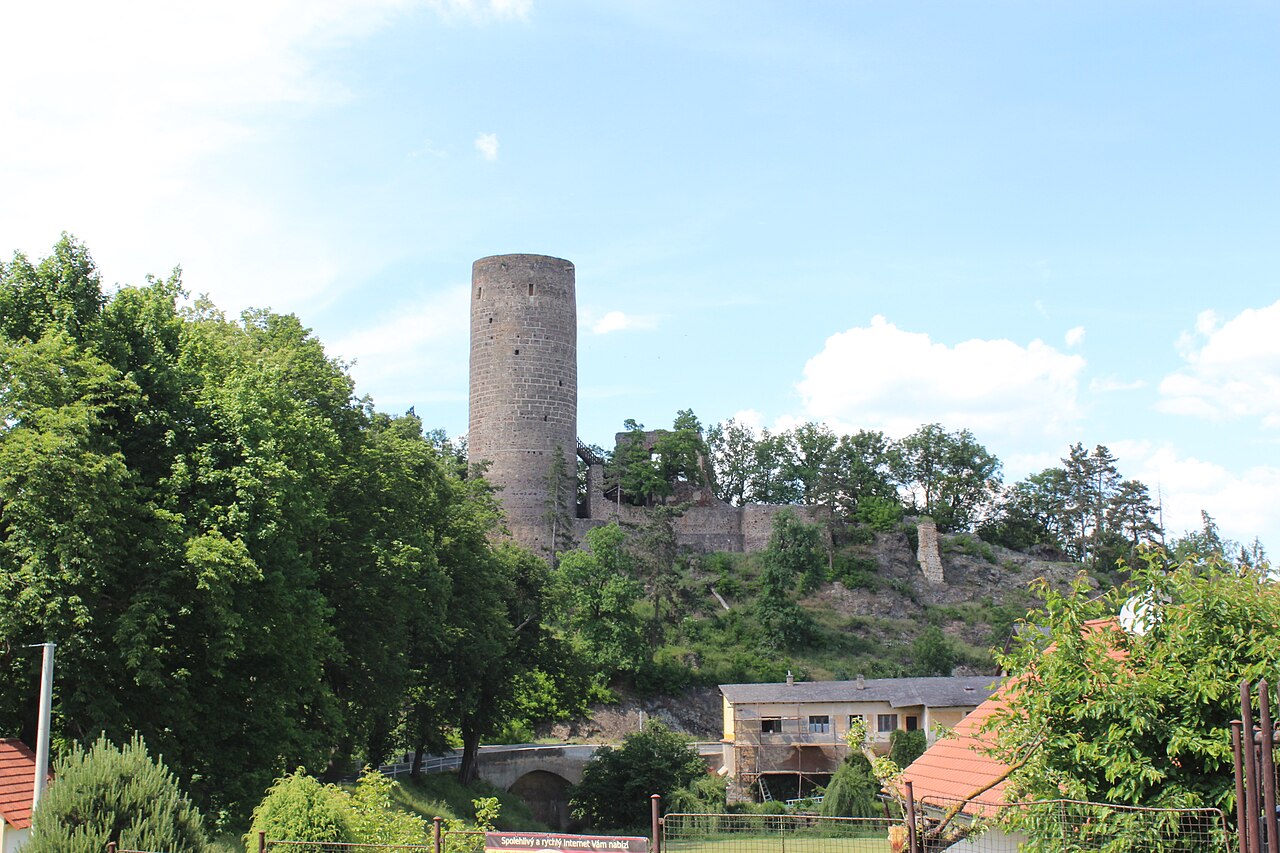
Točník Castle stands as a remarkable example of a late medieval hill castle in the Czech Republic, built in the 14th century during the reign of King Wenceslaus IV. Perched atop Zámecký Hill, it was conceived as a secure royal residence and refuge, replacing the older and vulnerable Žebrák Castle nearby. The castle's strategic position, architectural complexity, and historical significance make it a vital monument in Bohemian medieval heritage.
Historical background and royal origins
The castle was constructed in response to a devastating fire at the neighboring Žebrák Castle in 1395, which exposed the older fortress's defensive weaknesses. King Wenceslaus IV initiated Točník's construction in the late 1380s, completing it by 1398 as his private residence and a stronghold amid the turbulent political climate of the time. The castle also functioned as a hunting retreat and a venue for hosting notable guests, reflecting its dual role as both fortress and palace.
During the Hussite Wars in the early 15th century, Točník played a defensive role, enduring a siege in 1425 by Hussite forces for three days. Unlike the surrounding towns that were destroyed, Točník's fortifications held firm, demonstrating its robust construction and strategic design.
Ownership of the castle passed through several prominent noble families, including the Kolovratové, Gutštejnové, Vartenberkové, and Lobkowicz families. These owners introduced architectural modifications that incorporated late Gothic and Renaissance elements, adapting the castle to evolving tastes and functions.
The Thirty Years' War in the 17th century marked the decline of Točník's military importance. By 1648, the last soldiers had departed, and by 1681, only a gatekeeper remained. The castle gradually fell into disrepair until the 20th century.
In 1923, the Czech Tourist Club purchased Točník Castle, and since 1953 it has been under state stewardship. Restoration efforts began in the 1930s and continue today, preserving the castle's historical fabric and architectural heritage.
Architectural layout and defensive features
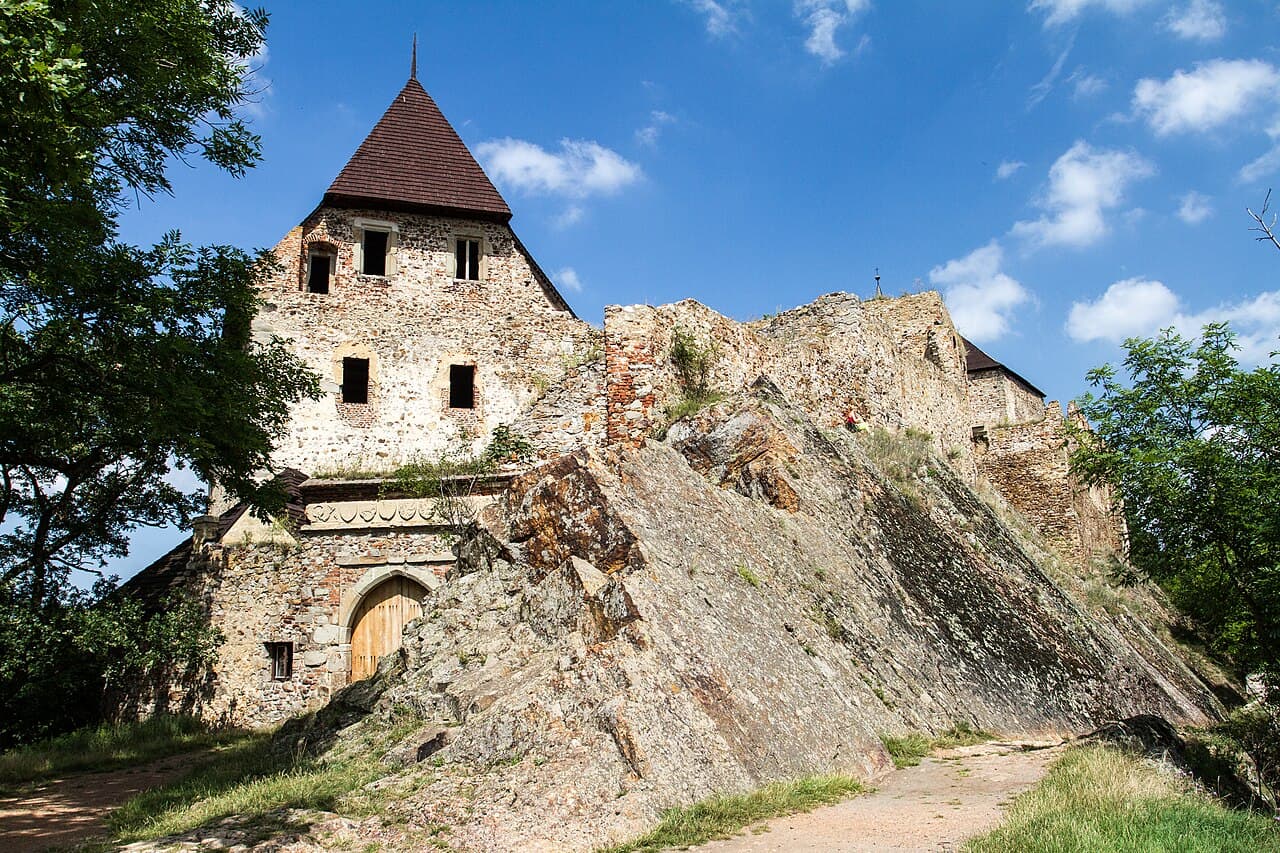
Točník Castle is built on a three-part ground plan, featuring successive courtyards that enhance its defensive capabilities. It is separated from the surrounding hill ridge by a deep moat cut into the rock, which contains an artificial pond that historically collected rainwater as the castle’s sole water source.
Access to the castle was originally through a large square gate tower above the moat, reached by a bridge with two supporting piers and a drawbridge section. Although the gate tower now lies in ruins, it once formed a formidable first line of defense.
The castle’s outer defenses include earthen embankments and a semi-circular bastion likely constructed in the late 15th or early 16th century. These were further enhanced during the Renaissance period, reflecting advances in military architecture.
The courtyards and palatial buildings
The first courtyard is notable for its access road, which takes a sharp right turn and crosses a masonry ditch, complicating any direct assault. The second courtyard houses the Purkrabský Palace, a significant building containing three large halls. Among these is a great hall measuring approximately 34 by 10 meters, historically the second largest castle hall in the Czech lands after Prague's Vladislav Hall. The palace also contains a timber-floored chamber measuring 13 by 9 meters, recognized as the largest wood-timbered room of its kind in the country.
At the core of the castle lies a square residential tower, possibly replacing an earlier chapel. This tower features fragments of Gothic doorways and evidence of wooden ceilings, highlighting its residential function within the fortress.
Royal Palace and residential quarters
The Royal Palace was the centerpiece of King Wenceslaus IV’s residence. It is a two-story building with an elongated plan and a convex eastern facade overlooking the moat. The cellar and ground floor are vaulted and include a kitchen area. The upper floors contain large halls and living quarters.
The palace’s main hall measures approximately 14 by 8.5 meters and is vaulted with four cross vaults, a structural technique where intersecting arches create a supportive framework. This hall was illuminated by three large windows facing the courtyard and originally heated by a fireplace, later replaced by tiled stoves.
Several exits from the Royal Palace connected to defensive battlements and the moat via drawbridges, allowing for quick escape or access to water. These exits were sealed off in the 16th century as the castle’s defensive needs evolved.
The castle’s design reflects a transitional character between fortress and residence, balancing security with comfort. Large windows facing the moat and the palace's exposed position demonstrate a priority on residential comfort alongside defensive considerations.
Renaissance modifications and later history
During the Renaissance, the Lobkowicz family initiated significant alterations. They divided the large courtyard with a transverse wall, lowered Gothic windows to new heights, removed interior wooden paneling, and decorated the outer plaster with sgraffito, a decorative technique involving scratching layers of plaster to reveal underlying colors or patterns.
The castle’s military importance declined after the Thirty Years' War, and it gradually fell into ruin. However, its architectural legacy remained significant, showcasing the evolution from medieval fortress to Renaissance residence.
Archaeological findings and modern restoration
Excavations in 1999 uncovered evidence of prehistoric settlement from the Hallstatt period, suggesting the site may have functioned as an early hillfort. These ancient earthworks, however, are difficult to distinguish from the medieval fortifications that dominate the site today.
A notable restoration project began in 2007, focusing on reconstructing the Royal Palace roof using medieval methods and tools documented through historical illustrations. This work exemplifies the ongoing commitment to preserving the castle’s historical integrity.
Current status and visitor experience
Today, Točník Castle is a well-preserved ruin that attracts visitors interested in medieval architecture and Bohemian history. The castle moat has found a unique contemporary use as a bear enclosure, housing brown bears born in 2013, adding an unexpected element to the site’s historical ambiance.
The castle's location near the older Žebrák Castle forms a picturesque 'castle couple,' offering visitors a rare opportunity to explore two medieval fortresses in close proximity. Restoration efforts continue to maintain the site, ensuring its accessibility and educational value for future generations.
Visitor information
- The castle is accessible to the public with guided tours available during the warmer months.
- Visitors can explore the extensive courtyards, the Royal Palace, and the remains of defensive structures.
- The site offers scenic views of the surrounding Bohemian landscape, enhancing the visitor experience.
- Nearby amenities include parking areas and informational displays detailing the castle’s history and architecture.
Frequently asked questions (FAQ)
- How do I get to Točník Castle?
- Točník Castle is located near the village of Točník in the Central Bohemian Region of Czechia. It is accessible by car and public transport from Prague, with local signage guiding visitors to the site.
- What are the opening hours of Točník Castle?
- The castle is generally open to visitors during the warmer months, typically from April to October. Exact opening hours may vary, so it is recommended to check the official website or local tourist information before planning your visit.
- Is Točník Castle suitable for families and children?
- Yes, Točník Castle offers a family-friendly environment with spacious courtyards and engaging historical displays. The unique bear enclosure in the moat can be especially interesting for children.
- What architectural styles are visible at Točník Castle?
- Točník Castle exhibits primarily late medieval Gothic architecture with later Renaissance modifications, including sgraffito decoration and bastion fortifications.
- Can I visit both Točník and Žebrák castles in one trip?
- Yes, the two castles are located very close to each other and can be visited together. They form a picturesque pair and offer complementary insights into medieval fortifications and royal residences.
Photo gallery

Information
Sources & official resources
Verify the information above using these authoritative references.
Loading map...
Visitor reviews
No reviews yet. Been here? Write the first review and help other travelers!
Write the first reviewVisited this castle? Share your experience
Your review helps other travelers and adds first-hand knowledge to our encyclopedia.