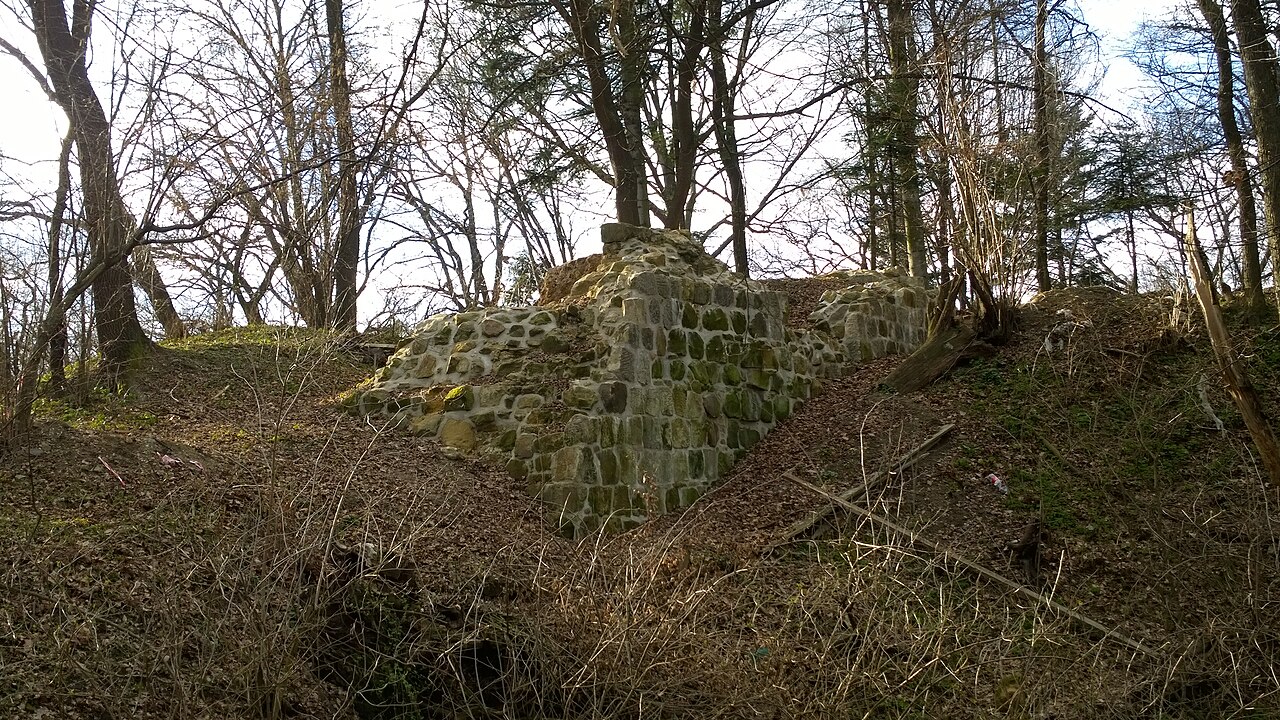
Zawada
Zawada castle, located in the village of Zawada in Poland, has a rich history dating back to the 13th century. Originally established as a fortified kasztel, or small defensive stronghold, it was constructed in the late medieval period to protect the surrounding lands. The earliest records of Zawada village and its fortifications emerge from this era, marking the castle's beginnings as a modest but strategic defensive site.
Medieval origins and ligęza family expansion
By the end of the 16th century, the estate was owned by Stanisław Ligęza of Bobrek, who likely commissioned the initial castle structure, evolving the site into a more substantial kasztel. The Ligęza family played a pivotal role in the castle's development, with Mikołaj Ligęza significantly expanding the residence in the 17th century. He transformed the kasztel into an imposing castle featuring four defensive towers, enhancing its fortifications and residential functions. This expansion reflected the architectural and military trends of the time, combining defensive needs with noble residence requirements.
Ownership transitions and architectural evolution
After the death of the last Ligęza heir, Jan Kazimierz Ligęza, without descendants, the estate passed to his sister Felicja and her husband Jan Walewski. Subsequent owners included the Przebendkowski and Radziwiłł families, prominent Polish noble houses that influenced the castle's fate and upkeep.
19th-century neogothic transformation
In 1816, the castle became part of the dowry of Anna Radziwiłł, who brought it into the possession of Count Atanazy Raczyński, a distinguished diplomat serving as the ambassador of Prussia in Lisbon and Madrid. By 1820, Raczyński undertook a major renovation project to convert the dilapidated castle, which had been used as a grain warehouse, into a grand neogothic residence.
The reconstruction resulted in a two-story palace with four towers and a steeply pitched gable roof. The main eastern façade was designed by the renowned Prussian architect Karol Fryderyk Schinkel, whose neogothic style brought elegance and romantic historicism to the structure. Additional wings with stepped gables were added on the western side, designed by Raczyński himself, enhancing the castle's residential and aesthetic appeal.
Architectural features of the neogothic palace
- Four corner towers providing both defensive symbolism and visual prominence.
- Steep gable roofs characteristic of the neogothic revival style.
- Decorative battlements and pointed arch windows reflecting medieval gothic motifs.
- Symmetrical layout blending fortress elements with palace comfort.
Destruction and decline in the 20th century
The castle suffered catastrophic damage during World War I. On 27 September 1914, Russian troops looted and set fire to the residence, destroying its rich art collections and furnishings. The retreating Russian forces reignited the flames in the spring of 1915, leaving the castle in ruins.
In the 1920s, Edward Bernard Raczyński dismantled the remaining ruins of the castle. He constructed a Mediterranean-style villa adjacent to the surviving fragment of the palace, marking a new chapter for the estate but also signaling the end of the castle's historical prominence.
Post-war nationalization and current status
Following World War II, the Raczyński estate was nationalized and repurposed as a state agricultural farm (PGR) and horse stud farm. After the political changes of 1989, the property fell into neglect and further deterioration.
Today, Zawada castle remains in a state of ruin. Only one of the original towers survives, surrounded by neogothic additions and fragments of the castle walls. The site is privately owned and is not open to the public, limiting access to its historical and architectural legacy.
Cultural significance and heritage
Zawada castle exemplifies the architectural evolution from a medieval defensive kasztel to a 19th-century neogothic palace, reflecting broader historical shifts in Poland's noble estates. Its association with prominent families such as the Ligęza, Radziwiłł, and Raczyński lineages underscores its importance in regional history.
Despite its ruined condition, the castle remains a valuable cultural monument, illustrating the challenges of preserving noble residences affected by war and political change. The surviving architectural elements offer insights into both medieval fortification techniques and neogothic revival aesthetics.
Frequently asked questions (FAQ)
- What is the historical significance of Zawada Castle?
- Zawada Castle, located in Poland, dates back to the 14th century and is an excellent example of medieval architecture. It has played a crucial role in the region's history, serving as a defensive stronghold and residence for local nobility throughout the ages.
- When was Zawada Castle built?
- The construction of Zawada Castle began in the early 14th century, with significant renovations occurring in the following centuries. Its historical layers reflect various architectural styles and adaptations made by its successive owners.
- What are the opening hours for Zawada Castle?
- Zawada Castle is open to visitors from April to October, typically from 10 AM to 6 PM on weekdays and 10 AM to 8 PM on weekends. It is advisable to check the castle's official website for any seasonal changes or special events that might affect these hours.
- Can I take a guided tour of Zawada Castle?
- Yes, guided tours are available at Zawada Castle, providing visitors with in-depth insights into its history and architecture. These tours are conducted by knowledgeable guides who can enhance your experience with fascinating stories and details about the castle.
- Is it possible to access Zawada Castle with a wheelchair?
- Zawada Castle has made efforts to improve accessibility for all visitors, including those with mobility challenges. However, due to its historical nature, some areas may still present difficulties, so it's best to contact the castle administration for specific accessibility information.
- What is the best time to visit Zawada Castle?
- The best time to visit Zawada Castle is during the late spring and early autumn months, when the weather is pleasant and the surrounding scenery is vibrant. Additionally, this period often coincides with local festivals and events, enhancing your overall experience.
- How much are the ticket prices for Zawada Castle?
- Ticket prices for Zawada Castle are generally affordable, with discounts available for students and seniors. Children under a certain age may enter for free, making it a great family-friendly destination.
- Are there any nearby attractions to visit after Zawada Castle?
- Yes, the area surrounding Zawada Castle is rich in attractions, including beautiful parks, historical sites, and charming villages. Visitors can explore nearby museums and enjoy the scenic landscapes that characterize the region.
Information
Loading map...
Visitor reviews
No reviews yet. Been here? Write the first review and help other travelers!
Write the first reviewVisited this castle? Share your experience
Your review helps other travelers and adds first-hand knowledge to our encyclopedia.