Zator
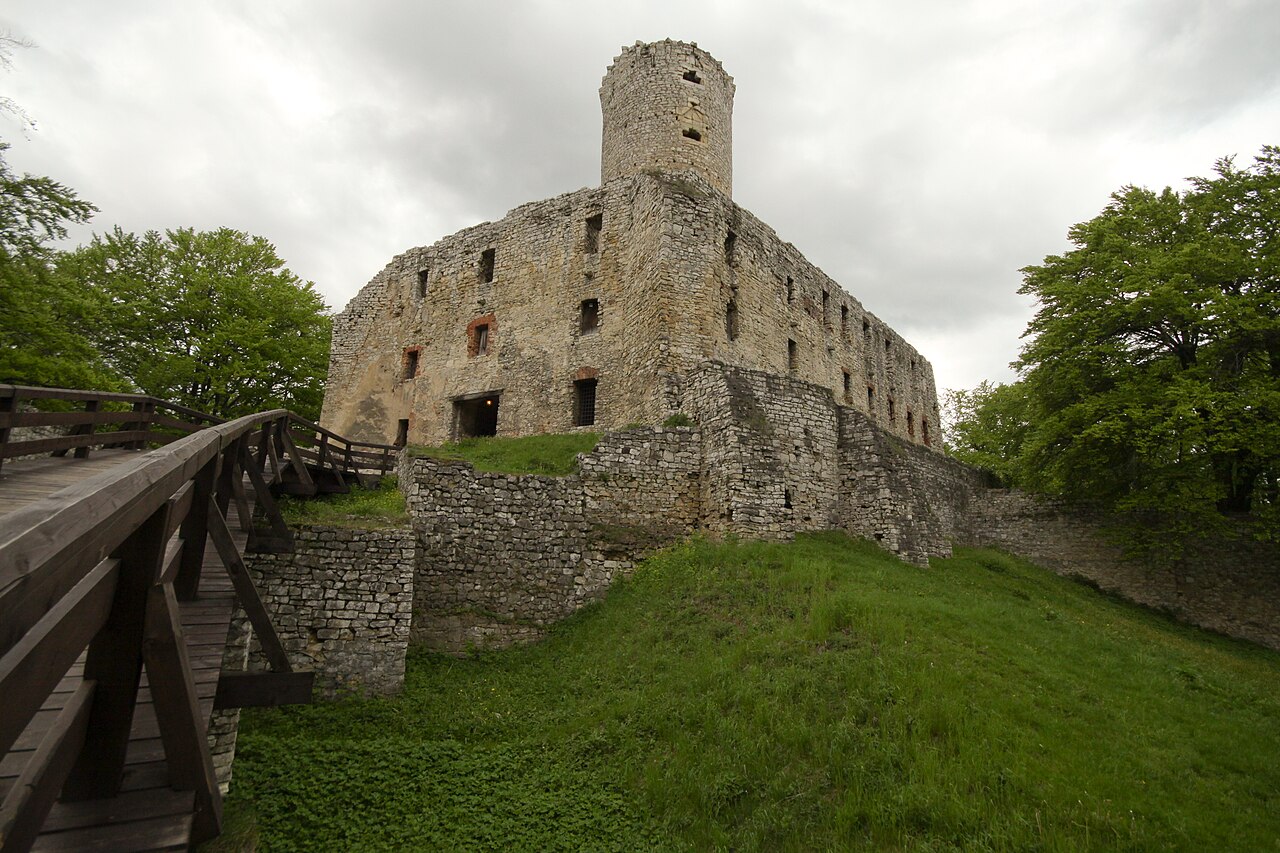
Zator castle stands as a remarkable testament to centuries of architectural evolution and regional history in southern Poland. Originally constructed as a medieval fortress in the 14th century, it was strategically positioned on a riverbank slope overlooking the Skawa River. This location provided natural defensive advantages while commanding the surrounding landscape. Over time, the castle transformed from a primarily defensive stronghold to a noble residence reflecting changing political and cultural influences, culminating in a distinctive romantic neo-Gothic style renovation in the 19th century.
The castle's origins trace back to the era when the Duchy of Zator emerged as a separate entity from the Duchy of Oświęcim. The initial fortress was built using locally quarried limestone on an oval plan, typical of 14th-century castle architecture in the region. By the mid-15th century, significant expansions included a rectangular brick structure with a prominent two-story tower, commissioned by Duke Wacław of the Piast dynasty between 1445 and 1450. This early phase established the castle's role as both a defensive bastion and a ducal residence.
Medieval foundations and early expansions
The original fortress was designed with robust stone walls and defensive features suitable for the turbulent political landscape of medieval Silesia and Lesser Poland. Archaeological excavations reveal vaulted chambers and deep foundations that supported the castle's imposing structure. The 15th-century additions, including the two-story tower, enhanced both security and residential comfort, reflecting the dual function of the castle as a military and noble domicile.
During this period, the Duchy of Zator was a small but autonomous principality ruled by the Piast dukes. The castle served as the administrative and symbolic center of their power. After Duke Wacław's death, the duchy was eventually sold to the Polish Crown in 1494 by his heirs, marking the beginning of a new chapter in the castle's history.
Transition to royal property and administrative seat
Following its acquisition by King Jan Olbracht, the castle ceased to function as a ducal residence and was repurposed as the seat of royal starosts who governed the territory on behalf of the Crown. This transition reflected the broader political integration of the Duchy of Zator into the Kingdom of Poland. The castle's role shifted from feudal stronghold to administrative center, with successive starosts managing the estate and local affairs.
In 1524, under King Sigismund the Old, the duchy was reorganized into a non-fortified starostwo within the Kraków Voivodeship. The castle remained central to this administrative structure, housing officials such as Andrzej Kościelecki and his successors. This period saw limited architectural changes, as the fortress's military importance diminished in favor of bureaucratic functions.
Renaissance rebuilding and aristocratic ownership
The year 1564 marked the formal incorporation of the Duchy of Zator into the Polish Crown, preserving its name and a degree of autonomy. Around this time, the castle underwent significant renovations and expansions. The last starost, Piotr Dunin, notably added a second floor and modernized the residence in the late 18th century, reflecting changing tastes and the need for more comfortable living quarters.
Ownership passed through various noble families, including the Dunins and later the Poniatowskis. In 1778, the castle estate was purchased by Princess Apolonia Poniatowska, ushering in a new era of aristocratic stewardship. The Poniatowski family maintained the property until the outbreak of World War II, during which the castle suffered extensive damage and looting.
19th-century neo-Gothic transformation
One of the most significant architectural phases occurred in 1836 when Count Aleksander Poniatowski commissioned the renowned architect Franciszek Maria Lanci to remodel the castle in the then-popular romantic neo-Gothic style. This renovation introduced characteristic elements such as pointed arches, decorative battlements, and ornate interior rooms, including the hunting room, golden room, fern room, and ivy room.
The neo-Gothic redesign emphasized aesthetic appeal while preserving the castle's historical essence. Interior decorations featured heraldic motifs, notably the Pilawa coat of arms associated with the Potocki family, who later owned the castle. This stylistic transformation aligned with 19th-century European trends that romanticized medieval architecture and noble heritage.
20th-century decline and restoration efforts
The castle's fortunes declined sharply during World War II when German forces plundered its furnishings and valuable collections. By 1945, the once-grand residence lay in ruins. Post-war, the Polish government repurposed the site for institutional use, including the Zootechnical Institute from 1951 onward.
Conservation and restoration efforts between 1964 and 1973 aimed to stabilize the structure and restore its neo-Gothic features. These works successfully preserved the castle as a cultural monument, highlighting its layered history and architectural significance. In 2013, ownership was legally returned to the Potocki family, who continue to maintain the property.
Archaeological insights and cultural significance
Excavations at Zator castle have uncovered the foundations of the original 14th-century limestone fortress and subsequent 15th-century vaulted extensions, illustrating the site's continuous adaptation over centuries. The reuse of materials from the medieval castle in later constructions reflects practical building practices and evolving residential needs.
Today, Zator castle stands as a symbol of the region's complex history, embodying the transition from medieval defensive architecture to Renaissance and neo-Gothic aristocratic residence. Its preservation offers valuable insights into the political, cultural, and architectural developments of Lesser Poland and Silesia.
Visitors to Zator can explore the castle's exterior and interior spaces, appreciating the blend of historical layers and the craftsmanship of its restorations. The castle's story enriches understanding of Poland's noble heritage and the enduring legacy of its architectural monuments.
Frequently asked questions (FAQ)
- When was Zator castle originally built and by whom?
- Zator castle was originally built in the 14th century as a limestone fortress and significantly expanded between 1445 and 1450 by Duke Wacław of the Piast dynasty.
- What architectural styles are visible at Zator castle?
- The castle features a blend of medieval defensive architecture and 19th-century romantic neo-Gothic style, especially after the 1836 renovation by Franciszek Maria Lanci.
- Is the castle open to visitors, and what can be seen?
- While the castle is in ruins, visitors can explore the exterior and some interior spaces, appreciating the historical layers and neo-Gothic decorative elements preserved through restoration.
- Who owns Zator castle today?
- The castle is currently owned by the Potocki family, who regained ownership in 2013 and oversee its maintenance.
- What happened to the castle during World War II?
- During World War II, German forces looted the castle's furnishings and collections, leaving it in ruins by 1945.
Information
Sources & official resources
Verify the information above using these authoritative references.
Loading map...
Visitor reviews
No reviews yet. Been here? Write the first review and help other travelers!
Write the first reviewVisited this castle? Share your experience
Your review helps other travelers and adds first-hand knowledge to our encyclopedia.