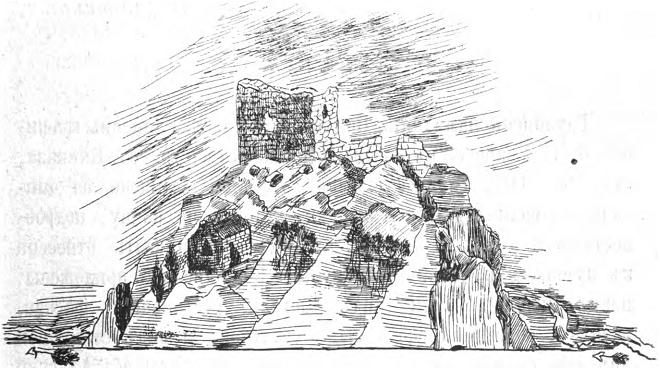
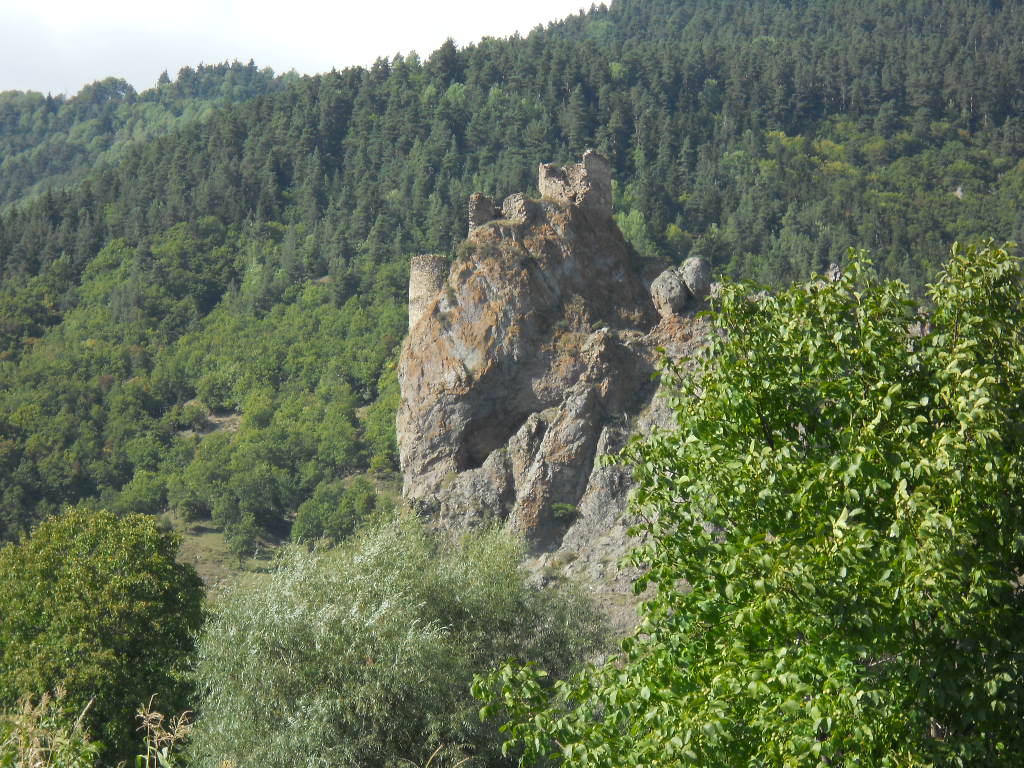
Zanavi Castle

Zanavi castle in samtskhe-javakheti, georgia
Zanavi, Georgia
High Medieval (11th–13th c.)
Ruins

Zanavi Castle is a medieval fortress located near the hamlet of Patara Zanavi in the Adigeni municipality within the Samtskhe–Javakheti region of Georgia. This castle stands as a notable example of a defensive structure built during the Middle Ages, strategically positioned on a rocky peak which provided natural fortification advantages.

Location and strategic importance

The castle's placement on a rocky peak allowed it to dominate the surrounding landscape, serving both as a lookout point and a formidable defensive position. The irregular ground plan of Zanavi Castle closely follows the contours of the rock on which it is built, a common architectural approach in medieval fortifications designed to maximize natural defenses and reduce construction complexity.

Architectural features and layout

Zanavi Castle's structure is characterized by its adaptation to the natural terrain. The irregular shape of the fortress walls conforms to the rocky outcrop, which would have made siege warfare challenging for potential attackers. Although much of the original construction details are lost, the remaining ruins suggest a complex layout likely including defensive walls, battlements, and possibly towers integrated into the rocky landscape.

The original entrance to the castle has disappeared, which currently prevents visitors from entering the inner parts of the ruin. This loss of the main gateway is significant as entrances were typically heavily fortified and architecturally distinct, often featuring gatehouses or drawbridges in medieval castles.

Historical context and significance

While specific historical records about Zanavi Castle are scarce, its medieval origin places it within a period of frequent regional conflicts and shifting political powers in Georgia. Castles like Zanavi were essential in controlling territories, protecting trade routes, and serving as administrative centers for local lords or rulers.

The Samtskhe–Javakheti region, where Zanavi Castle is located, has a rich history of fortifications due to its strategic position at the crossroads of various empires and cultures. The castle would have contributed to the defense network in this mountainous area, although detailed accounts of its role are not well documented.

Current condition and visitor information

Today, Zanavi Castle remains a striking ruin that can be freely visited. The site offers visitors the opportunity to explore the exterior and appreciate the castle's integration with the natural rocky environment. However, due to the loss of the original entrance and the ruinous state of the structure, access to the interior is not possible.

The castle's preservation as a ruin allows for an authentic experience of medieval military architecture adapted to challenging terrain. Visitors interested in Georgian history and medieval fortifications will find Zanavi Castle a valuable site despite the limited available historical details.

Cultural and heritage value

Zanavi Castle contributes to the cultural landscape of the Samtskhe–Javakheti region, reflecting the medieval heritage of Georgia. Its rugged setting and enduring presence underscore the historical importance of castles in territorial defense and local governance during the Middle Ages.

Efforts to document and preserve such sites are important for understanding the architectural and historical development of the region. Zanavi Castle, while less documented than other Georgian fortresses, remains a significant monument within the country's medieval architectural heritage.

Frequently asked questions (FAQ)

How do I get to Zanavi Castle?
Zanavi Castle is located in the picturesque village of Zanavi, Georgia, and is easily accessible by car or public transport from major cities like Tbilisi. The nearest bus station is in a nearby town, from which you can take a local taxi or hike to the castle for about 20 minutes.
What is the historical significance of Zanavi Castle?
Zanavi Castle dates back to the 12th century and played a crucial role in the defense of the region against invasions. Its historical architecture reflects the strategic military importance it held during medieval times, making it a fascinating site for history enthusiasts.
When was Zanavi Castle built?
Zanavi Castle was constructed in the early 12th century, during a period of significant political and military activity in Georgia. Its design and structure have been preserved, offering visitors a glimpse into the architectural styles of that era.
Can I take guided tours of Zanavi Castle?
Yes, guided tours are available for visitors wishing to learn more about the castle's history and architecture. These tours typically include access to all parts of the castle and are led by knowledgeable guides who can provide in-depth information.
Why is Zanavi Castle a popular tourist attraction?
Zanavi Castle attracts visitors for its rich history, stunning views of the surrounding landscape, and its well-preserved architecture. The castle serves as a perfect spot for photography and offers a unique glimpse into Georgia's medieval past.
Is it possible to visit Zanavi Castle year-round?
Yes, Zanavi Castle is open for visitors throughout the year, although the best time to visit is during the spring and fall when the weather is mild and the scenery is particularly beautiful. However, be sure to check local weather conditions, as winter can bring snow and make access difficult.
What are the opening hours for Zanavi Castle?
Zanavi Castle is generally open from 9 AM to 6 PM, but it's advisable to check ahead for any seasonal changes in hours. Always confirm the opening times before your visit to ensure you have ample time to explore.
What are the ticket prices for visiting Zanavi Castle?
Admission to Zanavi Castle is quite affordable, with tickets typically costing around 5 GEL for adults and discounts available for students and children. Group discounts may also be available, so it's worth inquiring if you are visiting with a larger party.
Are there any nearby attractions to visit after Zanavi Castle?
Yes, there are several nearby attractions, including the scenic hiking trails and beautiful landscapes of the surrounding region. The village of Zanavi itself offers charming local culture and hospitality, making it a perfect area to explore before or after your visit to the castle.

Information

Hill Castle

Loading map...

Visitor reviews

No reviews yet. Been here? Write the first review and help other travelers!

Write the first review

Visited this castle? Share your experience

Your review helps other travelers and adds first-hand knowledge to our encyclopedia.
Write a review

(5/5)

0/2000 characters

Your review will be visible after admin approval

Nearby castles

0.8 km
Fortaleza de Zanavi — Georgia castle

Fortaleza de Zanavi

, Georgia

Fortaleza de Zanavi is a notable example of a hill castle located in the country of Georgia. This castle is strategically positioned on elevated terrain, which provided natural defensive advantages against invaders during its time of use. Although detailed records of its construction and history are limited, the castle's location and structural remains indicate its role as a fortified stronghold in the region. Historical context and significance The castle is believed to have origins dating back to the medieval period, a time when Georgia was frequently engaged in defending its territories against various regional powers. Hill castles like Fortaleza de Zanavi were essential for controlling surrounding lands and protecting trade routes. While exact dates of construction are not well documented, the castle likely served as a military and administrative center during its peak. Architectural features and layout As a hill castle, Fortaleza de Zanavi was constructed to take advantage of the natural topography, with steep slopes enhancing its defenses. The remains suggest the presence of stone walls that would have enclosed the main courtyard and living quarters. Defensive features typical of such castles include battlements, watchtowers, and possibly a gatehouse to control access. The castle's layout would have been designed to maximize visibility over the surrounding landscape, allowing defenders to spot approaching enemies from a distance. The use of local stone materials is consistent with regional construction practices of the medieval period in Georgia. Current condition and preservation Fortaleza de Zanavi today exists primarily as ruins, with only partial walls and foundations remaining. The site has not undergone extensive restoration, which means that much of its original structure has been lost to time and natural decay. Despite this, the ruins provide valuable insight into medieval Georgian military architecture and settlement patterns. Visiting and accessibility Due to its remote location and limited infrastructure, visiting Fortaleza de Zanavi may require careful planning and local guidance. The site is of interest to historians, archaeologists, and travelers interested in medieval fortifications and Georgian heritage. Visitors should be prepared for rugged terrain and limited facilities. Fortaleza de Zanavi in the context of Georgian castles Georgia is home to numerous castles and fortresses, many of which reflect the country's turbulent history and strategic importance at the crossroads of Europe and Asia. Fortaleza de Zanavi contributes to this rich tapestry as a representative of hill castles that played a defensive role in the medieval period. Its ruins add to the understanding of Georgian fortification techniques and regional defense strategies.

High Medieval (11th–13th c.)
Details
4 km

Okros Castle

Shoka, Georgia

Okros Castle, also known as Okrostsikhe or the Golden Fortress, is a significant medieval stronghold perched on a cliff-like rocky ridge west of the village of Shoka in the Samtskhe–Javakheti region of Georgia. Its evocative name derives from the golden hue it reportedly takes on when the setting autumn sun illuminates its stone walls, a natural spectacle that highlights the castle's unique position and architectural presence in the landscape. The alternative name Altunkala reflects the Ottoman influence in the area during later centuries. Historical context and strategic importance While the exact origins of Okros Castle remain uncertain, historical analysis suggests it was constructed in the late 13th or early 14th century, situating it firmly within the late medieval period. The castle's primary role was defensive, guarding the Meskheti region against various incursions and serving as a military and administrative center. Between the 15th and 18th centuries, Okros Castle was a pivotal fortress in the defense network of southern Georgia, reflecting the region's turbulent history marked by frequent conflicts and shifting political powers. Architectural features and layout Okros Castle is notable for its irregular ground plan, which closely follows the natural contours of the rocky ridge on which it is built. This strategic placement, rising approximately 500 meters above the Adigeni valley, provided commanding views over the surrounding landscape and made the fortress difficult to assault. The castle's extensive size ranks it among the largest medieval castles in Georgia. The fortress incorporates defensive walls that adapt to the ridge's shape, with battlements and towers positioned to maximize defensive coverage. The natural rocky outcrop itself served as a formidable barrier, reducing the need for artificial fortifications on certain sides. Access to the castle was deliberately challenging, requiring a strenuous hour-long hike from Shoka village, which further enhanced its defensibility. Construction materials and techniques The castle's construction primarily utilized local stone, skillfully shaped and assembled to create robust walls capable of withstanding sieges. The masonry work reflects the typical methods of the late medieval period in the Caucasus region, combining functionality with an imposing aesthetic. The walls' thickness and the positioning of the defensive structures suggest careful planning to leverage the natural terrain. Notable historical events and figures One of the most significant historical episodes associated with Okros Castle occurred in 1578, when it served as the headquarters of Dedisimedi, the widow of Kaikhosro II Jaqeli, the Atabeg of Samtskhe. During this period, Dedisimedi led resistance efforts against the advancing Ottoman army, highlighting the castle's strategic and symbolic importance. Following the eventual acceptance of Ottoman suzerainty by the Jaqeli family, the castle witnessed the visit of Lala Mustafa Pasha, an Ottoman general. His diplomatic yet firm demand that Dedisimedi's sons convert to Islam underscores the political and religious pressures exerted on Georgian nobility during Ottoman expansion. Current status and visitor information Today, Okros Castle remains accessible to visitors interested in exploring Georgia's medieval heritage. Its partially preserved state allows for an evocative glimpse into its past, though the rugged terrain and weather conditions can pose challenges. Visitors should be prepared for a demanding hike of about an hour from Shoka village to reach the site. The castle's dramatic setting and historical significance make it a compelling destination for those interested in medieval architecture, Georgian history, and the legacy of the Meskheti region. The site offers panoramic views of the surrounding valleys and mountains, enriching the visitor experience. Accessibility and safety considerations Due to its mountain location, access to Okros Castle can be affected by weather, as heavy storms may render the paths unsafe. It is advisable to check local conditions before planning a visit. The castle is freely open to the public, with no entrance fees, though facilities are minimal, reflecting its remote and historic nature. Cultural and heritage significance Okros Castle stands as a testament to the medieval military architecture of Georgia and the region's complex history of conflict and cultural exchange. Its evocative names and enduring presence link it to the broader narratives of Georgian resilience and adaptation during periods of foreign domination. The castle's association with notable figures like Dedisimedi and its role in resisting Ottoman advances contribute to its status as a cultural landmark. Preservation efforts and historical research continue to shed light on its importance within the heritage of the Samtskhe–Javakheti region.

Late Medieval (14th–15th c.)
Details
22.6 km
Jaki Fortress — Turkey castle

Jaki Fortress

, Turkey

Jaki Fortress is a notable example of a bastioned fortress located in Turkey, reflecting the strategic military architecture characteristic of the Ottoman period. Though the exact city location is not definitively recorded, the fortress stands as a historical monument illustrating the defensive innovations that were prevalent during its time of construction. Historical context and significance The fortress was constructed during a period when fortifications were adapting to new forms of warfare, particularly the increased use of artillery. This led to the development of bastioned designs, which allowed defenders to cover all approaches with overlapping fields of fire, minimizing blind spots. The Ottoman Empire extensively employed such designs to protect key territories and trade routes. Jaki Fortress played a role in regional defense and control, serving as a military stronghold to secure the surrounding area. Its construction reflects the Ottoman military engineering expertise and the empire's strategic priorities in fortification during the post-medieval period. Architectural features and design The fortress is characterized by its bastioned layout, which typically includes angular bastions projecting from the curtain walls. These bastions provided defenders with the ability to fire upon attackers from multiple angles, a significant advancement over earlier medieval castle designs. The walls are thick and robust, built to withstand artillery bombardment. Within the fortress, there would have been various functional structures such as armories, garrison quarters, and storage facilities. Although detailed architectural plans are scarce, the design likely incorporated a moat or ditch for additional defense, as was common in bastioned fortresses. Defensive elements The bastions themselves are the fortress's most distinctive defensive feature. Their angular shape was designed to eliminate dead zones where attackers could find cover. The walls connecting the bastions, known as curtain walls, were constructed with thick masonry to absorb and deflect cannon fire. Entrances to the fortress would have been limited and heavily fortified, often including gatehouses with defensive mechanisms such as portcullises and murder holes to repel attackers. Preservation and current condition Jaki Fortress remains a partially preserved structure, with some sections of its bastions and walls still standing. The fortress has suffered from the effects of time and environmental exposure, but ongoing efforts aim to maintain and protect what remains of this historical site. Its condition offers valuable insights into Ottoman military architecture and the evolution of fortification techniques in the region. Visiting Jaki Fortress While specific visiting information is limited due to the fortress's less prominent status, visitors interested in military history and Ottoman architecture may find the site rewarding. The fortress's location in Turkey makes it accessible for travelers exploring the country's rich historical landscape. Visitors should prepare for a site that is largely in ruins but still evocative of its past strategic importance.

Post-Renaissance (17th–18th c.)
Details