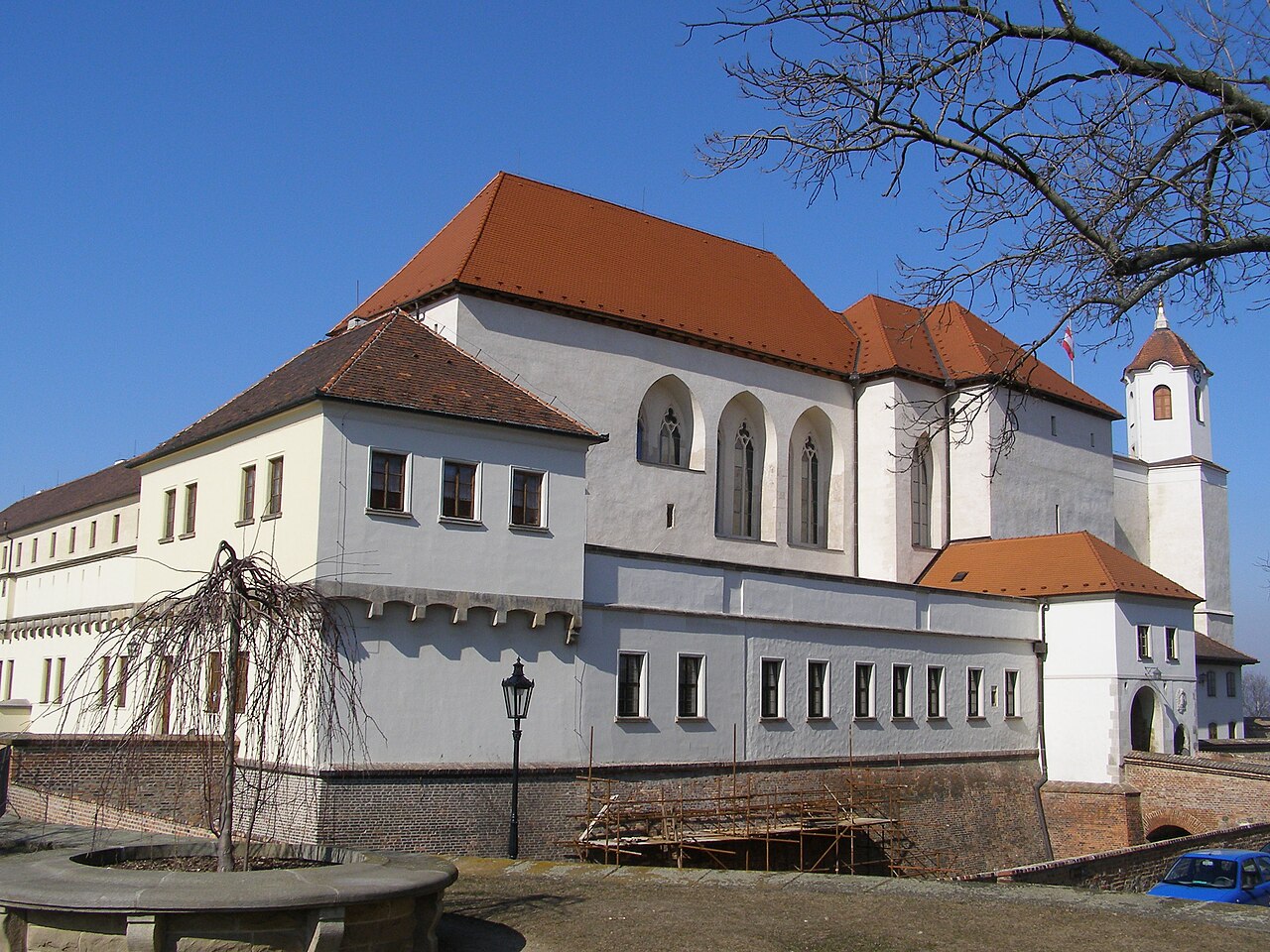
Zámek v Dolních Kounicích

Zámek v Dolních Kounicích: Renaissance castle with Gothic roots in Czechia
Dolní Kounice, Czech Republic
Late Medieval (14th–15th c.)
Partially Restored

Zámek v Dolních Kounicích stands as a remarkable historical monument in the municipality of Dolní Kounice, Czechia, embodying a rich tapestry of religious, noble, and architectural heritage. Originally established by the Premonstratensian order in the medieval era, the castle's evolution from a fortified Gothic stronghold to a Renaissance noble residence mirrors the shifting political and cultural landscape of Moravia over several centuries.

The earliest origins of the site are closely linked to Vilém of Pulín, a nobleman whose coat of arms dates back to 1162. His founding of the Rosa Coeli monastery in 1181 marked a significant religious and economic development in the region, fulfilling a papal penance and establishing a spiritual center that influenced the surrounding area. The monastery's proximity to the castle site underscores the intertwined nature of ecclesiastical and feudal power during the medieval period.

By approximately 1330, the Premonstratensians constructed a Gothic castle on a strategic hill overlooking the Jihlava River. This location was chosen for its defensive advantages, protecting a vital river crossing and important trade routes that connected Moravia with other regions. The castle's original Gothic features included robust fortified walls, defensive battlements, and a commanding position that allowed surveillance over the valley below.

Transformation into a Renaissance noble residence

The 16th century brought significant change to the castle's function and appearance. Following the dissolution of the Rosa Coeli monastery, the castle passed into the hands of Moravian Margrave and King Ferdinand I. In 1537, Ferdinand sold the property to Jiří Žabka of Limberk, a nobleman who initiated extensive renovations to convert the fortress into a Renaissance-style chateau. This transformation reflected the broader European trend of shifting from purely defensive medieval castles to more comfortable and representative noble residences.

During these renovations, Renaissance architectural elements were introduced, including elegant staircases, refined interior chambers, and decorative details that emphasized symmetry and classical motifs. The Žabka staircase remains one of the most notable features from this period, exemplifying the craftsmanship and aesthetic values of Renaissance architecture.

Later modifications and ownership changes

Near the turn of the 17th century, the Drnovský family undertook further modifications, adapting the castle to contemporary tastes and needs. However, the political turmoil following the Bohemian Estates uprising of 1620 led to the confiscation of the Drnovský estates in 1622. The castle was then acquired by the influential Dietrichstein family, who primarily used it as an administrative center rather than a noble residence, signaling a shift in the castle's role within the region.

In 1862, ownership passed to the Herberstein family, who repurposed the castle to support agricultural activities. This practical use altered some interior spaces, reflecting the decline of aristocratic residential functions and the rise of utilitarian adaptations in historic buildings during the 19th century.

20th-century history and restoration efforts

The 20th century saw the castle change hands multiple times before its nationalization in 1974. Managed by various state institutions, including the Moravian Library from 1986, the castle's preservation became a focus amid broader efforts to protect cultural heritage sites in Czechia.

Following the political changes after the fall of communism, the property was returned to the Edl family in 1992 and soon sold to a private company, L.V.P., which began extensive restoration work in 2006. These efforts aimed to conserve both the Gothic and Renaissance architectural features, preserving the castle's historical integrity while preparing it for cultural and private events. Plans have been developed to adapt the site as a tourist resort, enhancing its accessibility and appeal to visitors interested in Moravian history and architecture.

Architectural features and notable remains

The castle is prominently situated on a hill overlooking the Jihlava River, near the ruins of the Rosa Coeli monastery. This strategic placement highlights its historical role in controlling river crossings and trade routes. The structure itself is a blend of Renaissance and Gothic elements, with the Renaissance chateau incorporating remnants of the earlier Gothic fortress.

Among the most significant surviving features is the Žabka staircase, a Renaissance addition that provides a striking example of period craftsmanship and architectural innovation. The green knight’s chamber retains decorative details that suggest symbolic and artistic influences from the castle's noble inhabitants.

Extensive underground areas beneath the castle have been preserved, likely serving as storage, defensive refuges, or service spaces. These subterranean constructions offer valuable insights into the castle's complex functional layout beyond its visible superstructure.

The castle's adaptive reuse over centuries, especially during the 19th century under the Herberstein family, led to modifications that reflect changing social and economic priorities. Despite these changes, recent restoration efforts have focused on maintaining the castle’s essential architectural and historical character, ensuring its status as a protected cultural monument.

Historical and cultural significance

Together with the nearby Rosa Coeli monastery ruins, Zámek v Dolních Kounicích forms a unique historical ensemble that encapsulates the religious, economic, and noble influences that shaped the region. The castle's layered construction and evolving functions provide a tangible narrative of Moravian history from the medieval period through the Renaissance and into modern times.

Today, the castle stands not only as a testament to architectural and historical heritage but also as a potential cultural hub, with ongoing efforts to integrate it into the tourism landscape of Czechia. Its preservation and adaptive reuse represent the broader challenges and opportunities faced by historic sites in maintaining relevance while honoring their past.

Frequently asked questions (FAQ)

What is the historical significance of Zámek v Dolních Kounicích?
Zámek v Dolních Kounicích is a remarkable example of Renaissance architecture in Czechia, with roots dating back to the 13th century. It has served various functions over the centuries, including a residence for noble families and a site for significant historical events, making it an important landmark in the region.
When was Zámek v Dolních Kounicích built?
The castle was originally constructed in the 13th century, with significant renovations and expansions occurring during the Renaissance period. Its architectural evolution reflects the changing styles and functions of the castle over the centuries, showcasing its rich history.
Can I visit Zámek v Dolních Kounicích?
Yes, Zámek v Dolních Kounicích is open to visitors who wish to explore its historical grounds and learn about its architecture. Guided tours are available, providing insights into the castle's past and its architectural features.
What are the opening hours for Zámek v Dolních Kounicích?
The castle typically operates from 9 AM to 5 PM during the tourist season, but hours may vary in the off-season. It is advisable to check the official website or contact the castle directly for the most current information before planning your visit.
What are the ticket prices for visiting Zámek v Dolních Kounicích?
Ticket prices for Zámek v Dolních Kounicích are generally affordable, with discounts available for students and seniors. Children under a certain age may enter for free, making it a great destination for families.
Is Zámek v Dolních Kounicích accessible for visitors with disabilities?
Yes, the castle has made efforts to accommodate visitors with disabilities. However, due to its historical structure, certain areas may still present challenges. It is recommended to contact the castle in advance to inquire about specific accessibility options.
When is the best time to visit Zámek v Dolních Kounicích?
The best time to visit is during the late spring and early autumn months when the weather is pleasant and the gardens are in full bloom. These seasons also tend to have fewer tourists, allowing for a more enjoyable experience.
What nearby attractions can I explore while visiting Zámek v Dolních Kounicích?
While visiting the castle, you can explore the picturesque town of Dolní Kounice, known for its charming streets and local culture. Additionally, nearby attractions include the ruins of the Augustinian Monastery and the scenic Moravian countryside, ideal for hiking and nature walks.

Information

Hill Castle

Sources & official resources

Verify the information above using these authoritative references.

Loading map...

Visitor reviews

No reviews yet. Been here? Write the first review and help other travelers!

Write the first review

Visited this castle? Share your experience

Your review helps other travelers and adds first-hand knowledge to our encyclopedia.
Write a review

(5/5)

0/2000 characters

Your review will be visible after admin approval

Nearby castles

16.5 km
Templštejn Castle — Czech Republic castle

Templštejn Castle

Moravský Krumlov, Czech Republic

Templštejn castle stands as a remarkable example of a medieval hill castle in the Czech Republic, located near the village of Templštejn-Moravský Krumlov. Established in the late 13th century by the Knights Templar, this fortress served as a crucial commandery seat, replacing their earlier base at Gomolitz. The castle's origins are closely tied to the religious military order's expansion in the Bohemian and Moravian lands, authorized by King Wenceslaus I in 1232. Construction of the castle took place between 1281 and 1298, reflecting the strategic and administrative importance of the site during the High Medieval period. The castle's foundation marked the consolidation of Templar holdings in the region, overseeing extensive estates including villages such as Ober-Dubin, Unter-Dubin, and Tokkowan. The first documented mention of the commandery is dated July 16, 1298, underscoring its early significance. Following the suppression of the Knights Templar in 1312, Templštejn passed through several noble families, including the Schellenbergs, the Lords of Leipa, and the Osovský family. The Lords of Leipa notably expanded and renovated the castle, enhancing its defensive capabilities and residential quarters. Architectural features and defensive design Perched atop a forested rocky promontory rising over 100 meters above the Jihlava River valley, Templštejn exemplifies the spur castle typology. Its original core measured approximately 40 by 30 meters, enclosed by a robust circular curtain wall reinforced with a prominent pillar near the main entrance. This design reflects medieval English architectural influences, adapted to local stone materials. The castle's defensive system was augmented with a partially double ring of fortifications, designed to provide layered protection against assaults. Remnants of the palas (the main residential building), sections of the curtain wall, and the main gate ruins remain visible today. The courtyard contains a deep accumulation of rubble, marking the collapse of masonry over centuries. Significant features include the vestiges of a Gothic chapel, indicating the castle's religious functions during its active use, and a well that ensured a reliable internal water supply. Outside the main enclosure lies the ruin of a later-added high gable wall intended to shield the fortress from artillery fire, a testament to early modern military adaptations, although this addition was never completed. Historical events and ownership transitions Templštejn castle was never conquered by enemy forces but suffered severe damage from a fire in the first half of the 16th century. Archaeological evidence of charred masonry confirms the destructive blaze. Reconstruction efforts commenced around 1552 but were soon abandoned, leading to the castle's gradual decline into ruin. After the confiscations following the Battle of White Mountain in 1621, the castle became the property of the Liechtenstein family, who retained ownership until 1908. Subsequently, the Kinsky family held the site until 1945. Over these centuries, the castle saw little preservation, accelerating its deterioration. Since 2011, Templštejn has been privately owned by David Hamza, who has dedicated efforts to preserve the ruins using traditional materials and techniques. Starting in 2014, infrastructural improvements such as a wooden cabin, informative displays, and a viewing staircase were installed to enhance visitor experience. Archaeological rescue excavations led by Mgr. Miroslav Dejmal began in 2017, significantly advancing knowledge of the castle's medieval defensive systems and architectural fabric. Conservation and archaeological significance Recognized as a cultural monument since 1958, Templštejn has received restoration awards, notably in 2016, for conservation efforts. The site has undergone clearing of overgrown vegetation that threatened the stonework, stabilization of precarious structures such as the gable wall, and installation of stone steps to improve access. Wooden bridges now connect parts of the curtain wall to the palace ruins, facilitating exploration. Surrounding the castle are visible earthworks and defensive ditches that form ramparts still discernible in the landscape. Prior to recent excavations, no extensive archaeological investigations had been conducted, making the ongoing work crucial to understanding the castle's historical context and architectural evolution. Templštejn castle remains an important site for studying medieval fortifications, the legacy of the Knights Templar in Central Europe, and the transition of military architecture from the medieval to early modern periods. Its combination of Gothic elements, strategic location, and layered defensive structures make it a significant heritage site in Czechia.

High Medieval (11th–13th c.)
Details
16.9 km
Brno — Czech Republic castle

Brno

Brno, Czech Republic

Špilberk Castle stands as a commanding bastioned fortress atop a hill overlooking the city of Brno in the Czech Republic. Its origins trace back to the mid-13th century, when it was established by the Přemyslid kings as a royal residence and administrative center for the rulers of Moravia. The castle's strategic position on a rocky hill at 282 meters above sea level provided natural defenses and a panoramic view of the surrounding region. Documented first in 1277, Špilberk has witnessed centuries of political shifts, architectural evolution, and military conflicts, shaping its role from a medieval stronghold to a formidable Baroque fortress and later a notorious prison. Medieval origins and early architecture The initial construction of Špilberk Castle was commissioned by Přemysl Otakar II during the mid-13th century. Designed as an irregular quadrilateral, close to a trapezoid, the castle featured robust stone defensive walls approximately 8 meters high and 2.8 meters thick. The eastern curtain wall served as the main residential area, flanked by a massive square tower with a 15-meter base that projected beyond the wall line, providing a vantage point for surveillance and defense. The main gate was situated between this tower and the residential block, while a secondary gate on the western curtain was accessible via a steep road and a bridge spanning the surrounding moat. The southern side of the castle was fortified with a large cylindrical tower measuring 15 meters in diameter and walls 3.5 meters thick. This tower, along with other defensive features such as cisterns and a well located within the courtyard, ensured the castle could withstand prolonged sieges. Over subsequent centuries, additional buildings were added along the northern and southern walls to accommodate service quarters and housing for castle personnel, reflecting the castle's expanding administrative and military functions. Historical significance and political role Following the death of the last Přemyslid king, Wenceslaus III, in 1306, Špilberk Castle passed under Austrian control. When John of Luxembourg became King of Bohemia in 1310, the castle and the city of Brno emerged as central seats of power for the Luxembourg dynasty in Moravia. In 1334, John appointed his son Charles as Margrave of Moravia. After John's death in 1346, Charles IV ascended as King of Bohemia and later Holy Roman Emperor. In 1349, Charles IV granted Moravia as a fief to his younger brother John Henry, with the condition that John's descendants would not claim the Bohemian throne during the reign of Charles's line. This arrangement elevated Špilberk as the principal seat of the Moravian margraves, who invested in its maintenance and expansion. By the early 15th century, Špilberk Castle symbolized regional authority and governance. After the death of Margrave Judok in 1411, the castle reverted to the crown under King Sigismund of Luxembourg and was later granted to Albert II of Habsburg in 1423. The castle's military importance grew during the mid-15th century conflicts over the Bohemian crown. Notably, it endured an 11-month siege by forces loyal to Matthias Corvinus of Hungary in 1469, a key episode that underscored its strategic value in Moravian and Central European history. Fortification enhancements and military history In the 16th century, the growing threat of the Ottoman Empire prompted modernization of Špilberk's fortifications. Although inspections revealed neglect, the Moravian estates purchased the castle in 1560 to prevent its transfer to foreign powers, subsequently transferring ownership to the city of Brno. A catastrophic fire in 1578 led to extensive repairs and further fortification efforts, especially during the turbulent times of the Thirty Years' War. Špilberk Castle played a decisive role in defending Brno against Swedish sieges in 1643 and 1645. Under the leadership of the French Huguenot Colonel Louis Raduit de Souches, the garrison successfully withstood prolonged attacks despite being outnumbered. To mitigate fire hazards during the sieges, all roofs were removed from the castle buildings. The fortress was later expanded in the late 17th and 18th centuries into a Baroque citadel featuring bastions, moats, and integrated urban defenses, making it the largest fortification complex in Moravia. In 1742, the castle resisted an assault by Prussian forces led by Frederick the Great, further cementing its military legacy. Prison transformation and infamous reputation By the late 18th century, Špilberk Castle was converted into a prison, gaining notoriety as one of the harshest detention centers in the Austrian Empire. Emperor Joseph II ordered the division of casemates into individual cells in 1784 to accommodate both common criminals and political prisoners. The prison housed notable inmates such as the Austrian soldier Franz Freiherr von der Trenck, French revolutionary Jean-Baptiste Drouet, Hungarian Jacobins led by Ferenc Kazinczy, and Italian patriot Silvio Pellico, whose memoir "My Prisons" brought international attention to the castle's grim conditions. Throughout the 19th century, the prison continued to detain political dissidents and participants of uprisings, including those involved in the Kraków Uprising of 1846. The prison was officially closed by Emperor Franz Joseph I in 1855, and the castle was repurposed as military barracks. It remained a military installation through both World Wars, during which the Nazis used it as a prison for Czech patriots, many of whom suffered and died within its walls. Modern era and cultural significance After World War II, Špilberk Castle ceased military operations, with the Czechoslovak army vacating the site in 1959. In 1960, the castle was transformed into the Brno City Museum, opening its doors to the public to explore its extensive history. The castle today showcases a blend of its medieval Gothic origins and Baroque military expansions. The eastern wing preserves significant Gothic elements, while the bastion fortifications and casemates reflect its Baroque military past. Archaeological excavations have revealed medieval structures such as the cylindrical tower foundations and Gothic walls, enriching the understanding of the castle's early phases. The museum hosts exhibitions covering the castle's roles as a royal seat, fortress, prison, and barracks. Visitors can explore the dark casemates where prisoners were held and enjoy sweeping views of Brno from the hilltop. Špilberk Castle remains a powerful symbol of Brno's historical resilience and cultural heritage, attracting tourists, historians, and scholars. Its transformation over centuries encapsulates significant chapters of Central European history, reflecting shifts in power, military technology, and societal changes. Architectural features and layout The castle's layout is a palimpsest of its varied history, combining medieval defensive structures with Baroque military engineering. The original medieval castle featured high stone walls, a prominent square tower, cylindrical towers, and a protective moat. The Baroque period introduced extensive bastion fortifications designed to withstand artillery fire, including thick earthen ramparts and brick-lined moats. The fortress includes two-story vaulted casemates that served as military shelters and were later converted into prison cells. The well in the western courtyard, initially 39 meters deep and later extended to 112 meters, was vital for water supply during sieges. Adjacent to the well is a Baroque cistern for rainwater collection, underscoring the castle's self-sufficiency in times of conflict. Most visible buildings date from the 19th century when the castle functioned as barracks, including the southern, western, and northern wings and the central block dividing the courtyard. The castle's elevated position offers commanding views over Brno, emphasizing its strategic importance throughout its history. Visiting špilberk castle today Today, Špilberk Castle operates as a museum and cultural venue, providing visitors with a comprehensive insight into its multifaceted history. Exhibitions detail the castle's royal origins, military significance, and its dark legacy as a prison. The preserved casemates offer a stark glimpse into the harsh conditions endured by prisoners. The castle's hilltop location provides scenic views of Brno, making it a popular destination for tourists and history enthusiasts alike. The castle hosts numerous cultural events, exhibitions, and educational programs throughout the year. Visitors can explore the extensive grounds, including bastions, courtyards, and historical buildings. Špilberk Castle stands as a testament to Brno's rich past and enduring cultural identity.

Late Medieval (14th–15th c.)
Details
18.7 km

Levnov Castle

Ketkovice, Czech Republic

Levnov castle stands as a significant medieval fortress ruin located in the municipality of Ketkovice, within the modern-day Czech Republic. This hill castle, perched strategically on a rocky elevation above the confluence of the Oslava and Chvojnice rivers, embodies the defensive ingenuity and feudal power structures typical of Central European fortifications from the High medieval period. The castle's origins, deeply intertwined with the Knights Templar and prominent noble families, mark it as a site of considerable historical and architectural interest. Early history and foundation The earliest documented mention of Levnov dates to 1358, under the ownership of Lev of Levnov, who is traditionally credited as the principal founder and the figure who established the castle as a significant seat for the Lords of Löwenau. However, archaeological findings and historical analysis suggest that the castle's foundation likely occurred earlier, probably in the mid-13th century. This earlier dating aligns with the period of active castle-building by the Knights Templar in Central Europe, indicating that Levnov was originally constructed as part of their network of fortified sites. Its initial purpose was both military and administrative, serving as a defensive stronghold and a center of local governance. The castle’s location on a rocky hilltop provided natural fortifications, which were enhanced by man-made defensive works such as moats and gate towers. Ownership and political significance Following the tenure of the Levnov family, the castle passed to the Lords of Leipa by the late 14th century, another influential noble house in the region. The castle's strategic importance is underscored by its role in the Moravian Margrave Wars during the late 14th and early 15th centuries. These conflicts, fought between rival claimants Jobst and Prokop, saw Levnov change hands multiple times, including possession by patrician families from Kuttenberg, before ultimately returning to the Lords of Leipa. The impact of the Hussite wars The turbulent period of the Hussite Wars further shaped Levnov's history. After these religious and political conflicts swept through Bohemia and Moravia, the castle fell into the hands of a mercenary group led by Burghart Kienberger. These soldiers used Levnov as a base for raids throughout the surrounding countryside, contributing to regional instability. In response to the lawlessness, the Moravian Landtag intervened and ordered the castle to be redeemed by Bertold of Leipa. To prevent further misuse, Levnov was deliberately demolished in 1442, marking the end of its active military role. Architectural features and defensive design Levnov castle was designed to maximize the natural defensive advantages of its rocky hilltop setting. The site rises approximately 120 meters above the surrounding landscape, with steep cliffs and deep river valleys providing formidable natural barriers on most sides. The only accessible approach was from the northeast, via a narrow land strip connecting to the adjacent highlands. The castle's defenses included a moat and a gate tower that secured the entrance to an outer courtyard or bailey. This layout was characteristic of medieval fortifications, combining natural terrain with engineered structures to create a layered defense. The main residential building, or palas, was situated on the western side of the castle grounds. This structure was divided longitudinally into two parts and featured thick stone walls approximately 2.5 meters wide. These robust walls indicate the palas was not only a living space but also a fortified refuge for the lord and his household. Current state of the ruins Today, the remains of Levnov castle primarily consist of thick defensive walls and substantial earthworks that once formed the castle's ramparts. The finer architectural details and decorative elements have not survived, leaving a rugged impression of the fortress's original scale and strength. The castle's ruins are set within the Oslava and Chvojnice valley nature reserve, which protects both the natural environment and the cultural heritage of the site. Nearby historical features include the Ketkovský mill in the valley below and the ruins of the Kraví Hora fortress across the Chvojnice river, adding to the area's historical landscape. Historical rediscovery and cultural significance Over centuries, knowledge of Levnov castle's original name and precise location faded, leading to misidentification and obscurity. It was not until 1970 that historian Vladimír Voldán uncovered archival evidence confirming the site as the long-lost Levnov castle. This discovery restored the castle's historical identity and highlighted its importance within Czech cultural heritage. Levnov is now legally protected as a cultural monument by the Czech Republic, recognized for its historical significance and as a testament to medieval fortification architecture in Central Europe. Absence of ornamental features Unlike some castles that feature inscriptions, mosaics, or decorative stonework, Levnov castle shows no evidence of such ornamental details. Interpretations of the site rely heavily on its defensive structures and strategic location to understand its role and importance during the medieval period.

High Medieval (11th–13th c.)
Details