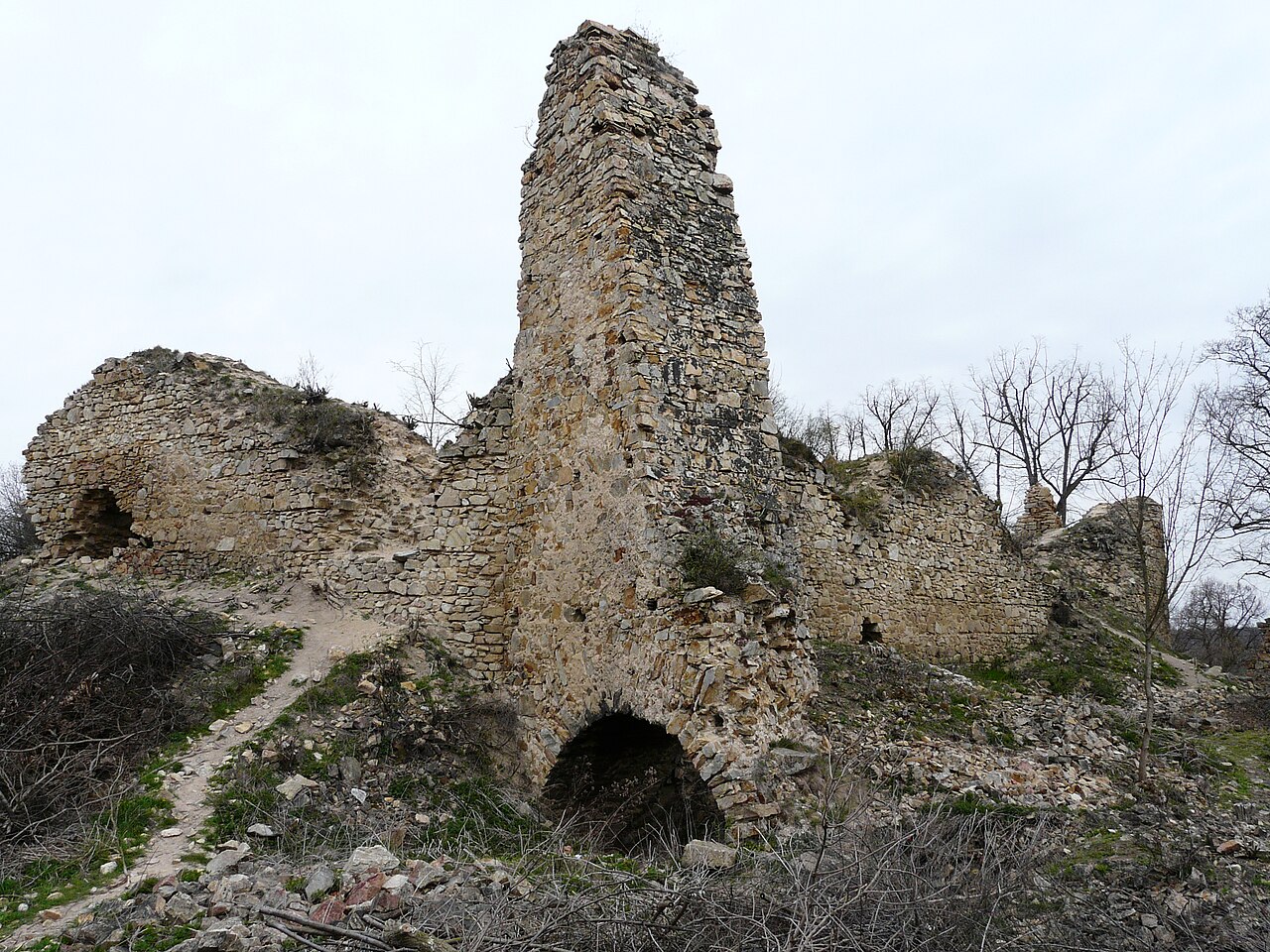
Levnov Castle
Levnov castle stands as a significant medieval fortress ruin located in the municipality of Ketkovice, within the modern-day Czech Republic. This hill castle, perched strategically on a rocky elevation above the confluence of the Oslava and Chvojnice rivers, embodies the defensive ingenuity and feudal power structures typical of Central European fortifications from the High medieval period. The castle's origins, deeply intertwined with the Knights Templar and prominent noble families, mark it as a site of considerable historical and architectural interest.
Early history and foundation
The earliest documented mention of Levnov dates to 1358, under the ownership of Lev of Levnov, who is traditionally credited as the principal founder and the figure who established the castle as a significant seat for the Lords of Löwenau. However, archaeological findings and historical analysis suggest that the castle's foundation likely occurred earlier, probably in the mid-13th century. This earlier dating aligns with the period of active castle-building by the Knights Templar in Central Europe, indicating that Levnov was originally constructed as part of their network of fortified sites.
Its initial purpose was both military and administrative, serving as a defensive stronghold and a center of local governance. The castle’s location on a rocky hilltop provided natural fortifications, which were enhanced by man-made defensive works such as moats and gate towers.
Ownership and political significance
Following the tenure of the Levnov family, the castle passed to the Lords of Leipa by the late 14th century, another influential noble house in the region. The castle's strategic importance is underscored by its role in the Moravian Margrave Wars during the late 14th and early 15th centuries. These conflicts, fought between rival claimants Jobst and Prokop, saw Levnov change hands multiple times, including possession by patrician families from Kuttenberg, before ultimately returning to the Lords of Leipa.
The impact of the Hussite wars
The turbulent period of the Hussite Wars further shaped Levnov's history. After these religious and political conflicts swept through Bohemia and Moravia, the castle fell into the hands of a mercenary group led by Burghart Kienberger. These soldiers used Levnov as a base for raids throughout the surrounding countryside, contributing to regional instability.
In response to the lawlessness, the Moravian Landtag intervened and ordered the castle to be redeemed by Bertold of Leipa. To prevent further misuse, Levnov was deliberately demolished in 1442, marking the end of its active military role.
Architectural features and defensive design
Levnov castle was designed to maximize the natural defensive advantages of its rocky hilltop setting. The site rises approximately 120 meters above the surrounding landscape, with steep cliffs and deep river valleys providing formidable natural barriers on most sides. The only accessible approach was from the northeast, via a narrow land strip connecting to the adjacent highlands.
The castle's defenses included a moat and a gate tower that secured the entrance to an outer courtyard or bailey. This layout was characteristic of medieval fortifications, combining natural terrain with engineered structures to create a layered defense.
The main residential building, or palas, was situated on the western side of the castle grounds. This structure was divided longitudinally into two parts and featured thick stone walls approximately 2.5 meters wide. These robust walls indicate the palas was not only a living space but also a fortified refuge for the lord and his household.
Current state of the ruins
Today, the remains of Levnov castle primarily consist of thick defensive walls and substantial earthworks that once formed the castle's ramparts. The finer architectural details and decorative elements have not survived, leaving a rugged impression of the fortress's original scale and strength.
The castle's ruins are set within the Oslava and Chvojnice valley nature reserve, which protects both the natural environment and the cultural heritage of the site. Nearby historical features include the Ketkovský mill in the valley below and the ruins of the Kraví Hora fortress across the Chvojnice river, adding to the area's historical landscape.
Historical rediscovery and cultural significance
Over centuries, knowledge of Levnov castle's original name and precise location faded, leading to misidentification and obscurity. It was not until 1970 that historian Vladimír Voldán uncovered archival evidence confirming the site as the long-lost Levnov castle. This discovery restored the castle's historical identity and highlighted its importance within Czech cultural heritage.
Levnov is now legally protected as a cultural monument by the Czech Republic, recognized for its historical significance and as a testament to medieval fortification architecture in Central Europe.
Absence of ornamental features
Unlike some castles that feature inscriptions, mosaics, or decorative stonework, Levnov castle shows no evidence of such ornamental details. Interpretations of the site rely heavily on its defensive structures and strategic location to understand its role and importance during the medieval period.
Frequently asked questions (FAQ)
- How do I get to Levnov castle?
- Levnov castle is located near Ketkovice in the South Moravian Region of Czechia. Visitors can reach the site by car or local transport to Ketkovice, followed by a hike up the hill to the ruins.
- What is the historical significance of Levnov castle?
- Levnov castle was a strategic medieval fortress linked to the Knights Templar and prominent noble families like the Lords of Löwenau and Leipa. It played a role in regional conflicts such as the Moravian Margrave Wars and the Hussite Wars.
- Can I explore the ruins of Levnov castle?
- Yes, visitors can explore the ruins of Levnov castle, including its thick defensive walls and earthworks. The site offers insight into medieval fortification design and stunning views of the surrounding valleys.
- When was Levnov castle built?
- Levnov castle was likely founded in the mid-13th century, with the earliest records dating to 1358. Its origins are connected to the Knights Templar's castle-building activities in Central Europe.
- Is Levnov castle protected as a heritage site?
- Yes, Levnov castle is legally protected as a cultural monument by the Czech Republic, ensuring its preservation as an important historical and architectural site.
Information
Sources & official resources
Verify the information above using these authoritative references.
Loading map...
Visitor reviews
No reviews yet. Been here? Write the first review and help other travelers!
Write the first reviewVisited this castle? Share your experience
Your review helps other travelers and adds first-hand knowledge to our encyclopedia.