Zamek Orawski
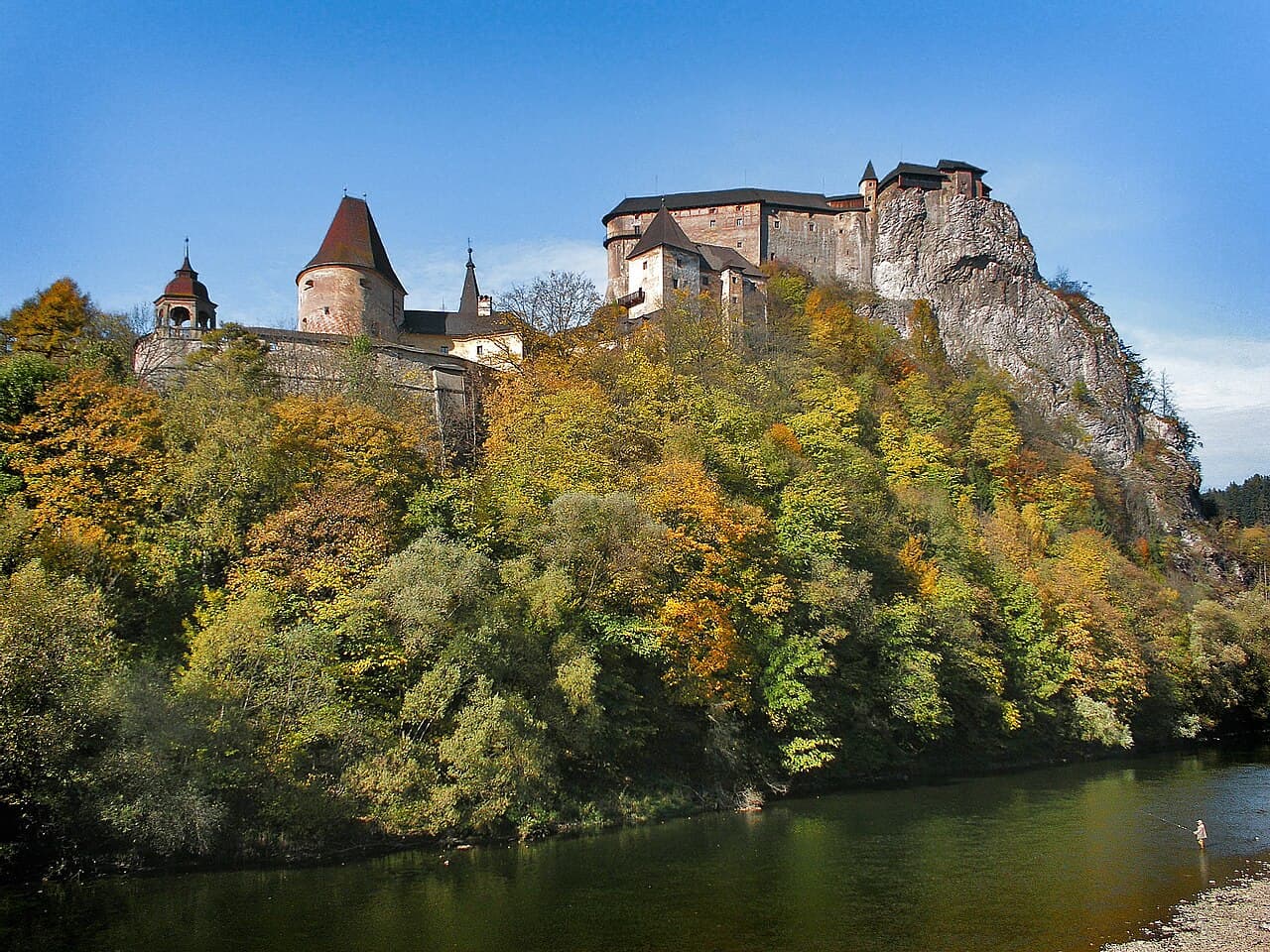
Orava Castle, known locally as Zamek Orawski, is one of Slovakia's most iconic and well-preserved medieval fortresses. Perched dramatically atop a steep limestone cliff rising 112 meters above the Orava River, the castle commands sweeping views of the surrounding landscape. Its strategic location and imposing architecture have made it a symbol of the region's turbulent history and cultural heritage.
The castle's origins date back to the 13th century, shortly after the devastating Mongol invasion of 1241, which prompted King Béla IV of Hungary to fortify his northern borders. The first documented mention of Orava Castle appears in 1267, when it became royal property under Béla IV. Constructed initially as a wooden fortification on a rocky spur, it was soon rebuilt in stone to enhance its defensive capabilities. The earliest structures included a stone-built ground floor with upper wooden floors, a common practice in medieval castle construction to balance defense with available resources.
Architectural evolution and castle layout
The castle complex is divided into three main sections: the Upper Castle, the Middle Castle, and the Lower Castle, each reflecting different phases of construction and architectural styles. The Upper Castle is the oldest part, built directly on the cliff's edge, making it nearly impregnable. It originally served as the primary defensive stronghold and royal residence, featuring a tall, narrow tower that functioned as a donjon or keep.
The Middle Castle developed later, incorporating Renaissance elements under the ownership of notable nobles such as Jan z Dębowca and Jan Korwin in the 16th century. This section includes two large round bastions designed for artillery, a five-story palace constructed between 1539 and 1543, and enhanced fortifications such as a new gate with a moat and drawbridge. These upgrades were a direct response to the growing threat of Ottoman incursions and advances in military technology.
The Lower Castle houses the Thurzó Palace, a Baroque castle church with an altar dating from 1751-1752, and additional residential wings. Defensive features here include two guard towers flanking the main entrance and bastions adapted for cannon defense. The castle's complex defensive system comprises multiple gates, fortified walls, and a defensive moat, illustrating its dual role as a fortress and administrative center.
Historical significance and ownership
Throughout its history, Orava Castle was a key military and administrative hub in the Kingdom of Hungary. It served as the seat of Árva county and was governed by castle captains and nobles who often played crucial roles in regional politics. Ownership passed through several prominent families, including the Csáks, Komorowskis, Zápolyas, and the influential Thurzó family, who held the castle from the 16th century until the 20th century.
The castle withstood numerous sieges and conflicts, notably resisting the Hussite armies and the forces of Jan Jiskra in the 15th century. During the anti-Habsburg uprisings of the 17th and early 18th centuries, it was occupied by Kuruc rebels under Francis II Rákóczi before being recaptured by imperial forces in 1709 after a prolonged artillery siege. These events left their mark on the castle's fortifications and interior, prompting continual modernization and repairs.
Destruction and restoration
A catastrophic fire in 1800 devastated much of Orava Castle, destroying all wooden structures and interior furnishings except for parts of the Lower Castle protected by roofing. For decades, the castle remained partially in ruins until restoration efforts began in the mid-19th century under the stewardship of Edmund Zichy. In 1868, Zichy founded one of Slovakia's first regional museums within the castle, preserving its history and artifacts for public education.
Further restoration and archaeological work took place throughout the 20th century, culminating in the castle's current status as a well-preserved historical monument and museum. The castle now houses numerous exhibitions, including archaeological, ethnographic, natural history, and art collections, attracting visitors interested in medieval architecture, Slovak history, and cultural heritage.
Architectural highlights and visitor experience
Visitors to Orava Castle can explore its complex layout, which follows the natural contours of the cliff. The castle's three gates provide access to the distinct courtyards and sections, each featuring unique architectural elements such as the Renaissance palaces, the Baroque chapel, and the defensive bastions equipped for artillery.
The castle's interiors include the Knights' Hall, a picture gallery, an armory displaying historical weapons, and period-style furnished rooms that convey the lifestyle of its noble inhabitants. The castle also offers panoramic views of the Orava River valley, enhancing its appeal as a cultural and scenic destination.
Orava Castle's eerie and majestic presence has inspired popular culture, most famously serving as the filming location for Count Orlok's castle in the 1922 silent horror film Nosferatu. This connection adds a layer of mystique and draws visitors intrigued by its cinematic history.
Access and tourism
Located near the village of Oravský Podzámok in the Žilina Region of Slovakia, Orava Castle is easily accessible by car and public transport. It operates as a museum with regular opening hours and offers guided tours that delve into its rich history and architectural features. Seasonal events, including theatrical performances and night tours, enhance the visitor experience by bringing the castle's history to life.
As one of Slovakia's premier tourist attractions, Orava Castle combines historical significance, architectural grandeur, and cultural heritage, making it a must-visit site for enthusiasts of medieval castles and Central European history.
Frequently asked questions (FAQ)
- How do I get to Zamek Orawski?
- Zamek Orawski is located in Slovakia and can be accessed by car or public transportation. The nearest major city is Dolný Kubín, from where you can take a bus or taxi to the castle.
- What is the historical significance of Zamek Orawski?
- Zamek Orawski, dating back to the 13th century, played a crucial role in the defense and administration of the region. It has been a witness to numerous historical events and has served various purposes throughout its existence, making it a significant landmark in Slovak history.
- When was Zamek Orawski constructed?
- The construction of Zamek Orawski began in the early 13th century, with significant modifications made in the 16th and 17th centuries. Its architectural evolution reflects the changing styles and needs of the times.
- Can I take guided tours of Zamek Orawski?
- Yes, guided tours of Zamek Orawski are available and provide in-depth information about the castle's history and architecture. It is recommended to check the schedule in advance, especially during peak tourist seasons.
- Why is Zamek Orawski considered an architectural gem?
- Zamek Orawski is renowned for its unique blend of Gothic and Renaissance architectural styles, showcasing intricate details and sturdy fortifications. Its breathtaking views of the surrounding landscape add to its charm and make it a favorite among visitors.
- Is it possible to visit Zamek Orawski year-round?
- Yes, Zamek Orawski is open to visitors year-round, although opening hours may vary by season. It’s advisable to check the official website for the most current information regarding hours and any seasonal events.
- What are the ticket prices for visiting Zamek Orawski?
- Ticket prices for Zamek Orawski vary depending on the type of tour and age group. Discounts are often available for students and seniors, so it's best to review the pricing details on their official site before your visit.
- When is the best time to visit Zamek Orawski?
- The best time to visit Zamek Orawski is during the spring and early autumn when the weather is mild and the scenery is particularly beautiful. However, summer offers the most extended hours and events, making it a popular choice for tourists.
- Are there any nearby attractions to Zamek Orawski?
- Yes, there are several attractions near Zamek Orawski, including the picturesque Orava Reservoir and the historic Orava Village. These sites provide additional opportunities for exploration and enjoyment during your visit.
Photo gallery

Information
Website
Visit websiteSources & official resources
Verify the information above using these authoritative references.
Loading map...
Visitor reviews
No reviews yet. Been here? Write the first review and help other travelers!
Write the first reviewVisited this castle? Share your experience
Your review helps other travelers and adds first-hand knowledge to our encyclopedia.