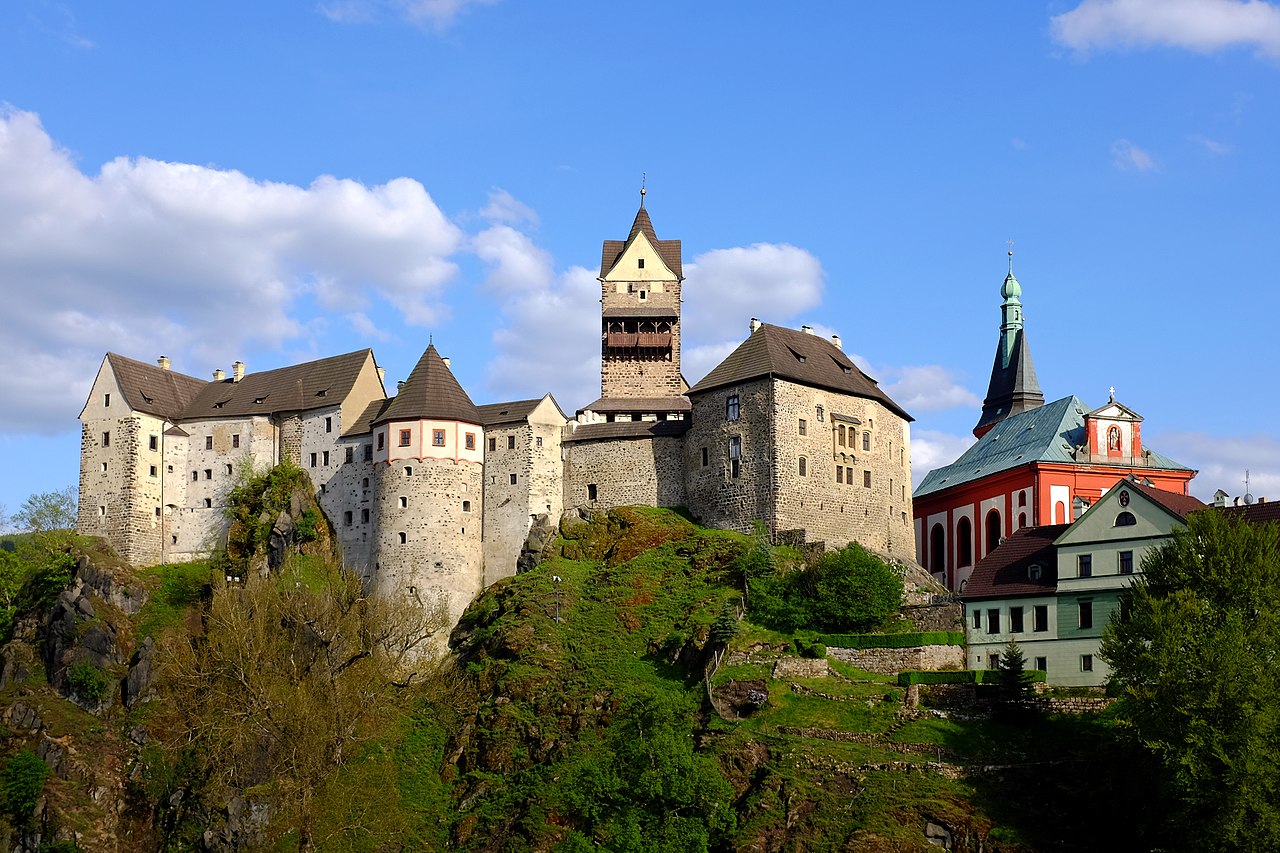
Zámecká věž

Zámecká věž: the historic castle tower of Karlovy Vary
Karlovy Vary, Czech Republic
High Medieval (11th–13th c.)
Well Preserved

Zámecká věž stands as a remarkable historical monument in the town of Karlovy Vary, Czechia, embodying centuries of architectural evolution and rich medieval heritage. Originally constructed in the mid-14th century, this tower was part of a small Gothic royal castle commissioned by King Charles IV, a pivotal figure in Bohemian history. The castle's strategic location on a hill overlooking the Teplá River made it a significant defensive and administrative site during the High Medieval period.

The origins of Zámecká věž date back to around 1358, when King Charles IV ordered the establishment of a royal castle to assert his authority in the region. The king himself stayed at the castle during several visits between 1370 and 1376, underscoring its importance. In 1370, Charles IV issued a significant document at the castle granting privileges to the villages of Obora and Drahovice, privileges that were reaffirmed by his successor Wenceslaus IV in 1401. The castle and the town remained under royal control until 1437, reflecting its role as a center of royal power.

Medieval ownership and conflicts

After 1437, the castle passed into the hands of the influential Šlik family, who acquired Karlovy Vary and the castle as a pledge, including the nearby castle of Loket. The late 15th century saw tensions surrounding the castle's control, notably when knight Václav Polacký obtained the castle in pledge from Matthias Šlik around 1475. This led to local disputes involving the townspeople and resulted in imprisonments within the castle tower. The intervention of King Vladislaus II was crucial in resolving these conflicts, ordering compensation and the release of Polacký.

Ownership then transferred within the Šlik family, from Matthias to Jeroným Šlik and subsequently to Šebastián Šlik. The early 16th century was marked by rebellion from the local inhabitants against Šebastián's rule, culminating in a war from 1502 to 1506. Control of the castle shifted between the townspeople and the Šlik family during this turbulent period. The conflict ended with peace in 1506, and the castle was administratively linked to Loket, indicating a restructuring of regional governance.

Decline and transformation in the post-medieval era

In 1547, the Šlik family sided against King Ferdinand I in a political dispute, resulting in the loss of the castle, which reverted to royal property. Subsequently, the castle suffered neglect and fell into disrepair. In 1567, Emperor Maximilian II transferred ownership to the town of Karlovy Vary, which repurposed the site for practical uses such as storing firefighting equipment. The town also acquired surrounding forests in 1598, emphasizing the site's integration into municipal functions.

A devastating fire in 1604 severely damaged the castle, and it was never rebuilt as a fortress. Instead, in 1608, a new Baroque city watchtower was constructed on the site, marking a significant shift from military to civic use. This watchtower featured a pyramidal roof and a distinctive three-sided arcade gallery on the second floor. Historically, this gallery served as a platform for a trumpeter who signaled the arrival of notable visitors and marked the beginning of the spa season, a tradition linked to Karlovy Vary's renowned spa culture. The tower also housed a watchman responsible for fire surveillance, underscoring its role in city safety.

Architectural features and modifications

The medieval core

The surviving structure of Zámecká věž preserves the main tower (donjon) of the original Gothic castle, albeit heavily altered. Archaeological investigations have revealed that a manor building once adjoined the donjon on its northwest side, evidenced by a thin northwest wall and a vaulted basement with a barrel vault partially extending beneath the tower. This combination of features highlights the castle's original defensive and residential functions.

Baroque and modern adaptations

The 1608 watchtower incorporated Baroque architectural elements, including the simple pyramidal roof and the arcade gallery, which became a defining visual and functional feature. A characteristic Baroque turret crowns the tower, adding to its distinctive silhouette in the Karlovy Vary skyline. Over the centuries, the tower underwent several restorations, notably after a fire in 1759, which preserved its structural integrity and appearance.

In 1911, the tower was modernized with the installation of an elevator designed by Friedrich Ohmann, a prominent architect responsible for the nearby Zámecká kolonáda. This addition reflects the blending of historical preservation with modern technology, enhancing accessibility and functionality. The last major renovation occurred in 2001, ensuring the tower's continued use and preservation as a cultural landmark.

Current status and cultural significance

Today, Zámecká věž stands as a well-preserved monument that encapsulates the layered history of Karlovy Vary. Its medieval origins combined with Baroque modifications and 20th-century enhancements illustrate the evolution of castle architecture from a defensive fortress to a civic watchtower and social venue. The tower remains prominently visible on the left bank of the Teplá River, near the market colonnade, serving as a symbol of the town's historical and architectural heritage.

As a cultural site, Zámecká věž attracts visitors interested in medieval history, Gothic architecture, and Baroque civic structures. Its role in the spa town's traditions, including the signaling of the spa season, connects it to the broader cultural identity of Karlovy Vary. The tower's integration into the urban fabric and its preservation efforts highlight the importance of adaptive reuse in maintaining historical monuments.

Frequently asked questions (FAQ)

What is the historical significance of Zámecká věž?
Zámecká věž, or Castle Tower, is a prominent historical landmark in Karlovy Vary, showcasing the rich heritage of the region. Built in the 14th century, it served as a defensive structure and a royal residence, reflecting the architectural style of its time.
When was Zámecká věž constructed?
Zámecká věž was constructed in the year 1349, making it one of the oldest structures in Karlovy Vary. Its longstanding presence offers visitors a glimpse into the medieval history of the area.
What are the opening hours for Zámecká věž?
Zámecká věž is typically open to visitors from 10 AM to 6 PM daily. However, it is advisable to check the official website or local listings for any seasonal changes or special events that may affect these hours.
Can I access Zámecká věž with a wheelchair?
While Zámecká věž strives to accommodate all visitors, the historical nature of the building may present some accessibility challenges. It is recommended to contact the castle directly for specific information regarding wheelchair access and available facilities.
Is it possible to take guided tours of Zámecká věž?
Yes, guided tours are available at Zámecká věž, providing an in-depth look at its history and architecture. These tours are led by knowledgeable guides who can enhance your understanding of the castle's significance.
When is the best time to visit Zámecká věž?
The best time to visit Zámecká věž is during the spring and early autumn when the weather is pleasant and the surrounding landscapes are beautiful. Additionally, visiting during weekdays can help you avoid the larger crowds typical of weekends.
What are the ticket prices for Zámecká věž?
Ticket prices for Zámecká věž are generally affordable, with discounts available for students and seniors. It is advisable to check the official website for the most current pricing and any special offers.
What nearby attractions can I visit while at Zámecká věž?
Nearby attractions include the famous hot springs of Karlovy Vary, the stunning Mill Colonnade, and the historic Church of St. Mary Magdalene. Exploring these sites can provide a well-rounded experience of the region's culture and history.

Information

Hill Castle

Sources & official resources

Verify the information above using these authoritative references.

Loading map...

Visitor reviews

No reviews yet. Been here? Write the first review and help other travelers!

Write the first review

Visited this castle? Share your experience

Your review helps other travelers and adds first-hand knowledge to our encyclopedia.
Write a review

(5/5)

0/2000 characters

Your review will be visible after admin approval

Nearby castles

6.1 km
Andělská Hora Castle — Czech Republic castle

Andělská Hora Castle

Andělská Hora, Czech Republic

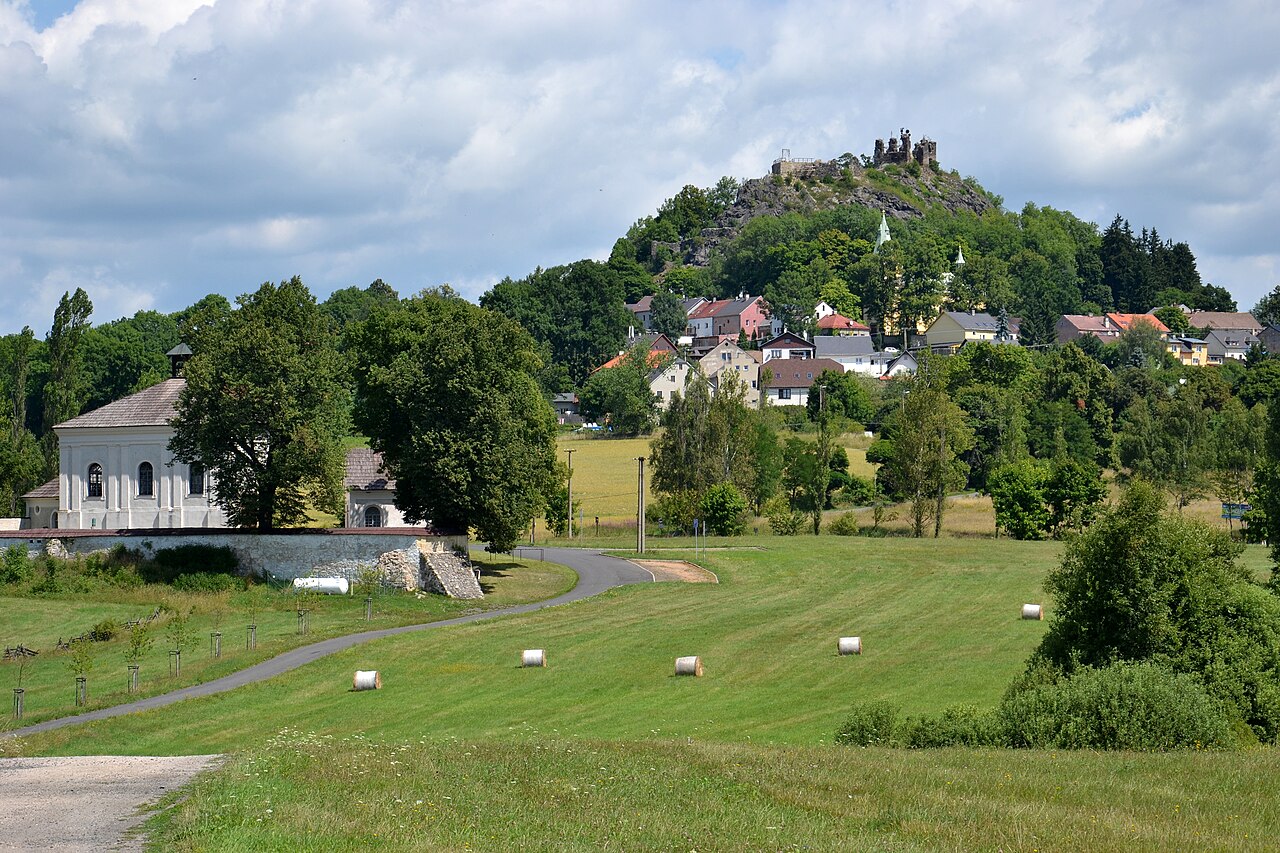
Andělská Hora Castle, originally known as Engelsburg, is a remarkable example of a late medieval hill castle located near the village of Andělská Hora, approximately 7 kilometers southeast of Karlovy Vary in the Karlovy Vary Region of Czechia. Perched atop a prominent basalt hill within the Slavkov Forest and near the Doupov Mountains, the castle's strategic location offered commanding views of the surrounding agricultural landscape and served as a defensive stronghold for the noble families who held it over centuries. Constructed in the 14th century by the House of Hrabischitz from Riesenburg, the castle was initially built to protect the family's estates and assert control over the region. Its architecture and layout were carefully adapted to the natural pentagonal shape of the basalt ridge on which it was founded, blending the fortress harmoniously with the rugged terrain. Despite its current status as a ruin, key elements such as the square residential tower, parts of the Renaissance palace, and sections of the stone curtain walls remain, offering valuable insights into medieval defensive design and noble residence. Historical background and ownership The earliest documented mention of Andělská Hora Castle dates back to 1402, when it was under the ownership of Boreš of Rýzmburk, a member of the Rýzmburk noble family responsible for its founding. The castle quickly became embroiled in the political and military upheavals of the region, including the Hussite Wars in the early 15th century. In 1430, the fortress was seized by Jakoubek of Vřesovice, a Hussite captain who used it as a base for raids in the surrounding territories. Throughout the 15th century, the castle changed hands multiple times, reflecting the turbulent political landscape. Emperor Sigismund granted the Loket region, including Andělská Hora, to Chancellor Kašpar Šlik in 1437, who initiated restoration and fortification efforts. The Plauen family controlled the castle briefly in the mid-15th century before it reverted to royal authority. By 1496, it served as the administrative center for the Plauen estates in the area. The 16th century marked a significant phase of architectural transformation. The castle underwent extensive Gothic renovations and was expanded with the addition of a Renaissance two-story palace featuring vaulted ceilings. This expansion respected the natural pentagonal form of the hill, creating a unique architectural footprint that combined medieval fortifications with Renaissance residential elements. Ownership passed through several prominent noble families, including the Lobkowicz, Fictum, and Colonna of Fels. After the Battle of White Mountain in 1620, a pivotal event in Bohemian history, the castle was confiscated and awarded to Heřman Černín of Chudenice in 1622. The fortress was plundered by Swedish forces in 1635 during the Thirty Years' War, sustaining significant damage. The castle's decline accelerated after a devastating fire in 1718, which destroyed the roof and rendered the buildings uninhabitable. Subsequently, Andělská Hora Castle was abandoned and gradually fell into ruin. It remained in private hands until 1945, when the estate was confiscated by the state. Today, the ruins are owned by the local municipality, with ongoing legal claims by descendants of the Černín family. Architectural features and layout Site and design Andělská Hora Castle's design is closely tied to its natural setting on a rocky basalt ridge. The castle's layout follows a roughly pentagonal shape, dictated by the contours of the hill. This integration of architecture with the landscape is a notable feature, demonstrating medieval builders' adaptability to challenging terrain. Fortifications and defensive structures The castle was fortified with thick stone curtain walls enclosing the central courtyard and residential areas. A prominent square residential tower stands at the highest point, serving as the original core of the fortress. This tower, constructed in the late 14th century, was built of solid stone and provided both residence and defense. Originally, a semicircular bastion reinforced the walls below the tower, enhancing the castle's defensive capabilities, though this bastion has since vanished. The outer defenses included a front wall pierced with narrow loopholes for archers and firearms, and sockets for hooked crossbows, reflecting the evolution of medieval weaponry. A polygonal bastion projected from this wall, allowing defenders to cover multiple angles. Access to the castle was protected by a complex system of gates and walls. Between the first and second gates, a path partially shielded by a wooden wall provided additional security for those approaching the fortress. This layered defense system was typical of castles designed to withstand sieges and raids. Renaissance palace and interior spaces The mid-16th century Renaissance expansion introduced a two-story palace with vaulted ceilings, built atop the site of an earlier building. The palace's pentagonal floor plan conformed to the hill's shape, creating spacious interiors with arched stone ceilings that enhanced structural strength and aesthetic appeal. The castle's interiors likely included halls for administration and noble living quarters, although much of the detailed layout has been lost to time. Vaulted halls above the first gate suggest multifunctional spaces used for defense and governance. Cultural significance and modern status Beyond its military and administrative roles, Andělská Hora Castle holds cultural importance. It was a filming location for the Czech movie "Balada pro banditu" and is associated with the celebrated writer Johann Wolfgang von Goethe, who marked his 37th birthday at the site. These connections enrich the castle's legacy as a place of historical and cultural memory. Since 1964, the ruins have been protected as a cultural monument. Preservation efforts by local authorities aim to maintain the castle's remains, balancing public access with conservation. The site attracts visitors interested in medieval history, architecture, and hiking, thanks to its scenic location and panoramic views. Visitor experience Visitors to Andělská Hora Castle can explore the ruins by hiking up the steep slopes of the basalt hill. The journey rewards adventurers with breathtaking views of the surrounding agricultural lands and forests. Key features such as the sally port, remnants of the palace, and the visible well offer tangible links to the castle's past. The ruins' accessibility and historical ambiance make it a favored destination for tourists traveling west from Prague towards the German border, as well as guests from the nearby Karlovy Vary spa town. Interpretive signage and guided tours help visitors appreciate the site's architectural and historical significance.

Late Medieval (14th–15th c.)
Details
10 km
Loket Castle — Czech Republic castle

Loket Castle

Loket, Czech Republic

Loket Castle, a majestic hill castle perched on a granite massif encircled by the Ohře river, is one of the most significant medieval fortresses in the Czech Republic. Founded in the 12th century, this fortress has stood for over 800 years, witnessing the rise and fall of dynasties, political intrigues, and military conflicts. Its strategic location on a rocky promontory provided natural defenses and control over important trade routes connecting Prague with Cheb and further to Plauen and Erfurt. The castle's origins are linked to either the Czech King Vladislav I or officials under the Holy Roman Emperor Frederick I Barbarossa. Archaeological evidence, including a rare Romanesque rotunda integrated into the castle walls, strongly supports a foundation during the High Medieval period with influences from the Přemyslid dynasty. The rotunda, one of the smallest of its kind in the Czech Republic, exemplifies the castle's early Romanesque architectural roots and distinguishes Loket from typical Germanic fortifications. Medieval origins and royal significance The first written record of Loket dates to 1234, marking its emergence as a royal administrative center. Initially serving as a border fortress, Loket was crucial for protecting the kingdom’s western frontier and overseeing the lucrative merchant route. By the late 13th century, a settlement had developed around the castle, which was later elevated to the status of a royal town. Under the reigns of Přemysl Otakar I, Václav I, and Přemysl Otakar II, the castle underwent significant expansion and fortification. Notably, during the reign of Přemysl Otakar II, new defensive walls with semicylindrical towers were constructed, transforming Loket into a formidable Gothic stronghold. The castle frequently hosted members of the royal family, underscoring its political importance. The imprisonment of Charles IV Loket played a pivotal role in the early life of Charles IV, future Holy Roman Emperor. During a dynastic conflict, Queen Elisabeth of Bohemia and her young son Václav (Charles IV) were imprisoned here by King John of Luxembourg in 1319. The young prince was confined in harsh conditions for approximately two months, an episode that left a lasting historical imprint and connected the castle to the broader narrative of Bohemian royal struggles. Renaissance transformations and noble ownership From the 15th century, Loket Castle entered a new phase under the ownership of the influential Šlik family. Chancellor Kaspar Šlik acquired the castle in 1434, initiating extensive renovations that introduced Renaissance architectural elements while preserving its Gothic character. The Šlik family transformed Loket into a representative noble residence, adding large halls, a chapel, and administrative buildings. The castle withstood multiple sieges during the Hussite Wars, remaining loyal to the Catholic cause under the burgrave Půta of Illburk. Despite repeated attempts, Hussite forces failed to capture the fortress, cementing its reputation as the "Impregnable Castle of Bohemia." Following the Šlik tenure, Loket passed to the Lords of Plavna and subsequently to the town burghers after disputes and confiscations. The castle's role shifted from a noble residence to an administrative and economic center for the town, reflecting changing political and social dynamics in the region. Military conflicts and decline The Thirty Years' War brought devastation to Loket and its surroundings. The town and castle endured multiple sieges and occupations by imperial, Swedish, and other forces. Economic hardship, plague, and war-related destruction severely impacted Loket, leading to a decline in its strategic importance. A catastrophic fire in 1725 destroyed much of the castle’s upper structures, leaving only the ground floor and underground levels intact. Subsequently, the castle was partially rebuilt at a lower height, and the original Gothic church was replaced by a Baroque cathedral completed in 1734, designed by Wolfgang Braubock. The church features altar paintings attributed to Petr Brandl and side altars by local sculptor Jan Wild. Castle as a prison and modern restoration In the late 18th and 19th centuries, Loket Castle was converted into a town prison, a function it maintained until 1948. The prison cells and a chamber of torture have been preserved and are now part of the castle museum’s exhibits, providing visitors with a glimpse into the harsh judicial practices of the past. After 1989, the castle was opened to the public and transferred to the administration of the Loket Castle Foundation in 1993. Since then, it has been restored and developed as a cultural and historical monument. The castle hosts exhibitions on local porcelain, medieval weaponry, and archaeology. It also features displays related to its prison history and the legend of the "bewitched burgrave" Elbogen meteorite, the largest meteorite found in the Czech Republic. Architectural highlights and sections of the castle Margrave's House: Originally Romanesque, now a museum exhibiting locally-made porcelain and historical tombstones. Romanesque rotunda: A rare, small round chapel dating from the 12th century, integrated into the castle walls. Archaeological hall: Displays masonry from different construction phases, including original Romanesque walls and Renaissance kitchen remains. Prison cells and torture chamber: Preserved from the castle’s use as a prison, showcasing medieval and early modern punitive practices. Wedding and ceremonial halls: Spaces used for noble ceremonies and events. Historical arms and archaeological exhibits: Featuring medieval weaponry and artifacts uncovered during excavations. Burgrave’s house and captain’s house: 15th-century buildings reflecting the castle’s administrative functions. 16th-century palace: Two-winged structure with fortifications, demonstrating Renaissance architectural influence. Baroque cathedral: Built in 1734 on the site of the original Gothic church, featuring significant religious artworks. Cultural significance and legends Loket Castle is not only a monument of military and architectural history but also a cultural symbol entwined with local folklore. The legend of the goblin Gottstein, said to be the protector of the Loket rocks and the castle’s underworld, is commemorated by a bronze statue in the castle courtyard. This folklore adds a mystical dimension to the castle’s rich historical narrative. Today, Loket Castle is a popular tourist destination and museum, attracting visitors interested in medieval architecture, Czech history, and cultural heritage. Its well-preserved structures, combined with extensive exhibitions and events such as the annual opera festival, make it a vibrant center for historical education and cultural engagement.

High Medieval (11th–13th c.)
Details
14.2 km

Hartenstein Castle

Bochov, Czech Republic

Hartenstein Castle, also known as Hartenštejn, is a remarkable example of a late Gothic hill castle located near the town of Bochov in the Czech Republic. Built in the 15th century, this castle stands on a solitary hill approximately 730 meters above sea level, commanding a strategic vantage point over the surrounding landscape. Its ruins today bear witness to a turbulent history shaped by noble families, military innovation, and regional power struggles during the late medieval period. The castle was constructed before 1473, with its first documented mention dating from that year. It was established as a replacement fortress following the destruction of the nearby Hungerberg Castle in 1469. This new stronghold was commissioned around 1471 by Heinrich II of Plauen, a nobleman who had been granted the County of Hartenstein by King Sigismund in 1426. Originally named Neuhartenstein, the castle's name evolved over time to Hartenstein and eventually to the Czech form, Hartenštejn. Historical significance and noble lineage Hartenstein Castle played a critical role as a military and administrative center for the Plauen family during the late medieval era. Its early occupants included Heinrich III of Plauen, a prominent noble who governed the castle until his death in 1519. His son, Heinrich IV, believed to have been born at Hartenstein in 1510, continued the family's legacy into the early 16th century. The castle's ownership passed through various noble hands due to inheritance, marriage, and political alliances. After Heinrich III's death, the estate became subject to complex guardianship and claim disputes within the lineage. By the mid-16th century, the castle had come under the possession of Johann the Younger of Kolovrat through marriage to Barbara, Heinrich III's widow. Later, in 1567, ownership transferred to Heinrich Niklas of Lobkowicz, reflecting the shifting power dynamics among the Bohemian nobility. Despite its initial importance, Hartenstein Castle began to decline in the late 16th century. By 1573, it was described as deserted, signaling the end of its active military and residential use. Although restoration attempts were made in the late 1500s and early 1600s, the castle was fully abandoned by 1609. Subsequently, it became part of the estate of Andělská Hora, with nearby fortresses like Herstošice administered within this domain until the mid-16th century. Architectural features and fortifications The castle's design reflects the late Gothic architectural style adapted for military defense. It occupies an approximately square plan atop the hill, with robust stone masonry forming its curtain walls. The elevated position provided a commanding view and natural defense against attackers. Defensive structures included three semi-circular battery towers projecting from the curtain walls on three sides, enabling defenders to deliver flanking fire. A large polygonal bastion on the western side offered substantial protection, complemented by a smaller semi-circular bastion near the main entrance gate on the same side. These bastions were innovative for their time, designed to accommodate artillery and small arms fire while shielding defenders. Within the castle grounds, a small palace occupied the southwestern corner, serving as the residential quarters for the ruling family. Other buildings once surrounded the courtyard, although these have not survived. Archaeological excavations in the 1930s revealed a deep well on the northeastern side of the courtyard, reaching 34 meters underground, which was vital for sustaining the castle during sieges. Additional fortifications included two towers situated on the northern and southern sides of the castle, enhancing its defensive perimeter. Near the southern bastion, a vaulted building with a cellar was discovered, likely used for storage or as a secure refuge. Despite centuries of decay, significant portions of the walls, bastions, and towers remain visible today, with 20th-century conservation efforts stabilizing and partially restoring these structures. Conservation and visitor experience Recognized for its cultural and historical importance, Hartenstein Castle was designated a cultural monument in 1964. Since then, conservation work has focused on preserving the remaining defensive structures and preventing further deterioration. Visitors today can explore the ruins via a marked path approximately 1 kilometer long from Bochov, providing access to the castle's silhouette against the hilltop. The site offers a compelling glimpse into late medieval fortification techniques and the lifestyle of Bohemian nobility. While much of the castle lies in ruins, the surviving bastions and towers illustrate the strategic military architecture of the 15th century. The castle's elevated position and well-planned defenses reflect the evolving nature of warfare during the late Gothic period, particularly the integration of artillery into castle design. Legacy and historical context Hartenstein Castle stands as a testament to the regional history of western Bohemia during a time of significant political and military change. Its construction following the destruction of Hungerberg Castle symbolizes the resilience and adaptability of noble families such as the Plauens. The castle's eventual decline and abandonment mirror broader shifts in military technology and aristocratic residence patterns in the early modern period. Today, the ruins of Hartenstein Castle continue to attract historians, architects, and tourists interested in medieval fortifications and Czech heritage. Its preserved elements provide valuable insights into late Gothic castle architecture and the socio-political landscape of 15th and 16th century Bohemia.

Late Medieval (14th–15th c.)
Details