Zahara de los Atunes Castle
The Castle of Zahara de los Atunes and Palace of Jadraza is a remarkable medieval coastal fortress located in Zahara de los Atunes, a town within the municipality of Barbate in southern Spain. This castle uniquely combines military, residential, and industrial functions, reflecting the rich maritime heritage of the region. Constructed in the late 13th century, the fortress was built to protect one of the most productive tuna fisheries in Europe, a legacy that dates back to ancient Phoenician and Roman times. Its strategic position near the Strait of Gibraltar underscores its importance in both economic and military history.
Historical background and royal patronage
The origins of the castle are closely tied to the royal decree issued in 1294 by King Sancho IV of Castile. In recognition of the valor demonstrated by Don Alonso Pérez de Guzmán during the defense of Tarifa, the king granted him the rights to establish tuna fishing traps, known as almadrabas, along the southern coast of Spain. This grant not only rewarded Guzmán's military service but also laid the groundwork for a thriving fishing industry centered on the capture and processing of bluefin tuna.
Over subsequent centuries, the Guzmán family's fisheries at Zahara de los Atunes and nearby Conil de la Frontera became renowned as some of the most productive in Europe. The castle and palace complex evolved to support these activities, serving as a fortified refuge against frequent raids by Barbary pirates, a seasonal residence for the noble family during the tuna fishing season, and a processing plant for the captured fish. This multifunctional use highlights the adaptive nature of medieval coastal architecture in response to economic and security needs.
Architectural features and defensive design
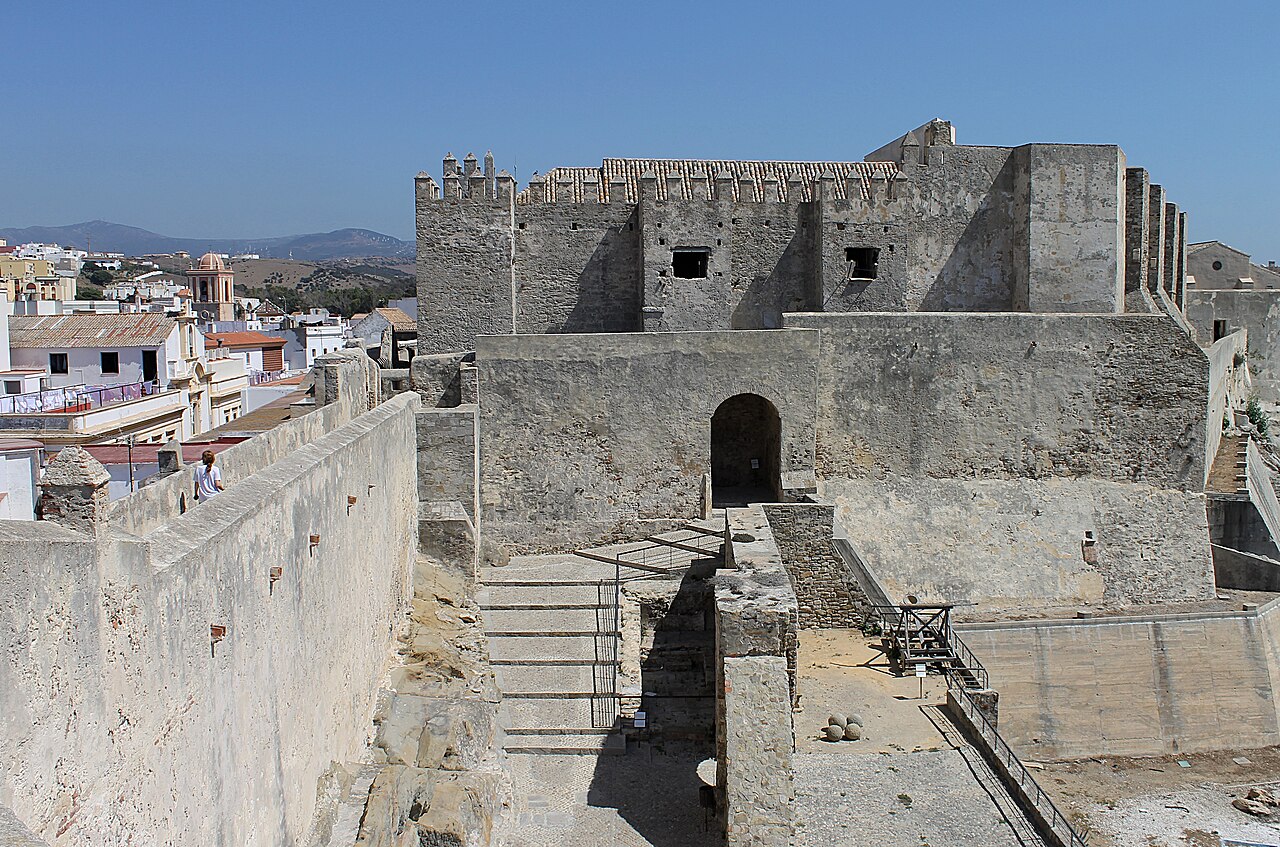
The fortress is constructed on a roughly square plan, enclosed by four robust defensive walls approximately three meters high. These walls are topped by a parapet with an adarve (narrow walkway) used for patrols and defense, although notably lacking the typical crenellations found in many medieval fortifications. The masonry consists of regular rectangular blocks (mampuestos) bonded with lime mortar mixed with pebbles, while the corners are reinforced with carefully cut stonework to enhance structural stability.
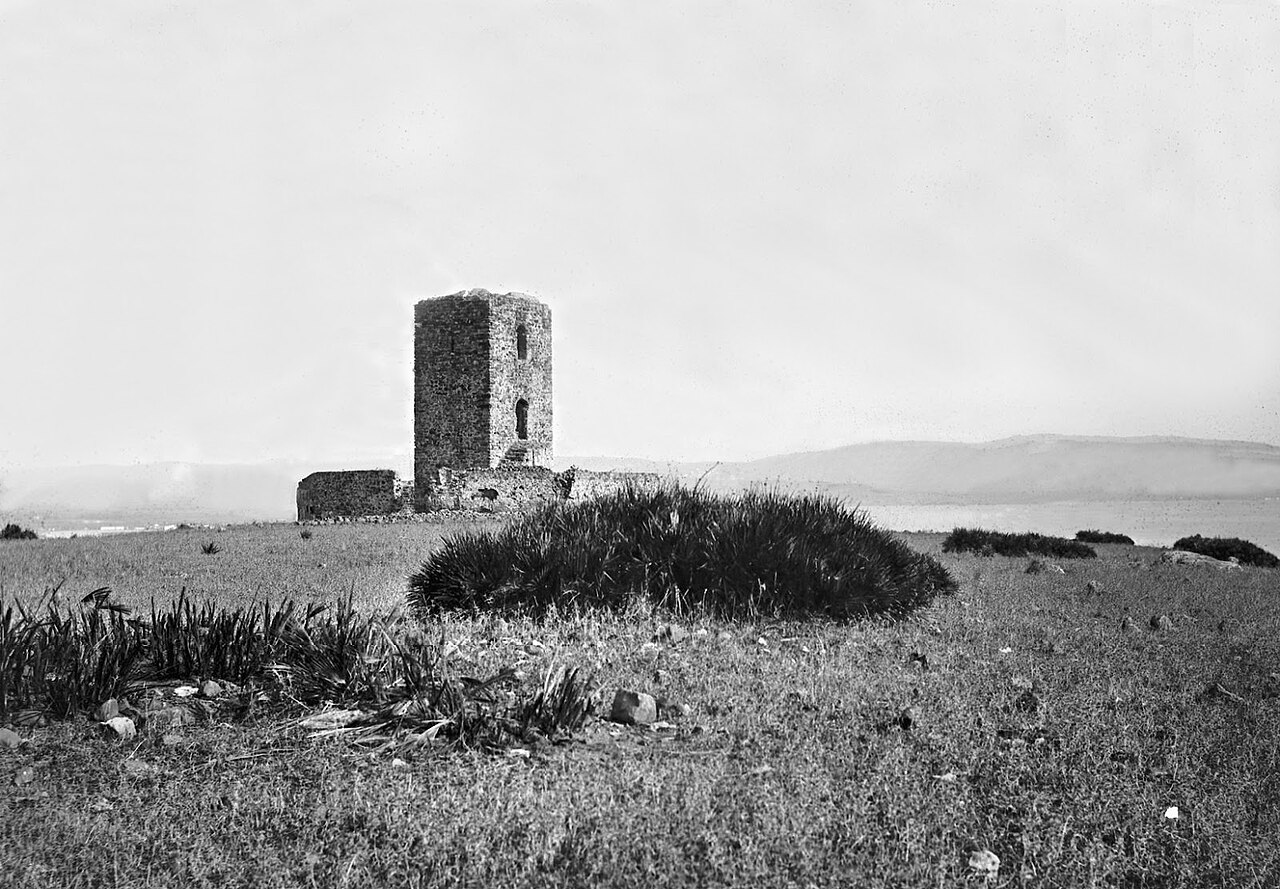
Two prominent towers anchor the corners of the fortress: the well-preserved Torre de Poniente at the northwest corner and the remains of the Torre de Levante at the northeast. Both towers were designed as corbelled spaces projecting beyond the curtain walls, allowing defenders to observe and repel attackers more effectively. The Torre de Poniente features an inner vaulted chamber beneath a high terrace surrounded by a parapet, providing an elevated platform for surveillance and defense.
Gates and access points
Access to the castle was carefully controlled through several gates. The main entrance is located in the western wall, characterized by large stone doorframes with arches and keystones. Along the southern wall, two sea gates open onto a large internal courtyard, reinforced by thick buttresses that strengthen their defensive capability. In the 20th century, a "New Gate" was added to the northern wall, along with other modifications such as additional openings to accommodate evolving uses of the building.
Multifunctional use and economic significance
The castle's design reflects its triple role as a military fortress, noble residence, and tuna processing facility. During the tuna season, the palace provided accommodation for the Guzmán family and their retinue, while the adjoining spaces were used for processing the catch. The integration of industrial and defensive architecture in this coastal setting is a distinctive feature that illustrates the economic importance of tuna fishing in the region.
Throughout its history, the fortress witnessed numerous historical events due to its strategic location near the Strait of Gibraltar, a critical maritime passage. Its presence on coastal maps over centuries attests to its enduring significance in navigation and military strategy.
Later history and preservation
By the 20th century, the castle's military function had largely ceased, and it was repurposed to support the fishing industry, including use as a barracks. Recognizing its cultural and historical value, Spanish authorities declared the Castle of Zahara de los Atunes and Palace of Jadraza a Bien de Interés Cultural (Cultural Heritage Site) in 2004, ensuring its protection and conservation.
Today, the fortress stands as a well-preserved example of medieval coastal architecture adapted to the unique demands of its environment. While some parts, such as the Torre de Levante, survive only as ruins, the overall structure retains much of its original character, showcasing the robust stonework, vaulted chambers, and defensive features that made it a formidable stronghold.
Architectural materials and construction techniques
The use of regular masonry blocks with lime mortar and pebbles provided durability against the harsh coastal climate. The reinforced stone corners and thick buttresses at the gates demonstrate advanced medieval masonry techniques aimed at maximizing defense. The vaulted roofs and high terraces of the towers further highlight the sophistication of the castle's design.
Cultural and heritage importance
The Castle of Zahara de los Atunes and Palace of Jadraza is not only significant for its military and economic history but also as a cultural symbol of the enduring tuna fishing tradition in southern Spain. Its preservation allows visitors to appreciate the intersection of medieval architecture, maritime economy, and regional history.
Frequently asked questions (FAQ)
- What is the historical significance of the Castle of Zahara de los Atunes?
- The castle was built in the 13th century to protect valuable tuna fisheries granted to Don Alonso Pérez de Guzmán by King Sancho IV, serving as a defensive fortress, noble residence, and processing site.
- Can I visit the Castle of Zahara de los Atunes today?
- Yes, the castle is accessible to visitors and is recognized as a Cultural Heritage Site, offering insights into medieval coastal defense and tuna fishing traditions.
- What architectural features make the castle unique?
- Its multifunctional design includes robust defensive walls, corbelled towers, vaulted chambers, and sea gates reinforced with thick buttresses, combining military and industrial functions.
- Why was the castle built near the Strait of Gibraltar?
- Its strategic location near the Strait of Gibraltar allowed control over maritime routes and protection of the lucrative tuna fisheries from pirate attacks.
- How did the castle evolve over time?
- Originally a medieval fortress and palace, it later served the fishing industry and was adapted with new gates and openings in the 20th century to meet changing needs.
Photo gallery

Information
Website
Visit websiteSources & official resources
Verify the information above using these authoritative references.
Loading map...
Visitor reviews
No reviews yet. Been here? Write the first review and help other travelers!
Write the first reviewVisited this castle? Share your experience
Your review helps other travelers and adds first-hand knowledge to our encyclopedia.