Tarifa Castle
Tarifa Castle, also known as the Castle of Guzmán el Bueno or the Castle of the Guzmáns, is a prominent hill castle located in the town of Tarifa in southern Spain. Constructed initially in 960 AD by Abd-ar-Rahman III, the Caliph of Córdoba, it stands as a significant example of early medieval military architecture on the Iberian Peninsula. The castle's strategic position commands the narrowest point of the Strait of Gibraltar, offering commanding views across to the coast and mountains of Morocco, which lies just a few kilometers away across the sea.
Early history and moorish origins
The original fortress was built during the early medieval period under the rule of the Umayyad Caliphate. Its location was chosen to control maritime traffic between the Mediterranean Sea and the Atlantic Ocean and to defend the southern coast of the Iberian Peninsula from Christian incursions. The castle's irregular, oblong shape suggests it may have been constructed atop the foundations of an earlier Roman fortification, a common practice in the region to utilize existing defensive works.
Reconquest and christian control
In 1292, the castle and the town of Tarifa were captured by Sancho IV, the king of Castile, marking a key moment in the Christian Reconquista of southern Spain. Following this conquest, the castle was entrusted to Alonso Pérez de Guzmán, a nobleman who became known as Guzmán el Bueno ("the Good") due to his steadfast loyalty and defense of the fortress.
The siege of 1296 and the legend of guzmán el bueno
One of the most famous episodes in the castle's history occurred during a siege in 1296, when Guzmán el Bueno was faced with a brutal dilemma. The besieging forces, led by the rebellious Infante Don Juan (brother of King Sancho IV) allied with the Marinid dynasty from North Africa, demanded the surrender of the castle in exchange for sparing the life of Guzmán's son. Demonstrating remarkable resolve and loyalty to his king and cause, Guzmán refused to yield the fortress, even ordering from the castle's Torre de Guzmán el Bueno that his son be sacrificed rather than surrender the stronghold. This act of sacrifice and loyalty cemented his legacy and gave the castle its enduring association with his name.
Architectural features and layout
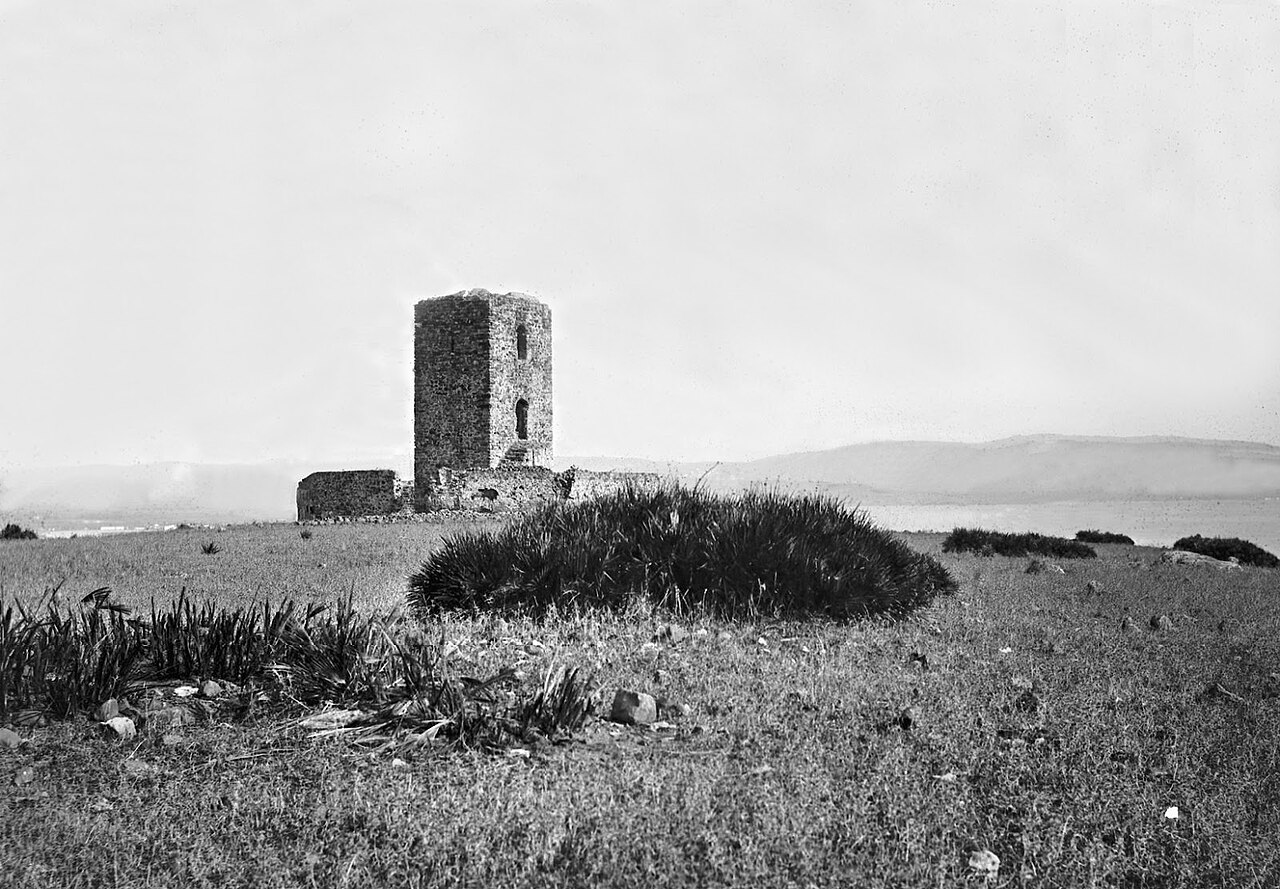
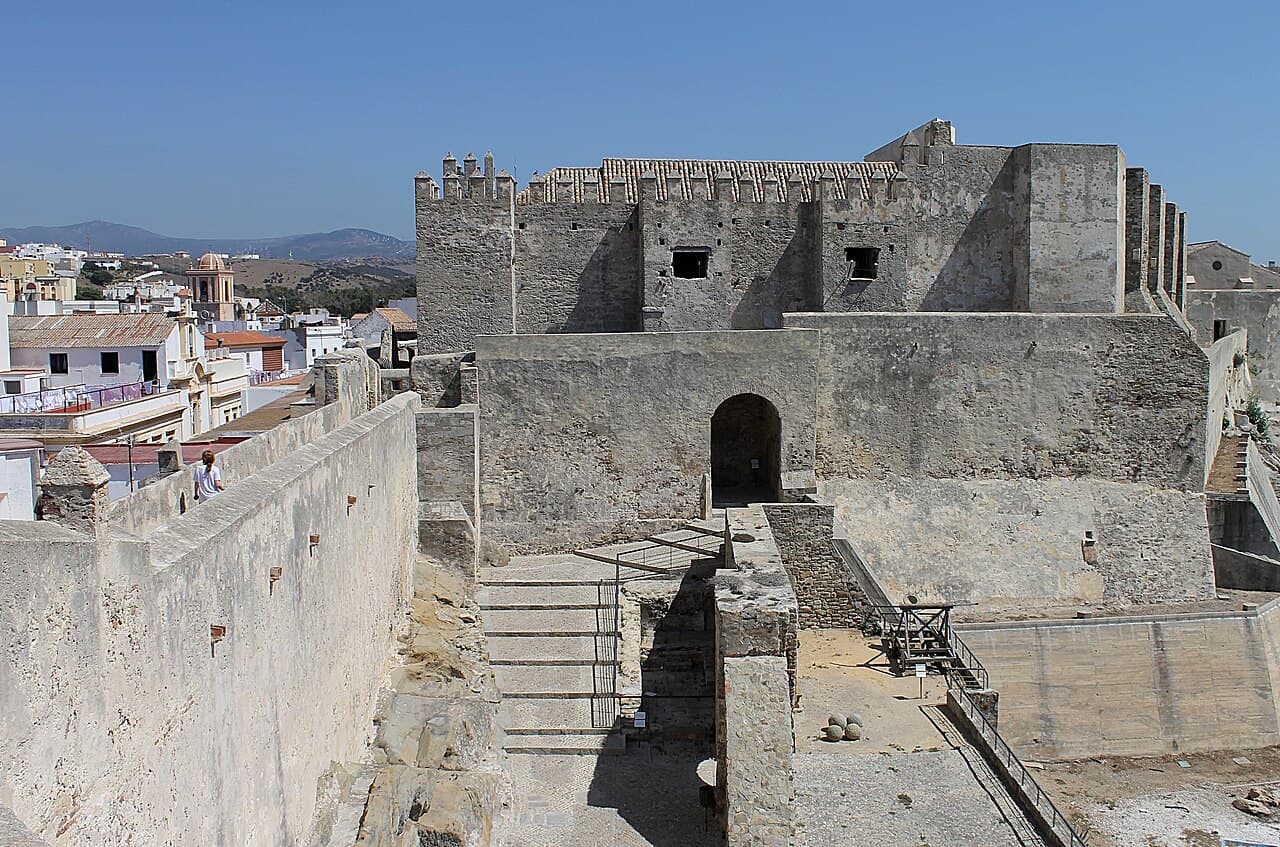
The castle exhibits a medieval military architectural style adapted to the terrain of the hill on which it stands. Its irregular oblong shape conforms to the contours of the site, maximizing defensive capabilities. The fortress is protected by thick stone walls and includes two prominent towers on the eastern side, one of which is the historically significant Torre de Guzmán el Bueno. These towers provided vantage points for surveillance and defense against attackers approaching from land or sea.
The castle's interior includes various defensive and residential structures such as battlements, courtyards, and chambers that were essential for garrison life during the medieval period. The design reflects the military needs of the era, emphasizing strong fortifications and strategic positioning.
Statues and commemorations
Outside the castle, visitors can find a statue of King Sancho IV, who led the reconquest of Tarifa from the Moors in 1292. Across the road on the Alameda, there is a statue honoring Alonso Pérez de Guzmán himself, celebrating his role as the castle's defender and founder of the noble line of the Dukes of Medina Sidonia.
Modern status and visitor experience
Recently refurbished, Tarifa Castle is open to the public and serves as a cultural and historical attraction. Visitors can explore the well-preserved fortress, walk along its walls and towers, and enjoy panoramic views of the Strait of Gibraltar and the distant Moroccan coast. The castle's location and condition make it an important site for understanding the military history of medieval Spain and the complex interactions between Christian and Muslim powers during the Reconquista.
The castle is a key landmark in Tarifa, contributing to the town's identity and tourism. Its accessibility and informative displays provide insight into the architectural and historical significance of this early medieval fortress.
Frequently asked questions (FAQ)
- What are the opening hours for visiting Tarifa Castle?
- Tarifa Castle is generally open to visitors during daytime hours, often from morning until late afternoon. It is advisable to check the current schedule before planning your visit, as hours may vary seasonally or due to special events.
- How do I get to Tarifa Castle?
- The castle is located in the town of Tarifa, Andalusia, Spain. It is accessible by car or public transportation, with parking available nearby. The castle sits on a hill within walking distance from the town center.
- What is the historical significance of Tarifa Castle?
- Tarifa Castle played a crucial role during the Reconquista, especially in the defense of the town against Muslim forces. It is famous for the 1296 siege where Alonso Pérez de Guzmán, known as Guzmán el Bueno, refused to surrender the castle, exemplifying loyalty and sacrifice.
- Can I see views of Morocco from Tarifa Castle?
- Yes, from the towers of Tarifa Castle, visitors can enjoy clear views across the Strait of Gibraltar to the coast and mountains of Morocco, highlighting its strategic maritime location.
- Is the castle suitable for families and children?
- Tarifa Castle is suitable for families, offering an educational experience about medieval history and architecture. However, some areas may involve climbing stairs or uneven surfaces, so supervision is recommended for young children.
Photo gallery

Information
Loading map...
Visitor reviews
No reviews yet. Been here? Write the first review and help other travelers!
Write the first reviewVisited this castle? Share your experience
Your review helps other travelers and adds first-hand knowledge to our encyclopedia.