Zagórze Śląskie — Poland castle

Zagórze Śląskie

Grodno Castle in Zagórze Śląskie: a late medieval bastioned fortress
Zagórze Śląskie, Poland
Late Medieval (14th–15th c.)
Ruins

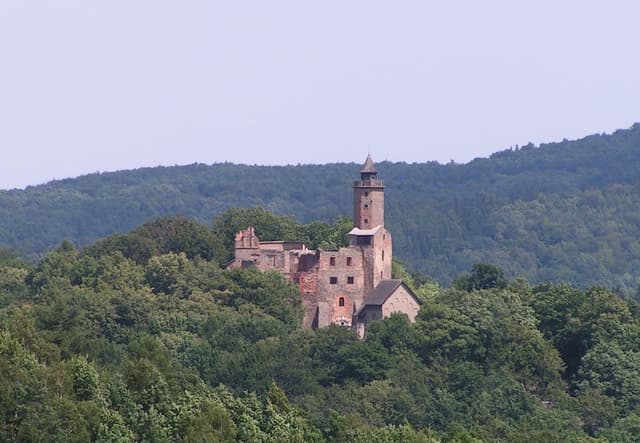
Grodno Castle, also historically known as Kynsburg, is a remarkable example of a late medieval bastioned fortress located on the summit of Choina Mountain (450 m above sea level) in the northern part of the Owl Mountains (Góry Sowie), near the town of Zagórze Śląskie in Poland. Its strategic position overlooking the valley of the Bystrzyca Kłodzka River provided a natural defensive advantage and made it a key stronghold guarding the borderlands between the Duchy of Świdnica-Jawor and the Kingdom of Bohemia. This castle is renowned for its picturesque setting and its complex architectural evolution from a Gothic fortress into a Renaissance residence.

Early history and medieval origins

The first documented mention of Grodno Castle dates back to 1315, during the rule of the Piast dukes Bernard, Bolko II, and Henryk over the Świdnica-Jawor duchy. While local legend attributes the initial construction to Duke Bolesław Wysoki in the late 12th century, no archaeological or historical evidence confirms this early origin. It is more likely that the castle was founded by Duke Bolko I of Świdnica, who either built or initiated the construction of the fortress in the late 13th or early 14th century as part of a defensive network along the Silesian-Bohemian border.

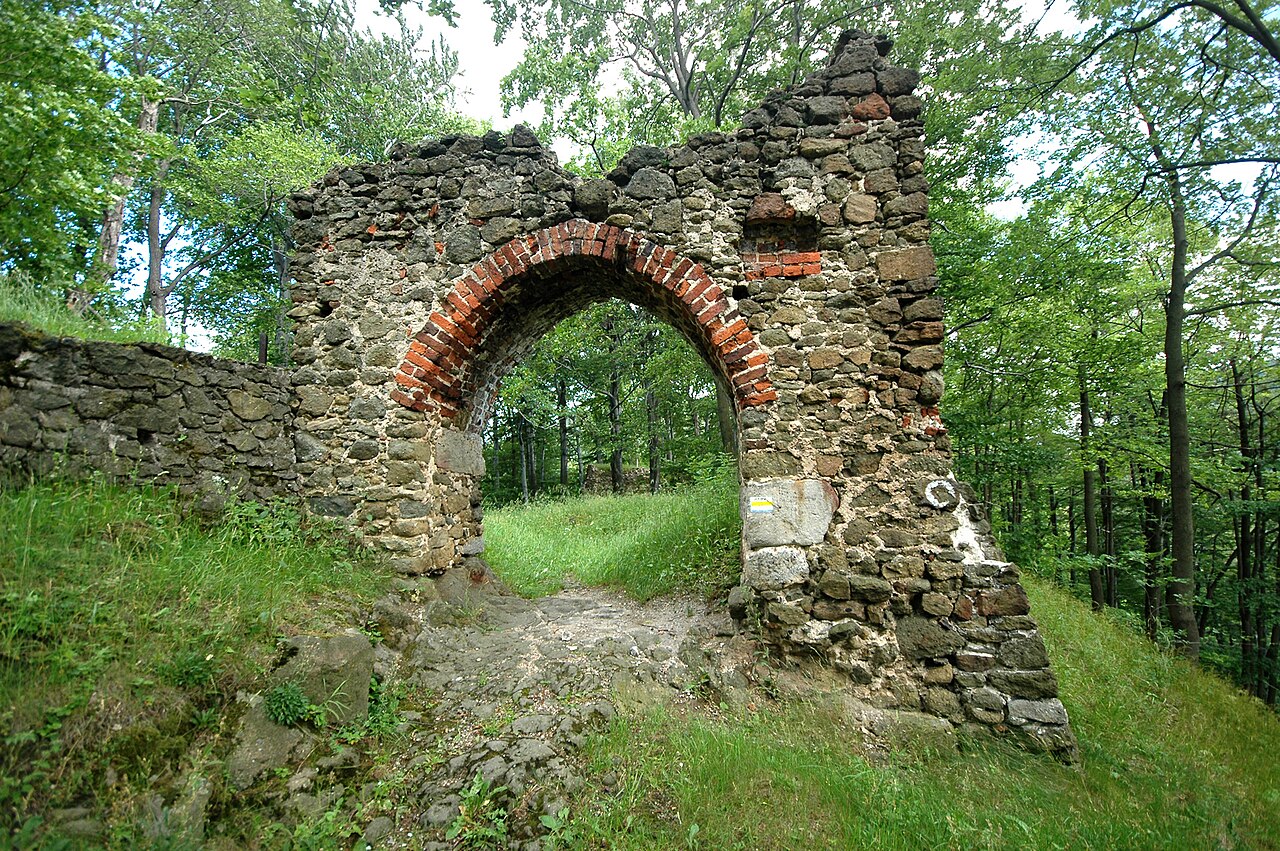
The original castle occupied the highest eastern part of the Choina hill and was built on an elongated polygonal plan. Its Gothic curtain walls, approximately 2.4 meters thick and constructed from local broken stone set in lime mortar, were reinforced with buttresses and topped with battlements. A protected walkway ran along the walls behind crenellations for the guards. The main entrance was located on the eastern side, defended by a gate tower with a drawbridge spanning a dry moat. Inside the castle, two stone buildings adjoined the southern curtain wall, likely serving as the main residential and administrative quarters, while other economic structures were probably wooden. The castle lacked a well but featured a rock-hewn cistern in the courtyard for water storage. A prominent quadrangular tower projected over a steep rock escarpment at the southern corner, enhancing the defensive capabilities.

Renaissance transformation and expansion

In the 15th century, after the castle passed under the authority of the Bohemian Crown in 1392, it experienced turbulent times. It was often held by various noble families, some of whom were raubritters (robber knights), including Jerzy Mühlheim and the Czetryć family. The castle's military importance declined as it became a base for local banditry.

A major rebuilding campaign occurred between 1545 and 1587 under the ownership of Matthias von Logau and his family. This renovation transformed Grodno from a purely defensive fortress into a Renaissance residence with enhanced fortifications. The Gothic buildings were heightened and connected to the main tower, forming the southern wing. A new gatehouse with a corner kitchen tower was built on the western side, and a third wing was added along the eastern curtain wall. These wings were single-tract with rooms arranged enfilade, reflecting Renaissance architectural principles.

The main tower was extended upwards by three octagonal stories, creating a distinctive silhouette. The entrance was fortified by a long gate neck ending in a two-story tower, decorated with a richly crafted Renaissance portal made of grey and red sandstone. This portal is considered one of the most magnificent secular Renaissance portals in Silesia. The castle interiors were adorned with elaborate Renaissance decorations, and a new courtyard was established on the northwest side, enclosed by a wall with two bastions.

Further fortifications were added to the north, creating an outer bailey (lower castle) with a curtain wall featuring a row of loopholes and an attic decorated with sgraffito. The lower castle included a rectangular gatehouse with two stories and a richly decorated portal, five bastions along the curtain wall, and buildings for economic functions such as a bakery, bathhouse, and stables.

Decline, destruction, and preservation efforts

By the late 16th century, financial difficulties led owner Jerzy von Logau to sell parts of the estate. After his death in 1596, the castle changed hands multiple times, including being granted by Emperor Rudolf II to his Moldavian ally Michael the Brave and later owned by Baron Bernard Fünfkirchen and Count Jan Jerzy Hohenzollern-Sigmaringen.

During the Thirty Years' War (1618–1648), Grodno Castle was captured and heavily damaged by Swedish forces. In 1679, it was besieged during a peasant uprising but successfully defended. Despite repairs, the castle gradually fell into neglect in the 18th century. It was abandoned in 1774, and natural disasters such as lightning strikes and structural collapses further ruined the fortress. By the early 19th century, local peasants acquired the ruins intending to dismantle them for building materials.

The castle was saved from complete destruction through the intervention of Professor Jan Gustaw Büsching, a historian and antiquarian who secured lifetime rights to the site and initiated conservation works. Subsequent owners, including the Zeidlitz family, continued preservation efforts, although some modifications were made that did not always align with historical accuracy. For example, some bastions were converted into terraces or restaurant spaces.

After World War II, the castle was managed by the Wałbrzych branch of the Polish Tatra Society, which carried out further stabilization and conservation in the 1950s and 1980s. Today, Grodno Castle is open to visitors as a partially preserved ruin with a museum housed in the restored southern and eastern wings. It displays original Renaissance portals, historic artifacts, and offers panoramic views from the reconstructed tower.

Architectural features and layout

Grodno Castle is one of the largest and best-preserved castles in Silesia, featuring a complex spatial arrangement divided into the upper (medieval) and lower (Renaissance) castles. The upper castle is situated on a narrow rocky ridge, naturally defended by steep slopes and the river valley below. It includes the main gate with a drawbridge over a dry moat, a quadrangular tower on the southern curtain wall, and two stone residential buildings.

The lower castle, built during the Renaissance expansion, extends westward and is enclosed by a curtain wall with five bastions topped by an attic decorated with sgraffito. The gatehouse here is notable for its two-story Renaissance portal adorned with allegorical reliefs representing the eight virtues: Faith (Fides), Justice, Charity (Caritas), Strength (Fortitudo), Patience (Patientia), Wisdom (Prudentia), and Hope (Spes). The portal also features eight coats of arms of the castle's owners and related noble families, crowned by a double-headed eagle with a mitre and griffins, symbolizing imperial connections.

The castle's walls are crowned with battlements and supported by buttresses. The main tower was heightened with an octagonal upper section, providing commanding views of the Owl Mountains and the Bystrzyca River valley, including the artificial Bystrzyckie Lake below.

Archaeological remains in the lower castle area reveal foundations of functional buildings such as a bakery, bathhouse, and stables, illustrating the castle's self-sufficient infrastructure during its peak.

Visitor information and cultural significance

Today, Grodno Castle is a popular tourist destination and cultural monument in Lower Silesia. The partially restored ruins offer visitors a glimpse into the region's medieval and Renaissance history, architectural evolution, and the turbulent political landscape of Silesia over the centuries.

The castle museum showcases original architectural details, period furnishings, and exhibits related to the castle's history and its various noble owners. From the reconstructed tower's gallery, visitors can enjoy expansive views of the surrounding mountains and the Bystrzyckie Lake, enhancing the castle's appeal as a scenic and historical landmark.

Grodno Castle's blend of Gothic defensive features and Renaissance residential elegance, combined with its dramatic location, make it a significant heritage site that reflects the complex history of Silesia and its borderlands.

Frequently asked questions (FAQ)

What is the historical significance of Zagórze Śląskie Castle?
Zagórze Śląskie Castle, dating back to the 13th century, played a crucial role in the region's defense against invasions. Its strategic location allowed it to oversee trade routes and protect local settlers, making it a key site in Polish history.
When was Zagórze Śląskie Castle built?
The construction of Zagórze Śląskie Castle began in the early 13th century, with significant renovations occurring in the following centuries. This long history contributes to its diverse architectural styles, reflecting the various periods of its existence.
Can I visit Zagórze Śląskie Castle?
Yes, Zagórze Śląskie Castle is open to visitors throughout the year. Guided tours are available, providing insights into its history, architecture, and the surrounding landscape.
What are the opening hours for Zagórze Śląskie Castle?
The castle is typically open from 10 AM to 6 PM during the tourist season, but hours may vary in the off-season. It's advisable to check the official website or contact the visitor center for the most current information before your visit.
Is it possible to access Zagórze Śląskie Castle with a wheelchair?
While efforts have been made to improve accessibility, the castle's historical structure may present some challenges for wheelchair users. Visitors are encouraged to inquire about specific accessibility options when planning their visit.
What is the best time to visit Zagórze Śląskie Castle?
The best time to visit is during the spring and early autumn months when the weather is pleasant, and the surrounding landscape is particularly beautiful. These seasons also offer fewer crowds, allowing for a more enjoyable experience.
Are there any nearby attractions to explore after visiting the castle?
Yes, the area around Zagórze Śląskie offers several attractions, including beautiful hiking trails and local museums. Visitors can also explore the charming village and enjoy the scenic views of the surrounding mountains.
How much does it cost to enter Zagórze Śląskie Castle?
Ticket prices for Zagórze Śląskie Castle vary depending on the season and whether you opt for a guided tour. Generally, entrance fees are quite reasonable, making it an affordable option for families and history enthusiasts alike.

Photo gallery

Zagórze Śląskie
Click to view

Photo by Spook at Polish Wikipedia•CC BY-SA 2.5

1 photo • Click any image to view in full screen

Information

Bastioned Fortress

Sources & official resources

Verify the information above using these authoritative references.

Loading map...

Visitor reviews

No reviews yet. Been here? Write the first review and help other travelers!

Write the first review

Visited this castle? Share your experience

Your review helps other travelers and adds first-hand knowledge to our encyclopedia.

Write a review

(5/5)

0/2000 characters

Your review will be visible after admin approval

Nearby castles

3.3 km

Olszyniec

Olszyniec, Poland

Olszyniec Castle was a modest late medieval hill castle located near the village of Olszyniec, now part of the town of Jedliny-Zdrój in southwestern Poland. Nestled at the foothills of the Sowie Mountains (Góry Sowie), this small fortress occupied a strategic position in the valley of the Bystrzyca River. Constructed around the turn of the 14th to 15th century, it served as a knightly seat during a turbulent period marked by regional conflicts and shifting allegiances.The castle was likely built as a stone structure, typical of minor noble residences of the time, designed to provide defense and control over the surrounding lands. Despite its strategic location, Olszyniec Castle had a relatively short lifespan, functioning for only a few decades before being destroyed in the Hussite Wars of the early 15th century. These wars, which ravaged much of Central Europe, led to the castle's ruin and it was never rebuilt.Today, there are no visible remains of the castle above ground, and the exact site of the fortress remains a subject of some debate among historians and archaeologists. The absence of physical remnants makes it difficult to reconstruct the castle's precise layout or architectural details, but historical records and local tradition confirm its existence and significance during the late medieval period.Historical context and significanceThe region around Olszyniec was a contested borderland during the late Middle Ages, with various noble families vying for control. The castle likely functioned as a minor defensive stronghold and administrative center for a local knightly family. Its location in the Bystrzyca valley would have allowed control over trade routes and local resources.The Hussite Wars (1419-1434), a series of religious and political conflicts triggered by the reformist Hussite movement in Bohemia, spilled over into neighboring Silesia and Lower Lusatia. Many small castles and fortifications in the area were attacked or abandoned during this period. Olszyniec Castle was among those destroyed, reflecting the widespread disruption caused by these wars.Architectural features and constructionWhile no physical structures survive, it is believed that Olszyniec Castle was constructed primarily from stone, which was common for castles in the region during the late medieval era. The castle was probably a modest hilltop fortress, featuring defensive walls and possibly a small keep or tower house. Its design would have prioritized defense and surveillance over grand residential comforts.The castle's placement on a hill overlooking the valley provided natural defensive advantages, allowing defenders to spot approaching enemies and control the surrounding landscape. The use of local stone materials would have integrated the castle visually into its mountainous environment.Current status and archaeological considerationsToday, Olszyniec Castle exists only in historical documentation and local lore. No visible ruins remain, and the exact location is uncertain, complicating archaeological efforts. The site is considered an archaeological site rather than a preserved castle ruin.Despite the lack of physical remains, the castle holds cultural and historical importance as a representation of the region's medieval heritage and the impact of the Hussite Wars on local fortifications. It attracts interest from historians and enthusiasts of medieval architecture and regional history.Visiting and local contextVisitors to the area can explore the surroundings of Jedliny-Zdrój and the Sowie Mountains, enjoying the natural beauty and hiking opportunities. While the castle itself cannot be visited, the region offers insights into the medieval history of southwestern Poland through nearby preserved castles and historical sites.The story of Olszyniec Castle contributes to understanding the network of small fortifications that dotted the landscape during the late medieval period, reflecting the social and military dynamics of the time.

Late Medieval (14th–15th c.)
Details
4.5 km

Bojanice

Bojanice, Poland

Bojanice castle was a medieval hill castle located on a strategic elevation west of the village of Bojanice, nestled in the valley of Bojanicka Woda at the foothills of the Sowie Mountains in Poland. Documented origins of the village date back to the 14th century, and it is likely that the settlement, along with the castle, existed earlier as part of the regional defensive network. The castle was probably constructed in the 14th century during the late medieval period and belonged to the Świdnica-Jawor duchy, a significant principality within the fragmented Piast-ruled Silesia.Historical context and ownershipThe Świdnica-Jawor duchy was a notable political entity in southwestern Poland during the Middle Ages, and Bojanice castle formed part of its border defenses. Castles like Bojanice served as administrative centers, military strongholds, and symbols of feudal authority. Unfortunately, detailed records about Bojanice castle's role and ownership are scarce, limiting comprehensive understanding of its historical significance.Architectural features and layoutDue to the lack of surviving physical remains and limited archaeological research, the exact architectural design of Bojanice castle remains unknown. The castle was situated on a hilltop, typical for defensive sites in the region, providing commanding views over the surrounding valley and control of local routes. It likely featured typical medieval fortifications such as stone walls, a gatehouse, towers, and possibly a keep or donjon. However, no detailed plans or descriptions survive to reconstruct its layout.Destruction and current conditionBojanice castle was destroyed during the Thirty Years' War (1618-1648), a devastating conflict that affected much of Central Europe. By the 19th century, remnants of the castle's walls were still visible, but systematic quarrying of stone from the ruins led to the complete dismantling of the structure. Today, no visible traces of the castle remain on the hill, and the site is considered archaeological ruins. The absence of above-ground remains challenges preservation and interpretation efforts.Archaeological potential and heritage significanceAlthough Bojanice castle no longer stands, its location and historical context offer potential for archaeological investigation. Excavations could reveal foundations, defensive features, and artifacts that illuminate medieval life in the region. The castle's association with the Świdnica-Jawor duchy contributes to understanding the complex feudal landscape of late medieval Silesia. Preserving knowledge of such vanished sites is crucial for regional cultural heritage.Visiting the site todayVisitors to Bojanice can explore the surrounding countryside and the village, appreciating the natural beauty of the Sowie Mountains foothills. Although the castle itself has vanished, the site remains of interest to history enthusiasts and hikers. Interpretation is limited due to the lack of visible remains, so visitors should prepare accordingly and seek local historical resources for context.

Late Medieval (14th–15th c.)
Details
8.4 km
Nowy Dwór Castle in Wałbrzych — Poland castle

Nowy Dwór Castle in Wałbrzych

Wałbrzych, Poland

Nowy Dwór Castle is a historic hill castle located in the city of Wałbrzych, in southwestern Poland. Constructed in the 14th century, it represents a significant example of late medieval military architecture in the region. The castle was originally built for defensive purposes, strategically positioned on elevated terrain to oversee and control the surrounding landscape. Historical context and construction The castle's foundation dates back to the late medieval period, a time when fortifications were essential for territorial defense and asserting noble power. Built primarily in the 14th century, Nowy Dwór Castle was part of a network of fortresses in the Lower Silesia region, which was then a contested borderland between various duchies and kingdoms. The castle's location on a hill provided a commanding view, allowing defenders to spot approaching enemies from a distance. The original builders likely belonged to the local nobility or ruling authorities who sought to establish a fortified residence and stronghold. The architectural style reflects typical late medieval design elements, focusing on functionality and defense, with thick stone walls and limited openings. Architectural features Nowy Dwór Castle is classified as a hill castle due to its elevated position. The castle's layout includes a central keep or donjon, which served as the last line of defense and the residence of the lord. Surrounding the keep, there are remnants of curtain walls that once enclosed the castle courtyard, providing protection against invaders. The defensive structures likely included battlements, arrow slits, and possibly a moat or ditch carved into the hillside to enhance security. Although much of the castle is now in ruins, archaeological studies and remaining walls reveal the robust construction techniques typical of the period. Materials and construction techniques The castle was primarily built using locally sourced stone, which provided durability and resistance to siege weaponry. The masonry work demonstrates the craftsmanship of medieval stonemasons, with thick walls designed to withstand battering and fire. Timber may have been used for floors, roofs, and internal structures, though these elements have not survived. Historical significance and ownership Throughout its history, Nowy Dwór Castle played a role in regional defense and administration. It was likely owned by noble families who governed the surrounding lands and used the castle as a seat of power. The castle's strategic position made it a valuable asset during conflicts in the region, including local skirmishes and broader territorial disputes in Silesia. Over the centuries, the castle experienced periods of occupation, damage, and neglect, which contributed to its current state as a ruin. Despite this, it remains an important cultural and historical landmark, reflecting the medieval heritage of Wałbrzych and Lower Silesia. Current condition and preservation Today, Nowy Dwór Castle stands as partially preserved ruins. The surviving walls and structural elements provide valuable insights into medieval fortification architecture. Preservation efforts focus on stabilizing the ruins and making the site accessible to visitors interested in history and archaeology. The castle is a popular destination for tourists and history enthusiasts, offering scenic views of the surrounding countryside and a tangible connection to Poland's medieval past. Interpretive signage and guided tours help visitors understand the castle's historical context and architectural features. Visiting Nowy Dwór Castle The castle is accessible to the public, with pathways leading up the hill to the ruins. Visitors can explore the remains of the keep, courtyard, and defensive walls while enjoying panoramic views of Wałbrzych and its environs. The site is especially attractive during spring and summer months when the natural surroundings are lush and inviting. While the castle does not have extensive visitor facilities, its historical ambiance and scenic location make it an appealing stop for those interested in medieval architecture and Polish history. Nearby attractions Wałbrzych itself offers several other historical sites and cultural attractions, including the well-known Książ Castle, which is one of the largest castles in Poland. Visitors to Nowy Dwór Castle often combine their visit with trips to these nearby landmarks to gain a broader appreciation of the region's rich heritage.

Late Medieval (14th–15th c.)
Details