Yedikule Fortress
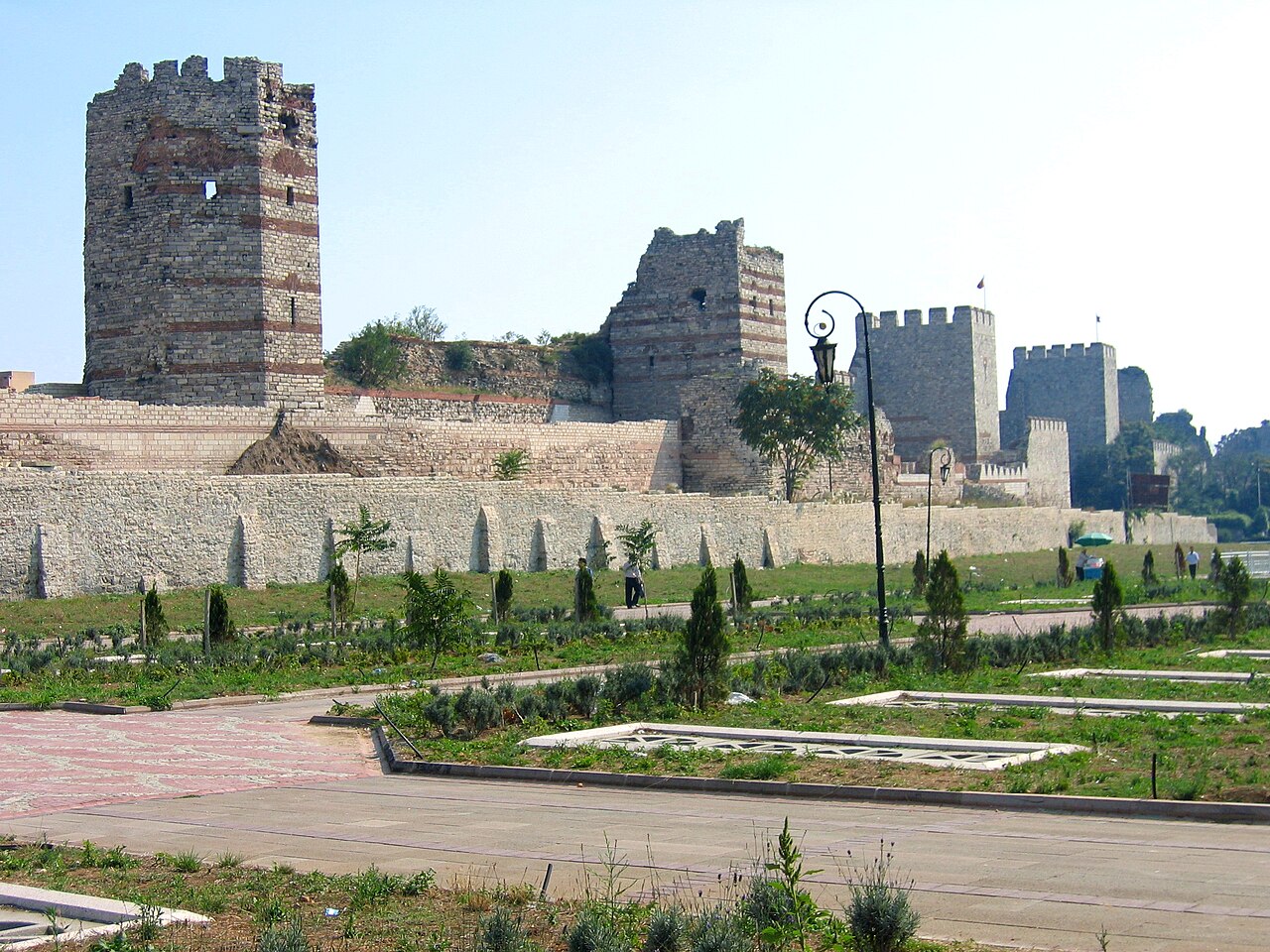
Yedikule Fortress, also known locally as Yedikule Hisarı or Yedikule Zindanları—meaning 'Fortress of the Seven Towers' or 'Dungeons of the Seven Towers'—is a remarkable historic fortification located in the Fatih district of Istanbul, Turkey. This fortress stands as a significant symbol of the city's layered history, bridging the Byzantine and Ottoman eras. It occupies a strategic position on the Sea of Marmara coast and is an integral part of the city's ancient defensive system.
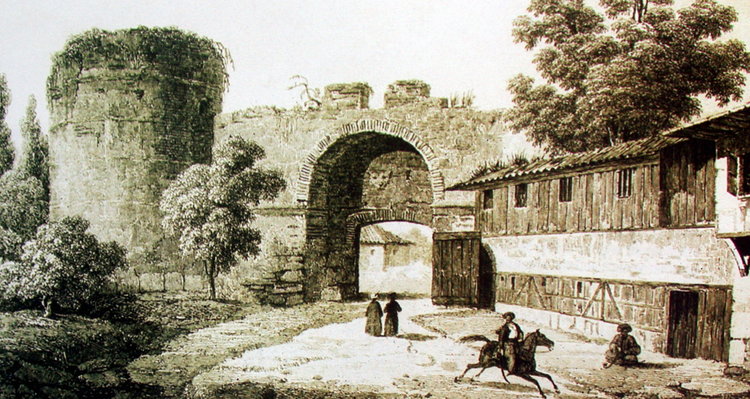
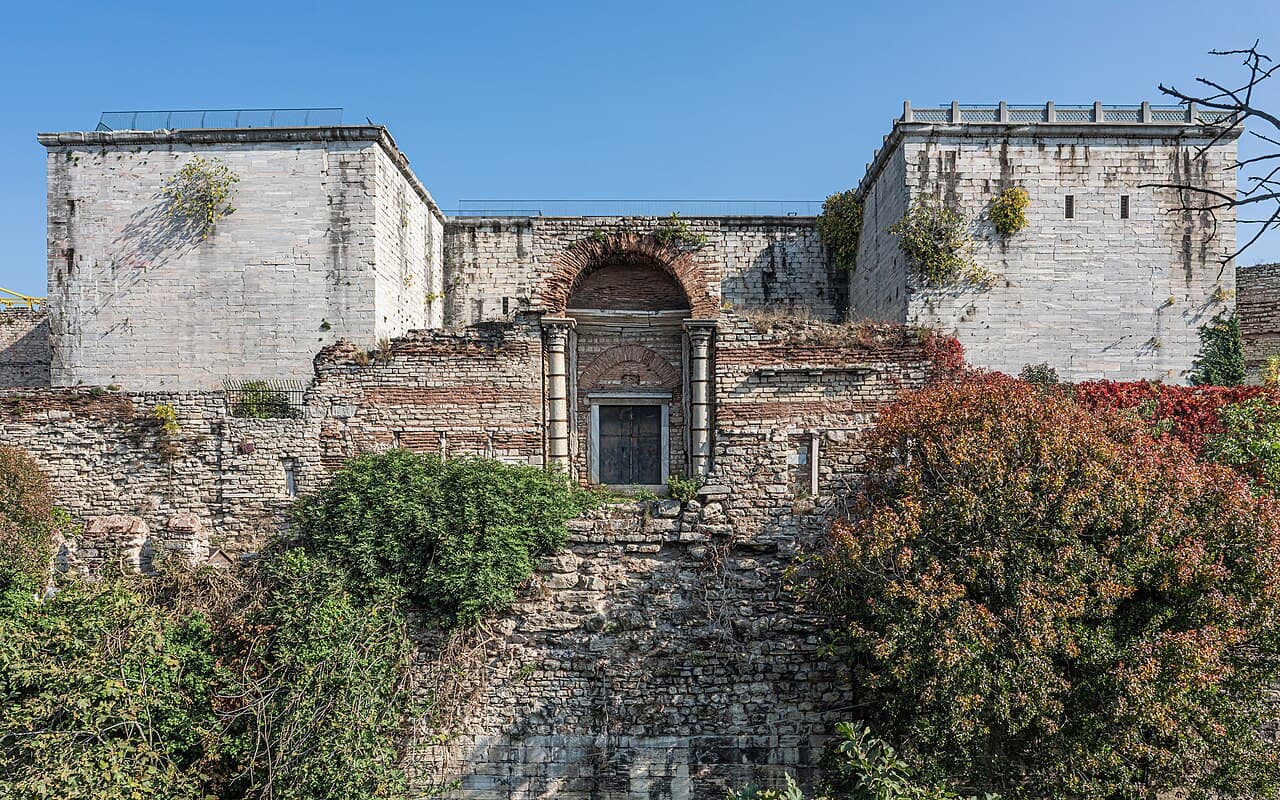
Originally, the site of Yedikule Fortress was not a standalone castle but part of the formidable Theodosian Walls, constructed in the 5th century during the Early Medieval period under the Byzantine Empire. These walls were among the most sophisticated defensive structures of their time, protecting Constantinople from numerous sieges. The section encompassing Yedikule included the famed Golden Gate, the city's main ceremonial entrance. The Golden Gate was distinguished by its two massive square towers and gilded doors, through which Byzantine emperors would enter triumphantly after military victories or during coronations.
Transformation into an Ottoman fortress
Following the conquest of Constantinople in 1453, the Ottoman Sultan Mehmed II, the Conqueror, ordered the construction of the Yedikule Fortress in 1457-1458. This involved enclosing a segment of the Byzantine walls, including the two towers of the Golden Gate and two adjacent wall towers, by adding three large round towers. This combination of Byzantine and Ottoman architecture created a unique seven-tower complex, hence the name 'Fortress of the Seven Towers.'
The Golden Gate itself was sealed off, a measure steeped in legend and superstition. According to local lore, the last Byzantine Emperor, Constantine XI Palaiologos, was turned to marble by an angel and hidden in an underground cave near the gate, destined to return and reclaim the city. Sealing the gate was believed to prevent his prophesied return.
Architectural features and layout
The fortress's architecture is a fascinating blend of Byzantine and Ottoman military design. The three newly constructed round towers combined with the existing square towers of the Golden Gate and the wall towers form a defensive enclosure with thick walls and battlements designed to withstand sieges. The fortress's walls are robust, constructed from stone and brick, reflecting the engineering prowess of the period.
Inside the fortress, there were various functional spaces including storerooms, armories, and living quarters for the garrison. A mosque was also established within the complex to serve the spiritual needs of the soldiers and residents. The fortress's position on the coast allowed it to control maritime access and protect the southern approaches to the city.
Historical roles: treasury, prison, and beyond
Initially, Yedikule Fortress served as the imperial treasury for the Ottoman sultans. Each tower was designated for storing different valuable items such as precious metals, documents, armor, coins, and ingots of gold and silver. This role underscored the fortress's importance as a secure facility safeguarding the empire's wealth.
In the 16th century, the treasury was relocated to the newly established Topkapı Palace, and Yedikule's function shifted to that of a state prison. The fortress became infamous for housing high-profile prisoners, including foreign ambassadors from hostile states, political prisoners, and prominent figures caught in palace intrigues.
Notable prisoners and executions
- David Megas Komnenos, the last Emperor of Trebizond, imprisoned and executed in 1461.
- Simon I of Kartli, a Georgian monarch, held captive in 1611.
- Constantin Brâncoveanu, Prince of Wallachia, and his family, executed in 1714.
- Sultan Osman II, the young Ottoman ruler, imprisoned and killed in 1622 after a Janissary revolt.
The fortress also detained other Ottoman officials and military leaders who fell out of favor. During the 18th century, it imprisoned the Russian ambassador and his staff amid Russo-Ottoman tensions. Around the Napoleonic Wars, it held numerous French prisoners of war.
Decline and modern use
Yedikule Fortress ceased functioning as a prison by the early 19th century. The garrison houses within the walls, which had formed a small community, were demolished. Subsequently, the fortress was repurposed as a gunpowder magazine until 1895, when it was converted into a museum.
Throughout the 20th century, the fortress underwent various restoration efforts and became a venue for cultural activities, including an open-air theater. It served as a public historical site attracting visitors interested in its rich past and architectural significance.
However, in recent years, the fortress has been closed to the public, with security measures restricting access. The reasons for this closure are not publicly detailed, and the interior appears largely unused and neglected. The presence of private gardens and a graveyard near the Golden Gate facade further limits visibility and access.
Significance in Istanbul's heritage
Yedikule Fortress remains a powerful testament to Istanbul's complex history, embodying the transition from Byzantine to Ottoman rule. Its unique architectural fusion and multifaceted roles over centuries highlight its importance as a cultural and historical monument. Despite its current closure, it continues to be a subject of interest for historians, architects, and visitors fascinated by the city's defensive heritage.
Frequently asked questions (FAQ)
- When was Yedikule Fortress built and by whom?
- Yedikule Fortress was constructed in 1457-1458 by Ottoman Sultan Mehmed II after the conquest of Constantinople, incorporating part of the 5th-century Byzantine Theodosian Walls.
- What was the original purpose of Yedikule Fortress?
- Originally part of the Byzantine city walls, it was transformed into an Ottoman fortress serving first as the imperial treasury and later as a state prison.
- Can visitors currently explore Yedikule Fortress?
- As of now, Yedikule Fortress is closed to the public and guarded, with no access for visitors due to unspecified reasons.
- Which notable historical figures were imprisoned at Yedikule Fortress?
- Notable prisoners include the last Emperor of Trebizond David Megas Komnenos, Sultan Osman II, Simon I of Kartli, and Prince Constantin Brâncoveanu with his family.
- What architectural styles are represented in Yedikule Fortress?
- The fortress showcases a mix of Byzantine and Ottoman architectural styles, combining the Theodosian Walls and Golden Gate with Ottoman round towers and defensive features.

Information
Opening hours
Currently closed to visitors
Ticket prices
Free
Current owner
Municipality
Address
Yedikule Meydanı Sk. 9, Istanbul, Turkey
Loading map...
Visitor reviews
No reviews yet. Been here? Write the first review and help other travelers!
Write the first reviewVisited this castle? Share your experience
Your review helps other travelers and adds first-hand knowledge to our encyclopedia.