Walls of Constantinople
The walls of Constantinople (Turkish: Konstantinopolis Surları; Greek: Τείχη της Κωνσταντινούπολης) represent one of the most significant and enduring defensive fortification systems in history. Constructed to protect the ancient city of Constantinople, now modern-day Istanbul, these walls have played a pivotal role in safeguarding the city since its establishment as the new capital of the Roman Empire by Constantine the Great in the early 4th century. Their strategic importance and architectural complexity have made them a landmark of military engineering and a symbol of the city's resilience through centuries of warfare and political change.
Early construction and constantine’s fortifications
The initial fortifications were erected under the orders of Constantine I in the early 4th century, soon after he declared Byzantium the new capital of the Roman Empire in 330 AD, renaming it Constantinople. These early walls enclosed the city on all sides, providing a robust defense against land and sea attacks. Constructed primarily from stone and brick, the walls featured towers and gates strategically positioned to monitor and repel invaders. This early phase laid the foundation for what would become a vast and complex defensive network.
Theodosian walls: the pinnacle of medieval fortification
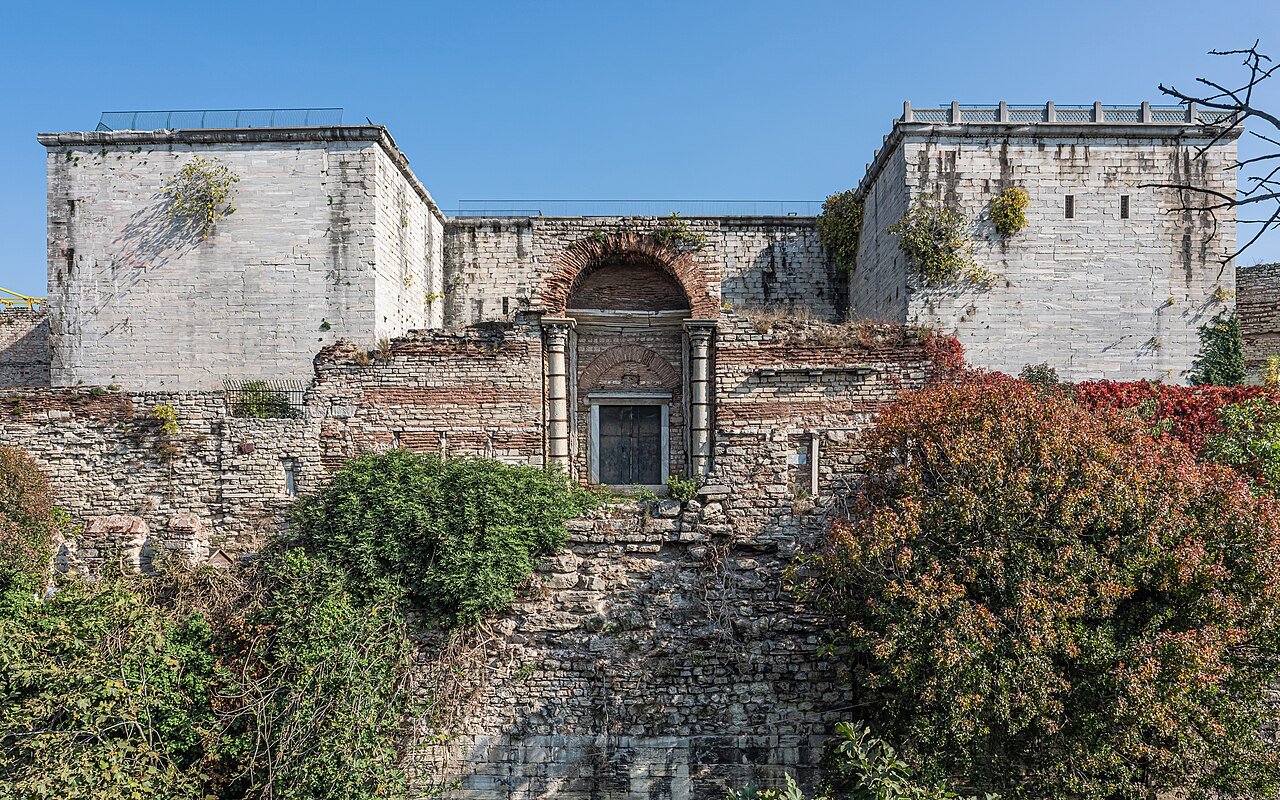
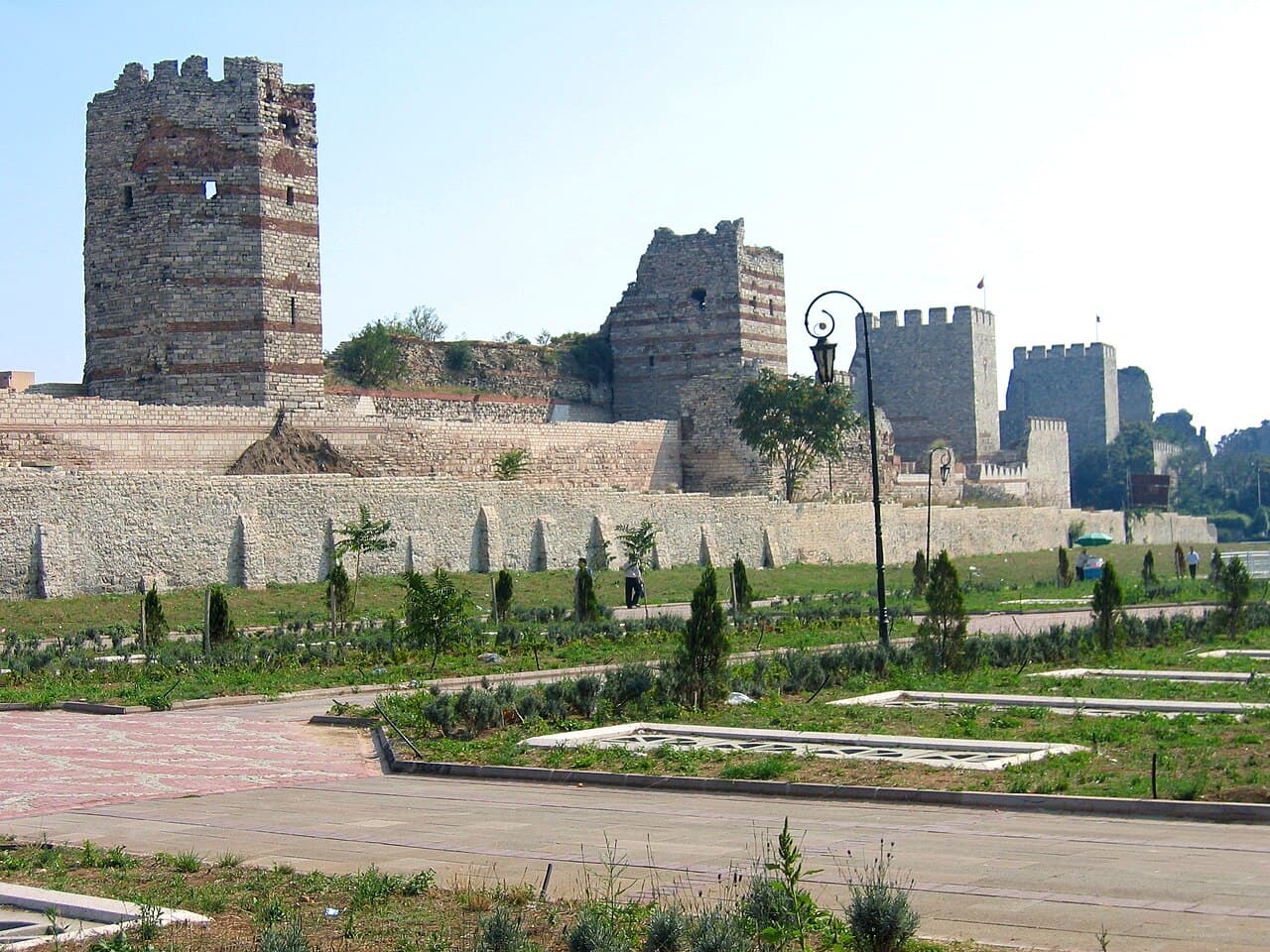
During the 5th century, the walls underwent their most significant expansion under the reign of Theodosius II. The resulting Theodosian Walls formed a formidable double line of defense stretching approximately 6.5 kilometers along the city's western landward side. This system consisted of a main outer wall, a lower inner wall, and a wide moat in front. The outer wall rose to about 12 meters high and was reinforced by numerous towers spaced at regular intervals, allowing defenders to launch arrows and projectiles effectively. The inner wall was slightly shorter but thicker, designed to serve as a final stronghold should the outer defenses be breached.
This multi-layered fortification was one of the most elaborate and effective of its time, capable of withstanding prolonged sieges. The Theodosian Walls successfully repelled attacks from various forces including the Avar–Sassanian coalition in the 7th century, Arab sieges in the 7th and 8th centuries, Rus' raids, and Bulgarian invasions. Their design incorporated advanced defensive features such as angled towers for flanking fire and reinforced gates with multiple barriers.
Architectural features and defensive innovations
The walls of Constantinople were not a single continuous structure but a complex system integrating multiple layers of defense. Key features included:
- Moats: Wide, deep moats filled with water or left dry to hinder siege engines and infantry assaults.
- Towers: Tall, rectangular towers spaced evenly along the walls, providing vantage points for archers and artillery.
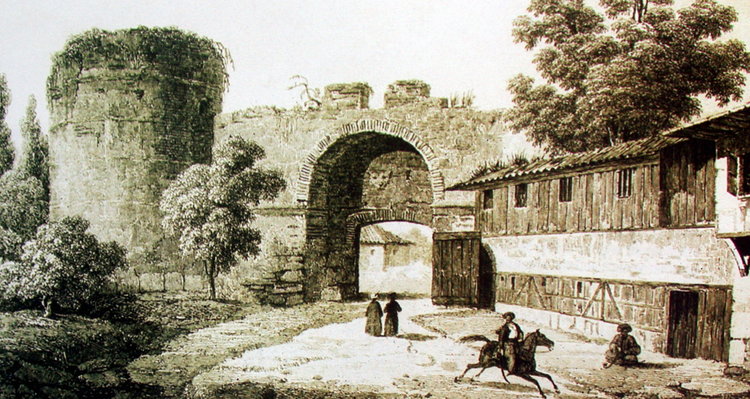
- Gates: Heavily fortified gates with multiple layers of doors, portcullises, and murder holes for dropping projectiles on attackers.
- Outer walls and inner walls: The double walls created a killing zone where attackers could be trapped and targeted from multiple angles.
- Wall walkways and battlements: Walkways behind crenellated battlements allowed defenders to move quickly and safely while repelling assaults.
The walls were constructed primarily from large blocks of limestone and bricks bonded with mortar, showcasing the advanced masonry skills of Byzantine engineers. The use of bastions and angled towers anticipated later medieval fortification techniques, making the walls a precursor to bastioned fortresses.
The walls during the ottoman conquest and beyond
Despite the advent of gunpowder artillery in the late medieval period, the walls of Constantinople remained remarkably resilient. During the 1453 siege by the Ottoman Empire under Sultan Mehmed II, the walls withstood heavy cannon bombardment for several weeks. The Ottomans eventually breached the walls, but only after deploying massive cannons and a prolonged siege that exploited weaknesses in less fortified sections.
Following the city's conquest, the Ottomans maintained the walls largely intact as a defensive perimeter around the capital. However, as Istanbul expanded beyond its medieval boundaries in the 19th century, many sections of the walls were dismantled or fell into disrepair. Despite this, significant portions remain standing today, offering a glimpse into the city's imperial past.
Modern preservation efforts and cultural significance
Beginning in the late 20th century, extensive restoration programs have been undertaken to preserve the walls of Constantinople. These efforts aim to stabilize the remaining structures, repair damage from natural decay and urban development, and make the walls accessible to visitors. The walls are recognized as a UNESCO World Heritage cultural landmark due to their historical importance and architectural ingenuity.
Today, the surviving sections of the walls attract scholars, tourists, and history enthusiasts interested in Byzantine and Ottoman history. They serve as a tangible link to the city's past and its role as a crossroads of civilizations spanning Europe and Asia.
Frequently asked questions (FAQ)
- When were the walls of Constantinople originally built?
- The initial walls were constructed in the early 4th century under Emperor Constantine the Great, with major expansions in the 5th century during Theodosius II's reign.
- What defensive features made the walls of Constantinople so effective?
- The walls featured a double line of defense with an outer and inner wall, a wide moat, numerous towers for archers, fortified gates, and battlements for defenders to repel attacks.
- How did the walls fare during the 1453 Ottoman siege?
- Despite heavy cannon fire, the walls withstood the siege for weeks. The Ottomans eventually breached them using massive cannons and exploiting weaker sections.
- Are the walls of Constantinople accessible to visitors today?
- Yes, many parts of the walls are preserved and accessible, with ongoing restoration efforts to maintain and improve visitor access.
- Why are the walls of Constantinople historically significant?
- They represent one of the last great fortification systems of antiquity, protecting the Byzantine capital for over a millennium and influencing military architecture.
Photo gallery

Information
Loading map...
Visitor reviews
No reviews yet. Been here? Write the first review and help other travelers!
Write the first reviewVisited this castle? Share your experience
Your review helps other travelers and adds first-hand knowledge to our encyclopedia.