Great Palace of Constantinople
The Great Palace of Constantinople, also known as the Sacred Palace, was the sprawling imperial palace complex of the Byzantine Empire, situated in the southeastern part of the historic peninsula of what is now Istanbul, Turkey. Constructed primarily during the Early Medieval period, this vast complex served as the main residence of the Eastern Roman emperors and the centre of imperial administration for nearly seven centuries, from the 4th century until the late 11th century.
The palace was initially built soon after the foundation of Constantinople by Emperor Constantine the Great in the early 4th century, but it underwent significant expansions and reconstructions over the centuries, particularly in the 6th and 10th centuries. The commonly referenced 10th-century date corresponds to major renovations and additions that enhanced the palace's grandeur and functionality. The complex was located on a hillside overlooking the Hippodrome of Constantinople and the Sea of Marmara, occupying a strategic and prestigious position within the city.
Architectural layout and features
The Great Palace was not a single building but a vast complex of interconnected structures including residential quarters, ceremonial halls, chapels, gardens, and administrative offices. Its layout was irregular, adapting to the natural topography of the site, with numerous courtyards, terraces, and colonnades linking the various parts.
Among the most notable features were the Chrysotriklinos, the main audience hall, famed for its lavish decoration and mosaics, and the Basilika, a large reception hall used for official ceremonies. The palace also contained the Triconchos and the Nea Ekklesia, a church built within the complex in the 9th century, illustrating the integration of religious and imperial functions.
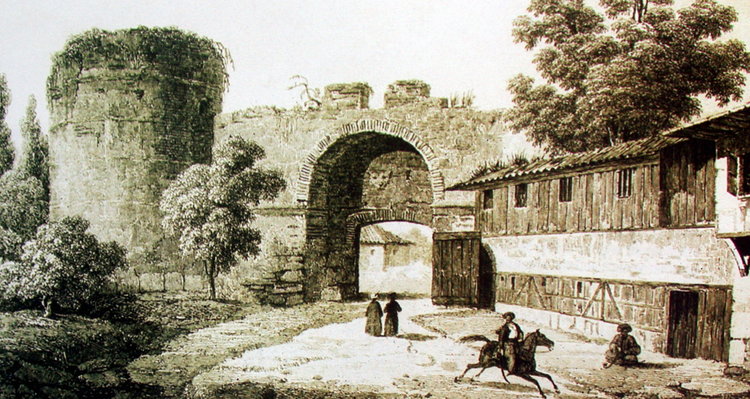
The palace was fortified by walls and gates, including the Chalke Gate, which served as the main entrance and was richly adorned. The complex also featured water cisterns and underground passages that supported its operation and security.
Historical significance and use
The Great Palace was the symbolic and administrative heart of the Byzantine Empire. It was the residence of emperors such as Justinian I, who commissioned major building projects in the 6th century, and Basil II, under whose reign the palace reached one of its peaks in splendor.
It witnessed numerous imperial ceremonies, including coronations, banquets, and receptions for foreign dignitaries. The palace was also the site of political intrigue and power struggles that shaped Byzantine history.
After the Fourth Crusade and the sack of Constantinople in 1204, the palace fell into disuse and decay. Subsequent Ottoman rulers favored the nearby Topkapi Palace, leading to the gradual abandonment and demolition of much of the Great Palace complex.
Archaeological remains and preservation
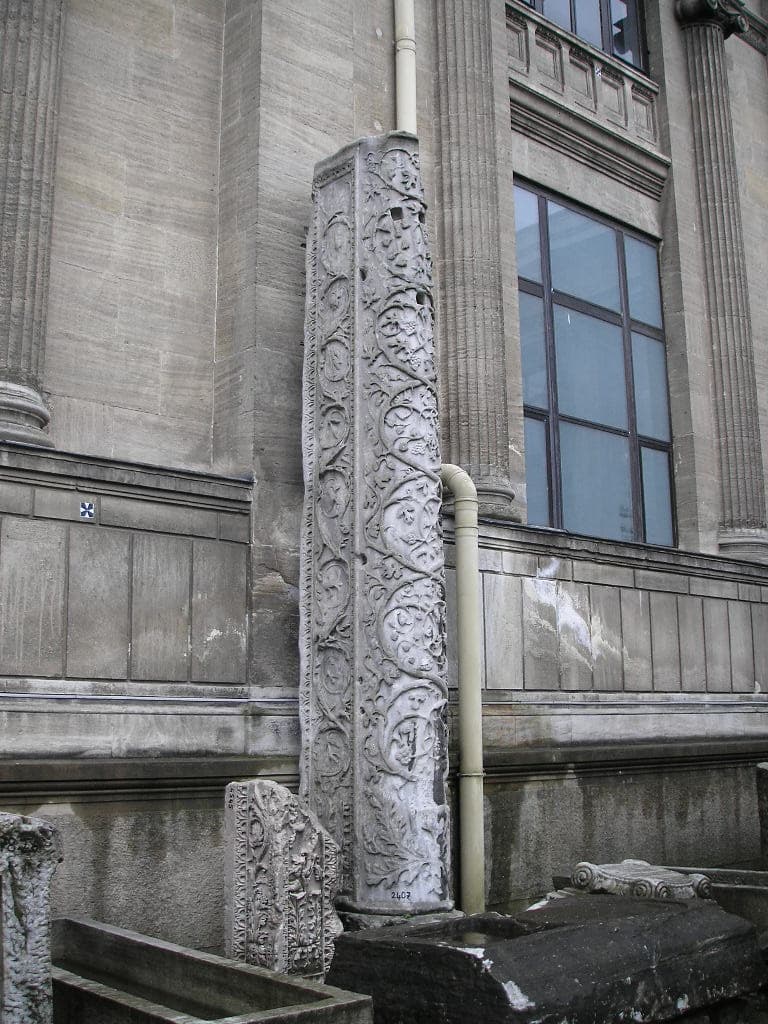
Today, very little of the Great Palace remains visible above ground. Archaeological excavations have uncovered foundations, mosaics, and fragments of walls, providing valuable insights into its scale and decoration. The Palace Mosaic Museum in Istanbul houses some of the exquisite floor mosaics recovered from the site.
The site is classified as archaeological ruins, reflecting its fragmentary preservation state. Efforts to study and preserve what remains continue, although much of the original structure has been lost to time and urban development.
Cultural legacy and influence
The Great Palace of Constantinople remains a key symbol of Byzantine imperial power and architectural achievement. Its design influenced later palatial architecture in the Eastern Mediterranean and beyond. The palace's integration of ceremonial, residential, and religious spaces exemplifies the Byzantine approach to imperial residence planning.
Despite its current ruined condition, the Great Palace continues to attract scholars, archaeologists, and visitors interested in Byzantine history and architecture. It is a testament to the grandeur of Constantinople as the capital of the Eastern Roman Empire.
Frequently asked questions (FAQ)
- What is the historical significance of the Great Palace of Constantinople?
- The Great Palace of Constantinople was the primary residence of the Byzantine emperors for over a thousand years. It served as the center of political power, culture, and religion, reflecting the grandeur of Byzantine architecture and art.
- When was the Great Palace of Constantinople built?
- Construction of the Great Palace began in the 4th century AD under Emperor Constantine the Great and continued to evolve over the centuries. The palace complex was expanded and modified until its decline in the 11th century.
- What are the opening hours for the Great Palace of Constantinople?
- The Great Palace is typically open to visitors from 9 AM to 6 PM, with extended hours during peak tourist seasons. It is advisable to check the official website for any changes to the schedule, especially on public holidays.
- Can I access the Great Palace of Constantinople with a disability?
- The Great Palace of Constantinople is working towards improved accessibility for all visitors, but some areas may still pose challenges due to the historical nature of the site. It is recommended to contact the visitor services ahead of your visit for specific accessibility options.
- What is the best time to visit the Great Palace of Constantinople?
- The best time to visit is during the spring (April to June) and fall (September to October) when the weather is pleasant and the tourist crowds are smaller. Visiting during these months allows for a more enjoyable experience exploring the historical site.
- Are there any nearby attractions to the Great Palace of Constantinople?
- Yes, the Great Palace is located close to several notable attractions, including Hagia Sophia, the Basilica Cistern, and the Blue Mosque. These sites can easily be incorporated into your itinerary for a comprehensive experience of Istanbul's rich history.
- How much do tickets cost for the Great Palace of Constantinople?
- Ticket prices for the Great Palace vary, with discounts available for students and seniors. It is best to purchase tickets online in advance, as this can save time and often includes additional benefits like guided tours.
Photo gallery

Information
Address
Fatih district, Istanbul, Turkey
Loading map...
Visitor reviews
No reviews yet. Been here? Write the first review and help other travelers!
Write the first reviewVisited this castle? Share your experience
Your review helps other travelers and adds first-hand knowledge to our encyclopedia.