Wytrzyszczka
Tropsztyn Castle stands prominently on a steep hill at 429 meters above sea level on the left western bank of the Dunajec River, now forming a peninsula by the Czchowskie Lake. This late medieval bastioned fortress was strategically positioned to guard the so-called Sądecka Gate, a vital passage between Poland and Upper Hungary (modern-day Slovakia), through which two important trade routes—water and land—once passed. From its inception, Tropsztyn served as a private stronghold whose owners often exercised autonomous control over these crucial trade paths.
The castle’s origins trace back to the noble Ośmioróg family, also known as Gierałtowie, who were its first known builders and owners. The earliest surviving record of the castle, already stone-built, dates to 1382, though scholarly consensus suggests its foundation may reach as far back as the late 13th century. Initially, the fortress comprised a stone defensive wall constructed from local sandstone, approximately 2 meters thick and 5.5 meters high, crowned with battlements and arrow slits along the guard walkway. The original gate was located in the northeastern corner, accessed via a wooden platform supported by pillars and a drawbridge. Inside, wooden buildings likely served residential and service functions.
Architectural evolution and expansions
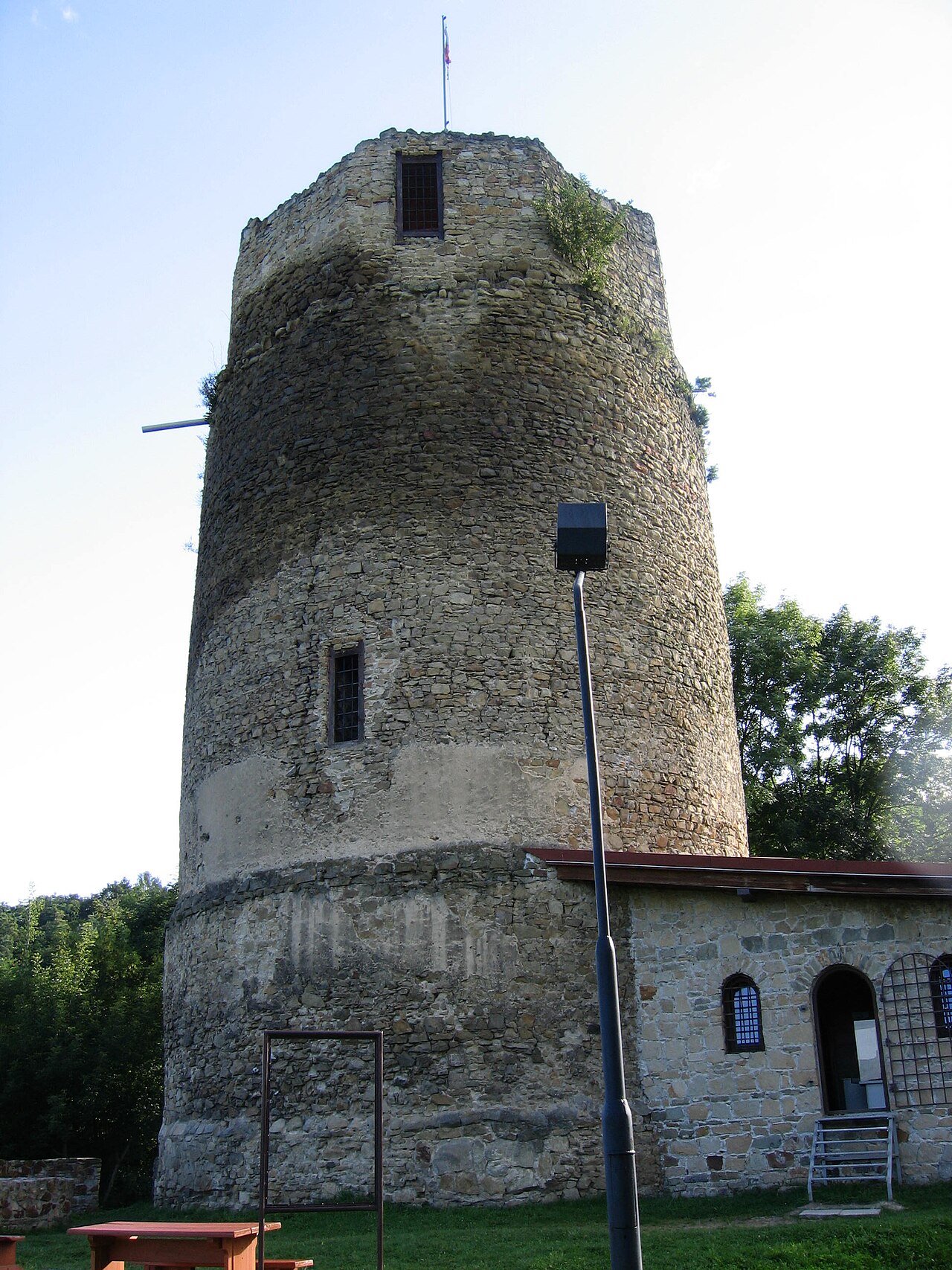
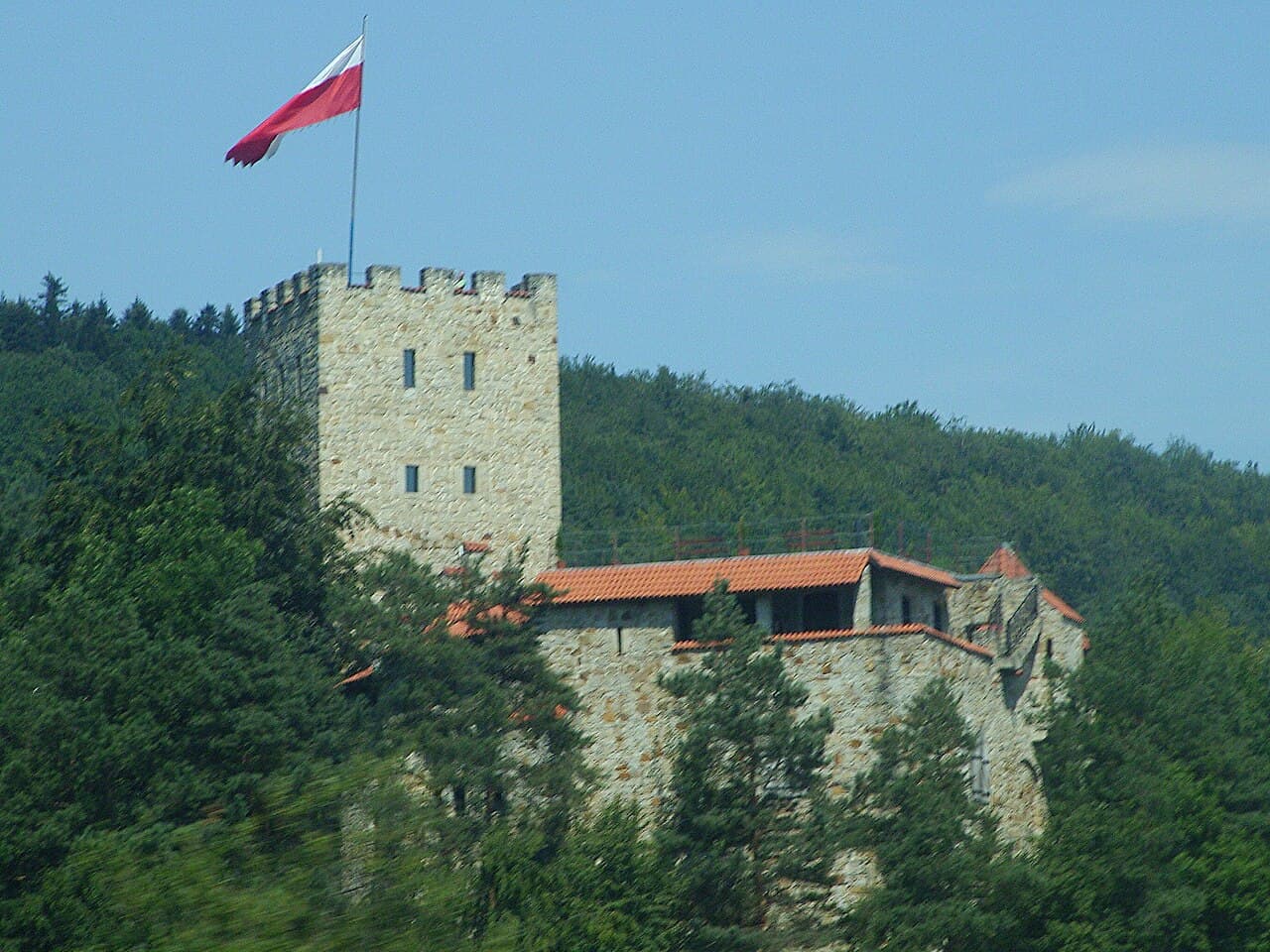
By the end of the 14th century, Tropsztyn transitioned into the hands of the Chebda family of the Starykoń coat of arms, who gained a notorious reputation that earned the castle the nickname "nest of robbers." Around 1390, the new owner erected a two-story stone residential building along the southern wall. His successor, Andrzej Chebda, added a formidable five-story square stone tower at the northwest corner. With walls 2 to 3 meters thick and an external staircase easily destroyed to protect the entrance, this tower was a strong defensive bastion and lookout point.
In 1521, King Sigismund I the Old confiscated the castle for its owner’s failure to join the war against the Teutonic Knights. However, the Chebda family soon repurchased it. The castle remained their property until 1535, when Prokop Chebda sold the uninhabited fortress to Piotr Kmita of Wiśnicz, the castellan of Sandomierz and the Grand Marshal of the Crown. Subsequent owners included the Robkowski and Gaboński families, who undertook further expansions. A notable addition was a prestigious residence along the northern wall, which led to the blocking of the original northeastern gate and the removal of the drawbridge. The new main gate was relocated to the west wall, accessed by a wooden bridge over a defensive moat.
Decline and ruin
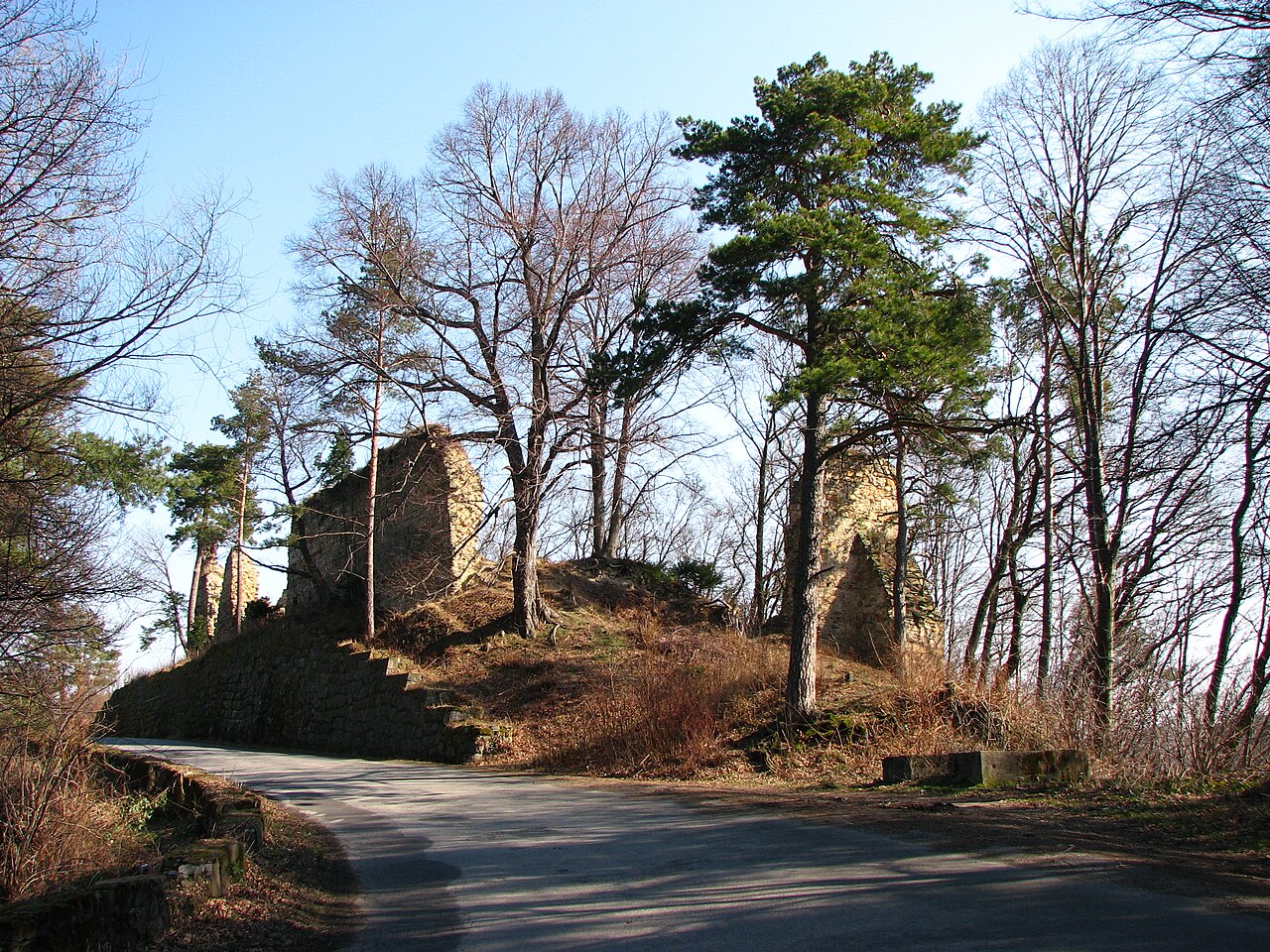
During this period, the castle’s administrators, or burgraves, reportedly engaged in piracy, attacking boats and rafts transporting goods along the Dunajec River. In retaliation, the neighboring lords of Rożnów, likely with the approval of the Sądecki starost, launched a devastating assault in 1574 that left Tropsztyn in ruins. A 1608 episcopal visitation report described the castle as being in a state of complete devastation.
In 1624, the left-bank part of the village Tropie, including the castle, was incorporated into the village of Wytrzyszczka. The abandoned fortress quickly fell into disrepair and local legend tells of it becoming a haunt for bandits. According to folklore, merchants tricked these robbers by sending a barge with poisoned wine past the castle, ending the bandit threat. The castle’s difficult access and superstitions contributed to its prolonged ruinous state.
Modern rediscovery and restoration
During World War I, Austro-Hungarian forces established trenches on the castle hill, causing further damage to the already dilapidated structure. A new chapter began in 1970 when the ruins were purchased by Andrzej Benesz, then Deputy Marshal of the Polish Sejm, who claimed descent from Sebastian Berzewiczy, a former owner reputed to have hidden an Incan treasure within the castle grounds.
Initial archaeological investigations took place in 1863 under the guidance of historian Szczęsny Morawski from Nowy Sącz. More comprehensive scientific excavations and restoration efforts commenced in 1993, led by archaeologist Eligiusz Dworaczyński, architect Waldemar Niewalda, and historian Halina Rojkowska. These works focused on stabilizing and partially reconstructing the castle’s external walls and gates.
Today, Tropsztyn Castle is privately owned and has undergone significant reconstruction, though only about 20 percent of the original ruins remain. The restored exterior faithfully reflects the fortress’s original form, while the interior has been adapted for modern use, incorporating commercial elements. The castle’s picturesque location and the intriguing legend of the hidden Incan treasure contribute to its growing appeal as a tourist destination.
Historical significance and heraldry
The castle’s history is closely tied to the Ośmioróg-Gierałt family, whose coat of arms features a distinctive cross formed from four split pods of the wild Italian pea, known locally as ciecierka. This emblem remains a symbolic link to the castle’s medieval origins and its first noble owners.
Tropsztyn Castle exemplifies the evolution of medieval fortifications in southern Poland, reflecting architectural adaptations to natural terrain and the changing needs of defense and residence. Its strategic position along the Dunajec River highlights its role within the region’s network of castles that protected trade routes and local territories during the Middle Ages and Renaissance.
Architectural features and layout
The castle is situated on a naturally fortified peninsula formed by a sharp bend in the Dunajec River, providing natural defense on three sides. The original fortifications included a thick sandstone curtain wall with battlements and arrow slits, enclosing wooden residential buildings. The later addition of a multi-story stone tower and expanded residential wings illustrate the transition from purely military to combined defensive and residential functions.
The relocation of the main gate from the northeast to the west side, along with the construction of new bridges and moats, demonstrates the castle’s evolving defensive strategies. The thick walls and elevated tower provided strong points of resistance, while the internal layout accommodated both the garrison and noble residents.
Visiting Tropsztyn Castle today
Currently, Tropsztyn Castle is open to visitors primarily during the summer months of July and August. Its scenic setting overlooking the Dunajec River and Czchowskie Lake offers spectacular views and a tangible connection to Poland’s medieval heritage. The castle’s restoration and promotion, including the captivating legend of the Incan treasure, position it as a unique cultural and historical attraction in the region.
Visitors can explore the reconstructed walls, gates, and tower, gaining insight into medieval defensive architecture and the turbulent history of the area. The site also serves as a reminder of the complex social and political dynamics of late medieval Poland, from noble family rivalries to the impact of regional conflicts and trade control.
Frequently asked questions (FAQ)
- When was Tropsztyn Castle originally built?
- Tropsztyn Castle was likely founded in the late 13th century, with the earliest stone construction documented by 1382 and significant expansions around 1390.
- What architectural style characterizes Tropsztyn Castle?
- The castle primarily exhibits late medieval Gothic architectural features, including thick sandstone walls, battlements, and a multi-story defensive tower.
- Can visitors tour Tropsztyn Castle year-round?
- Tropsztyn Castle is generally open to the public during the summer months of July and August, offering guided tours and access to the reconstructed areas.
- What is the legend associated with Tropsztyn Castle?
- Local legend tells of an Incan treasure hidden at Tropsztyn Castle by Sebastian Berzewiczy, who married an Incan princess and brought the treasure from Spanish Peru.
- How did Tropsztyn Castle fall into ruin?
- The castle was devastated in 1574 by neighboring landowners in retaliation for pirate raids on river traffic. It was abandoned thereafter and gradually fell into ruin.
Photo gallery

Information
Sources & official resources
Verify the information above using these authoritative references.
Loading map...
Visitor reviews
No reviews yet. Been here? Write the first review and help other travelers!
Write the first reviewVisited this castle? Share your experience
Your review helps other travelers and adds first-hand knowledge to our encyclopedia.