Roznów Castle Ruins
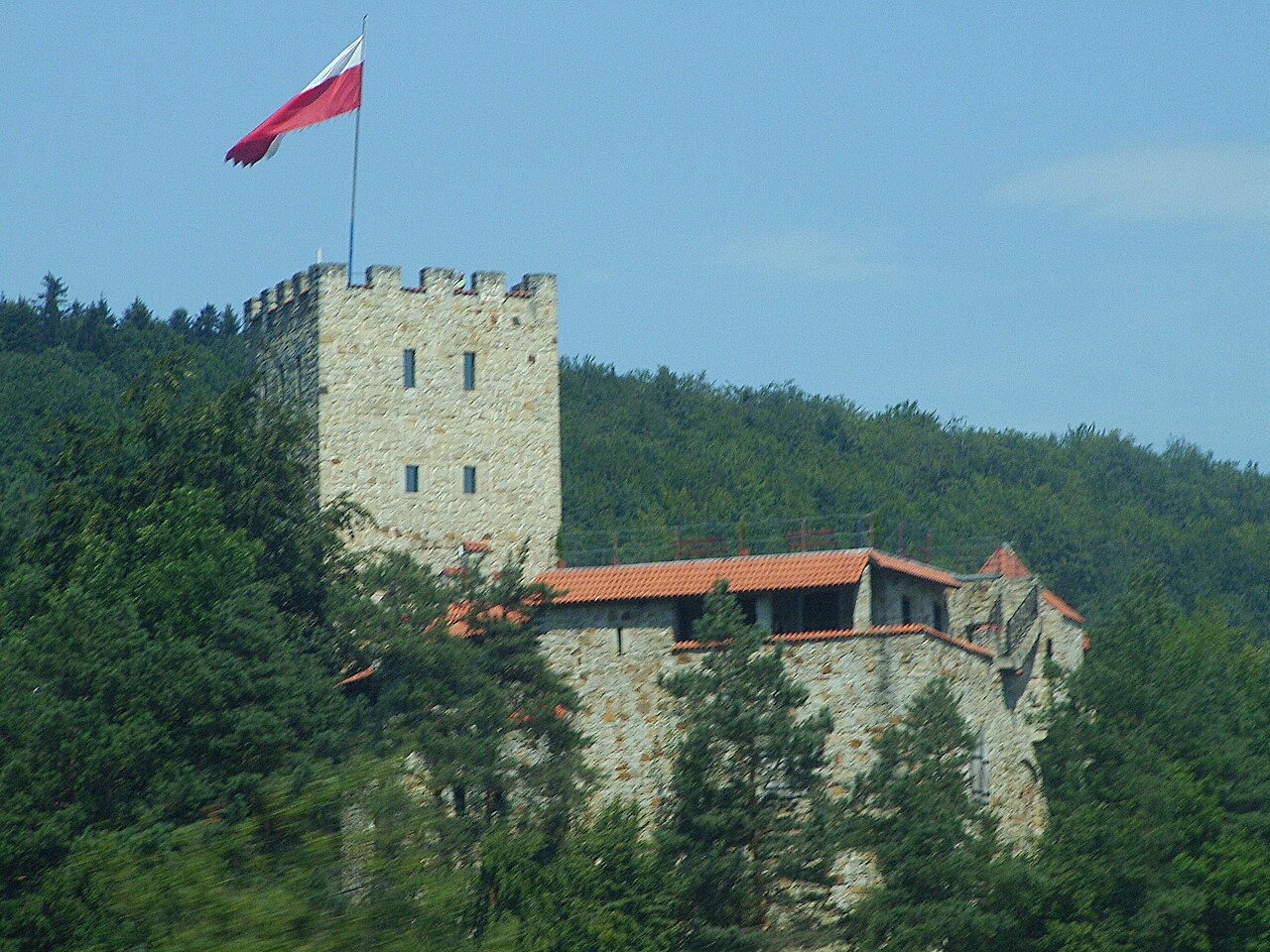
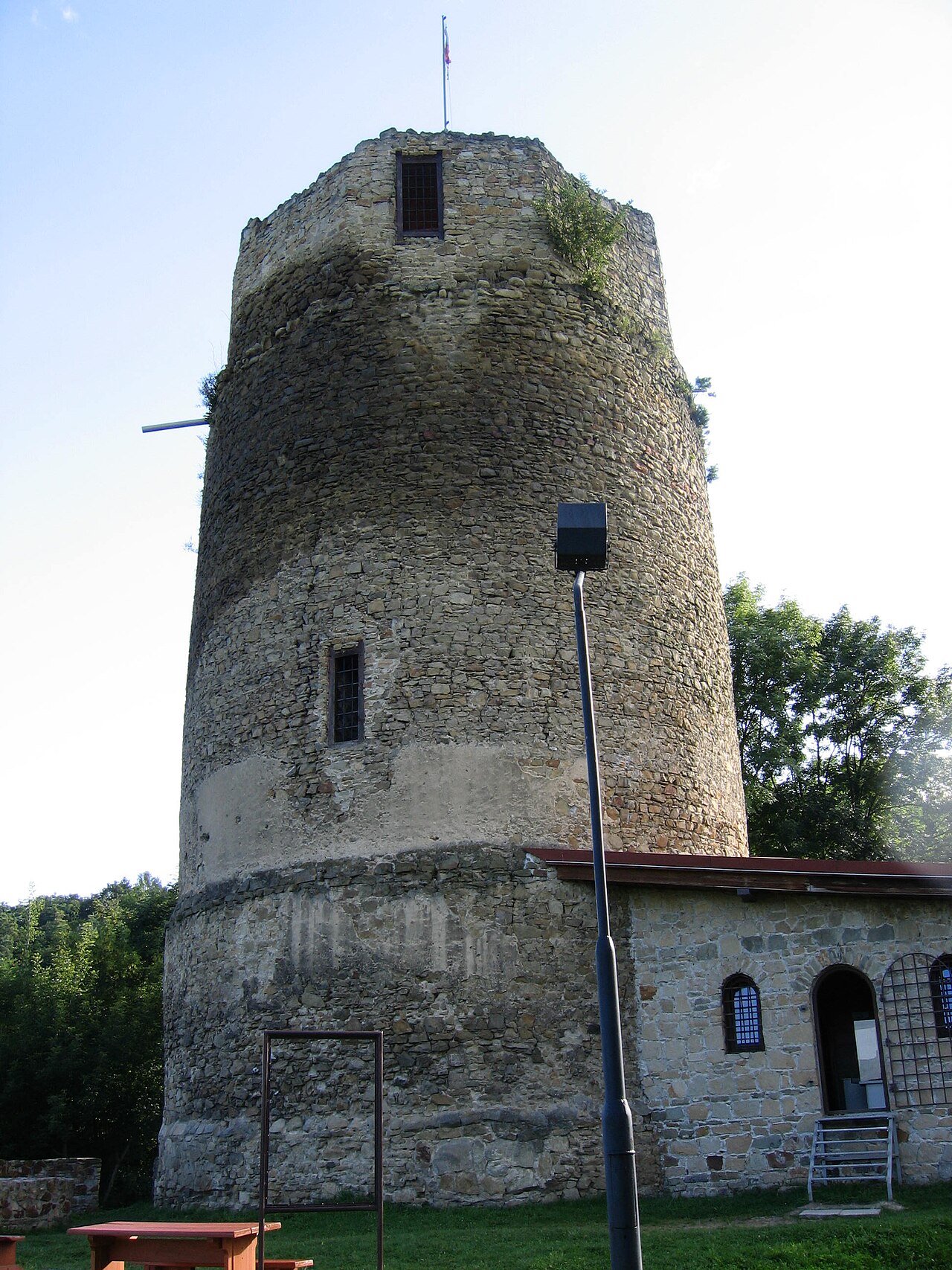
Rożnów Castle ruins represent a significant historical and architectural site in southern Poland, showcasing a complex of defensive structures that span from the High Medieval period through the Renaissance era. The site includes the remnants of an "upper castle," originally a medieval fortress, and a "lower castle" with Renaissance fortifications, illustrating the evolution of military architecture over several centuries.
Origins and medieval development
The origins of Rożnów Castle trace back to the 13th century when the Gryfita family established a watchtower at this strategic location. This early fortification served as a lookout point and a defensive structure guarding important routes in the region. The castle proper was likely constructed between 1350 and 1370 by Piotr Rozen, lending the castle its name. The initial castle was designed in a rectangular plan measuring approximately 44 meters by 20 meters, a typical layout for medieval fortresses intended to maximize defensive capabilities while accommodating residential and military functions.
Ownership and historical significance
In 1426, the castle was acquired by Zawisza Czarny, one of Poland's most renowned knights and a symbol of chivalry and military prowess. After his death, ownership passed to his sons, maintaining the castle within a family of notable military heritage. During the late 15th century, the castle changed hands to the Wydźga family and subsequently to the Tarnowski family, prominent nobles who played key roles in Polish history.
Renaissance fortifications and military ambitions
In the first half of the 16th century, during the period known as the Polish Golden Age, Hetman Jan Tarnowski initiated ambitious construction to transform Rożnów into a modern fortress. This project aimed to create one of the strongest fortifications in the Polish-Lithuanian Commonwealth, strategically positioned to guard the southern border against the expanding Ottoman Empire. The fortress was intended to incorporate the latest military architectural innovations of the time, including bastions and reinforced walls, reflecting Renaissance military engineering principles.
Despite these grand plans, construction was never fully completed due to Tarnowski's death in 1561. The unfinished fortress remains a testament to the shifting political and military landscape of the region during the 16th century, when the Commonwealth sought to fortify its defenses against external threats.
Architectural features and layout
The castle complex is divided into two main parts: the upper castle and the lower castle. The upper castle, dating from the medieval period, includes the remnants of the original rectangular fortress with its defensive walls and towers. Its compact design reflects typical medieval defensive strategies, emphasizing strong walls and limited access points.
The lower castle, constructed during the Renaissance fortification efforts, features elements characteristic of the period's military architecture, such as angled bastions designed to deflect artillery fire and provide overlapping fields of defense. Although incomplete, these Renaissance fortifications illustrate the transition from medieval to early modern fortress design, incorporating advances that responded to the advent of gunpowder weaponry.
Defensive structures
Key defensive elements of Rożnów Castle include curtain walls, towers, and gatehouses that controlled access to the complex. The castle's position on elevated terrain provided natural defensive advantages, complemented by man-made fortifications. The combination of medieval and Renaissance features offers valuable insight into the evolution of castle architecture in Poland.
Historical context and regional importance
Rożnów Castle's location in southern Poland placed it at a crucial crossroads during the Middle Ages and Renaissance. It served as a defensive stronghold protecting the region from incursions and as a symbol of noble power and prestige. The castle's ties to prominent families like the Gryfita, Zawisza, Wydźga, and Tarnowski underscore its significance in Polish noble and military history.
The unfinished Renaissance fortress reflects the broader geopolitical tensions of the 16th century, particularly the threat posed by the Ottoman Empire following the Battle of Mohács in 1526, which reshaped power dynamics in Eastern Europe. The Commonwealth's efforts to fortify its southern borders through constructions like Rożnów illustrate the strategic importance of such sites.
Current condition and preservation
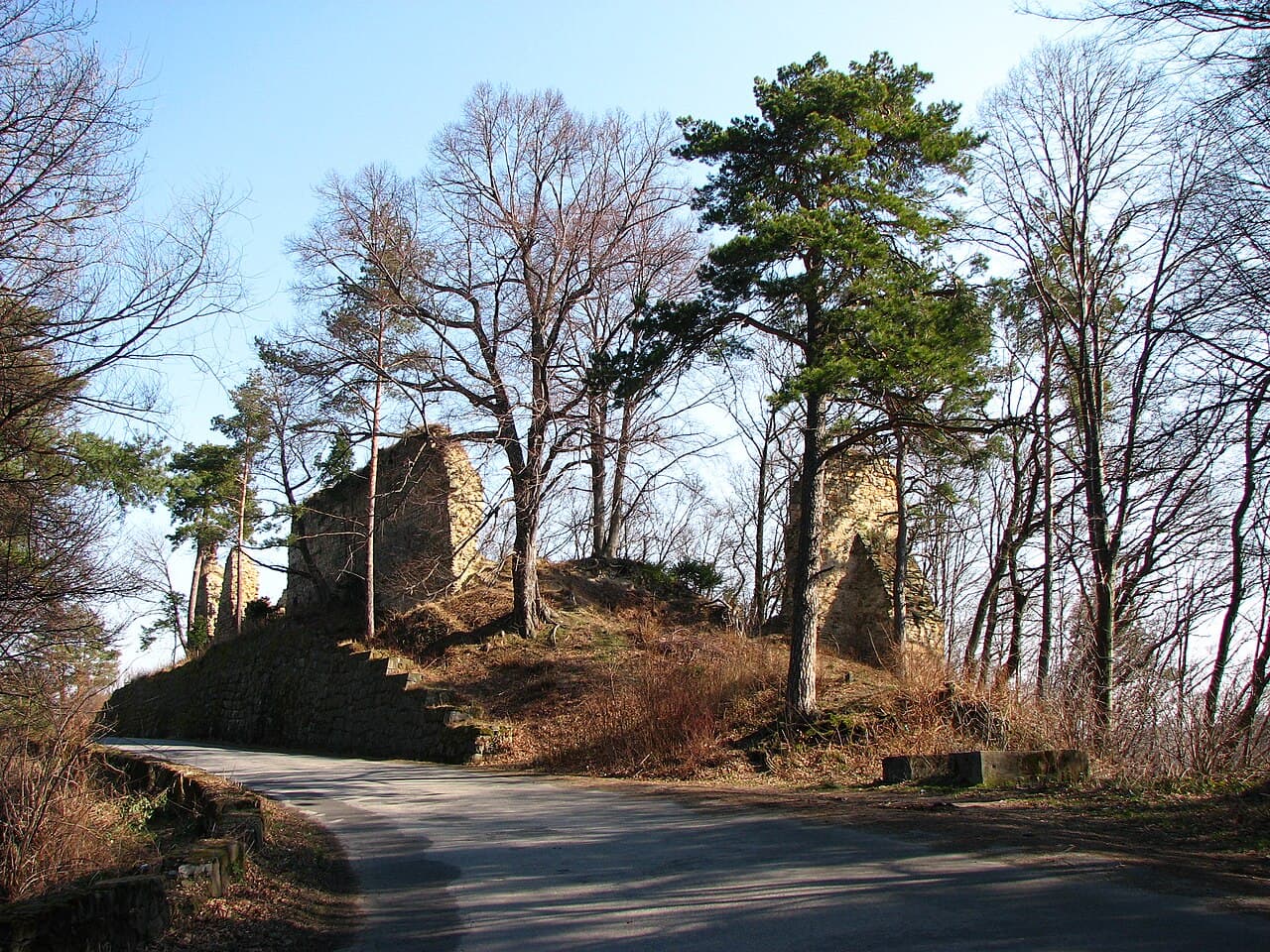
Today, Rożnów Castle remains in a state of ruins, classified as an archaeological site. The surviving structures provide valuable material for historical and archaeological research, offering insights into medieval and Renaissance military architecture. Preservation efforts focus on stabilizing the ruins and facilitating public access to this culturally significant site.
Visitors to Rożnów can explore the remains of both the medieval upper castle and the Renaissance lower castle, gaining an understanding of the site's layered history and architectural evolution. Interpretive signage and guided tours help contextualize the ruins within Poland's broader historical narrative.
Visiting Rożnów Castle ruins
The castle ruins are accessible to the public, offering a unique opportunity to experience a site that encapsulates centuries of Polish history and architectural development. While the site is primarily in ruins, its scenic location and historical importance make it a worthwhile destination for enthusiasts of medieval and Renaissance fortifications.
Visitors should prepare for uneven terrain and limited facilities, typical of archaeological ruins. The site is most enjoyable during spring through autumn when weather conditions are favorable for outdoor exploration.
Frequently asked questions (FAQ)
- What is the historical significance of Roznów Castle Ruins?
- Roznów Castle Ruins are remnants of a medieval fortress that dates back to the 14th century. It played a crucial role in protecting the region against invasions and has significant ties to Polish nobility, showcasing the rich history of the area.
- When was Roznów Castle built?
- Roznów Castle was constructed in the early 14th century, around 1320. It was initially established as a defensive structure and later transformed into a residence for local nobility.
- Can I visit the Roznów Castle Ruins?
- Yes, visitors are welcome to explore the Roznów Castle Ruins. It is an open site, and you can wander through the remains and enjoy the scenic views of the surrounding landscape.
- What are the opening hours for Roznów Castle Ruins?
- The Roznów Castle Ruins are accessible year-round, allowing visitors to explore at their convenience. However, it's recommended to visit during daylight hours for the best experience.
- Is it possible to take guided tours of the Roznów Castle Ruins?
- Currently, there are no formal guided tours available at the Roznów Castle Ruins. Visitors are encouraged to explore the site independently, but information boards are present to enhance your understanding of its history.
- What is the best time to visit Roznów Castle Ruins?
- The best time to visit Roznów Castle Ruins is during the spring and early autumn months when the weather is mild and the surrounding nature is in full bloom. This also allows for a more pleasant exploration of the area.
- Are there any nearby attractions to visit along with Roznów Castle?
- Yes, nearby attractions include the picturesque Rożnów Lake and the charming village of Rożnów itself, which offers additional historical sites and natural beauty to explore. Combining your visit to the castle with these attractions makes for a delightful day out.
- What are the ticket prices for visiting Roznów Castle Ruins?
- Visiting Roznów Castle Ruins is free of charge. This allows everyone to enjoy the historical and cultural significance of the site without any financial barrier.
- How do I get to Roznów Castle Ruins?
- Roznów Castle Ruins are accessible by car or public transport from nearby cities. The site is well-marked, and local maps can guide you to the ruins from Rożnów village.
Photo gallery

Information
Loading map...
Visitor reviews
No reviews yet. Been here? Write the first review and help other travelers!
Write the first reviewVisited this castle? Share your experience
Your review helps other travelers and adds first-hand knowledge to our encyclopedia.