Wyoming Frontier Prison

Wyoming Frontier Prison: historic penitentiary and museum in Rawlins
Post-Renaissance (17th–18th c.)
Well Preserved

Wyoming Frontier Prison, located in Rawlins, Wyoming, stands as a remarkable example of a historic penitentiary designed with castle-like architectural elements. Originally constructed as the state penitentiary, this imposing stone structure features turrets and fortified walls that evoke the appearance of a traditional castle, a design choice intended to symbolize strength and security. Today, the prison no longer functions as a correctional facility but has been repurposed as a museum, preserving its rich history and architectural significance for visitors and locals alike.

Architectural features and design

The prison's architecture is notable for its use of stone masonry and turreted towers, which contribute to its fortress-like appearance. These features are reminiscent of medieval castles, incorporating elements such as battlements and high walls that were originally intended for security and defense. The structure's robust construction reflects the practical needs of a penitentiary while also lending it a distinctive aesthetic that sets it apart from typical prison designs.

The layout of the prison includes multiple wings and secured courtyards, designed to facilitate the management and containment of inmates. The use of heavy stone materials and fortified gates underscores the emphasis on durability and control, common in early 20th-century prison architecture. The castle-like design not only served a functional purpose but also projected an image of authority and permanence.

Historical context and significance

Established in the early 20th century, the Wyoming Frontier Prison played a crucial role in the state's penal system for many decades. It housed a wide range of inmates and witnessed numerous significant events in Wyoming's correctional history. The prison's design reflects the era's penal philosophy, which combined strict security measures with architectural grandeur to convey the seriousness of the institution.

Over time, changes in correctional practices and the development of newer facilities led to the prison's closure as an active penitentiary. However, its historical and architectural value was recognized, prompting efforts to preserve the site. Today, it serves as a museum that educates the public about the history of incarceration in Wyoming and the broader American West.

Current use and visitor experience

Currently, the Wyoming Frontier Prison functions as a museum, offering guided tours that provide insight into its history, architecture, and the lives of those who were incarcerated there. Visitors can explore the turreted stone building and its various chambers, gaining a deeper understanding of early 20th-century prison life. The museum also hosts special events, including weddings and birthday celebrations, making use of the unique and historic setting.

The facility's location at 500 West Walnut, Rawlins, WY 82301 makes it accessible to tourists and locals. The museum's staff are available to provide detailed information and support for visitors, enhancing the educational and cultural value of the site.

Cultural and heritage importance

Wyoming Frontier Prison is more than just a former correctional facility; it is a cultural landmark that reflects the history of law enforcement and penal reform in Wyoming. Its preservation as a museum allows for ongoing public engagement with the state's past, highlighting themes of justice, security, and architectural innovation. The castle-like design adds to its allure, making it a distinctive point of interest in the region.

The site contributes to the broader narrative of American frontier history, illustrating how institutions adapted to the challenges of the time. Its continued use as a venue for events ensures that the prison remains a living part of the community, bridging historical significance with contemporary relevance.

Frequently asked questions (FAQ)

What is the best time to visit Wyoming Frontier Prison?
The Wyoming Frontier Prison museum is open year-round, but spring through fall offers the best weather for visiting and exploring the grounds.
Can I host events at Wyoming Frontier Prison?
Yes, the Wyoming Frontier Prison is available for hosting events such as weddings and birthday celebrations in its unique historic setting.
How do I arrange a tour of the prison museum?
Tours can be arranged by contacting the museum directly via phone or email. Guided tours provide detailed insights into the prison's history and architecture.
Is the Wyoming Frontier Prison accessible for visitors with disabilities?
The museum strives to accommodate visitors with disabilities, but some areas may have limited access due to the historic nature of the building.
What makes Wyoming Frontier Prison architecturally unique?
Its castle-like design with turreted stone construction is unique among American penitentiaries, blending fortress-style architecture with functional prison design.

Information

Lowland Castle

Current owner

Municipality

Address

500 West Walnut, Rawlins, WY 82301

Loading map...

Visitor reviews

No reviews yet. Been here? Write the first review and help other travelers!

Write the first review

Visited this castle? Share your experience

Your review helps other travelers and adds first-hand knowledge to our encyclopedia.
Write a review

(5/5)

0/2000 characters

Your review will be visible after admin approval

Nearby castles

190.7 km
Fort Washakie — United States of America castle

Fort Washakie

, United States of America

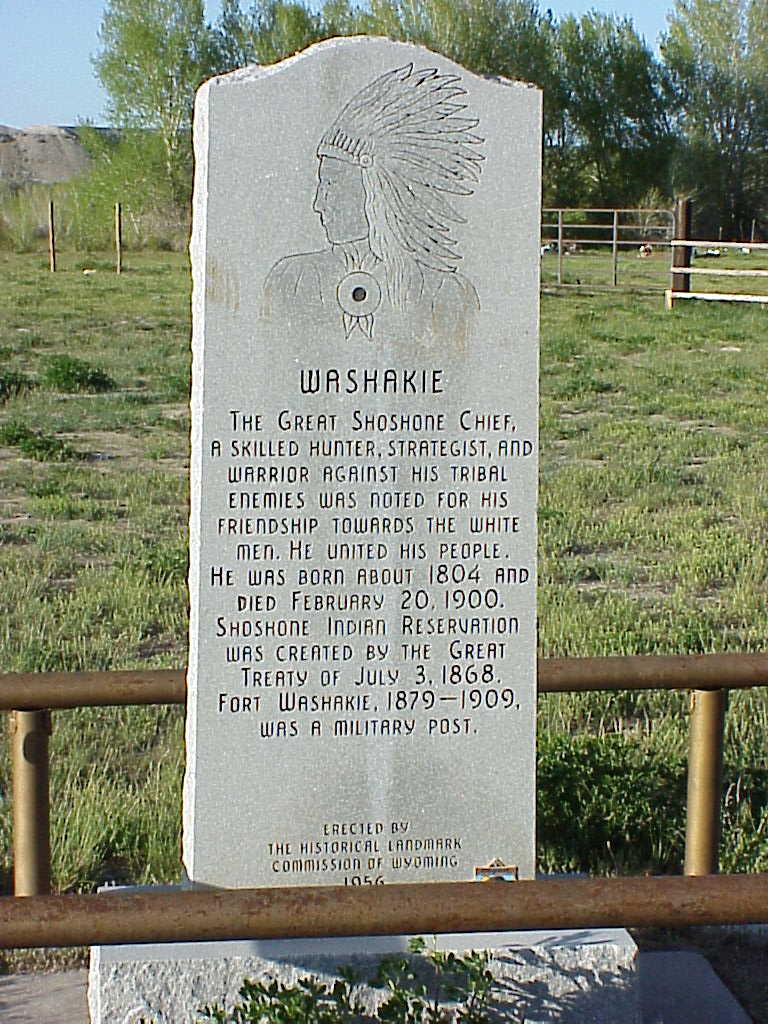
Fort Washakie is a historic U.S. Army fort located in what is now the state of Wyoming. Established in 1869 as Camp Augur, it was named after General Christopher C. Augur, commander of the Department of the Platte. The fort underwent several name changes in its early years, reflecting significant military and Native American figures. In 1870, it was renamed Camp Brown in honor of Captain Frederick H. Brown, who was killed in the Fetterman Massacre of 1866. The final renaming occurred in 1878, when it received the name Fort Washakie to honor Chief Washakie of the Shoshone tribe. This renaming was notable as it made the fort one of the few U.S. military outposts named after a Native American leader, a rare acknowledgment of indigenous influence in military history. Historical significance and military role Fort Washakie served as a critical military outpost during the late 19th century, a period marked by conflict and negotiation between the U.S. government and Native American tribes. Its establishment was part of a broader effort to exert control and provide security in the western territories during the post-Civil War expansion. The fort's strategic location within the Wind River Indian Reservation allowed it to function as a center for military administration and interaction with the Shoshone people. The fort was operational until 1909, when it was decommissioned under the command of William A. McCain, the last post commander. Following its closure, the property was transferred to the Shoshone Indian Agency, reflecting a shift from military to tribal governance and marking a significant moment in the history of U.S.-Native American relations. Architectural characteristics and fortifications Fort Washakie was constructed as a bastioned fortress, a style characterized by projecting bastions that allowed defenders to cover adjacent walls with gunfire. This design was common in military architecture of the period, emphasizing defense against potential attacks from both Native American tribes and other hostile forces. The fort's layout included typical features such as barracks, officers' quarters, storehouses, and parade grounds, designed to support a self-sufficient military community. While specific architectural details and surviving structures of Fort Washakie are limited, the fort's design reflected the practical needs of frontier military installations. Its buildings were likely constructed from locally available materials, with wood and stone used to provide durability and protection against the harsh Wyoming climate. Cultural and memorial importance The site of Fort Washakie holds significant cultural value, particularly due to its association with prominent Native American figures. The graves of Chief Washakie and Sacajawea, the renowned guide of the Lewis and Clark Expedition, are located on the fort's grounds. These burial sites underscore the fort's role as a place of historical memory and cultural intersection between Native American heritage and U.S. military history. Chief Washakie was a respected leader of the Shoshone people, known for his diplomatic efforts and alliance with the United States. His legacy is commemorated through the fort's name and the preservation of his gravesite, which attracts visitors interested in Native American history and the complex narratives of the American West. Present-day status and visitor information Today, Fort Washakie is part of the Wind River Indian Reservation and remains a site of historical interest. While the fort itself no longer functions as a military installation, its grounds and memorials serve as a reminder of the region's layered history. Visitors can explore the area to learn about the fort's military past and its significance to the Shoshone tribe. The site is managed in cooperation with the Shoshone Indian Agency, ensuring that its preservation respects the cultural heritage of the indigenous community. Interpretive materials and guided tours may be available to provide deeper insight into the fort's history and architecture.

Modern (19th–20th c.)
Details
212.3 km

Guernsey State Park Castle

Guernsey, United States of America

Guernsey State Park Castle is a distinctive stone structure located within the scenic Guernsey State Park in Wyoming. Constructed during the 1930s by the Civilian Conservation Corps (CCC), this castle-like building serves as a testament to the New Deal era's efforts to provide employment and develop public recreational infrastructure during the Great Depression. The castle is renowned for its impressive rustic stone masonry, which showcases the craftsmanship and architectural style typical of CCC projects. One of its most notable features is the giant stone fireplace that dominates the interior, providing a cozy focal point for visitors. The building also includes winding stone steps leading to an observation area that offers spectacular panoramic views of the park's natural landscape, including the nearby Guernsey Reservoir. Historical background and CCC involvement The Civilian Conservation Corps was a federal work relief program that operated from 1933 to 1942, aimed at providing jobs for young men and improving the nation's public lands. Guernsey State Park Castle was one of several structures built by the CCC in this area, contributing to the park's designation as a registered national historic landmark. The CCC workers used locally quarried stone and traditional building techniques to create a structure that harmonizes with the natural environment. Architectural features and design The castle's design reflects the rustic architectural style favored by the CCC, which emphasized the use of native materials and craftsmanship to blend buildings into their natural surroundings. The thick stone walls provide durability and insulation, while the large fireplace serves both functional and aesthetic purposes. The winding steps inside the castle lead visitors to an elevated observation platform, enhancing the experience of the park's scenic vistas. Observation area and views The observation area atop the castle offers visitors sweeping views of the surrounding parkland, including the Guernsey Reservoir, hiking trails, and the rolling Wyoming landscape. This vantage point is particularly popular for photography, bird watching, and appreciating the park's natural beauty. Recreational opportunities and visitor experience Guernsey State Park is a favored destination for outdoor enthusiasts, offering activities such as hiking, boating, fishing, and camping. The castle serves as a unique historical and architectural attraction within the park, providing educational value and a place for visitors to rest and enjoy the scenery. Interpretive signage near the castle explains its history and the role of the CCC in developing the park. Visitor information The park and castle are accessible year-round, with facilities maintained by Wyoming state park services. Visitors can contact the park at 307-836-2334 for information on hours, events, and amenities. The address for Guernsey State Park is 2187 Lakeside Shore Dr, Guernsey, WY 82214. Overall, Guernsey State Park Castle stands as a remarkable example of New Deal-era craftsmanship and conservation efforts, combining historical significance with natural beauty to offer a memorable visitor experience in Wyoming.

Post-Renaissance (17th–18th c.)
Details
228.4 km
Fort Laramie — United States of America castle

Fort Laramie

, United States of America

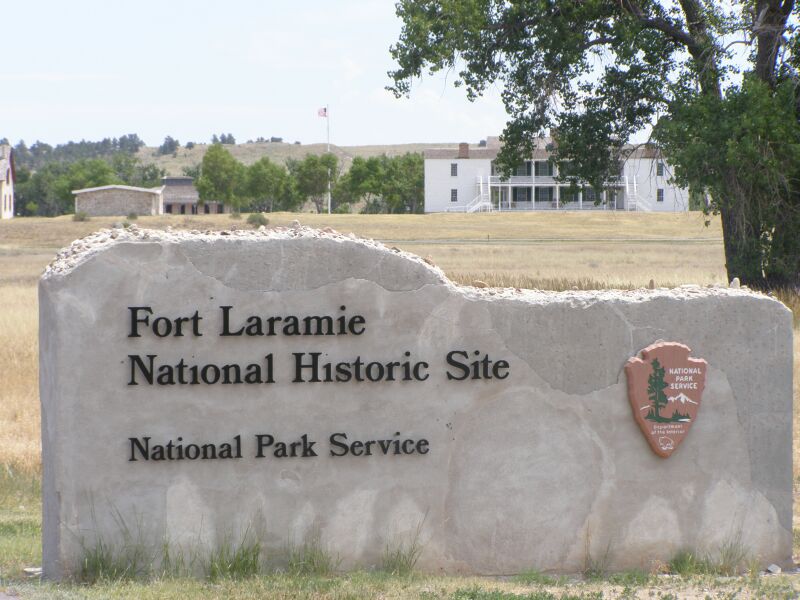
Fort Laramie is a significant historical military site located in the United States, originally established in the early 19th century. It served as a key bastioned fortress during the period of American westward expansion, playing a crucial role in the protection and control of the frontier. The fort was strategically positioned near the confluence of the Laramie and North Platte Rivers in present-day Wyoming, making it a vital hub for trade, military operations, and interactions with Native American tribes. Historical significance and foundation The origins of Fort Laramie trace back to the 1830s when it began as a private fur trading post known as Fort William. It was soon acquired and expanded by the American Fur Company, evolving into a prominent trading hub. By the 1840s, the U.S. Army recognized the strategic importance of the site and took control, transforming it into a military fortification to secure the Oregon Trail and other migration routes. Throughout the mid-19th century, Fort Laramie became a critical military post overseeing the safety of settlers and travelers moving westward. It was the site of numerous treaties and negotiations with various Native American tribes, including the Lakota, Cheyenne, and Arapaho. The fort's presence was central to the U.S. government's efforts to manage relations and conflicts on the frontier. Architectural features and fortifications Designed as a bastioned fortress, Fort Laramie incorporated defensive elements typical of military architecture in the 19th century. The fort featured thick adobe and wooden walls arranged in a rectangular layout with bastions at the corners, allowing for overlapping fields of fire to defend against potential attacks. The bastions were equipped with artillery placements, and the fort was surrounded by a palisade fence and earthworks for added protection. The internal layout included barracks, officers' quarters, a guardhouse, stables, workshops, and a parade ground. The buildings were primarily constructed from locally sourced materials such as adobe bricks and timber, reflecting the practical needs and resource availability of the frontier environment. The fort's design balanced defensive capability with the functional requirements of a military garrison and trading post. Role in westward expansion and military campaigns Fort Laramie was a pivotal military installation during the Indian Wars and the broader context of American westward expansion. It served as a staging ground for U.S. Army campaigns against Native American tribes resisting encroachment on their lands. The fort also provided protection for emigrants traveling along the Oregon, California, and Mormon Trails. Notably, the fort was involved in the Treaty of Fort Laramie in 1851 and again in 1868, which attempted to establish peace and define territorial boundaries between the U.S. government and Native American nations. Despite these treaties, conflicts persisted, and the fort remained a center for military operations and negotiations throughout the latter half of the 19th century. Preservation and current status Today, Fort Laramie is preserved as a National Historic Site managed by the National Park Service. The fort's structures are partially restored, allowing visitors to explore the original layout and buildings that convey the historical atmosphere of the 19th-century frontier military post. Interpretive programs and exhibits provide insight into the fort's military, cultural, and social history. The site is accessible to the public and serves as an educational resource illustrating the complexities of American expansion, military strategy, and Native American relations during a transformative period in U.S. history. Visiting Fort Laramie Visitors to Fort Laramie can walk through the preserved bastions, barracks, and parade grounds. The site offers guided tours, reenactments, and educational materials that highlight the fort's architectural features and historical significance. The surrounding landscape provides context for the fort's strategic location along historic migration routes. Open seasonally, the fort welcomes tourists interested in military history, frontier life, and the American West. Facilities include a visitor center with exhibits and a bookstore.

Modern (19th–20th c.)
Details