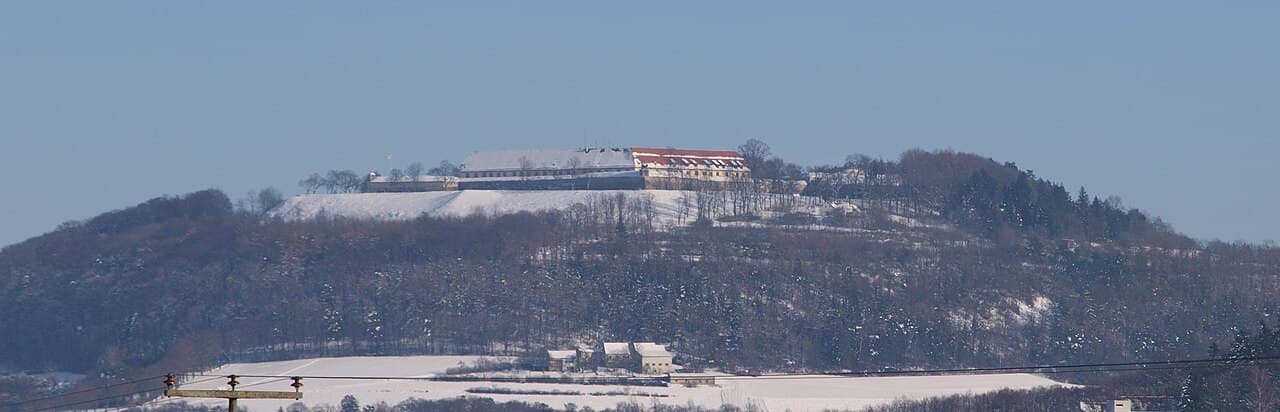
Wulzburg
Wulzburg fortress stands prominently on a hill overlooking the town of Weißenburg in Bayern, Germany. Rising approximately 200 metres above the town at an elevation of 630.5 metres, it is a striking example of a Renaissance fortress with deep historical roots dating back to the 11th century. Originally established as a Benedictine monastery, the site evolved significantly over the centuries, reflecting changing military and architectural needs.
From monastery to fortress: early history and transformation
The origins of Wulzburg trace back to the High Medieval period, when it was founded as a Benedictine monastery. The monastery's location on a hill was strategically chosen, providing natural defense advantages and commanding views of the surrounding landscape. This early religious establishment laid the groundwork for the site's later military significance.
During the Renaissance period, the monastery was transformed into a fortress, adapting to the evolving demands of warfare and defense. The Renaissance era was marked by significant advancements in fortification design, particularly in response to the increasing use of gunpowder artillery. Wulzburg was rebuilt and fortified with thick walls, bastions, and other defensive features typical of Renaissance military architecture.
Architectural features and fortifications
Wulzburg is considered one of the best-preserved Renaissance fortresses in Germany. Its design incorporates key elements of Renaissance military architecture, including bastioned walls arranged to provide overlapping fields of fire and to withstand artillery bombardment. The fortress's layout is characterized by a polygonal shape with multiple bastions projecting outward, allowing defenders to cover all approaches.
The fortress walls are robust and thick, constructed to absorb and deflect cannon fire. Inside the fortress, there are several notable structures such as barracks, powder magazines, and a chapel, which reflect its dual role as a military installation and a place of community for its garrison.
The elevated position of Wulzburg not only provided military advantages but also made it a prominent landmark in the region. The fortress's commanding views allowed for early detection of approaching enemies and control over the surrounding territory.
Military use through the centuries
In the 19th century, Wulzburg served as a garrison for the Bavarian Army. Its strategic location and strong fortifications made it a valuable military asset during this period. The fortress was maintained and adapted to meet the needs of modern military forces of the time.
During World War I, Wulzburg was used as a prison camp. One of its most notable prisoners was Charles de Gaulle, who was held captive there. This period highlights the fortress's continued military relevance well into the 20th century.
In World War II, the fortress was again utilized as a prison camp by the Nazi regime. Its secure construction made it suitable for detaining prisoners during the conflict.
Preservation and cultural significance
Today, Wulzburg remains well-preserved, standing as a testament to Renaissance fortification techniques and the site's layered history from a medieval monastery to a military fortress. It is an important cultural and historical landmark in the Bavarian region, attracting visitors interested in military architecture, history, and the evolution of defensive structures.
The fortress's preservation allows for detailed study of Renaissance military architecture and offers insight into the military history of Germany across several centuries. Its combination of religious origins and military adaptations makes it a unique example of architectural and historical continuity.
Visiting Wulzburg fortress
Visitors to Wulzburg can explore its extensive fortifications, including the bastioned walls, internal buildings, and the elevated vantage points that provide panoramic views of Weißenburg and the surrounding countryside. The fortress's historical significance and architectural grandeur make it a compelling destination for tourists and scholars alike.
Frequently asked questions (FAQ)
- What is the historical significance of Wulzburg Castle?
- Wulzburg Castle, built in the 16th century, is a prominent example of Renaissance military architecture in Bavaria. It served as a fortress and residence for the local nobility, reflecting the region's strategic importance during the time. The castle's rich history is intertwined with various local events and figures, making it a key landmark in Weißenburg.
- When was Wulzburg Castle constructed?
- Wulzburg Castle was constructed between 1550 and 1560 under the direction of architect Georg Tullius. It was built to replace an older fortification and has since been preserved as a significant historical site, showcasing the architectural styles of its era. The castle's construction marked a shift in military design, adapting to the needs of the time.
- Can I visit Wulzburg Castle?
- Yes, visitors are welcome to explore Wulzburg Castle. Guided tours are available, allowing guests to learn about its history and architecture while enjoying the scenic views from the castle grounds. It’s advisable to check the castle's official website for any specific visitor guidelines or restrictions before planning your visit.
- What are the opening hours for Wulzburg Castle?
- Wulzburg Castle typically opens to visitors from March to October, with specific hours varying by season. During peak tourist months, the castle may offer extended hours, while winter months might have limited access. Always check the official schedule before your visit to ensure you have the most accurate information.
- Is it possible to access Wulzburg Castle with mobility aids?
- Wulzburg Castle strives to be accessible, but some areas may pose challenges for visitors with mobility aids due to the castle's historical architecture. It is best to contact the castle administration in advance to inquire about specific accessibility options and to ensure a comfortable visit. They can provide guidance on the best routes and available facilities.
- What are the ticket prices for Wulzburg Castle?
- Ticket prices for Wulzburg Castle are generally affordable, with discounts often available for students, seniors, and children. Family tickets may also be offered, making it a great option for group visits. Prices can vary based on the type of tour or event, so checking the official website for the latest information is recommended.
- When is the best time to visit Wulzburg Castle?
- The best time to visit Wulzburg Castle is during the spring and early autumn months when the weather is pleasant, and the surrounding landscapes are beautiful. These seasons also feature fewer tourists, allowing for a more relaxed exploration of the castle. Special events and festivals may also take place during these times, enhancing your visit.
- What nearby attractions can I explore after visiting Wulzburg Castle?
- After visiting Wulzburg Castle, consider exploring the charming town of Weißenburg, which offers historical sites, local shops, and cafes. The nearby Altmühltal Nature Park is perfect for outdoor enthusiasts looking to hike or cycle in stunning scenery. Additionally, the Roman Museum in Weißenburg provides insights into the area's rich Roman heritage.
Photo gallery

Information
Website
Visit websiteSources & official resources
Verify the information above using these authoritative references.
Loading map...
Visitor reviews
No reviews yet. Been here? Write the first review and help other travelers!
Write the first reviewVisited this castle? Share your experience
Your review helps other travelers and adds first-hand knowledge to our encyclopedia.



