Czernina Castle
Czernina Castle in Poland represents a fascinating architectural and historical site that traces its origins back to the late medieval period. Initially constructed as a fortified water castle in the late 14th or early 15th century, the castle was established under the direction of Jan Czerniński. This early phase focused on defensive features typical of medieval fortifications, including a surrounding moat that utilized the natural landscape to enhance protection. The earliest documented reference to the castle dates from 1626, by which time it had passed through the hands of several noble families such as the von Czernina, von Dohna, von Stosch, and von Lestwitz.
By the end of the 17th century, the castle underwent a significant transformation under the ownership of Georg Abraham von Stosch. Between 1699 and 1700, the medieval fortress was extensively rebuilt into a Baroque palace, reflecting the architectural tastes and social aspirations of the era. This reconstruction introduced sculptural heraldic decorations above the eastern entrance, showcasing the combined coats of arms of the noble families associated with the property. The castle's architecture from this period is characterized by rusticated Ionic pilasters, multi-part gables, and conical-roofed round towers that flank the main entrance, creating a grand and imposing façade.
Medieval origins and early construction
The site of Czernina Castle was originally developed by medieval settlers who capitalized on the natural water features for defense. The initial construction phase, dating to the late 14th or early 15th century, focused on creating a water castle with a protective moat system. The surviving elements from this period include a vaulted cellar and portions of stone masonry incorporated into the later Baroque walls. These remnants provide tangible evidence of the castle's medieval roots and its strategic significance in the region.
Baroque transformation and architectural features
The Baroque remodeling at the turn of the 18th century dramatically altered the castle's appearance and function. The building was expanded into a closed quadrangle with four wings enclosing a central courtyard, a layout typical of aristocratic residences of the period. The palace rose three stories above a high basement, with facades articulated by rusticated Ionic pilasters and divided by horizontal cornices. The main entrance on the west facade was accentuated by two massive round towers with conical roofs, accessible by a broad external staircase leading to a stone balcony above the portal.
The western facade also featured a richly sculpted coat of arms combining the heraldic symbols of the von Stosch and von Lestwitz families. The three central window axes beneath a multi-part gable were decorated with putti figures and a circular opening that originally housed a clock face. On the south side, a prominent risalit projected from the facade, adding visual interest and architectural complexity.
Historical ownership and uses
Throughout its history, Czernina Castle changed ownership among notable noble families, each leaving their mark on the estate. By the early 19th century, in 1803, Carl Rudolph von Lestwitz donated the palace to a foundation dedicated to supporting unmarried Protestant noblewomen. From 1815, the castle served as the seat of a ladies’ collegiate foundation, providing residence and education in household arts. It also operated a kindergarten and organized rural holiday stays for children from urban areas, reflecting its social role beyond mere aristocratic residence.
During times of military conflict, the building was adapted for use as a hospital. After World War I, it offered refuge to displaced Baltic populations. Although the structure survived World War II largely intact, it was severely damaged by fire in January 1945 and subsequently abandoned. Despite its ruinous state, the castle was legally protected starting in 1959, with stabilization efforts initiated in 1960 to preserve the remaining walls.
Architectural remains and current condition
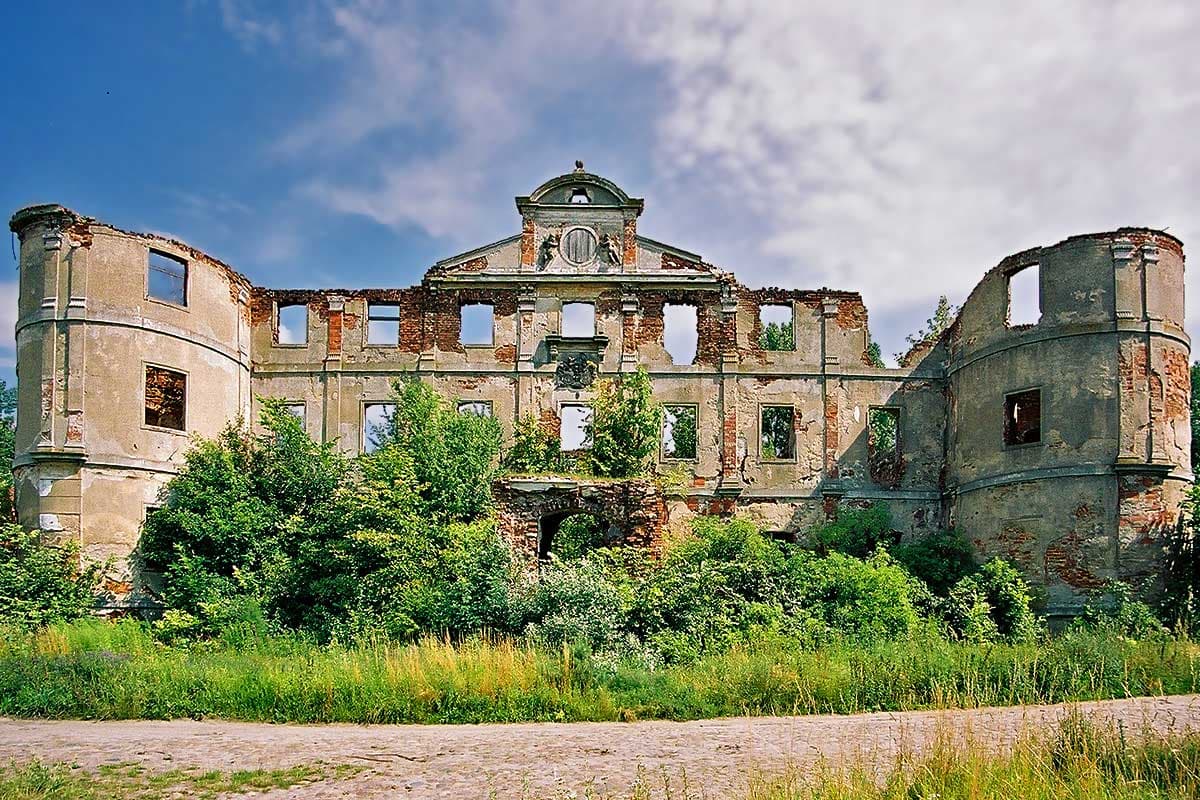
Today, Czernina Castle stands as ruins, with its external walls still visible but internal floors and roofs lost. The castle's construction primarily used brick, a common regional material, combined with medieval stone masonry in the oldest sections. The surviving vaulted cellar from the 15th century is among the oldest preserved features, highlighting the layered history of the site.
The castle complex was arranged as a closed quadrangle with four wings surrounding a central courtyard. Remnants of the original water moat survive on the south and east sides, indicating the castle's defensive origins. The original palace parkland has largely reverted to woodland, enveloping the ruins and providing a natural setting for visitors today.
Cultural significance and preservation efforts
Czernina Castle represents an important example of architectural evolution from a medieval water castle to a Baroque noble residence. Its history reflects broader social and political changes in the region, including shifts in noble ownership and the adaptation of aristocratic estates for social welfare purposes. The castle's ruins are protected as a cultural heritage site, with ongoing efforts to stabilize and conserve the remaining structures for future generations.
Frequently asked questions (FAQ)
- How do I get to Czernina Castle?
- Czernina Castle is located in Poland and can be easily accessed by car or public transportation. The nearest major city is Kraków, from where you can take a train or bus to reach the castle. Once you arrive in the area, local signs will guide you to the castle.
- What is the historical significance of Czernina Castle?
- Czernina Castle dates back to the 14th century and has played a crucial role in the region's history. It served as a defensive stronghold and a residence for various noble families throughout the centuries. Today, it stands as a testament to Poland's rich historical heritage.
- When was Czernina Castle built?
- Czernina Castle was constructed in the 14th century, with its origins linked to the medieval period of Poland. Over the years, it has undergone several renovations and restorations, reflecting various architectural styles. The castle's structure showcases the evolution of military architecture in Poland.
- Can I take guided tours of Czernina Castle?
- Yes, guided tours of Czernina Castle are available for visitors. These tours typically provide insights into the castle's history, architecture, and legends associated with it. It is advisable to check the castle's official website for tour schedules and availability.
- Why is Czernina Castle a popular tourist destination?
- Czernina Castle attracts visitors due to its stunning architecture, rich history, and picturesque surroundings. The castle offers a unique glimpse into Poland's past and serves as a beautiful backdrop for photography. Additionally, cultural events and exhibitions often take place here, enhancing its appeal.
- Is it possible to host events at Czernina Castle?
- Yes, Czernina Castle provides facilities for hosting various events, including weddings and corporate gatherings. The enchanting atmosphere and historical backdrop make it a unique venue. Interested parties should contact the castle's management for more details regarding bookings and availability.
- What are the opening hours for Czernina Castle?
- Czernina Castle is typically open to visitors from 10 AM to 6 PM, but hours may vary depending on the season. It is recommended to check the official website or call ahead to confirm the current opening hours before planning your visit. Special events may also affect these hours.
- What are the ticket prices for Czernina Castle?
- Ticket prices for Czernina Castle vary depending on age and type of tour. Generally, adult tickets are priced around 15 PLN, while discounts may be available for students and seniors. Group rates are also offered, so it's best to inquire directly for the latest pricing information.
- What is the best time to visit Czernina Castle?
- The best time to visit Czernina Castle is during the spring and early autumn months when the weather is mild and the surrounding nature is in full bloom. These seasons also tend to have fewer crowds, allowing for a more enjoyable experience. Summer can be busy, but it also offers various events and activities.
- Are there any nearby attractions to Czernina Castle?
- Yes, several attractions are located near Czernina Castle, including beautiful parks, hiking trails, and local villages that showcase traditional Polish culture. Visitors can explore nearby historical sites and enjoy local cuisine in the charming towns surrounding the castle. Plan a full day to make the most of your visit to the area.
Photo gallery

Information
Website
Visit websiteSources & official resources
Verify the information above using these authoritative references.
Loading map...
Visitor reviews
No reviews yet. Been here? Write the first review and help other travelers!
Write the first reviewVisited this castle? Share your experience
Your review helps other travelers and adds first-hand knowledge to our encyclopedia.