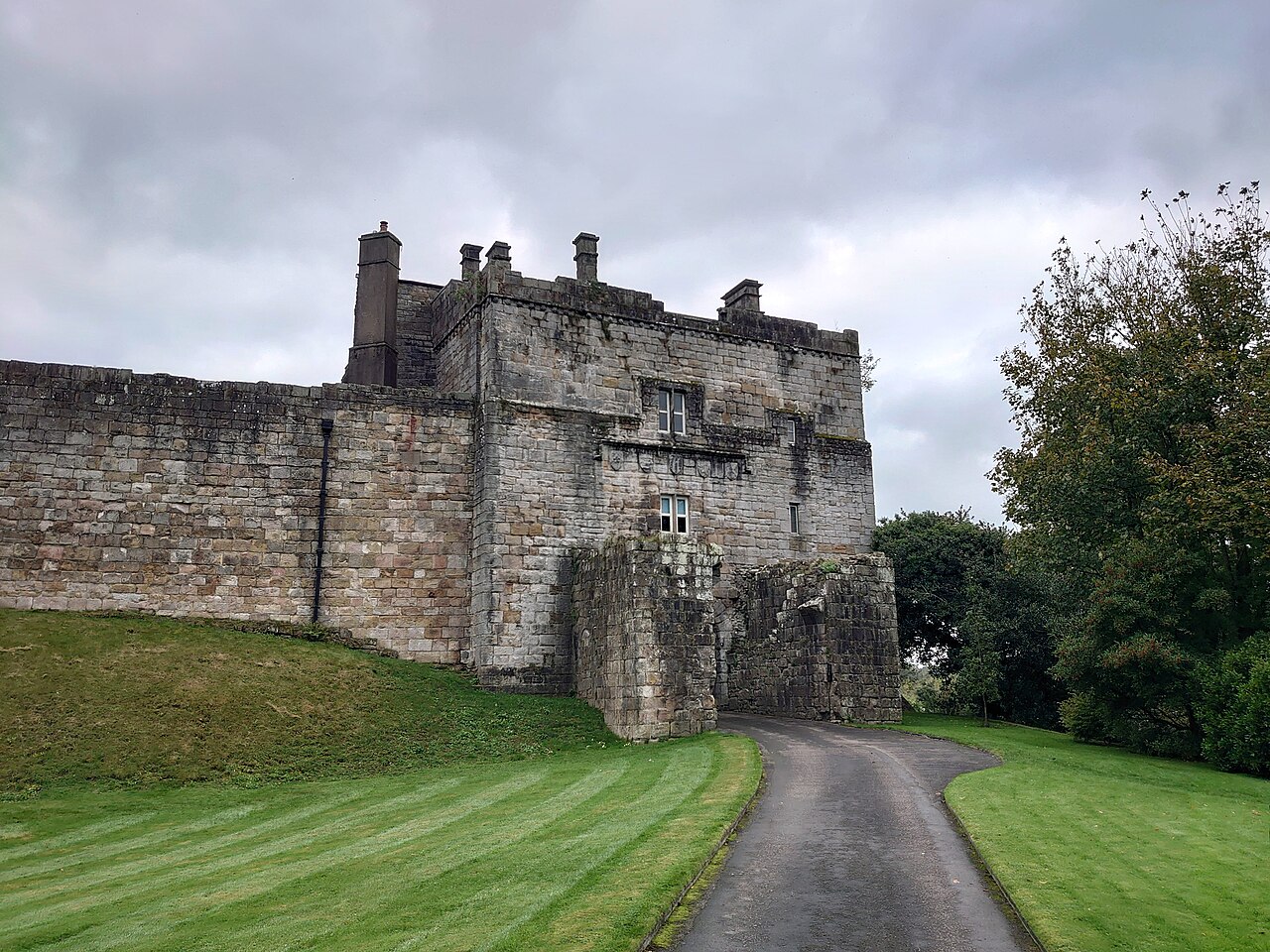
Workington Hall
Workington Hall is a historically significant fortified tower house located on the northeast edge of the town of Workington in Cumbria, England. The site originated in the mid-14th century with the construction of a medieval peel tower, a small fortified keep typical of the turbulent border regions between England and Scotland. These towers served as refuges during times of conflict, providing protection against raids and skirmishes common in this borderland area.
By around 1404, the original peel tower was replaced or expanded into a more substantial fortified tower house, reflecting the increasing need for stronger residential defenses. This transition marked a shift from a simple lookout and refuge tower to a combined residence and fortress, characteristic of the late medieval period in northern England. The stone construction and vertical emphasis of the tower house were designed to withstand sieges and provide a defensible living space for the lord and his household.
Architectural evolution and defensive features
The early structure of Workington Hall centered around a robust stone tower, typical of medieval military architecture in the border regions. The tower house featured thick stone walls, narrow windows for archers, and battlements that allowed defenders to repel attackers. The layout likely included a great hall, private chambers, and storage areas within the tower, combining domestic and martial functions.
In the late 18th century, the hall underwent significant architectural enhancements under the ownership of John Christian Curwen, lord of the manor from 1783 to 1828. Curwen commissioned the renowned architect John Carr to redesign parts of the hall, introducing elements that softened the medieval fortress aesthetic while preserving its historic character. These alterations included more comfortable living quarters and stylistic improvements aligned with the tastes of the Georgian period.
Alongside the architectural renovations, the estate's grounds were transformed through the expertise of Thomas White, a prominent landscape designer. White's plans introduced formal gardens that enhanced the estate's grandeur and reflected the landscaping fashions of the time. These gardens provided a picturesque setting that contrasted with the hall's original defensive purpose.
Historical significance and notable events
Workington Hall holds a prominent place in British history due to its association with Mary, Queen of Scots. In 1568, after fleeing Scotland, Mary took refuge at the hall during her first night in England. She was treated as an honored guest and composed a letter to Queen Elizabeth I during her stay. This event marked the beginning of Mary's captivity in England, as she was subsequently escorted to Carlisle Castle.
Ownership of the hall remained with the Curwen family until 1929, when it passed to the Chance family through marriage. During the Second World War, the hall was requisitioned by the War Office for military use. Unfortunately, it suffered a severe fire while accommodating troops, causing significant damage to the structure.
After the war, the Chance family transferred Workington Hall to the local borough council with plans to convert it into a Town Hall. However, this conversion never materialized, and the hall remains a ruin today. Despite its damaged state, it holds a Grade I listed status, recognizing its architectural and historical importance.
Current condition and preservation
Today, Workington Hall stands as the remains of a fortified tower house built on the foundations of the original 14th-century peel tower. The surviving structure reflects the hall's medieval origins and its later Georgian modifications. The stonework, battlements, and remnants of the tower convey the hall's defensive past, while the traces of 18th-century architectural enhancements demonstrate the evolution of the estate over centuries.
The hall's ruins serve as a tangible link to the region's turbulent history, illustrating how fortifications adapted to changing political and social circumstances. Its status as a Grade I listed building ensures ongoing recognition and protection, highlighting its value as a cultural heritage site within Cumbria and the United Kingdom.
Architectural and cultural legacy
Workington Hall exemplifies the architectural development from a medieval peel tower to a fortified tower house, a form prevalent in the border areas of England and Scotland. Its combination of defensive features and residential comforts illustrates the dual role such buildings played during the late medieval and early modern periods.
The involvement of figures like John Carr and Thomas White in the 18th century reflects the broader Georgian trend of adapting historic buildings to contemporary tastes while respecting their heritage. The hall's connection to significant historical events, particularly the refuge of Mary, Queen of Scots, adds to its cultural resonance.
As a site, Workington Hall offers insight into the architectural, social, and political history of northern England, making it a valuable subject for study and preservation. Its ruins continue to attract interest from historians, architects, and visitors intrigued by the layered history embodied in its stones.
Frequently asked questions (FAQ)
- What is the historical significance of Workington Hall?
- Workington Hall is historically significant for its medieval origins and its role as the refuge of Mary, Queen of Scots, in 1568. It marks an important episode in British history and reflects the turbulent border conflicts between England and Scotland.
- Can I visit Workington Hall today?
- Workington Hall exists today as a ruin and is protected as a Grade I listed building. While the site is accessible, visitors should check with local authorities for access details and any restrictions before planning a visit.
- Who was responsible for the 18th-century architectural enhancements at Workington Hall?
- The late 18th-century architectural enhancements at Workington Hall were designed by the prominent architect John Carr, commissioned by John Christian Curwen, the lord of the manor at the time.
- Why did Mary, Queen of Scots, stay at Workington Hall?
- Mary, Queen of Scots, stayed at Workington Hall in 1568 after fleeing Scotland. The hall served as her first refuge in England, where she was an honored guest before being taken into custody at Carlisle Castle.
- What caused the damage to Workington Hall during the Second World War?
- During the Second World War, Workington Hall was requisitioned by the War Office for military use and suffered a severe fire while accommodating troops, causing significant damage to the structure.
Information
Architect
John Carr
Current owner
Local borough council
Loading map...
Visitor reviews
No reviews yet. Been here? Write the first review and help other travelers!
Write the first reviewVisited this castle? Share your experience
Your review helps other travelers and adds first-hand knowledge to our encyclopedia.