Cockermouth Castle
Cockermouth Castle is a significant 12th-century hill castle located in the historic market town of Cockermouth in Cumbria, England. Positioned strategically at the confluence of the Rivers Cocker and Derwent, the castle commands an important defensive site that has played a pivotal role throughout English history. It is recognized today as a Grade I listed building and a scheduled monument, underscoring its architectural and historical importance.
Historical origins and medieval significance
The origins of Cockermouth Castle date back to the 12th century, during the High Medieval period. It was initially established shortly after the Norman Conquest as part of the network of fortifications to secure the northern borders of England. The castle was constructed under the auspices of the de Lucy family, a prominent Norman lineage, who held the barony of Cockermouth. Its location at the meeting point of two rivers provided natural defenses and facilitated control over the surrounding lands and trade routes.
Throughout the medieval period, the castle was a key stronghold in the region, witnessing various military and political events. It served as a royal garrison at times and was involved in conflicts such as the Wars of the Roses, reflecting its ongoing strategic importance.
Architectural features and layout
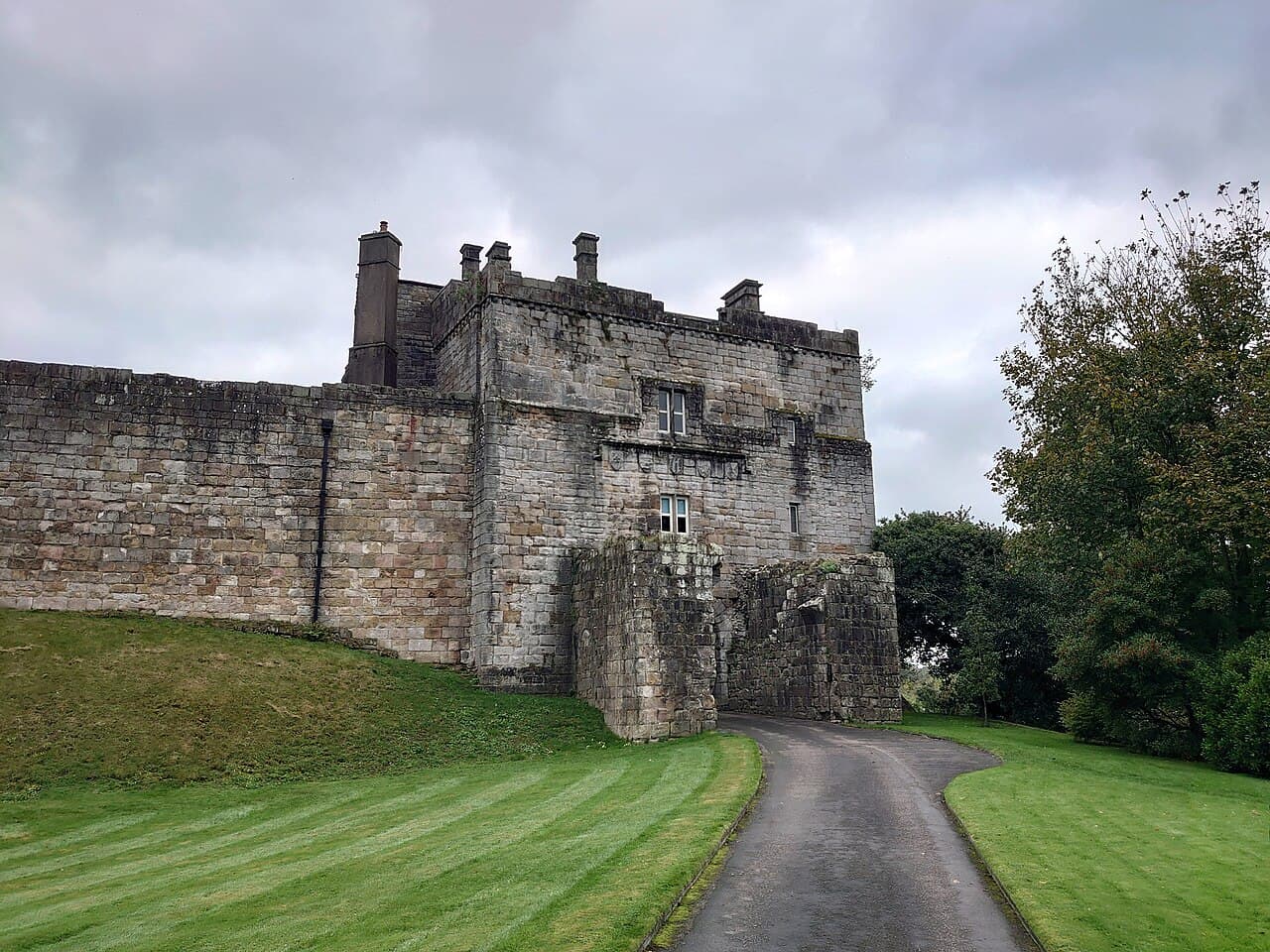
Cockermouth Castle is a classic example of a hill castle with a compact, fortified enclosure adapted to the terrain. The castle's core is a stone keep surrounded by a curtain wall with towers and battlements that have been modified over the centuries.
The castle features a motte—a raised earthwork mound—on which the keep is situated, providing a commanding view of the rivers and the town. The curtain walls include arrow slits and defensive battlements designed for archers to repel attackers. The entrance is fortified with a gatehouse and a drawbridge spanning a defensive ditch, elements typical of Norman military architecture.
Inside the walls, the castle contained essential structures such as a great hall, chapel, kitchens, and living quarters for the lord and his retainers. Over time, these were adapted to changing needs, including residential improvements during the later medieval period.
Later history and preservation
In the post-medieval period, Cockermouth Castle transitioned from a military fortress to a noble residence. It underwent various phases of remodeling and repair, reflecting changing architectural tastes and domestic requirements. Despite some damage during the English Civil War, the castle remained an important landmark.
Today, the castle is partially preserved, with significant portions of the curtain walls and the keep still standing. Its status as a Grade I listed building and scheduled monument ensures legal protection and conservation efforts. The castle is managed to facilitate public access and education, allowing visitors to explore its historic fabric and learn about its role in England's medieval past.
Visiting Cockermouth Castle
The castle is accessible to visitors interested in medieval history and architecture. Its location in the town of Cockermouth makes it a convenient site for tourists exploring the wider Lake District region. Visitors can appreciate the castle's imposing stone structures, the scenic riverside setting, and the interpretive displays that provide insight into its historical context.
Walking tours of the castle and surrounding town highlight the castle's significance in local heritage. The site is also a venue for occasional cultural events, connecting contemporary audiences with the medieval past.
Frequently asked questions (FAQ)
- When was Cockermouth Castle built?
- Cockermouth Castle was built in the 12th century during the High Medieval period, shortly after the Norman Conquest.
- What architectural features does Cockermouth Castle have?
- The castle features a stone keep, curtain walls with towers and battlements, a motte, gatehouse, and defensive ditch with a drawbridge.
- Is Cockermouth Castle open to visitors?
- Yes, Cockermouth Castle is accessible to visitors and offers walking tours and interpretive displays about its medieval history.
- Where is Cockermouth Castle located?
- Cockermouth Castle is located in the town of Cockermouth in Cumbria, England, at the confluence of the Rivers Cocker and Derwent.
- What is the current condition of Cockermouth Castle?
- The castle is partially preserved, with significant portions of its walls and keep still standing and protected as a Grade I listed building.
Photo gallery

Information
Loading map...
Visitor reviews
No reviews yet. Been here? Write the first review and help other travelers!
Write the first reviewVisited this castle? Share your experience
Your review helps other travelers and adds first-hand knowledge to our encyclopedia.