Woodleigh Castles (formerly Woodleigh Replicas)

Woodleigh Castles: replica medieval castles in Prince Edward Island
Burlington, Canada
Partially Restored

Woodleigh Castles in Prince Edward Island, Canada, is a unique and enchanting collection of replica castles nestled in the rural community of Burlington. This fascinating site offers visitors a glimpse into medieval architecture and history through meticulously crafted reproductions of iconic castles, most notably a large-scale replica of the Tower of London. Originally known as Woodleigh Replicas, the site was conceived and constructed starting in 1945 by Ernest Johnstone, a World War I veteran, and his son Archibald Johnstone. Their vision was to create a magical tribute to the grandeur and romance of medieval castles, bringing history to life in a rural Canadian setting.

The construction of the Woodleigh Castles spanned several decades, reflecting a deep passion for historical accuracy and craftsmanship. The replicas incorporate detailed architectural elements characteristic of medieval fortifications, including stone walls, turrets, battlements, and gatehouses. The site’s centerpiece, the Tower of London replica, covers approximately 13,000 square feet, making it an impressive landmark and a testament to the Johnstones' dedication. This replica captures the imposing presence and complex design of the original Tower, featuring multiple towers, defensive walls, and interior chambers designed to evoke the atmosphere of the historic fortress.

Historical background and development

The idea to build Woodleigh Castles emerged in the aftermath of World War II, a period when interest in medieval history and heritage was growing. Ernest Johnstone and his son Archibald began construction in 1945, gradually expanding the site over the years. Their work was largely self-directed, relying on traditional building techniques and local materials to replicate the medieval style authentically. The project was a labor of love, combining historical research with hands-on craftsmanship.

For decades, Woodleigh Castles operated as a tourist attraction, drawing visitors intrigued by its unique concept and impressive scale. However, after closing in 2008, the site fell into disrepair. In 2021, it was purchased by Bruce and Joanne, who embarked on an ambitious restoration project to revive the castles and adapt them for modern uses.

Restoration and contemporary use

Under the stewardship of Bruce and Joanne, Woodleigh Castles has undergone significant restoration and rebuilding efforts. Their goal has been to preserve the historical charm and architectural integrity of the replicas while making the site functional for contemporary events. Today, Woodleigh Castles serves as a versatile venue for weddings, photo shoots, theatrical performances, cultural festivals, historical reenactments, and themed celebrations such as Tudor fairs, Renaissance festivals, and Viking events.

The restoration process has been documented extensively on their YouTube channel, providing insight into the challenges and successes of reviving such a unique heritage site. The owners emphasize the castles' suitability for a wide range of activities, highlighting their spacious interiors and atmospheric settings that capture the spirit of medieval times.

Architectural features and design

Woodleigh Castles' architecture is characterized by its faithful reproduction of medieval castle elements. The replicas feature stone masonry walls that mimic the rugged texture and appearance of ancient fortifications. Towers and turrets punctuate the skyline, providing both defensive and aesthetic functions. Battlements and crenellations adorn the parapets, adding to the authenticity of the defensive design.

The gatehouses serve as dramatic entrances, often flanked by towers and equipped with portcullises, evoking the formidable gateways of real medieval castles. Inside, the castles include great halls, courtyards, and chambers designed to accommodate various events and gatherings, blending historical ambiance with modern practicality.

The tower of London replica

The Tower of London replica is the highlight of Woodleigh Castles. Spanning 13,000 square feet, it is a complex structure featuring multiple defensive towers, walls, and inner courtyards. The design captures the iconic silhouette of the original Tower, with attention to detail in the stonework and architectural proportions. This replica serves as a central hub for events and is a focal point for visitors exploring the site.

Location and visitor information

Located in the rural setting of Burlington, Prince Edward Island, Woodleigh Castles offers visitors a peaceful and immersive experience away from urban distractions. The site is accessible by car and provides ample space for parking and outdoor activities. Visitors can explore the grounds, enjoy photo opportunities, and participate in various events hosted throughout the year.

The castles are open for private bookings and special events rather than regular daily tours, making it an exclusive venue for weddings, cultural gatherings, and historical reenactments. The owners provide detailed information and updates through their official website and social media channels, ensuring visitors can plan their visits and events effectively.

Significance and cultural impact

Woodleigh Castles stands as a testament to the enduring fascination with medieval architecture and history. Its existence in Canada highlights the global appeal of castle heritage and the creative ways in which historical styles can be celebrated outside their original geographic contexts. The site enriches the cultural landscape of Prince Edward Island by offering a distinctive venue that combines education, entertainment, and community engagement.

The restoration and continued use of Woodleigh Castles demonstrate the value of preserving architectural heritage, even in replica form, as a means of connecting people with the past. It also supports local tourism and provides a unique backdrop for cultural expression and artistic endeavors.

Frequently asked questions (FAQ)

How do I visit Woodleigh Castles?
Woodleigh Castles is primarily available for private events and bookings. Visitors should check the official website or contact the owners for information on public access and event schedules.
What is the historical significance of Woodleigh Castles?
Woodleigh Castles represents a unique tribute to medieval architecture through replica construction, reflecting post-World War II interest in historical heritage and craftsmanship.
Can I host an event at Woodleigh Castles?
Yes, the castles are available for weddings, photo shoots, theatrical performances, and various cultural and historical events, providing a distinctive medieval atmosphere.
When were Woodleigh Castles built?
Construction began in 1945 by Ernest Johnstone and his son Archibald, continuing over several decades.
Is Woodleigh Castles accessible for photography?
Absolutely, the site is popular for photo shoots due to its authentic medieval castle replicas and scenic rural setting.

Information

Lowland Castle

Current owner

Bruce and Joanne

Loading map...

Visitor reviews

No reviews yet. Been here? Write the first review and help other travelers!

Write the first review

Visited this castle? Share your experience

Your review helps other travelers and adds first-hand knowledge to our encyclopedia.

Write a review

(5/5)

0/2000 characters

Your review will be visible after admin approval

Nearby castles

108 km

Logy Bay Castle

Logy Bay, Canada

Logy Bay Castle, located in Logy Bay, Newfoundland and Labrador, Canada, is a distinctive example of a contemporary private residence designed with strong inspiration from traditional castle architecture. Unlike historic castles built for defense or nobility, this structure serves as a unique modern home that incorporates the romantic and aesthetic qualities of medieval fortifications. Positioned on the scenic Marine Drive overlooking the Atlantic Ocean, the castle offers sweeping views of the rugged coastline, blending the charm of old-world castles with modern comforts and construction techniques. Architectural style and design elements Constructed by J & T Construction Ltd for a retired American NASA engineer, Logy Bay Castle reflects a deliberate fusion of medieval castle motifs with contemporary residential architecture. The building features characteristic elements such as turrets, battlement-like parapets, and extensive use of stone masonry on its exterior walls, which together create a fortress-like silhouette evocative of medieval castles. The design embraces a modern interpretation of castle architecture where traditional defensive features are reimagined for aesthetic appeal and residential functionality rather than military use. The multiple levels and towers provide panoramic views of the ocean and surrounding landscape, adapting the historic castle concept to a private seaside dwelling. Location and natural setting Logy Bay Castle is prominently situated on the eastern shore of Newfoundland along Marine Drive, a coastal route known for its dramatic ocean vistas and natural beauty. The castle's placement on a rocky shoreline enhances its visual prominence and connects it to Newfoundland's rich maritime heritage. The surrounding environment includes rugged rocky coastlines, dense vegetation, and open ocean views, which together create a striking backdrop that complements the castle's robust stone facade. This setting echoes the strategic placement typical of historic castles, here repurposed for scenic enjoyment and privacy. Historical and cultural significance While Logy Bay Castle does not possess the centuries-old history of traditional fortresses, it stands as a modern architectural statement inspired by the romanticism of medieval castles. Its construction for a retired NASA engineer adds a contemporary cultural layer, linking the structure to narratives of innovation, personal achievement, and individual expression through architecture. The castle is a private residence and is not open to the public, emphasizing its role as a personal home rather than a historic monument. Despite this, it remains a notable landmark within the community, visible from public roads and vantage points along the coast. Preservation and current condition Maintained privately by its owners, Logy Bay Castle is in a well-preserved condition, with ongoing care ensuring its durability against the harsh coastal climate of Newfoundland. The use of stone masonry and quality construction techniques contribute to its robust state. As a private home, it is not part of any public heritage conservation program, and access is restricted. Visitors are encouraged to appreciate the castle's unique architecture and picturesque location from public viewpoints without trespassing on private property. Architectural features in detail The castle's turrets serve both as architectural focal points and viewing platforms, offering expansive vistas of the Atlantic Ocean. The battlement-like parapets along the roofline are decorative rather than functional, evoking the defensive crenellations seen in medieval fortresses. The stone walls, likely constructed from locally sourced materials, provide a tactile connection to traditional castle building methods, while the interior presumably balances historic style with modern amenities suited to contemporary living. Access and visitor information Logy Bay Castle remains a private residence and is not accessible for public tours or visits. Visitors can view and photograph the castle from public roads and nearby vantage points along Marine Drive, where it stands as a distinctive architectural landmark. Respect for the privacy of the owners is essential. The castle's location on a public coastal route allows for visual appreciation without intrusion.

Contemporary (20th–21st c.)
Details
486.4 km
Fortress of Louisbourg — Canada castle

Fortress of Louisbourg

, Canada

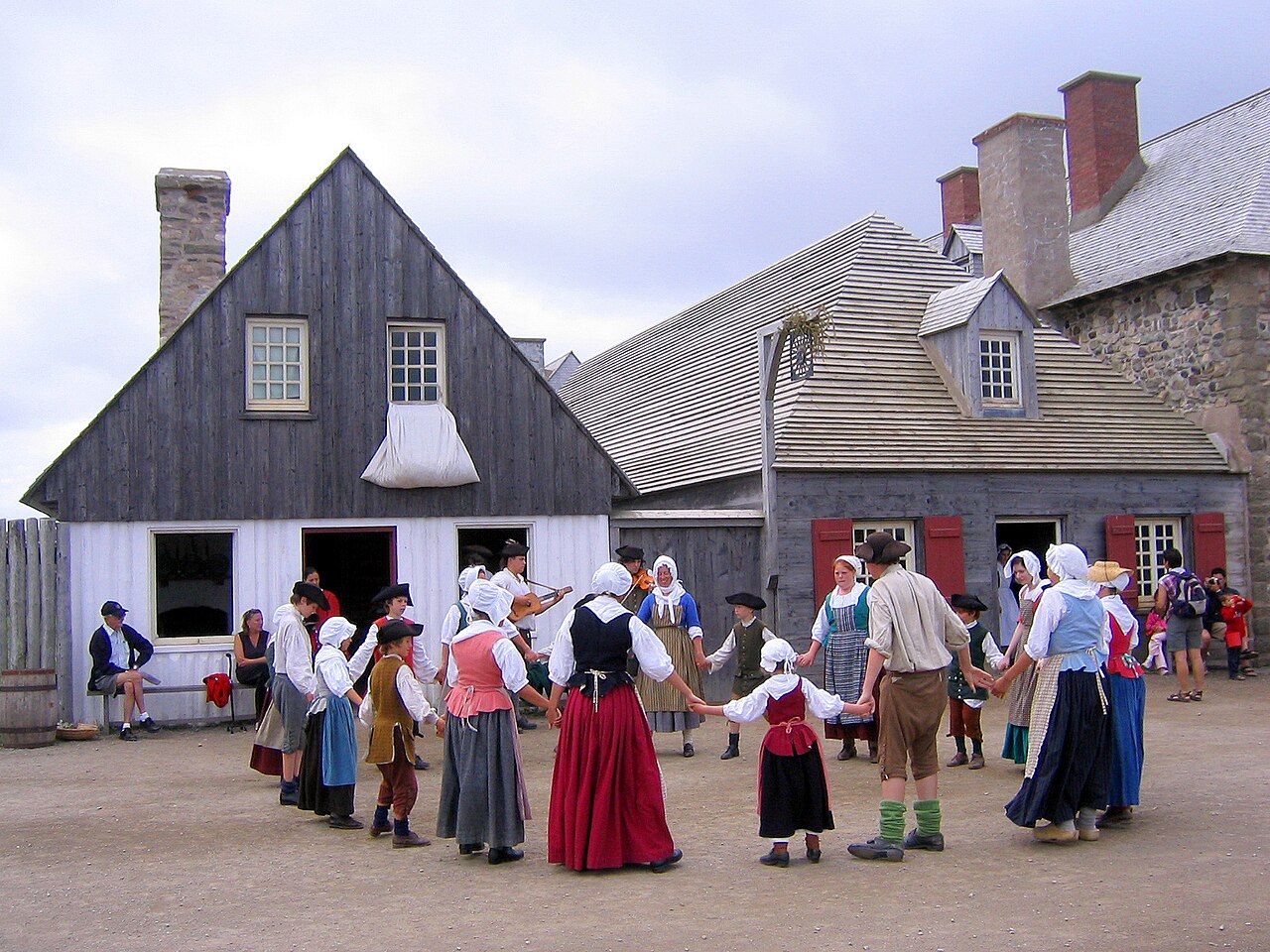
The Fortress of Louisbourg is a significant historical site located on Cape Breton Island in Nova Scotia, Canada. It represents one of the most extensive and costly European fortifications built in North America during the 18th century. Originally constructed by the French, this bastioned fortress played a crucial role in the colonial struggles between France and Britain for control of the region that would become Canada. Founded in 1713 as Havre à l'Anglois by settlers from Terre-Neuve, the settlement quickly evolved from a fishing port into a fortified commercial hub. The fortress walls, primarily built between 1720 and 1740, enclosed the town and its harbor, offering protection against naval attacks. Named in honor of King Louis XIV of France, Louisbourg's fortifications were designed in the post-Renaissance military architectural style, characterized by star-shaped bastions, thick stone walls, and angled defenses optimized for artillery warfare. Architecture and fortifications The design of the Fortress of Louisbourg reflects the principles of bastioned fortification that were prevalent in European military engineering during the 17th and 18th centuries. The fortress featured multiple bastions projecting outward from the curtain walls, allowing defenders to cover adjacent walls with flanking fire. The walls were constructed with heavy masonry and earthworks to absorb cannon fire, and the fortress included a network of moats, ravelins, and glacis to impede attackers. Despite its formidable sea-facing defenses, the fortress had notable vulnerabilities. It was built on relatively low-lying ground, overlooked by nearby hills, which compromised its landward defenses. The fortifications were primarily oriented toward repelling naval assaults, leaving the land approaches less well protected. This weakness was exploited during the sieges it endured. Historical significance and sieges The Fortress of Louisbourg was central to the Anglo-French conflicts in North America during the 18th century. It was captured by British colonial forces in 1745 during the War of the Austrian Succession, an event that marked a turning point in the struggle for dominance in the region. The fortress was returned to France in 1748 as part of the peace treaty, in exchange for territories in Europe. Louisbourg was besieged again in 1758 during the Seven Years' War. This siege was decisive, leading to British control of the fortress and a significant shift in power in North America. Following its capture, British engineers systematically demolished much of the fortress's defenses to prevent its future use by French forces. Although a British garrison remained until 1768, the site was eventually abandoned by 1785. Reconstruction and modern preservation Starting in 1961, a large-scale partial reconstruction of the fortress began, aiming to restore approximately one-quarter of the original structure. This project, one of the largest historical reconstruction efforts in North America, sought to recreate the fortress's appearance and function during its peak in the 18th century. The head stonemason, Ron Bovaird, led much of the masonry work, which also provided employment for local coal miners. The reconstruction required the expropriation of the community of West Louisbourg, a controversial aspect of the project. Restoration efforts continued into the 1970s and were supplemented by further work between 2018 and 2023, including repairs following damage from Hurricane Fiona. These recent restorations focused on protecting the site from rising water levels and preserving the structural integrity of the fortress. Visitor experience and cultural importance Today, the Fortress of Louisbourg National Historic Site is operated by Parks Canada as a living history museum. Visitors can explore reconstructed buildings, walk the fortress walls, and experience reenactments that illustrate life in an 18th-century French colonial fortress. The site serves as an educational resource, highlighting the complex military, cultural, and economic history of the region. The fortress's scale and the quality of its restoration make it a unique destination for those interested in colonial history, military architecture, and Canadian heritage. It stands as a testament to the strategic importance of Nova Scotia in the colonial era and the enduring legacy of European conflicts in shaping North America.

Post-Renaissance (17th–18th c.)
Details
798.9 km
Fort Beauséjour — Canada castle

Fort Beauséjour

, Canada

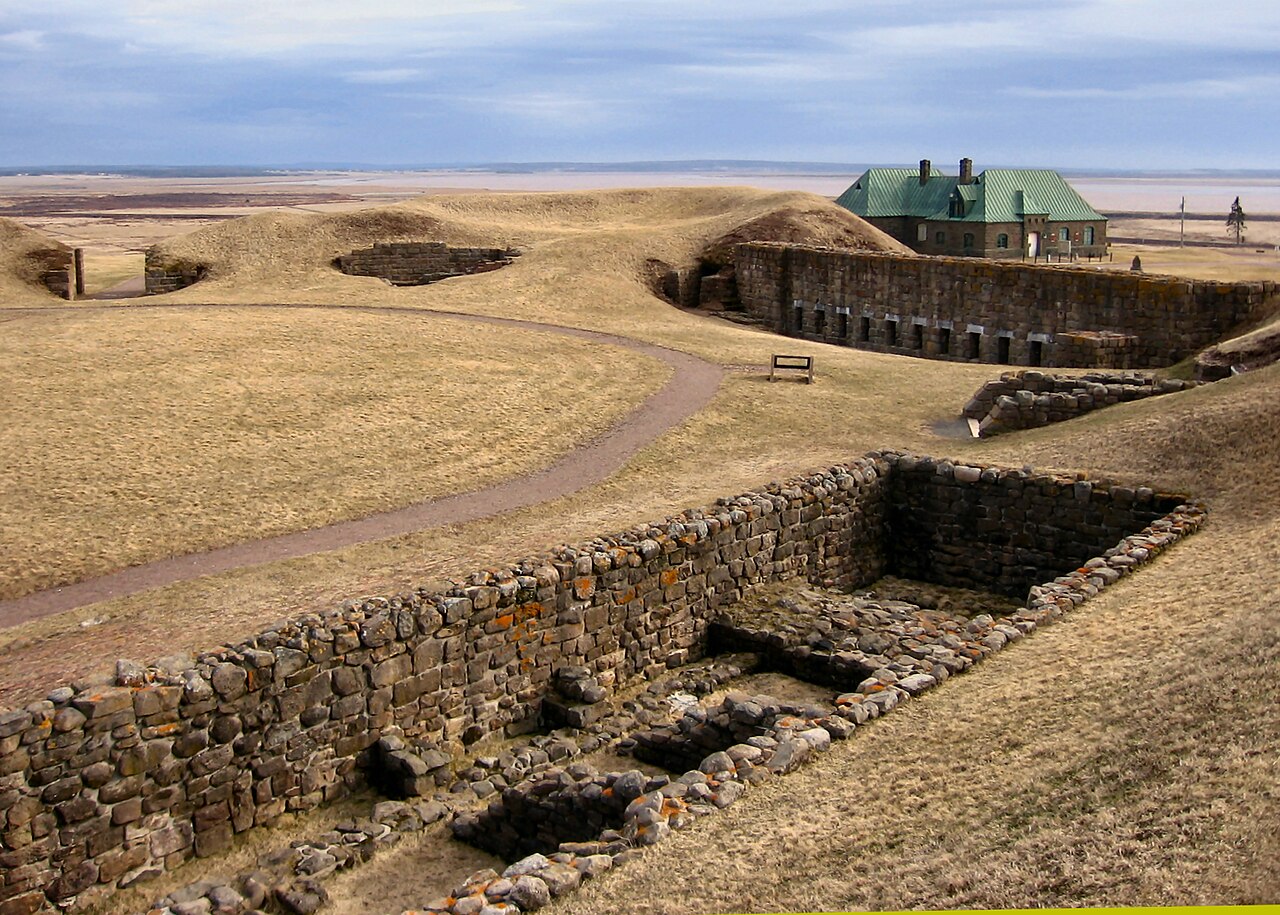
Fort Beauséjour, constructed between 1751 and 1752 by the French, is a prominent bastioned fortress located on the Isthmus of Chignecto, a narrow strip of land connecting the modern provinces of New Brunswick and Nova Scotia in eastern Canada. This fortification played a crucial role in the colonial conflicts between France and Britain during the mid-18th century, particularly in the struggle for control over the Acadian region, which encompassed the Maritime provinces, eastern Quebec, and parts of northern Maine. Architectural design and strategic importance The fort's design reflects the post-Renaissance military engineering principles typical of the 18th century, featuring a five-bastioned layout that provided overlapping fields of fire to defend against attackers. This star-shaped configuration was intended to maximize defensive capabilities, allowing defenders to cover all approaches with cannon and musket fire. The fort's position on the Isthmus of Chignecto was strategically chosen to control land access between Nova Scotia and New Brunswick, making it a key military asset in the region. The bastions, curtain walls, and surrounding ditches were constructed using earthworks reinforced with timber and stone, designed to withstand artillery bombardment. The fort included barracks, powder magazines, and storage facilities to support a garrisoned force. Its robust defensive features exemplify the evolution of bastioned fortifications during the colonial era, reflecting contemporary European military architecture adapted to North American conditions. Historical context and military engagements Fort Beauséjour was built during a period of intense rivalry between the French and British empires in North America, known as the French and Indian Wars (1749–1763). The fort was intended to secure French claims in Acadia and to serve as a base for operations against British forces. However, in 1755, during the early stages of the Seven Years' War, British forces launched an assault on the fort in the Battle of Fort Beauséjour. After a brief siege, the French garrison surrendered, and the British renamed the site Fort Cumberland. The capture of the fort was a significant event that contributed to British dominance in the region and the eventual expulsion of the Acadian population. The fort's strategic value continued into the American Revolutionary period. In 1776, it was the scene of the Battle of Fort Cumberland, where British troops successfully repelled an attack by American sympathizers aiming to bring the revolution to Nova Scotia. Role in the expulsion of the Acadians Following its capture, Fort Cumberland became a staging ground for British operations during the Great Expulsion (Le Grand Dérangement) of the Acadians. The fort's control allowed British forces to monitor and restrict movement in the region, facilitating the forced removal of Acadian families from their lands. This tragic episode had lasting effects on the cultural and demographic landscape of the Maritime provinces. Preservation and public access Since 1920, the site has been recognized as a National Historic Site of Canada, preserving the remains of both Fort Beauséjour and Fort Cumberland. Portions of the fort have been carefully restored to reflect their 18th-century appearance, including reconstructed bastions and defensive earthworks. The site includes a museum that offers exhibits on the fort's military history, the colonial conflicts, and the Acadian experience. Visitor facilities provide educational programs and guided tours, attracting approximately 6,000 visitors annually. The fort's preservation allows for an immersive experience into the military architecture and colonial history of eastern Canada, highlighting its significance in the broader context of North American colonial struggles. Architectural features visible today Today, visitors can explore the star-shaped layout of the five bastions, the remnants of the curtain walls, and the defensive ditches that once protected the fort. Interpretive signage explains the construction techniques and historical events associated with the site. The museum's collection includes artifacts recovered from the fort and surrounding areas, providing tangible connections to the lives of soldiers and settlers during the 18th century. Legacy and cultural significance Fort Beauséjour stands as a testament to the intense colonial rivalry that shaped the history of eastern Canada. Its role in the military conflicts between France and Britain, as well as in the American Revolutionary War, marks it as a site of considerable historical importance. The fort's association with the Acadian expulsion adds a poignant dimension to its legacy, reflecting the human cost of imperial ambitions. As a preserved historic site, Fort Beauséjour offers valuable insights into 18th-century bastioned fortress architecture, colonial military strategy, and the complex cultural heritage of the Maritime provinces. It remains a focal point for heritage tourism and education, contributing to the understanding of Canada's colonial past.

Post-Renaissance (17th–18th c.)
Details