Fortress of Louisbourg
The Fortress of Louisbourg is a significant historical site located on Cape Breton Island in Nova Scotia, Canada. It represents one of the most extensive and costly European fortifications built in North America during the 18th century. Originally constructed by the French, this bastioned fortress played a crucial role in the colonial struggles between France and Britain for control of the region that would become Canada.
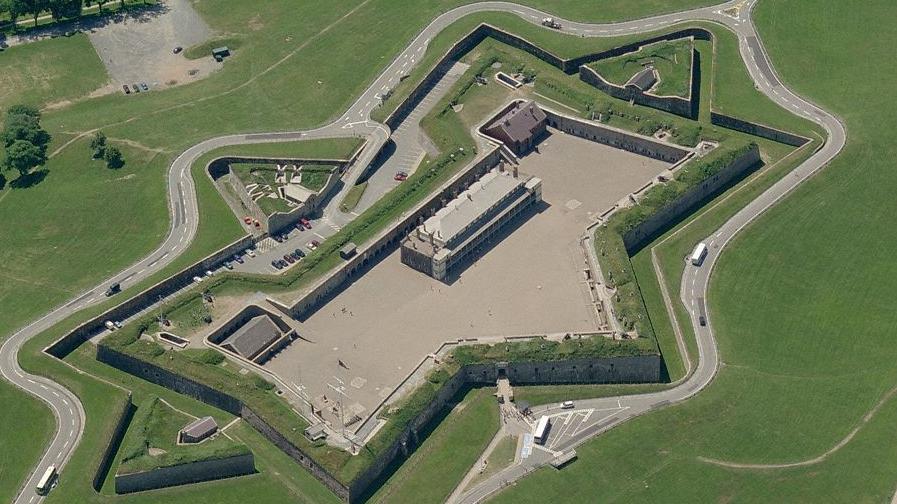
Founded in 1713 as Havre à l'Anglois by settlers from Terre-Neuve, the settlement quickly evolved from a fishing port into a fortified commercial hub. The fortress walls, primarily built between 1720 and 1740, enclosed the town and its harbor, offering protection against naval attacks. Named in honor of King Louis XIV of France, Louisbourg's fortifications were designed in the post-Renaissance military architectural style, characterized by star-shaped bastions, thick stone walls, and angled defenses optimized for artillery warfare.
Architecture and fortifications
The design of the Fortress of Louisbourg reflects the principles of bastioned fortification that were prevalent in European military engineering during the 17th and 18th centuries. The fortress featured multiple bastions projecting outward from the curtain walls, allowing defenders to cover adjacent walls with flanking fire. The walls were constructed with heavy masonry and earthworks to absorb cannon fire, and the fortress included a network of moats, ravelins, and glacis to impede attackers.
Despite its formidable sea-facing defenses, the fortress had notable vulnerabilities. It was built on relatively low-lying ground, overlooked by nearby hills, which compromised its landward defenses. The fortifications were primarily oriented toward repelling naval assaults, leaving the land approaches less well protected. This weakness was exploited during the sieges it endured.
Historical significance and sieges
The Fortress of Louisbourg was central to the Anglo-French conflicts in North America during the 18th century. It was captured by British colonial forces in 1745 during the War of the Austrian Succession, an event that marked a turning point in the struggle for dominance in the region. The fortress was returned to France in 1748 as part of the peace treaty, in exchange for territories in Europe.
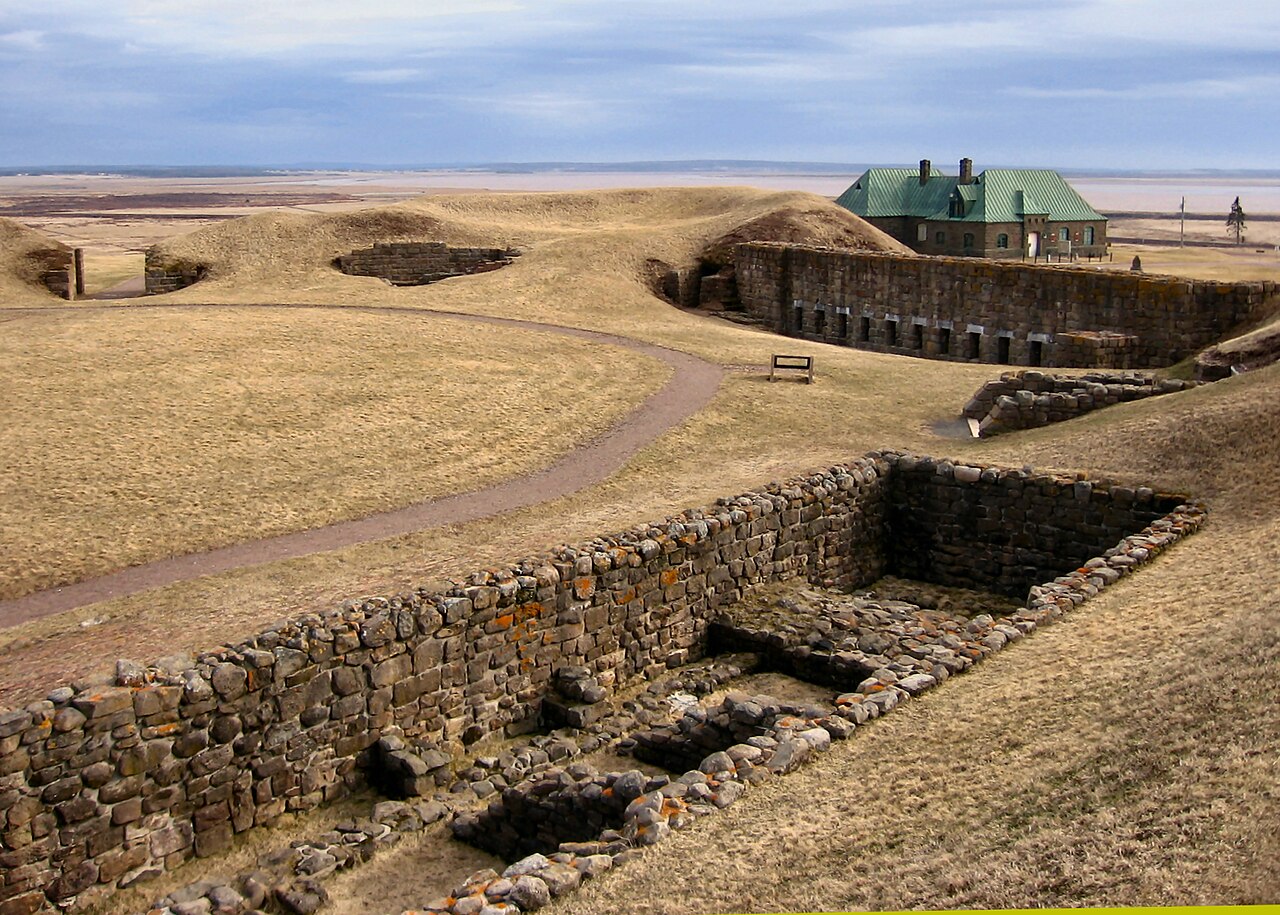
Louisbourg was besieged again in 1758 during the Seven Years' War. This siege was decisive, leading to British control of the fortress and a significant shift in power in North America. Following its capture, British engineers systematically demolished much of the fortress's defenses to prevent its future use by French forces. Although a British garrison remained until 1768, the site was eventually abandoned by 1785.
Reconstruction and modern preservation
Starting in 1961, a large-scale partial reconstruction of the fortress began, aiming to restore approximately one-quarter of the original structure. This project, one of the largest historical reconstruction efforts in North America, sought to recreate the fortress's appearance and function during its peak in the 18th century. The head stonemason, Ron Bovaird, led much of the masonry work, which also provided employment for local coal miners.
The reconstruction required the expropriation of the community of West Louisbourg, a controversial aspect of the project. Restoration efforts continued into the 1970s and were supplemented by further work between 2018 and 2023, including repairs following damage from Hurricane Fiona. These recent restorations focused on protecting the site from rising water levels and preserving the structural integrity of the fortress.
Visitor experience and cultural importance
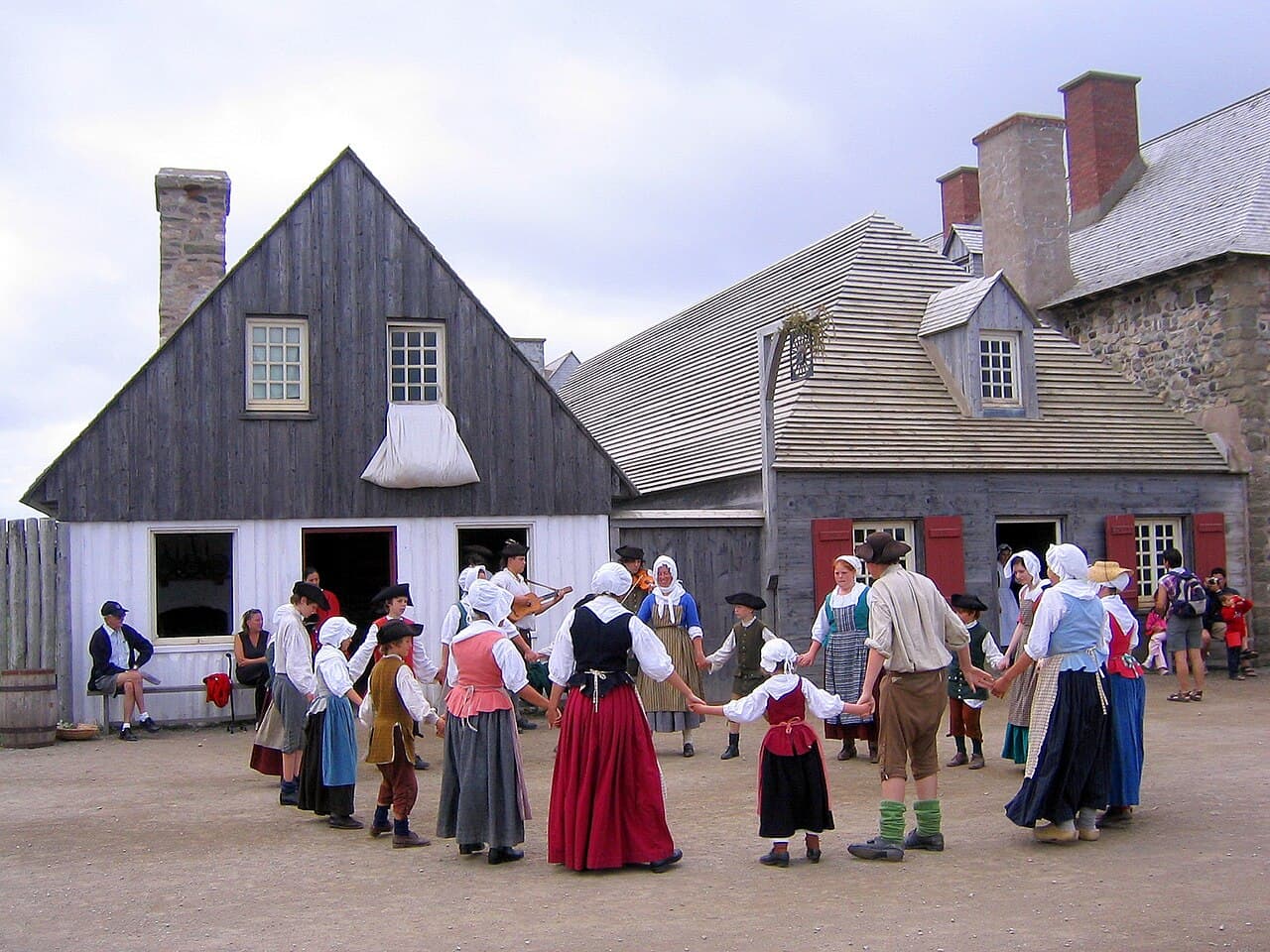
Today, the Fortress of Louisbourg National Historic Site is operated by Parks Canada as a living history museum. Visitors can explore reconstructed buildings, walk the fortress walls, and experience reenactments that illustrate life in an 18th-century French colonial fortress. The site serves as an educational resource, highlighting the complex military, cultural, and economic history of the region.
The fortress's scale and the quality of its restoration make it a unique destination for those interested in colonial history, military architecture, and Canadian heritage. It stands as a testament to the strategic importance of Nova Scotia in the colonial era and the enduring legacy of European conflicts in shaping North America.
Frequently asked questions (FAQ)
- When was the Fortress of Louisbourg originally built?
- The fortress was primarily constructed between 1720 and 1740, with the settlement founded in 1713.
- What architectural style characterizes the Fortress of Louisbourg?
- It is designed in the bastioned fortress style typical of the post-Renaissance period, featuring star-shaped bastions and thick stone walls.
- Can visitors explore the Fortress of Louisbourg today?
- Yes, the site is a National Historic Site operated by Parks Canada and functions as a living history museum with reconstructed buildings and reenactments.
- What were the major historical events involving the Fortress of Louisbourg?
- The fortress was captured by British forces in 1745 and again in 1758, with the latter siege during the Seven Years' War marking a decisive moment in North American colonial history.
- Is the Fortress of Louisbourg fully reconstructed?
- No, about one-quarter of the original fortress has been partially reconstructed, with ongoing restoration to preserve the site.
Photo gallery

Information
Loading map...
Visitor reviews
No reviews yet. Been here? Write the first review and help other travelers!
Write the first reviewVisited this castle? Share your experience
Your review helps other travelers and adds first-hand knowledge to our encyclopedia.