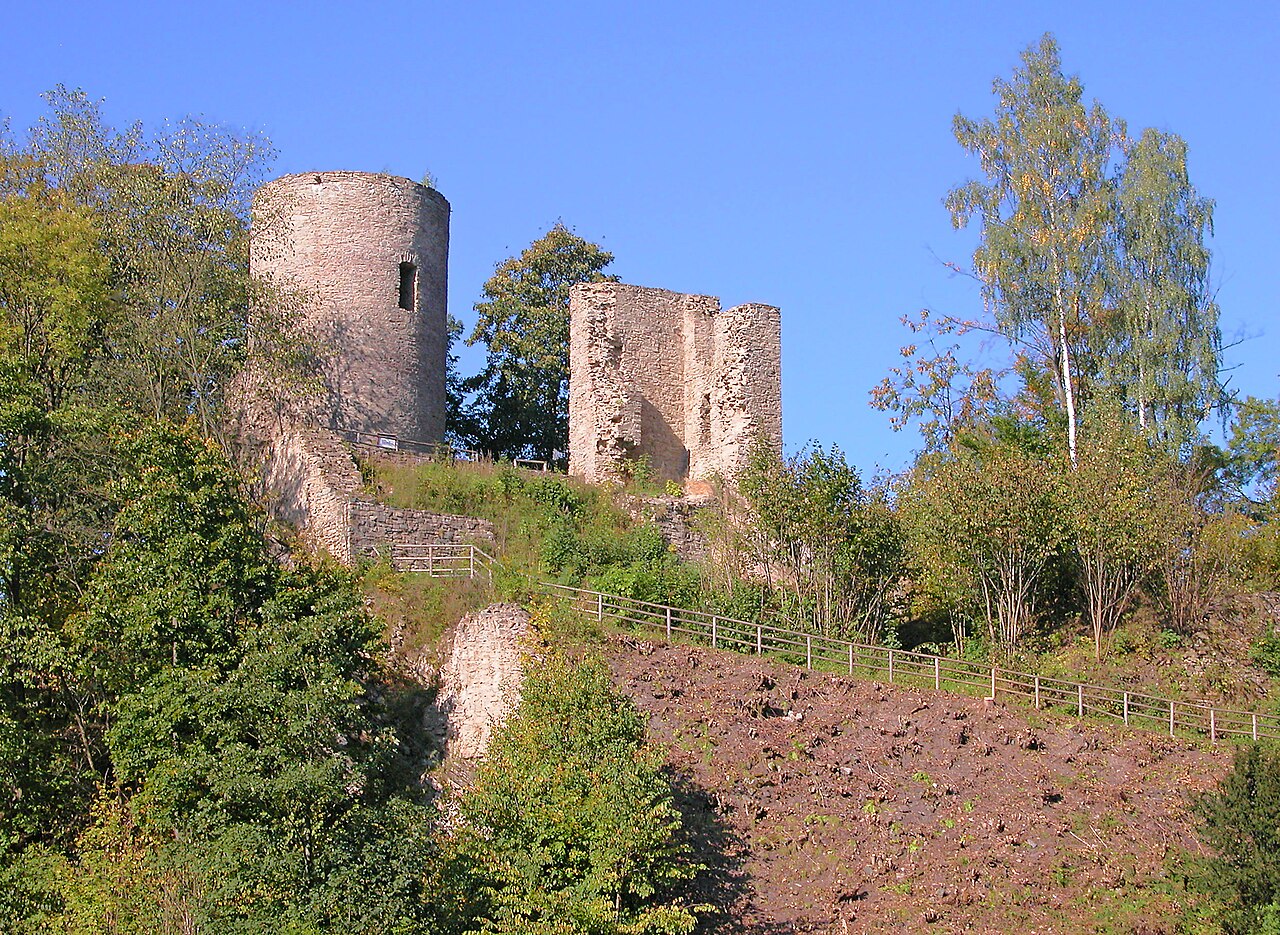
Wolkenstein Castle
Wolkenstein Castle, located in the town of Wolkenstein in Saxony, Germany, is a notable example of a late medieval castle complex that evolved through centuries of architectural development. The castle's origins trace back to the 14th century, with the oldest surviving section being the tower that includes the living quarters. This tower is the core around which the castle expanded, incorporating various older structures and fortifications whose original appearance remains undocumented.
Historical development and architectural evolution
The initial construction phase of Wolkenstein Castle focused on defensive needs typical of the late medieval period. The tower served as a fortified residence, providing protection and living space for the local nobility. Over time, the castle complex grew by joining additional buildings to this central tower, reflecting changing requirements from military defense to residential comfort.
By the 16th century, the castle underwent significant expansions, particularly the enlargement of the kitchen building. This period also saw the addition of the South and North wings along with the gate house, which now dominate the castle's appearance. These additions shifted the castle's character from a purely defensive fortress to a more residential and administrative complex, consistent with the broader trend in castle architecture during the Renaissance when fortifications became less critical due to advancements in warfare technology.
Architectural features and layout
The castle ensemble is characterized by a combination of medieval and Renaissance architectural elements. The tower with living quarters remains the oldest and most historically significant part, showcasing medieval construction techniques with thick stone walls and narrow windows designed for defense. The gate house serves as the main entrance, historically controlling access and providing security.
The South and North wings are prominent features of the castle, constructed during the 16th-century expansion. These wings include residential rooms and service areas, reflecting the castle's adaptation to a more domestic and administrative function. Although the castle retains traces of its defensive past, including remnants of fortifications, it is now primarily regarded as a residence rather than a military stronghold.
Cultural significance and museum
Today, Wolkenstein Castle serves as a cultural landmark within the town of Wolkenstein. The castle houses a museum that offers visitors detailed insights into the history of the castle and the surrounding city. Exhibits cover various aspects of the castle's architectural evolution, its role in regional history, and the lifestyle of its former inhabitants.
The museum's collections include artifacts from the medieval and Renaissance periods, architectural models, and historical documents that illustrate the castle's transformation over the centuries. This makes Wolkenstein Castle an important educational resource for those interested in German medieval architecture and local history.
Preservation and current status
Wolkenstein Castle is considered well preserved with several parts of the original structure still intact. The castle's maintenance and restoration efforts have ensured that its historical and architectural integrity remain visible and accessible to the public. Its status as a residence combined with its museum function helps sustain its upkeep and relevance.
The castle's location in Saxony places it among the region's significant historical sites, attracting visitors interested in exploring medieval and Renaissance architecture within a well-maintained setting.
Frequently asked questions (FAQ)
- What is the best time to visit Wolkenstein Castle?
- The best time to visit Wolkenstein Castle is during the spring and summer months when the weather is mild, and the castle grounds are fully accessible. Seasonal events and exhibitions often take place in warmer months, enhancing the visitor experience.
- Can I tour the interior of Wolkenstein Castle?
- Yes, visitors can tour the interior of Wolkenstein Castle, including the living quarters, kitchen building, and the South and North wings. The castle museum provides guided tours that explain the historical and architectural significance of the various parts.
- Is Wolkenstein Castle accessible for people with mobility issues?
- The castle's medieval structure includes some uneven surfaces and stairs, which may pose challenges for visitors with mobility issues. However, some areas of the castle and museum are adapted for accessibility. It is recommended to contact the castle administration in advance for specific accessibility information.
- How much does it cost to visit Wolkenstein Castle?
- Ticket prices for Wolkenstein Castle are modest, with discounts available for children, seniors, and groups. Admission fees help support the castle's preservation and museum operations. Exact prices can be found on the official website or at the ticket office.
- What historical periods are represented at Wolkenstein Castle?
- Wolkenstein Castle primarily represents the late medieval period with significant Renaissance modifications. The 14th-century tower and 16th-century expansions illustrate architectural and functional changes from fortress to residence.
Information
Current owner
Municipality
Loading map...
Visitor reviews
No reviews yet. Been here? Write the first review and help other travelers!
Write the first reviewVisited this castle? Share your experience
Your review helps other travelers and adds first-hand knowledge to our encyclopedia.