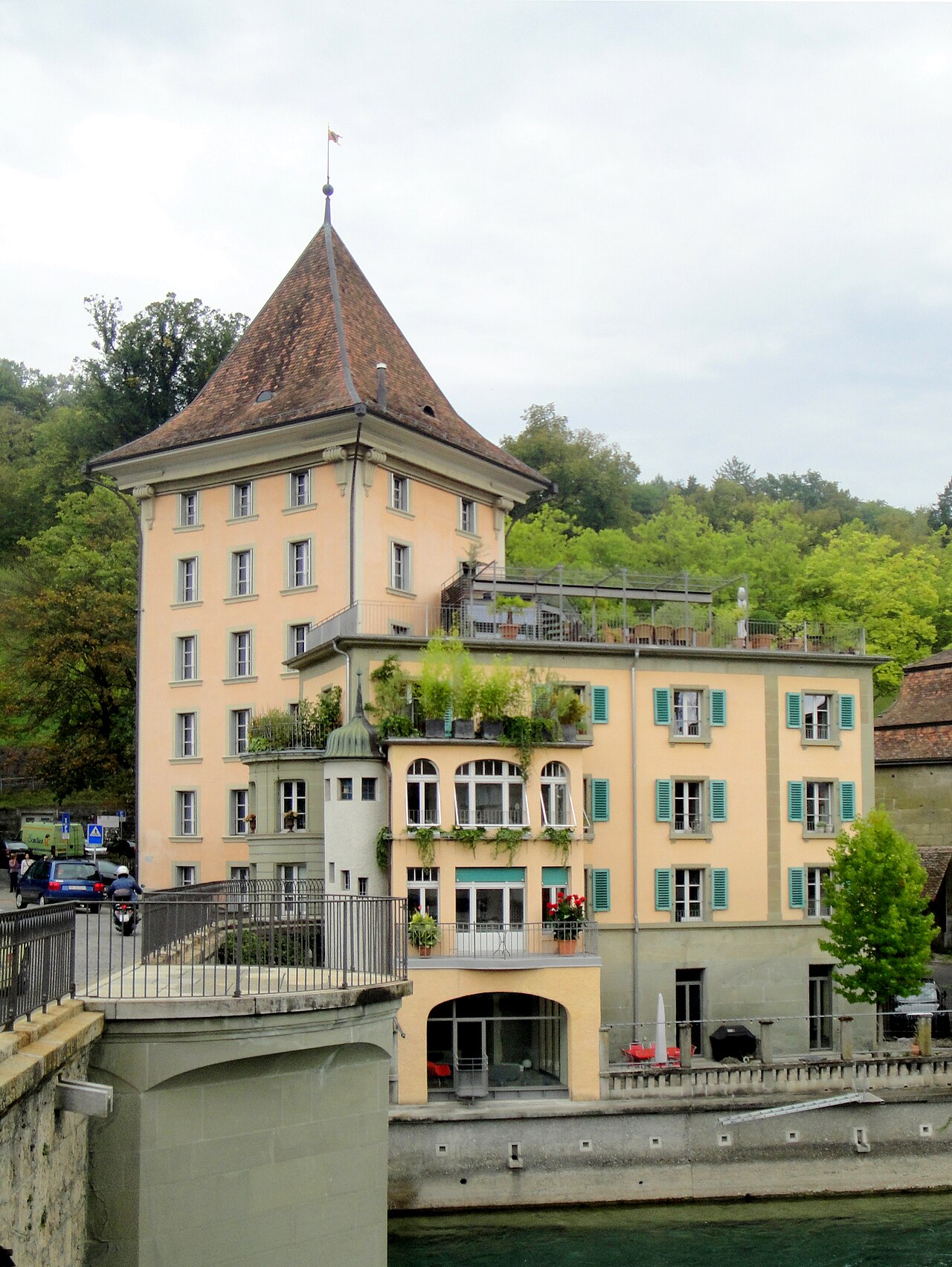
Wittigkofen Castle

Wittigkofen Castle in Bern, Switzerland
High Medieval (11th–13th c.)

Wittigkofen Castle is a historic high medieval castle located in the Bern region of Switzerland. Originally constructed in the 13th century, the castle began as a residence associated with a farm and was granted to followers of the influential Zähringian dynasty. This connection places Wittigkofen within the broader context of medieval feudal structures in the Swiss plateau, where the Zähringians played a key role in regional governance and land distribution.

Historical origins and early ownership

The earliest known manager of the estate was Heinricus Wittenchoven, a notable figure who served on the local council and is documented as the first feudal superior of the property during the mid-13th century. His stewardship reflects the castle's function as both a residential and administrative center in the feudal hierarchy of the time.

Throughout its history, Wittigkofen Castle changed hands among various noble families, illustrating the shifting political and social alliances typical of medieval Switzerland. A significant chapter in its ownership began in 1570 when Beat Ludwig von Mülinen (1521-1597) acquired the castle. Von Mülinen’s tenure marked a period of consolidation and partial transfer of ownership; six years after his purchase, he granted half of the property to Hans Rudolf Steiger (1549-1577), another prominent figure of the era.

Architectural features and style

While specific architectural details of Wittigkofen Castle are less documented, its classification as a high medieval hill castle suggests typical features such as fortified stone walls, a central keep or residential tower, and defensive elements adapted to the terrain. Castles from this period often included courtyards, battlements, and gatehouses designed to provide security and control over the surrounding lands.

The castle’s origins as a farm residence imply that it may have combined both residential and agricultural functions, with outbuildings and storage facilities integrated into the castle complex. The castle’s location in Bern, a region known for its strategic importance during the medieval period, would have influenced its design to balance comfort with defense.

Connection to the monastery of Interlaken

Wittigkofen Castle also had historical ties to the monastery of Interlaken, indicating a role in ecclesiastical landholding and possibly serving as a local administrative center for monastic estates. This relationship highlights the interconnectedness of religious and secular powers in medieval Switzerland, where monasteries often held significant territorial influence.

The Von Wurstemberger collection and modern history

In more recent history, Wittigkofen Castle housed a significant collection of historical and military artifacts belonging to the Von Wurstemberger family. This collection included an extensive library, maps, portraits, and drawings that documented the family's impact on the military history of the Swiss Confederation.

In June 2011, the decision was made by Jürg Stüssi-Lauterburg, director of the Library am Guisanplatz (BiG)—a federal military library in Bern—to acquire this collection. The Von Wurstemberger library was located in the castle’s French room and contained many rare and valuable books. Prior to transfer, each book was carefully cleaned to prevent insect infestation, demonstrating the care taken in preserving these historical materials.

In September 2011, with assistance from active military personnel, approximately 50 boxes of books and artifacts were moved to the Library am Guisanplatz, ensuring their preservation and accessibility for future research into Swiss military heritage.

Preservation and current status

Wittigkofen Castle remains a well-preserved example of a high medieval hill castle in the Bern region. Though not as extensively documented architecturally as some other Swiss castles, its historical significance is maintained through its connections to notable families and its role in preserving military history collections.

The castle’s condition reflects ongoing efforts to maintain its structure and heritage, contributing to the cultural landscape of Bern and offering insights into medieval feudal life and Swiss history.

Frequently asked questions (FAQ)

How do I get to Wittigkofen Castle?
Wittigkofen Castle is located just outside of Bern, Switzerland, making it easily accessible by public transport or car. If using public transport, you can take a local bus from Bern city center that stops nearby the castle.
What is the historical significance of Wittigkofen Castle?
Wittigkofen Castle dates back to the 13th century and serves as a remarkable example of medieval architecture in the region. It has played a crucial role in Bern's history, serving various purposes throughout the centuries, including as a noble residence and a strategic military stronghold.
When was Wittigkofen Castle built?
Wittigkofen Castle was constructed in the early 13th century, with significant additions and renovations occurring in the following centuries. Its rich history is reflected in its architectural elements, which showcase the evolution of castle design over time.
Can I visit Wittigkofen Castle year-round?
Yes, Wittigkofen Castle is open to visitors year-round, although specific opening hours may vary by season. It is advisable to check the official website for the most current visiting hours and any special events that may affect accessibility.
Why is Wittigkofen Castle considered a great example of medieval architecture?
Wittigkofen Castle features classic elements of medieval architecture, including robust stone walls, towers, and a picturesque setting that highlights its historical significance. The castle's design reflects the defensive needs of its time, while also showcasing the beauty of the era's craftsmanship.
Is it possible to take guided tours of Wittigkofen Castle?
Yes, guided tours are available at Wittigkofen Castle, offering visitors an in-depth look at its history and architecture. These tours are led by knowledgeable guides who provide fascinating insights into the castle's past and its role in the region.
What are the ticket prices for visiting Wittigkofen Castle?
Ticket prices for Wittigkofen Castle are generally affordable, with discounts available for children, students, and seniors. It is best to check the official website for the latest information on ticket prices and any special promotions.
What is the best time to visit Wittigkofen Castle?
The best time to visit Wittigkofen Castle is during the spring and summer months when the weather is pleasant and the surrounding gardens are in full bloom. However, visiting in the fall can also provide stunning views of the colorful foliage.
Are there any nearby attractions to visit along with Wittigkofen Castle?
Yes, visitors can explore several nearby attractions, including the beautiful parks and walking trails in the vicinity. Additionally, Bern's historic city center, a UNESCO World Heritage site, is just a short distance away and offers a wealth of cultural and historical experiences.

Loading map...

Visitor reviews

No reviews yet. Been here? Write the first review and help other travelers!

Write the first review

Visited this castle? Share your experience

Your review helps other travelers and adds first-hand knowledge to our encyclopedia.
Write a review

(5/5)

0/2000 characters

Your review will be visible after admin approval

Nearby castles

2 km
Nydegg Castle — Switzerland castle

Nydegg Castle

Bern, Switzerland

Nydegg Castle stands as a significant medieval fortification in the city of Bern, Switzerland, with origins dating back to the late 12th century. Constructed in 1190 under the auspices of the Zähringen dynasty, specifically by Duke Berchtold V, the castle was strategically positioned in what is now the Matte district. Its location on a prominent hill projecting into the Aare River allowed it to control vital ferry crossings and oversee river traffic, ensuring military and economic dominance in the region. The foundation and strategic importance of Nydegg Castle Nydegg Castle was established as a fortified residence for the duke’s appointed representative, serving both administrative and defensive purposes. The castle’s design centered on a large residential tower measuring approximately 22.5 by 16.2 meters, which enclosed an internal courtyard. This tower was reinforced by four smaller corner towers, creating a compact and formidable stronghold. Surrounding this core was a circular ring wall, the main defensive barrier, complemented by a deep moat on the landward side to deter attackers. Below the main castle was a fortified settlement protected by a second defensive wall, likely housing soldiers and support personnel. This layered defense system underscored the castle’s role as a military and administrative center within the region. Transition of ownership and political significance Following the extinction of the Zähringen line in 1212, Nydegg Castle passed under the authority of the Holy Roman Empire, functioning as an imperial stronghold. Its control was crucial for maintaining imperial influence over Bern and the surrounding territories. In the late 1260s, the local Bernese authorities sought to consolidate their power and reshape the city’s urban fabric. Between 1268 and 1270, the castle was deliberately dismantled to clear space for the development of the Nydegg quarter and to eliminate noble claims linked to the fortress. This action received formal sanction on January 16, 1274, when King Rudolf I of Habsburg granted Bern permission to destroy the castle, marking a significant shift in regional power dynamics. Post-demolition developments and archaeological rediscovery Decades after the castle’s demolition, the site was repurposed for religious use. Between 1341 and 1346, the Teutonic Order constructed the Nydegg Church on the castle’s former location, symbolizing a transformation from military to spiritual significance. In the 19th and 20th centuries, archaeological interest revived attention to Nydegg Castle. Excavations during the construction of the Nydegg Bridge (1840–1854) uncovered foundational remains of the castle. Further archaeological work led by art historian Paul Hofer between 1951 and 1962 revealed additional structural features, including the reconstruction of the castle’s well, known as the Sodbrunnen. These findings have been instrumental in understanding the castle’s layout and infrastructure. Architectural features and defensive structures The castle’s architecture reflects typical high medieval hill castle characteristics, with a focus on compactness and defensibility. The main residential tower’s four corner towers provided vantage points for surveillance and defense. The ring wall encircled the complex, creating a formidable barrier against invaders, while the deep moat on the landward side enhanced the castle’s security by exploiting natural topography. The lower fortified settlement added an additional layer of protection and housed personnel essential to the castle’s operation. The presence of the Sodbrunnen well within the castle grounds ensured a reliable water supply during sieges, a critical feature for sustaining the garrison. The castle’s location and integration with Bern’s urban development Nydegg Castle’s placement on a promontory overlooking the Aare River was integral to its strategic function. Its position allowed control over river crossings and facilitated the monitoring of trade routes. The subsequent demolition of the castle and the establishment of the Nydegg quarter illustrate the evolving urban landscape of Bern and the shift from feudal military control to municipal governance. Current preservation and archaeological remains Today, Nydegg Castle exists primarily as archaeological ruins. The visible remains consist of foundational structures marked on historical maps, delineating the original castle’s footprint. Much of the original masonry has been lost or incorporated into later buildings, including the adjacent Nydegg Church. The site’s archaeological significance provides valuable insights into medieval fortification techniques and urban development in Bern. Nydegg Castle’s role in Swiss medieval history Nydegg Castle exemplifies the military and political strategies of the High Middle Ages in Switzerland. Built by the influential Zähringen dynasty, it served as a symbol of ducal authority and imperial power. Its dismantling under Bernese authority reflects the rise of city-states and the decline of feudal noble dominance in the region. The castle’s transformation into a religious site under the Teutonic Order further highlights the shifting priorities and cultural changes in medieval Bern. Today, the castle’s remains and archaeological findings contribute to understanding the complex history of Swiss urban and military architecture. Visiting Nydegg Castle and related sites While the castle itself is in ruins, visitors to Bern can explore the Nydegg quarter and the Nydegg Church, which stands near the original castle site. Interpretive signage and historical markers provide context about the castle’s history and significance. The nearby Aare River and Nydegg Bridge also offer scenic views and insight into the city’s medieval infrastructure. Archaeological exhibits and local museums in Bern may feature artifacts and detailed information about Nydegg Castle, enriching the visitor experience and deepening appreciation for Bern’s medieval heritage.

High Medieval (11th–13th c.)
Details
2.3 km

Holligen Castle

Bern, Switzerland

Holligen Castle stands as a remarkable example of Renaissance castle architecture in Bern, Switzerland. Constructed around 1500 by the Bernese Schultheiss Wilhelm von Diesbach, this castle reflects the typical Burgundian style characterized by a robust square donjon built of massive stone blocks and fortified with four corner towers. Its strategic location near the Bümpliz-Köniz road underscores its historical role in controlling important regional routes and administering surrounding estates. Early history and origins The earliest recorded mention of Holligen dates back to 1257, when it was under the ownership of the Teutonic Knights commandry of Köniz. Although little is known about the original structure, it is likely that a castle or fortified manor existed on the site to oversee the vital road between Bümpliz and Köniz. This early fortification would have served both military and administrative functions, typical of medieval castles controlling trade and travel routes. Architectural design and Renaissance construction The current castle was erected around the turn of the 16th century by Wilhelm von Diesbach. It was designed in the Burgundian castle style, which was prevalent in the region during the late medieval period and early Renaissance. The castle’s core is a massive square donjon constructed of large stone blocks, a common defensive feature providing strong protection and a commanding presence. Each of the four corners of the donjon is anchored by a sturdy tower, enhancing its defensive capabilities and giving the castle its distinctive silhouette. The residential hall and later expansions In about 1575, a significant addition was made for Peter von Graffenried, who commissioned a residential hall complete with a staircase tower. This expansion reflected the evolving needs of castle inhabitants, emphasizing comfort and residential function alongside defense. Contemporary maps, such as the 1577 Thomas Schöpf map and the 1623/24 city plan, depict the castle surrounded by a ring wall punctuated with several small towers, indicating a fortified courtyard and layered defenses. Between the 1624 city plan and the year 1667, the castle underwent further enlargement. The residential hall was expanded westward, increasing the living quarters and adapting the castle to the tastes and requirements of its occupants during the early modern period. Baroque renovations and 18th-century modifications In the 18th century, the castle experienced a stylistic transformation with renovations in the Baroque style. The facade and window designs were updated in 1765, reflecting contemporary architectural trends and enhancing the castle’s aesthetic appeal. These modifications softened some of the fortress-like features, aligning the castle more closely with the tastes of the Baroque period, which favored grandeur and decorative detail. Modern restoration and current status Between 1991 and 1994, Holligen Castle underwent extensive renovation and repair work to preserve its historical fabric and structural integrity. This restoration was vital in maintaining the castle as a significant cultural heritage site. Today, the castle is owned and maintained by the Turmstiftung Schloss Holligen, a foundation dedicated to its upkeep and preservation. Architectural significance and cultural heritage Holligen Castle is an important example of the transition from medieval fortress to Renaissance residence, showcasing the Burgundian architectural style adapted to local Swiss traditions. Its evolution through the Renaissance and Baroque periods illustrates broader trends in castle architecture, where defensive needs gradually gave way to residential comfort and stylistic expression. The castle's well-preserved donjon, corner towers, residential hall, and ring wall remain key features that attract historians, architects, and visitors interested in Swiss heritage. Its location in the region of Bern places it among several notable castles that together represent the political and military history of the area. The castle’s connection to prominent historical figures such as Wilhelm von Diesbach and Peter von Graffenried further enriches its historical narrative. Visiting Holligen Castle While the castle is privately maintained by the Turmstiftung, it occasionally opens to the public for tours and cultural events. Visitors can appreciate the castle’s architectural features, including the massive stone donjon, the distinctive corner towers, and the elegant Baroque facade. The surrounding landscape and proximity to Bern make it an accessible destination for those interested in Swiss castles and Renaissance architecture.

Renaissance (15th–17th c.)
Details
2.7 km
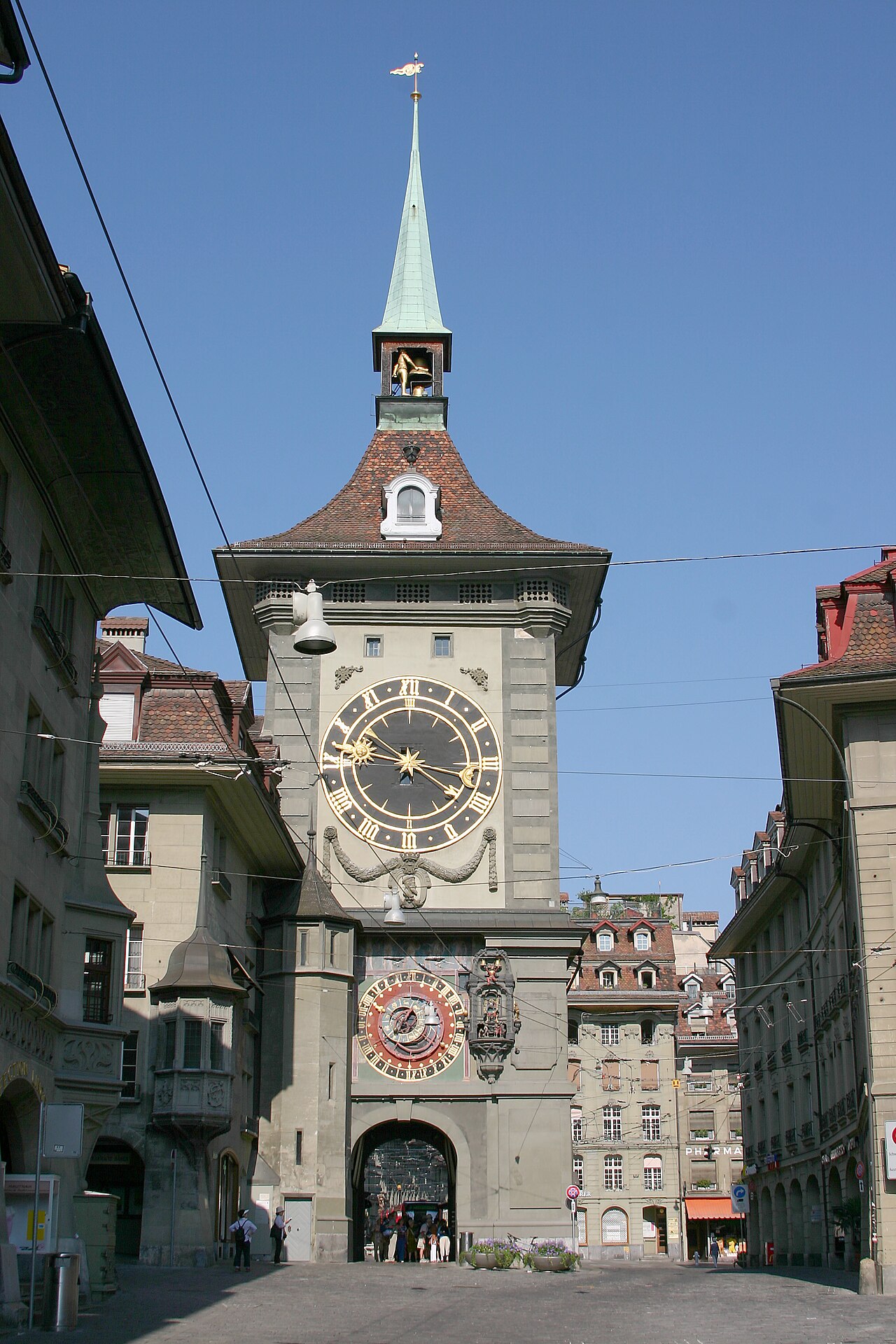
Zytglogge — Switzerland castle

Zytglogge

Bern, Switzerland

Zytglogge, located in the heart of Bern, Switzerland, is a medieval tower that has stood since the early 13th century. Originally constructed around 1218–1220, it is one of the oldest and most iconic monuments in Bern, serving multiple important roles throughout its long history. The name "Zytglogge" translates to "time bell" in Bernese German, reflecting its primary function as a clock tower in later centuries. Historical background and evolution The Zytglogge tower was initially built as a fortified gate tower in Bern's western city wall during the High Medieval period. It formed part of the city's defensive system, guarding the western entrance. Over time, its military role diminished, and it was repurposed as a prison and later as the city's main clock tower. In 1405, a devastating fire damaged much of Bern, including the Zytglogge. The tower was rebuilt and significantly modified in the early 15th century, which included the installation of the famous astronomical clock around 1530. This clock is a masterpiece of Renaissance engineering and artistry, providing not only the time but also astronomical information such as the phases of the moon and zodiac signs. Architectural features and style The Zytglogge is classified as a bastioned fortress due to its origins as a defensive tower integrated into the city walls. Its robust stone construction features thick walls and a distinctive octagonal roof added during later renovations. The tower’s façade is adorned with colorful frescoes and decorative elements that reflect various periods of Bernese art and architecture. The astronomical clock on the tower's exterior is a prominent feature, consisting of intricate mechanical figures that perform a show every hour. This includes a parade of bears, a rooster crowing, and Chronos, the Greek god of time. The clock mechanism itself is an important example of Renaissance clockmaking. Structural elements Gate passage: The tower originally served as a gate with a passageway for traffic, which still exists today. Defensive battlements: Remnants of battlements and arrow slits indicate its military function. Clock chamber: Houses the complex clockwork and figures. Bell chamber: Contains the "time bell" that gives the tower its name. Role in urban life and cultural significance Throughout its history, the Zytglogge has been a central feature in Bern’s civic life. Beyond its defensive and penal uses, it became a symbol of the city's autonomy and technological advancement. The clock tower regulated daily life by marking the hours for citizens and signaling important events. Today, it is a major tourist attraction and a UNESCO World Heritage Site component within Bern’s Old City. Visitors come to witness the hourly clock show and explore the tower's interior, which showcases historical clock mechanisms and offers panoramic views of Bern. Preservation and current status The tower has undergone numerous restorations to maintain its structure and the clock mechanism. It remains well preserved and continues to function as a public monument and cultural icon. The Zytglogge is managed as a heritage site of national significance in Switzerland. Visiting information The Zytglogge is accessible to the public through guided tours that explain its history, architecture, and mechanical clockwork. It is situated in Bern's Old Town, easily reachable by foot from major city landmarks. The best time to visit is during the hour to see the clock's mechanical figures in action.

High Medieval (11th–13th c.)
Details