Holligen Castle
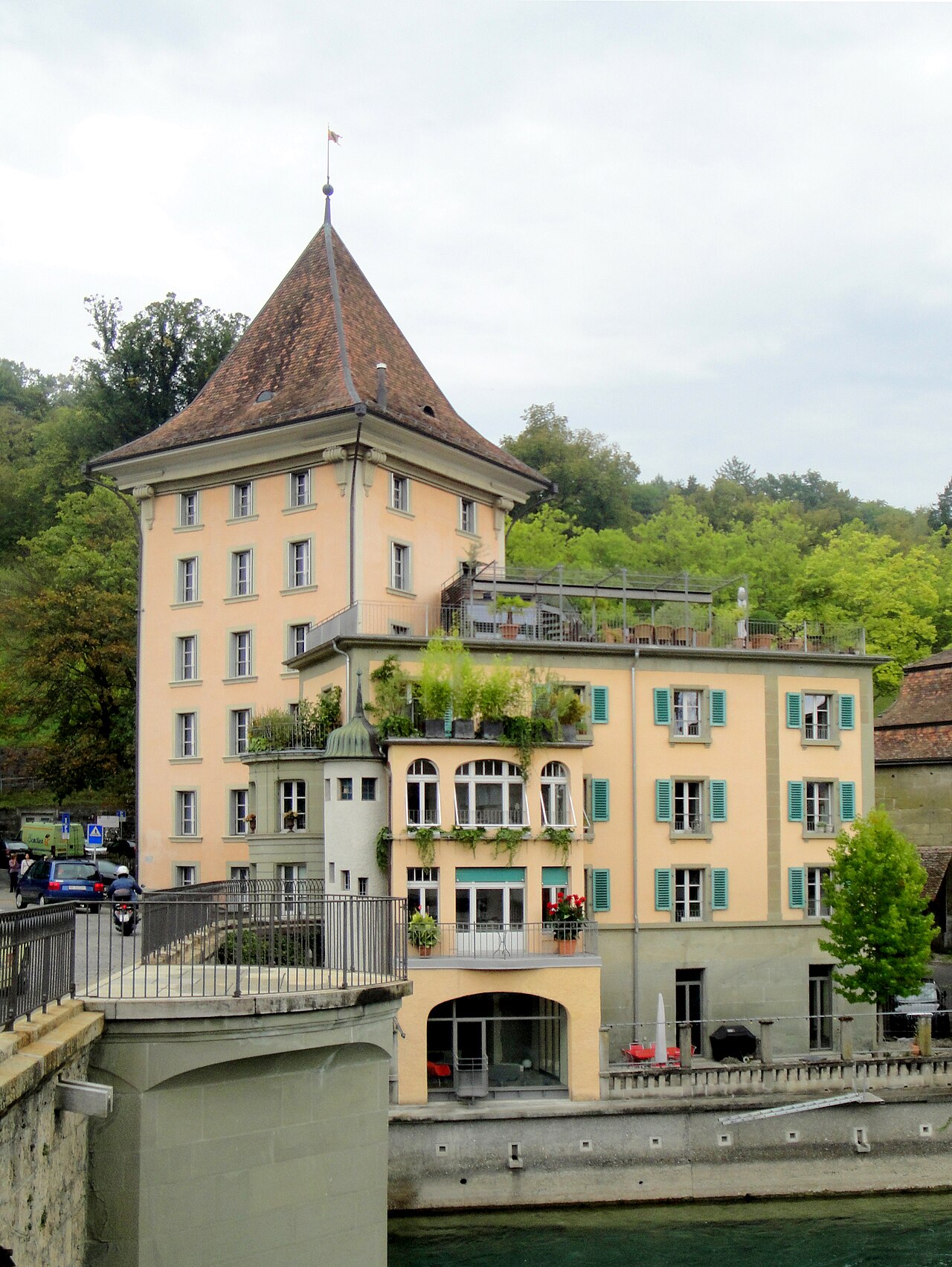
Holligen Castle stands as a remarkable example of Renaissance castle architecture in Bern, Switzerland. Constructed around 1500 by the Bernese Schultheiss Wilhelm von Diesbach, this castle reflects the typical Burgundian style characterized by a robust square donjon built of massive stone blocks and fortified with four corner towers. Its strategic location near the Bümpliz-Köniz road underscores its historical role in controlling important regional routes and administering surrounding estates.
Early history and origins
The earliest recorded mention of Holligen dates back to 1257, when it was under the ownership of the Teutonic Knights commandry of Köniz. Although little is known about the original structure, it is likely that a castle or fortified manor existed on the site to oversee the vital road between Bümpliz and Köniz. This early fortification would have served both military and administrative functions, typical of medieval castles controlling trade and travel routes.
Architectural design and Renaissance construction
The current castle was erected around the turn of the 16th century by Wilhelm von Diesbach. It was designed in the Burgundian castle style, which was prevalent in the region during the late medieval period and early Renaissance. The castle’s core is a massive square donjon constructed of large stone blocks, a common defensive feature providing strong protection and a commanding presence. Each of the four corners of the donjon is anchored by a sturdy tower, enhancing its defensive capabilities and giving the castle its distinctive silhouette.
The residential hall and later expansions
In about 1575, a significant addition was made for Peter von Graffenried, who commissioned a residential hall complete with a staircase tower. This expansion reflected the evolving needs of castle inhabitants, emphasizing comfort and residential function alongside defense. Contemporary maps, such as the 1577 Thomas Schöpf map and the 1623/24 city plan, depict the castle surrounded by a ring wall punctuated with several small towers, indicating a fortified courtyard and layered defenses.
Between the 1624 city plan and the year 1667, the castle underwent further enlargement. The residential hall was expanded westward, increasing the living quarters and adapting the castle to the tastes and requirements of its occupants during the early modern period.
Baroque renovations and 18th-century modifications
In the 18th century, the castle experienced a stylistic transformation with renovations in the Baroque style. The facade and window designs were updated in 1765, reflecting contemporary architectural trends and enhancing the castle’s aesthetic appeal. These modifications softened some of the fortress-like features, aligning the castle more closely with the tastes of the Baroque period, which favored grandeur and decorative detail.
Modern restoration and current status
Between 1991 and 1994, Holligen Castle underwent extensive renovation and repair work to preserve its historical fabric and structural integrity. This restoration was vital in maintaining the castle as a significant cultural heritage site. Today, the castle is owned and maintained by the Turmstiftung Schloss Holligen, a foundation dedicated to its upkeep and preservation.
Architectural significance and cultural heritage
Holligen Castle is an important example of the transition from medieval fortress to Renaissance residence, showcasing the Burgundian architectural style adapted to local Swiss traditions. Its evolution through the Renaissance and Baroque periods illustrates broader trends in castle architecture, where defensive needs gradually gave way to residential comfort and stylistic expression. The castle's well-preserved donjon, corner towers, residential hall, and ring wall remain key features that attract historians, architects, and visitors interested in Swiss heritage.
Its location in the region of Bern places it among several notable castles that together represent the political and military history of the area. The castle’s connection to prominent historical figures such as Wilhelm von Diesbach and Peter von Graffenried further enriches its historical narrative.
Visiting Holligen Castle
While the castle is privately maintained by the Turmstiftung, it occasionally opens to the public for tours and cultural events. Visitors can appreciate the castle’s architectural features, including the massive stone donjon, the distinctive corner towers, and the elegant Baroque facade. The surrounding landscape and proximity to Bern make it an accessible destination for those interested in Swiss castles and Renaissance architecture.
Frequently asked questions (FAQ)
- When was Holligen Castle originally built?
- Holligen Castle was originally constructed around 1500 by Wilhelm von Diesbach in the Renaissance period.
- What architectural style characterizes Holligen Castle?
- The castle features a Burgundian style with Renaissance origins and later Baroque renovations, resulting in a mixed architectural style.
- Who owns Holligen Castle today?
- Today, Holligen Castle is owned and maintained by the Turmstiftung Schloss Holligen, a foundation dedicated to its preservation.
- Can visitors tour Holligen Castle?
- The castle is occasionally open to the public for tours and cultural events, offering a chance to see its historic architecture and interiors.
- What significant renovations has Holligen Castle undergone?
- Major renovations occurred between 1991 and 1994 to restore and preserve the castle's structure and historical features.
Information
Sources & official resources
Verify the information above using these authoritative references.
Loading map...
Visitor reviews
No reviews yet. Been here? Write the first review and help other travelers!
Write the first reviewVisited this castle? Share your experience
Your review helps other travelers and adds first-hand knowledge to our encyclopedia.