Nydegg Castle
Nydegg Castle stands as a significant medieval fortification in the city of Bern, Switzerland, with origins dating back to the late 12th century. Constructed in 1190 under the auspices of the Zähringen dynasty, specifically by Duke Berchtold V, the castle was strategically positioned in what is now the Matte district. Its location on a prominent hill projecting into the Aare River allowed it to control vital ferry crossings and oversee river traffic, ensuring military and economic dominance in the region.
The foundation and strategic importance of Nydegg Castle
Nydegg Castle was established as a fortified residence for the duke’s appointed representative, serving both administrative and defensive purposes. The castle’s design centered on a large residential tower measuring approximately 22.5 by 16.2 meters, which enclosed an internal courtyard. This tower was reinforced by four smaller corner towers, creating a compact and formidable stronghold. Surrounding this core was a circular ring wall, the main defensive barrier, complemented by a deep moat on the landward side to deter attackers.
Below the main castle was a fortified settlement protected by a second defensive wall, likely housing soldiers and support personnel. This layered defense system underscored the castle’s role as a military and administrative center within the region.
Transition of ownership and political significance
Following the extinction of the Zähringen line in 1212, Nydegg Castle passed under the authority of the Holy Roman Empire, functioning as an imperial stronghold. Its control was crucial for maintaining imperial influence over Bern and the surrounding territories.
In the late 1260s, the local Bernese authorities sought to consolidate their power and reshape the city’s urban fabric. Between 1268 and 1270, the castle was deliberately dismantled to clear space for the development of the Nydegg quarter and to eliminate noble claims linked to the fortress. This action received formal sanction on January 16, 1274, when King Rudolf I of Habsburg granted Bern permission to destroy the castle, marking a significant shift in regional power dynamics.
Post-demolition developments and archaeological rediscovery
Decades after the castle’s demolition, the site was repurposed for religious use. Between 1341 and 1346, the Teutonic Order constructed the Nydegg Church on the castle’s former location, symbolizing a transformation from military to spiritual significance.
In the 19th and 20th centuries, archaeological interest revived attention to Nydegg Castle. Excavations during the construction of the Nydegg Bridge (1840–1854) uncovered foundational remains of the castle. Further archaeological work led by art historian Paul Hofer between 1951 and 1962 revealed additional structural features, including the reconstruction of the castle’s well, known as the Sodbrunnen. These findings have been instrumental in understanding the castle’s layout and infrastructure.
Architectural features and defensive structures
The castle’s architecture reflects typical high medieval hill castle characteristics, with a focus on compactness and defensibility. The main residential tower’s four corner towers provided vantage points for surveillance and defense. The ring wall encircled the complex, creating a formidable barrier against invaders, while the deep moat on the landward side enhanced the castle’s security by exploiting natural topography.
The lower fortified settlement added an additional layer of protection and housed personnel essential to the castle’s operation. The presence of the Sodbrunnen well within the castle grounds ensured a reliable water supply during sieges, a critical feature for sustaining the garrison.
The castle’s location and integration with Bern’s urban development
Nydegg Castle’s placement on a promontory overlooking the Aare River was integral to its strategic function. Its position allowed control over river crossings and facilitated the monitoring of trade routes. The subsequent demolition of the castle and the establishment of the Nydegg quarter illustrate the evolving urban landscape of Bern and the shift from feudal military control to municipal governance.
Current preservation and archaeological remains
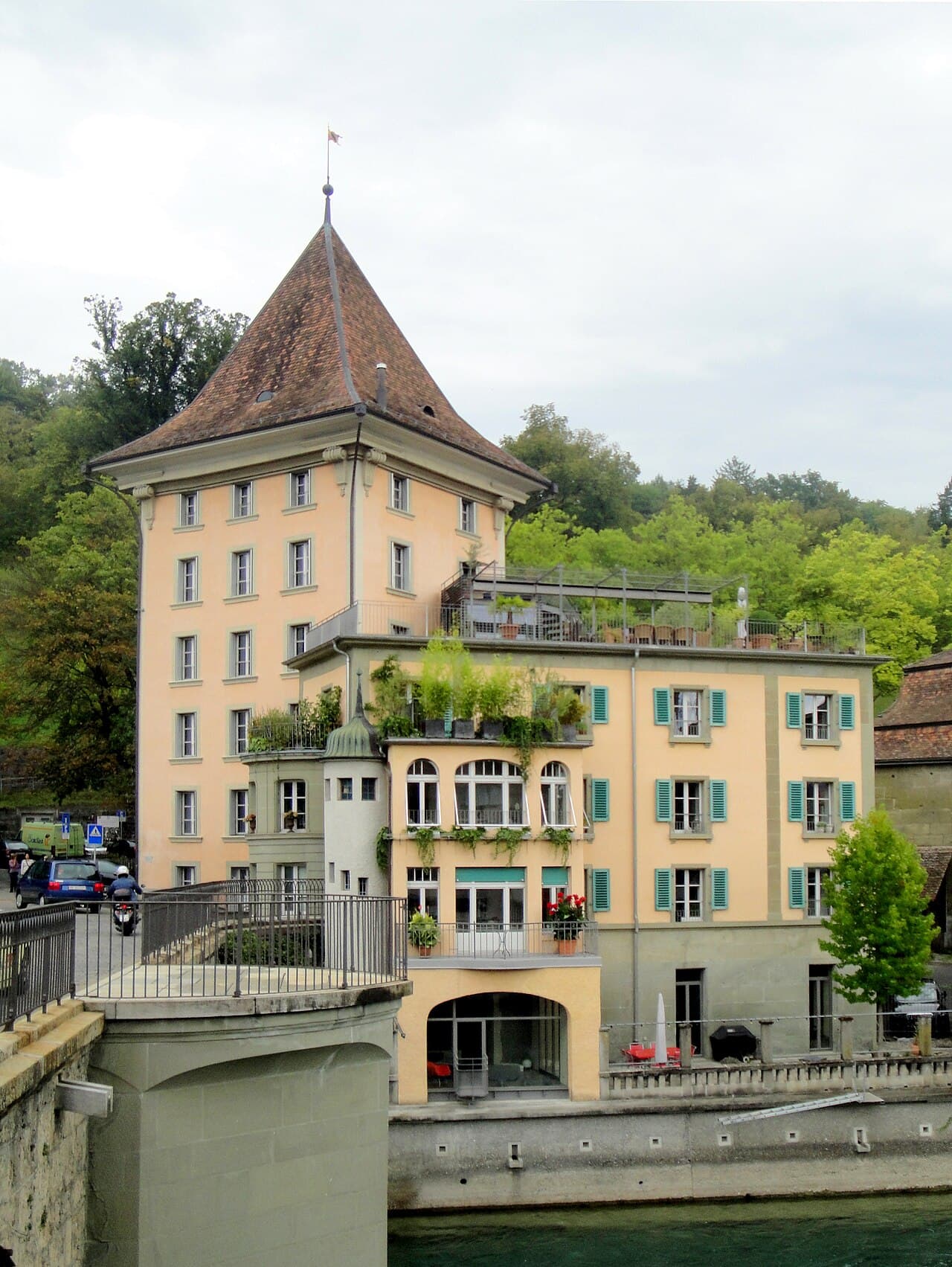
Today, Nydegg Castle exists primarily as archaeological ruins. The visible remains consist of foundational structures marked on historical maps, delineating the original castle’s footprint. Much of the original masonry has been lost or incorporated into later buildings, including the adjacent Nydegg Church. The site’s archaeological significance provides valuable insights into medieval fortification techniques and urban development in Bern.
Nydegg Castle’s role in Swiss medieval history
Nydegg Castle exemplifies the military and political strategies of the High Middle Ages in Switzerland. Built by the influential Zähringen dynasty, it served as a symbol of ducal authority and imperial power. Its dismantling under Bernese authority reflects the rise of city-states and the decline of feudal noble dominance in the region.
The castle’s transformation into a religious site under the Teutonic Order further highlights the shifting priorities and cultural changes in medieval Bern. Today, the castle’s remains and archaeological findings contribute to understanding the complex history of Swiss urban and military architecture.
Visiting Nydegg Castle and related sites
While the castle itself is in ruins, visitors to Bern can explore the Nydegg quarter and the Nydegg Church, which stands near the original castle site. Interpretive signage and historical markers provide context about the castle’s history and significance. The nearby Aare River and Nydegg Bridge also offer scenic views and insight into the city’s medieval infrastructure.
Archaeological exhibits and local museums in Bern may feature artifacts and detailed information about Nydegg Castle, enriching the visitor experience and deepening appreciation for Bern’s medieval heritage.
Frequently asked questions (FAQ)
- When was Nydegg Castle built and by whom?
- Nydegg Castle was built in 1190 by the Zähringen dynasty under Duke Berchtold V, serving as a fortified residence in Bern.
- Why was Nydegg Castle dismantled?
- The castle was dismantled between 1268 and 1270 to clear space for the Nydegg quarter and to remove noble claims, with official permission granted by King Rudolf I in 1274.
- What remains of Nydegg Castle can be seen today?
- Today, visitors can see archaeological foundations and markings of the castle’s layout, with much of the original masonry lost or incorporated into later buildings like Nydegg Church.
- What was the strategic importance of Nydegg Castle?
- Nydegg Castle controlled ferry crossings over the Aare River and served as a military and administrative stronghold in medieval Bern.
- Can I visit Nydegg Castle and the surrounding area?
- While the castle itself is in ruins, the Nydegg quarter and Nydegg Church near the site are accessible, with historical markers providing information about the castle’s history.
Photo gallery

Information
Website
Visit websiteSources & official resources
Verify the information above using these authoritative references.
Loading map...
Visitor reviews
No reviews yet. Been here? Write the first review and help other travelers!
Write the first reviewVisited this castle? Share your experience
Your review helps other travelers and adds first-hand knowledge to our encyclopedia.