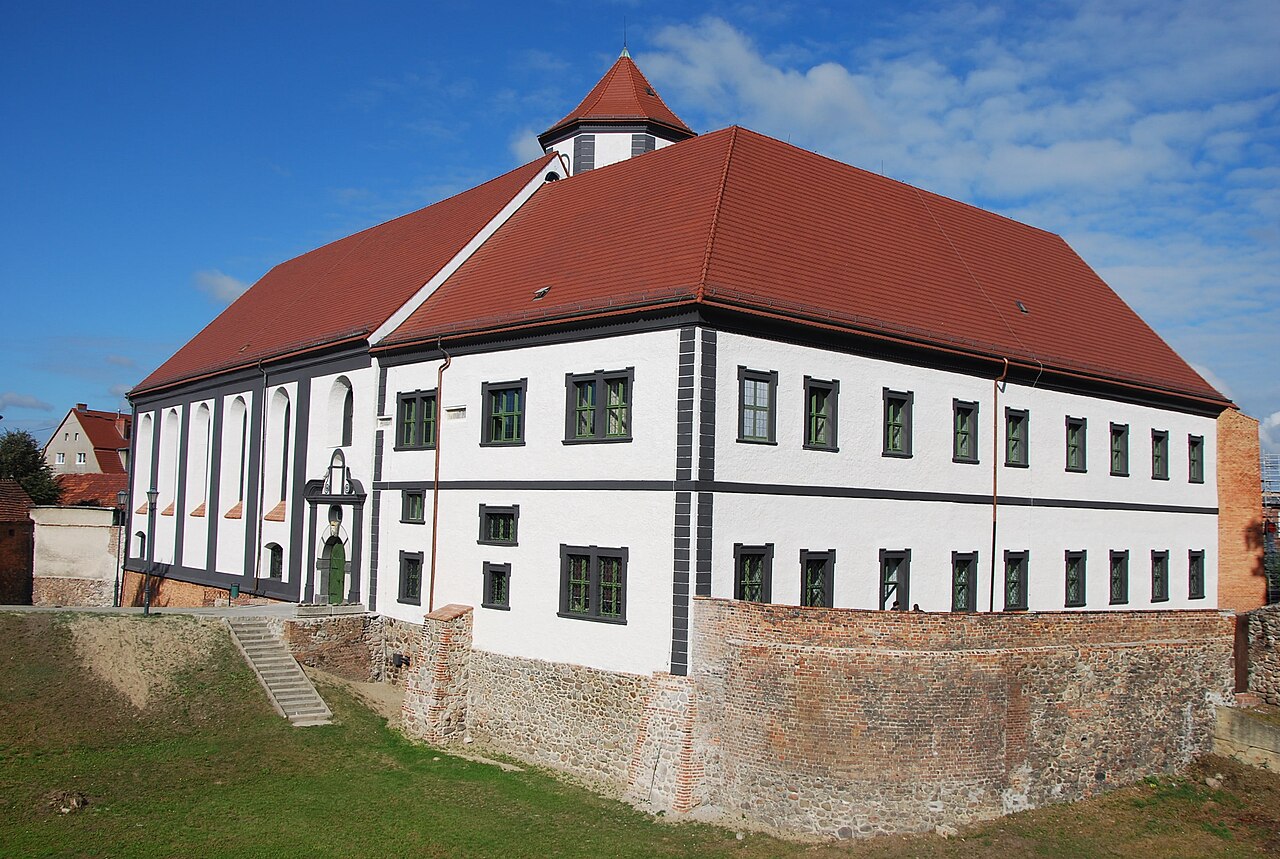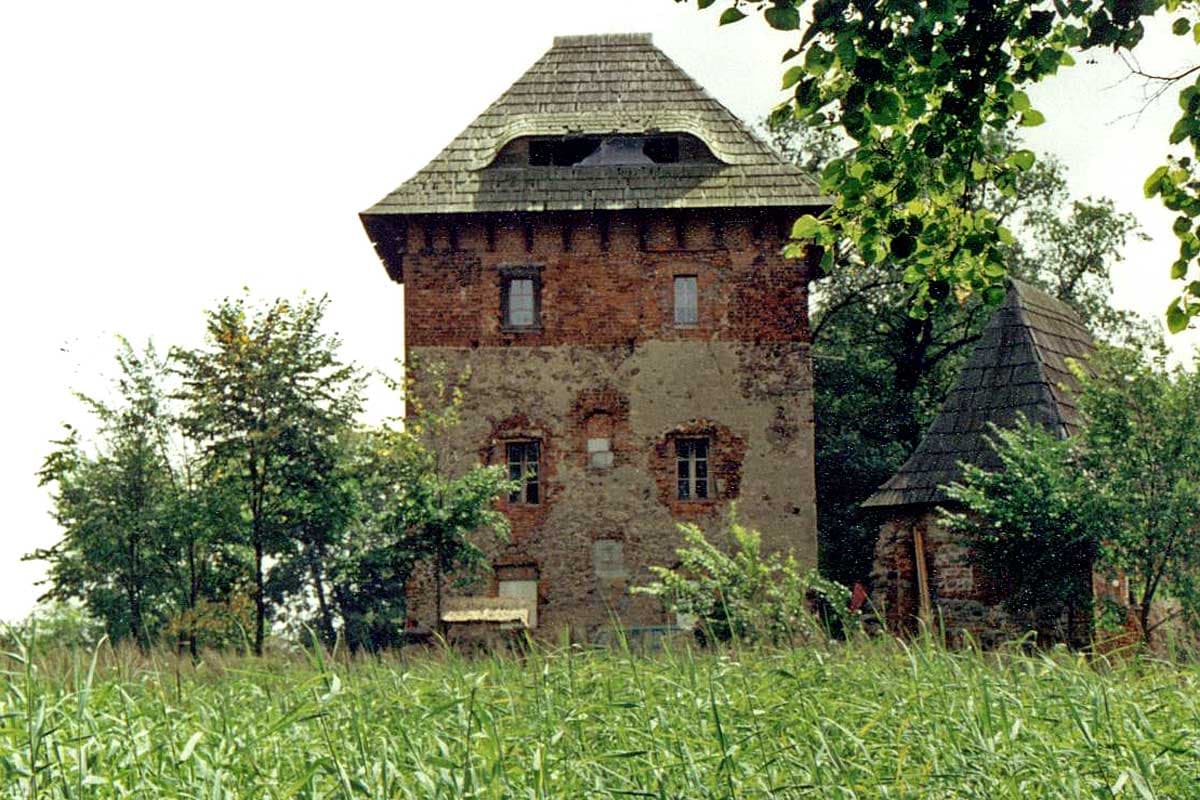
Witków Castle — Poland castle

Witków Castle

Witków castle ruins in poland
Ruins

Witków Castle is a medieval fortress located in Poland, known today primarily as an archaeological ruin. Although the exact city location is not specified, the castle's remains offer valuable insight into the region's medieval fortifications and architectural practices. The site is characterized by its ruined condition, with remnants of defensive walls and foundational structures that hint at its former prominence.

Historical context and significance

The castle dates back to the high medieval period, a time marked by the construction of numerous fortifications across Poland to protect territories and assert feudal control. Witków Castle likely served as a local stronghold, overseeing trade routes or territorial boundaries. Although detailed historical records are scarce, the castle’s strategic placement suggests it played a role in regional defense and administration during its operational years.

Architectural features and layout

As an archaeological site, Witków Castle presents the typical features of medieval fortifications, including the remains of stone walls that once enclosed the castle grounds. Excavations have revealed traces of towers and gatehouses, which would have been integral to the castle’s defense system. The layout likely included a courtyard surrounded by residential and service buildings, although much of this remains to be uncovered.

Defensive structures

The surviving ruins indicate the castle was equipped with battlements and possibly a moat or ditches, common defensive elements in medieval castles. The thick stone walls suggest a focus on protection against sieges and attacks. The castle’s design would have combined both military and residential functions, typical of hill castles or similar fortifications in the region.

Archaeological research and preservation

Witków Castle has been the subject of archaeological interest due to its potential to reveal information about medieval construction techniques and feudal life in Poland. Excavations have helped document the castle’s footprint and structural components, although much remains buried or eroded. Preservation efforts focus on stabilizing the ruins to prevent further decay and to allow for educational and cultural tourism.

Visitor information

As an archaeological ruin, the site offers visitors a glimpse into the medieval past, though facilities may be limited. Visitors interested in medieval history and castle architecture can explore the remains, often accompanied by informational signage or guided tours where available. The site is typically accessible year-round, but visitors should prepare for uneven terrain and limited amenities.

Regional importance and cultural heritage

Witków Castle contributes to Poland’s rich tapestry of medieval heritage sites. It reflects the historical landscape of feudal Poland, where castles served as centers of power and defense. The ruins are a cultural asset, helping to connect present-day Poland with its medieval roots and offering opportunities for historical education and tourism development.

Though much of Witków Castle remains to be uncovered and studied, its ruins stand as a testament to the enduring legacy of medieval fortifications in Poland. Continued archaeological work and preservation efforts will enhance understanding of this site and its role in the region’s history.

Frequently asked questions (FAQ)

How do I get to Witków Castle?
Witków Castle is located in the picturesque region of Poland, easily accessible by car or public transport. If you're driving, the castle is situated near major highways, making it convenient for visitors from nearby cities. Public transport options include local buses that connect to surrounding areas.
What is the historical significance of Witków Castle?
Witków Castle dates back to the late medieval period and played a crucial role in the region's defense against invasions. It has witnessed numerous historical events, including territorial disputes and royal visits, contributing to its rich heritage. Today, it stands as a symbol of Polish resilience and architectural grandeur.
When was Witków Castle built?
The construction of Witków Castle began in the late 14th century, during a time when fortifications were essential for protection. Over the years, it underwent various renovations and expansions, reflecting the changing architectural styles of each era. Its enduring presence showcases the historical architecture of Poland.
Can I take guided tours of Witków Castle?
Yes, guided tours of Witków Castle are available for visitors to explore its fascinating history and architecture. Knowledgeable guides provide insights into the castle's past, the lives of its inhabitants, and the significance of its design. Tours typically last about an hour, allowing you to enjoy a comprehensive experience.
Why is Witków Castle a popular tourist attraction?
Witków Castle attracts visitors for its stunning architecture, rich history, and beautiful surrounding landscapes. The castle offers a unique glimpse into Poland's medieval past, making it a must-visit for history enthusiasts. Additionally, its strategic location near other attractions enhances its appeal as a travel destination.
Is it possible to host events at Witków Castle?
Yes, Witków Castle offers facilities for hosting various events, including weddings, corporate gatherings, and cultural events. The scenic backdrop and historic ambiance make it a charming venue for special occasions. Interested parties should contact the castle management for more details on availability and arrangements.
What are the opening hours for Witków Castle?
Witków Castle is open to visitors from Tuesday to Sunday, with specific hours varying by season. During peak tourist season, extended hours may be offered to accommodate more visitors. It's advisable to check the official website for the most current opening times before planning your visit.
What are the ticket prices for visiting Witków Castle?
Ticket prices for Witków Castle are generally affordable, with discounts available for students and seniors. Family packages may also be offered, making it an economical choice for groups. Be sure to review the pricing details on the official website before your visit to plan accordingly.
When is the best time to visit Witków Castle?
The best time to visit Witków Castle is during the spring and early autumn months when the weather is pleasant and the surrounding gardens are in full bloom. These seasons also offer a variety of cultural events and activities at the castle, enhancing your experience. Summer can be busy, but it also provides vibrant outdoor events.
Is Witków Castle accessible for visitors with disabilities?
Witków Castle strives to be accessible to all visitors, including those with disabilities. There are provisions in place to ensure ease of movement within the castle and its grounds. It's recommended to contact the castle in advance for specific accessibility options and assistance during your visit.

Photo gallery

Witków Castle
Click to view

Photo by Skarabeusz•CC BY-SA 3.0

1 photo • Click any image to view in full screen

Information

Archaeological Site / Ruins

Loading map...

Visitor reviews

No reviews yet. Been here? Write the first review and help other travelers!

Write the first review

Visited this castle? Share your experience

Your review helps other travelers and adds first-hand knowledge to our encyclopedia.
Write a review

(5/5)

0/2000 characters

Your review will be visible after admin approval

Nearby castles

5.6 km
Janowiec Castle (Lubusz) — Poland castle

Janowiec Castle (Lubusz)

, Poland

Janowiec Castle in the Lubusz region of Poland is a notable example of a 16th-century Renaissance hill castle. Situated on elevated terrain, this castle was strategically positioned to oversee the surrounding landscape, serving both defensive and residential purposes during its time. Historical background and construction The castle was constructed in the 16th century, a period marked by the transition from medieval fortifications to more comfortable and stylistically refined residences. This era saw the integration of Renaissance architectural principles across Europe, influencing the design and function of castles like Janowiec. The castle's origins lie in the need for a stronghold that combined military defense with the emerging Renaissance emphasis on symmetry, proportion, and ornamentation. Architectural features and style Janowiec Castle exemplifies the Renaissance style with its balanced proportions and incorporation of classical elements. The castle's layout typically includes a central courtyard surrounded by fortified walls and residential buildings. Defensive features such as thick stone walls, towers, and battlements are present, reflecting its hill castle classification and the military concerns of the time. The castle’s elevation on a hill provided natural defensive advantages, complemented by man-made fortifications. Architectural elements such as arched windows, decorative stonework, and possibly remnants of a moat or ditches would have enhanced both the castle's defense and aesthetic appeal. Significance and preservation While specific details about the current condition of Janowiec Castle in Lubusz are limited, hill castles from this period often face challenges related to preservation due to their age and exposure. The castle holds cultural and historical significance as part of Poland's Renaissance heritage and offers insight into the architectural evolution from medieval fortresses to Renaissance residences. Visitors to similar Renaissance hill castles can expect to see a blend of military architecture and early modern residential design, reflecting the changing priorities of castle construction in the 16th century. Location and regional context Located in the Lubusz region, which is known for its diverse historical sites and natural landscapes, Janowiec Castle contributes to the area's rich cultural tapestry. The Lubusz region's strategic position near historical trade routes and borders influenced the construction of fortifications like Janowiec Castle. Visiting information and tourism Information about public access, visiting hours, and ticket prices for Janowiec Castle in Lubusz is not widely documented. Visitors interested in Renaissance architecture and Polish history may find exploring this castle and its surroundings rewarding, especially when combined with visits to other nearby historical landmarks. Architectural legacy and influence The castle's Renaissance design elements reflect broader European trends of the 16th century, illustrating the diffusion of architectural ideas across regions. Janowiec Castle serves as an example of how Polish nobility adapted Renaissance styles to local defensive needs and landscape features. Its hilltop location and structural features influenced subsequent castle constructions in the region, balancing aesthetic considerations with practical military functions.

Renaissance (15th–17th c.)
Details
7.2 km

Szprotawa

Szprotawa, Poland

Szprotawa castle stands as a remarkable example of medieval fortification with a rich history spanning several centuries. Located in the town of Szprotawa, Poland, this hill castle was originally constructed at the turn of the 13th and 14th centuries under the initiative of the dukes of Głogów. Perched on a steep escarpment overlooking the southern branch of the Szprotawa River, the castle's strategic position afforded it natural defensive advantages. The castle's oval plan measuring approximately 24 by 33.5 meters suggests it was possibly built atop an earlier fortified settlement, a common practice to utilize existing defensive earthworks. Medieval architecture and layout The castle's perimeter was enclosed by thick stone and brick walls nearly 2.5 meters thick, forming a robust defensive barrier. These walls surrounded a courtyard that housed a two-story residential building on the eastern side, providing living quarters for the castle's inhabitants. The main entrance was located on the northern side, allowing controlled access. The castle's fortifications were integrated with the town's defensive walls, yet it was separated from the urban area by a water-filled moat with a drawbridge, enhancing its security against potential attackers. Fortifications and defensive features Notably, the castle's design reflects typical gothic military architecture of the period, with emphasis on strong walls and limited entry points. The presence of a moat and drawbridge system highlights the importance of water defenses in medieval fortifications. The castle's location on a hill further augmented its defensive capabilities, making it a formidable stronghold in the region. Historical significance and notable events Between 1476 and 1488, Szprotawa castle served as the residence of Prince Jan II of Żagań, known as "the Mad," during his conflict over the Duchy of Głogów. During this turbulent period, the castle was used as a prison for captured Brandenburg dignitaries, including the commander of the Knights Hospitaller from Łagów. The prince's ambitions eventually led to a confrontation with King Matthias Corvinus of Hungary, whose forces captured the castle. Subsequently, it became the seat of the royal starost, a local governor representing the king's authority. Renaissance transformations At the beginning of the 16th century, the castle underwent significant modifications, including the addition of an elongated semicircular stone bastion to the defensive walls. This was part of a broader effort to modernize the fortress in response to evolving military technologies and siege tactics. Between the late 16th and early 17th centuries, the castle was remodeled in the renaissance style. Contemporary descriptions indicate the main building was predominantly masonry, containing five chambers, one of which was located within the bastion, along with a small kitchen and two cellars. Decline and adaptive reuse The castle suffered significant damage during the 1642 siege amid the Great Northern War, followed by a devastating fire in 1672. These events led to the loss of its defensive functions. Subsequently, the structure was repurposed as a brewery, marking a shift from military to industrial use. The rise of Protestantism in Silesia influenced the decision to construct an evangelical church on the castle's remains. Between 1745 and 1747, the surviving walls were incorporated into the new church building. This church was later remodeled in 1822 in the neoclassical style, featuring a four-story tower with two-story annexes facing the town. Modern condition and preservation After World War II, the church fell into disuse and gradually deteriorated, leading to partial demolition. Today, the most visible remnants of the original Szprotawa castle are best seen from the southern side, where sections of the thick defensive walls and the attached bastion remain. These ruins provide valuable insight into the castle's historical evolution and architectural significance. Architectural legacy and cultural importance Szprotawa castle exemplifies the transition from medieval fortifications to renaissance adaptations and later secular and religious reuse. Its layered history reflects the broader political and religious changes in Silesia over several centuries. The castle's ruins, combined with the later church structure, contribute to the cultural heritage of Szprotawa and offer an important site for historical and architectural study. Visiting and exploring the site Visitors to Szprotawa can explore the castle ruins, particularly the southern walls and bastion, which showcase the original defensive architecture. The site offers a tangible connection to the region's medieval past and the complex history of Silesian nobility and warfare. While the church is no longer functional, its remains add to the historical narrative of the location.

Renaissance (15th–17th c.)
Details
14 km
Kożuchów Castle — Poland castle

Kożuchów Castle

Kożuchów, Poland

Kożuchów Castle is a notable historic hill castle located in the town of Kożuchów, in western Poland. This castle is an important example of medieval fortification architecture in the region and reflects the complex history of Silesia, a region that has seen various rulers and cultural influences over the centuries. Historical background and significance The origins of Kożuchów Castle date back to the 13th century, placing it firmly within the High Medieval period. It was initially constructed as a defensive stronghold to protect the local settlements and trade routes in the area. Over time, the castle was expanded and modified to serve both military and residential purposes. Throughout its history, the castle has witnessed numerous historical events, including regional conflicts and changes in ownership. It was part of the defensive network in Silesia and played a role in the territorial disputes between Polish and German states. The castle's location on a hill provided strategic advantages for surveillance and defense. Architectural features and layout Kożuchów Castle is characterized by its hill castle design, which means it is built on elevated terrain to maximize defensive capabilities. The castle complex includes robust stone walls, towers, and a fortified gatehouse. The walls are constructed primarily from local stone, providing strength and durability. The castle features a central keep or donjon, which served as the last line of defense and the residence of the lord. Surrounding the keep is a courtyard with various auxiliary buildings, including living quarters, storage rooms, and possibly a chapel. The layout reflects typical medieval castle planning, balancing defense with the needs of daily life. Defensive elements such as battlements, arrow slits, and moats or ditches were integrated into the design to enhance protection against attackers. The elevated position also allowed defenders to spot approaching enemies from a distance. Architectural style and construction period The castle's construction period spans primarily the High Medieval era, with some later modifications possibly introduced in subsequent centuries. The architectural style is predominantly Gothic, which was common for fortifications of this period in Central Europe. Gothic elements are evident in the pointed arches, narrow windows, and the overall vertical emphasis of the structures. Later renovations and restorations may have introduced elements from other architectural styles, but the core medieval Gothic character remains dominant. The castle's preservation status allows visitors to appreciate the medieval craftsmanship and design principles. Current condition and preservation Today, Kożuchów Castle is considered partially preserved. While some sections of the original walls and towers remain intact, other parts have suffered damage or decay over the centuries. Efforts have been made to stabilize and restore key areas to prevent further deterioration. The castle is accessible to visitors, offering a glimpse into medieval fortification techniques and the historical legacy of the region. Interpretive signage and guided tours may be available to enhance the educational experience. Visiting Kożuchów Castle Visitors to Kożuchów Castle can explore the ruins and enjoy panoramic views of the surrounding countryside from the hilltop location. The castle's setting provides a picturesque backdrop for photography and historical exploration. Nearby, the town of Kożuchów offers additional cultural and historical attractions, including churches, museums, and traditional architecture, making the castle part of a broader heritage itinerary. Frequently asked questions about Kożuchów Castle What is the best time to visit Kożuchów Castle? The castle is best visited during the spring to early autumn months when weather conditions are favorable for outdoor exploration. This period allows visitors to comfortably tour the ruins and enjoy the surrounding landscapes. Is Kożuchów Castle accessible to people with limited mobility? Due to the castle's hilltop location and the nature of the ruins, accessibility may be limited for visitors with mobility challenges. Some uneven terrain and stairs are present, so visitors should plan accordingly. Are guided tours available at Kożuchów Castle? Guided tours may be offered by local tourist organizations or the municipality, providing detailed historical context and architectural insights. It is advisable to check in advance for availability and schedules. Can I visit Kożuchów Castle year-round? The castle grounds are generally open year-round, but certain weather conditions in winter may restrict access for safety reasons. Checking local information before planning a visit is recommended. What other attractions are near Kożuchów Castle? The town of Kożuchów features historic churches, museums, and traditional Silesian architecture. Visitors can combine a castle visit with exploring these cultural sites for a richer experience.

High Medieval (11th–13th c.)
Details