Szprotawa
Szprotawa castle stands as a remarkable example of medieval fortification with a rich history spanning several centuries. Located in the town of Szprotawa, Poland, this hill castle was originally constructed at the turn of the 13th and 14th centuries under the initiative of the dukes of Głogów. Perched on a steep escarpment overlooking the southern branch of the Szprotawa River, the castle's strategic position afforded it natural defensive advantages. The castle's oval plan measuring approximately 24 by 33.5 meters suggests it was possibly built atop an earlier fortified settlement, a common practice to utilize existing defensive earthworks.
Medieval architecture and layout
The castle's perimeter was enclosed by thick stone and brick walls nearly 2.5 meters thick, forming a robust defensive barrier. These walls surrounded a courtyard that housed a two-story residential building on the eastern side, providing living quarters for the castle's inhabitants. The main entrance was located on the northern side, allowing controlled access. The castle's fortifications were integrated with the town's defensive walls, yet it was separated from the urban area by a water-filled moat with a drawbridge, enhancing its security against potential attackers.
Fortifications and defensive features
Notably, the castle's design reflects typical gothic military architecture of the period, with emphasis on strong walls and limited entry points. The presence of a moat and drawbridge system highlights the importance of water defenses in medieval fortifications. The castle's location on a hill further augmented its defensive capabilities, making it a formidable stronghold in the region.
Historical significance and notable events
Between 1476 and 1488, Szprotawa castle served as the residence of Prince Jan II of Żagań, known as "the Mad," during his conflict over the Duchy of Głogów. During this turbulent period, the castle was used as a prison for captured Brandenburg dignitaries, including the commander of the Knights Hospitaller from Łagów. The prince's ambitions eventually led to a confrontation with King Matthias Corvinus of Hungary, whose forces captured the castle. Subsequently, it became the seat of the royal starost, a local governor representing the king's authority.
Renaissance transformations
At the beginning of the 16th century, the castle underwent significant modifications, including the addition of an elongated semicircular stone bastion to the defensive walls. This was part of a broader effort to modernize the fortress in response to evolving military technologies and siege tactics. Between the late 16th and early 17th centuries, the castle was remodeled in the renaissance style. Contemporary descriptions indicate the main building was predominantly masonry, containing five chambers, one of which was located within the bastion, along with a small kitchen and two cellars.
Decline and adaptive reuse
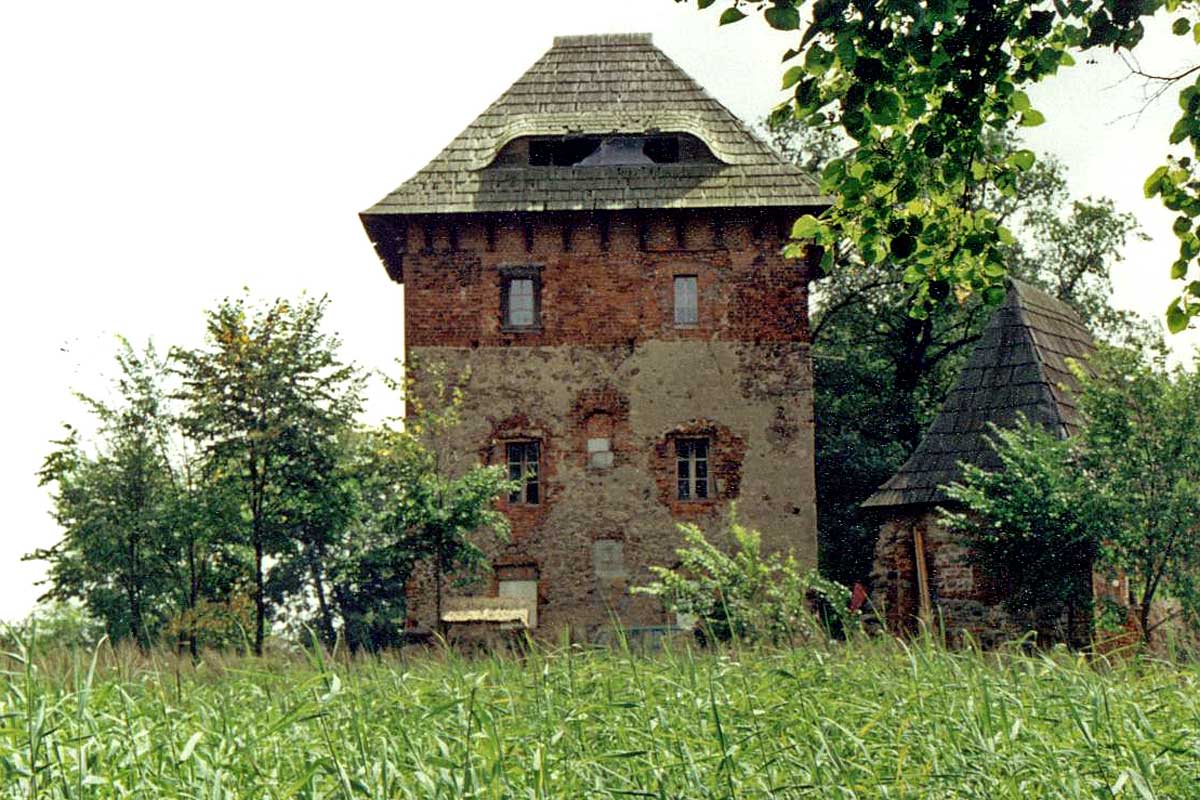
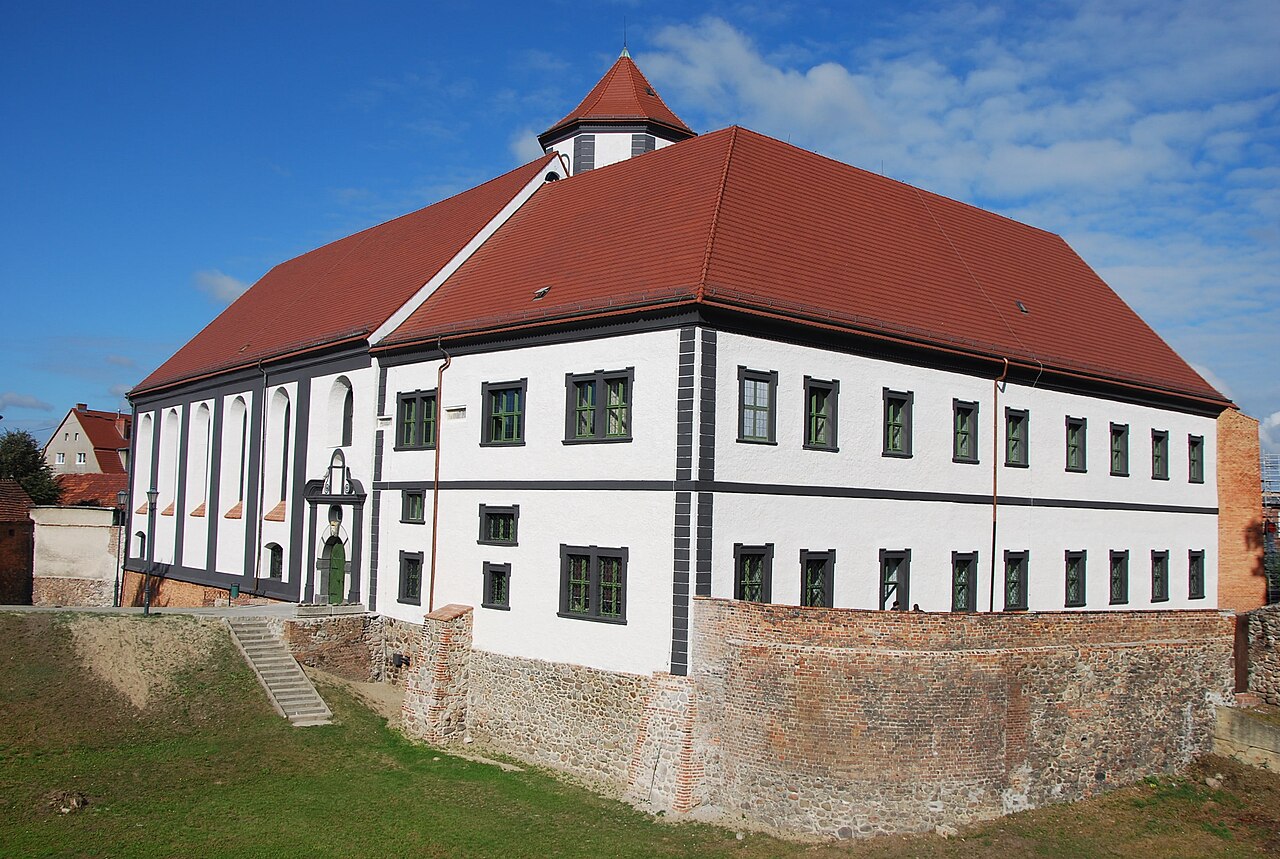
The castle suffered significant damage during the 1642 siege amid the Great Northern War, followed by a devastating fire in 1672. These events led to the loss of its defensive functions. Subsequently, the structure was repurposed as a brewery, marking a shift from military to industrial use. The rise of Protestantism in Silesia influenced the decision to construct an evangelical church on the castle's remains. Between 1745 and 1747, the surviving walls were incorporated into the new church building. This church was later remodeled in 1822 in the neoclassical style, featuring a four-story tower with two-story annexes facing the town.
Modern condition and preservation
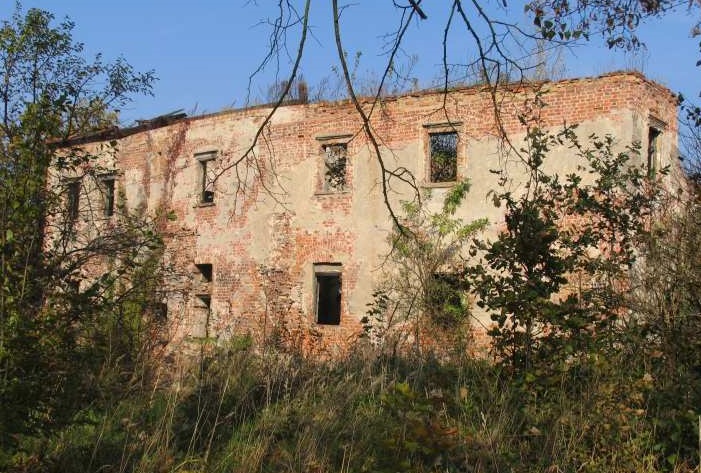
After World War II, the church fell into disuse and gradually deteriorated, leading to partial demolition. Today, the most visible remnants of the original Szprotawa castle are best seen from the southern side, where sections of the thick defensive walls and the attached bastion remain. These ruins provide valuable insight into the castle's historical evolution and architectural significance.
Architectural legacy and cultural importance
Szprotawa castle exemplifies the transition from medieval fortifications to renaissance adaptations and later secular and religious reuse. Its layered history reflects the broader political and religious changes in Silesia over several centuries. The castle's ruins, combined with the later church structure, contribute to the cultural heritage of Szprotawa and offer an important site for historical and architectural study.
Visiting and exploring the site
Visitors to Szprotawa can explore the castle ruins, particularly the southern walls and bastion, which showcase the original defensive architecture. The site offers a tangible connection to the region's medieval past and the complex history of Silesian nobility and warfare. While the church is no longer functional, its remains add to the historical narrative of the location.
Frequently asked questions (FAQ)
- When was Szprotawa castle originally built?
- Szprotawa castle was originally constructed at the turn of the 13th and 14th centuries by the dukes of Głogów.
- What architectural style characterizes Szprotawa castle?
- The castle primarily exhibits Gothic architectural features, with significant Renaissance modifications made in the late 16th and early 17th centuries.
- Can visitors see the castle ruins today?
- Yes, visitors can view the castle ruins, especially the thick defensive walls and bastion on the southern side, which remain partially preserved.
- What historical events is Szprotawa castle known for?
- Szprotawa castle was the residence of Prince Jan II of Żagań during his conflict over the Duchy of Głogów and was later captured by King Matthias Corvinus's forces.
- How was the castle used after its military function ended?
- After damage in the 17th century, Szprotawa castle was converted into a brewery and later the site was used for building an evangelical church in the 18th century.
Information
Loading map...
Visitor reviews
No reviews yet. Been here? Write the first review and help other travelers!
Write the first reviewVisited this castle? Share your experience
Your review helps other travelers and adds first-hand knowledge to our encyclopedia.