Wilhelmstein Castle
Wilhelmstein Castle stands as a notable medieval fortress located near the city of Aachen in the North Rhine-Westphalia region of Germany. Its origins trace back to a strategic site known as Valentia Castle, constructed as a defensive bulwark by the Archbishop of Cologne against the Duchy of Limburg. Although Valentia Castle was destroyed in 1255 by Limburg troops, the location remained significant for regional power struggles.
In 1270, Count Wilhelm IV of Jülich established Wilhelmstein Castle on the remnants of the earlier fortification, lending the castle its name. This construction marked an important assertion of control over the city of Aachen, which Count Wilhelm had been granted guardianship of by Emperor Friedrich II in 1240. The castle's position on a ledge overlooking the Worm stream placed it at the boundary between the historic territories of Jülichgau and Maasgau, an area of strategic military and political significance during the High Medieval period.
Architectural features and defensive design
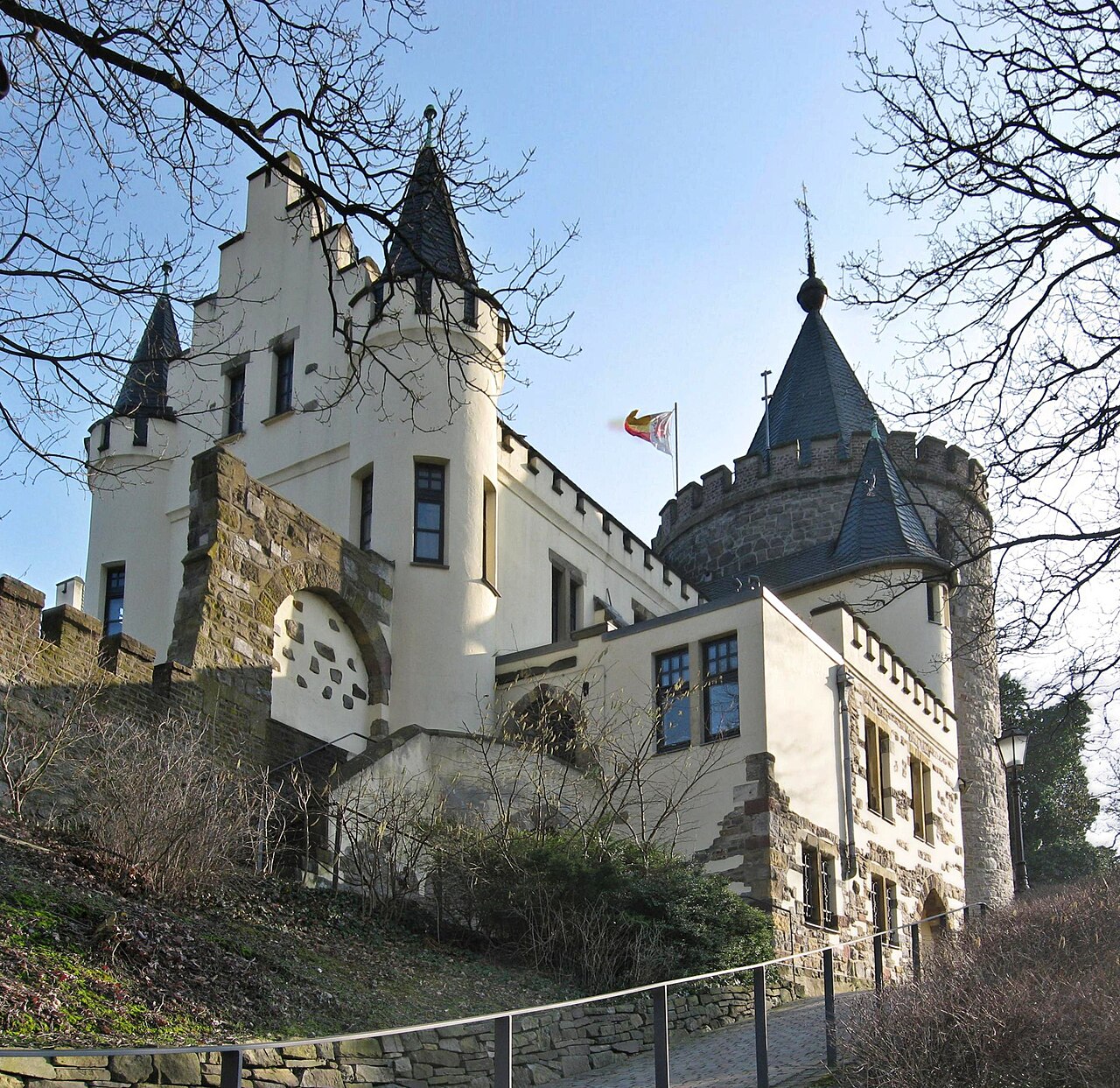
The castle was originally fortified with a protective ditch and featured a drawbridge, traces of which remain visible today, including the chains that once secured it. A prominent five-story square keep formed the castle's central stronghold, although only partial remains of this structure survive. Adjacent to the gothic gate stands a distinctive round tower that historically functioned as a prison, highlighting the castle's role in regional governance and law enforcement.
The castle's design reflects typical High Medieval defensive architecture, combining robust stone walls with strategic positioning to control access and oversee the surrounding landscape. Its location on a natural ledge enhanced its defensive capabilities, allowing defenders to monitor and repel attackers effectively.
Historical significance and turbulent past
Wilhelmstein Castle played a critical role during several regional conflicts. After Count Wilhelm IV's death, the castle's importance diminished, and it was maintained primarily by caretakers. However, it suffered considerable damage during the Jülich Feuds (1538-1543), a series of conflicts over territorial claims in the region.
During the Thirty Years' War, the castle was captured in 1642 by troops from Weimar-Hessen, reflecting the ongoing military struggles that engulfed much of Germany during this period. Later, in 1690, French forces took control of Wilhelmstein Castle. The following year, in 1691, the castle and the adjacent village were deliberately burned down by the French because the local population could not pay the imposed contributions to support the occupying forces. This event left the castle in ruins, marking a significant decline in its military and residential use.
Later ownership and current state
Following the destruction, Wilhelmstein Castle became state property in 1793 before transitioning to private ownership in 1820. Despite its ruined condition, the site has been preserved and adapted for modern use. Today, the castle grounds host an open-air theater and a restaurant, surrounded by a small forest that adds to the site's ambiance and visitor appeal.
Visitors can explore Wilhelmstein Castle only as guests of the theater or restaurant, as the castle is not open for general public tours. The preservation of the remaining structures, including the gate, prison tower, and partial keep, offers a glimpse into the castle's medieval past and its role in the region's history.
Wilhelmstein castle's place in regional heritage
Wilhelmstein Castle remains a significant cultural and historical landmark within North Rhine-Westphalia. Its layered history—from its origins as Valentia Castle to its role in medieval conflicts and eventual decline—reflects broader themes in German and European medieval history. The castle's architecture provides valuable insights into High Medieval fortification techniques, while its turbulent past illustrates the shifting political and military landscape of the Rhineland over several centuries.
Frequently asked questions (FAQ)
- How do I get to Wilhelmstein Castle?
- Wilhelmstein Castle is located in Würselen, Germany, easily accessible by car and public transport. If traveling by train, the nearest station is in Würselen, from where you can take a short bus ride or taxi to reach the castle.
- What is the historical significance of Wilhelmstein Castle?
- Wilhelmstein Castle was built in the 18th century and served as a military fortress and later a leisure retreat. Its rich history reflects the architectural styles and military strategies of its time, making it a significant landmark in the region.
- When was Wilhelmstein Castle built?
- Construction of Wilhelmstein Castle began in 1770 and was completed in 1777. It was designed by the architect Johann Peter Cremer and has since been a popular site for both tourists and historians alike.
- Can I visit Wilhelmstein Castle year-round?
- Yes, Wilhelmstein Castle is open to visitors throughout the year, although specific opening hours may vary by season. It’s advisable to check the official website for the most current visiting hours and any seasonal events.
- Is it possible to access the castle with limited mobility?
- While Wilhelmstein Castle is a historic site, some areas may be challenging for visitors with limited mobility due to uneven paths and stairs. However, the staff is committed to assisting guests whenever possible, so it’s best to inquire ahead of your visit.
- What are the ticket prices for visiting Wilhelmstein Castle?
- Ticket prices for Wilhelmstein Castle are generally affordable, with discounts available for students and seniors. Family packages are also offered, making it a great option for groups looking to explore the castle together.
- What are the best times to visit Wilhelmstein Castle?
- The best times to visit Wilhelmstein Castle are during the spring and early autumn when the weather is mild and pleasant. These seasons also offer beautiful scenery and a chance to enjoy the surrounding gardens and landscapes.
- Are there any nearby attractions to visit along with Wilhelmstein Castle?
- Yes, there are several nearby attractions, including the charming town of Würselen and the scenic parks in the area. You can also explore local museums and historical sites that showcase the rich culture and history of the region.
- What are the opening hours for Wilhelmstein Castle?
- Wilhelmstein Castle typically opens at 10 AM and closes at 6 PM, but these hours can vary depending on the time of year. It’s recommended to check the castle’s official website for any updates on opening times before your visit.
Information
Loading map...
Visitor reviews
No reviews yet. Been here? Write the first review and help other travelers!
Write the first reviewVisited this castle? Share your experience
Your review helps other travelers and adds first-hand knowledge to our encyclopedia.