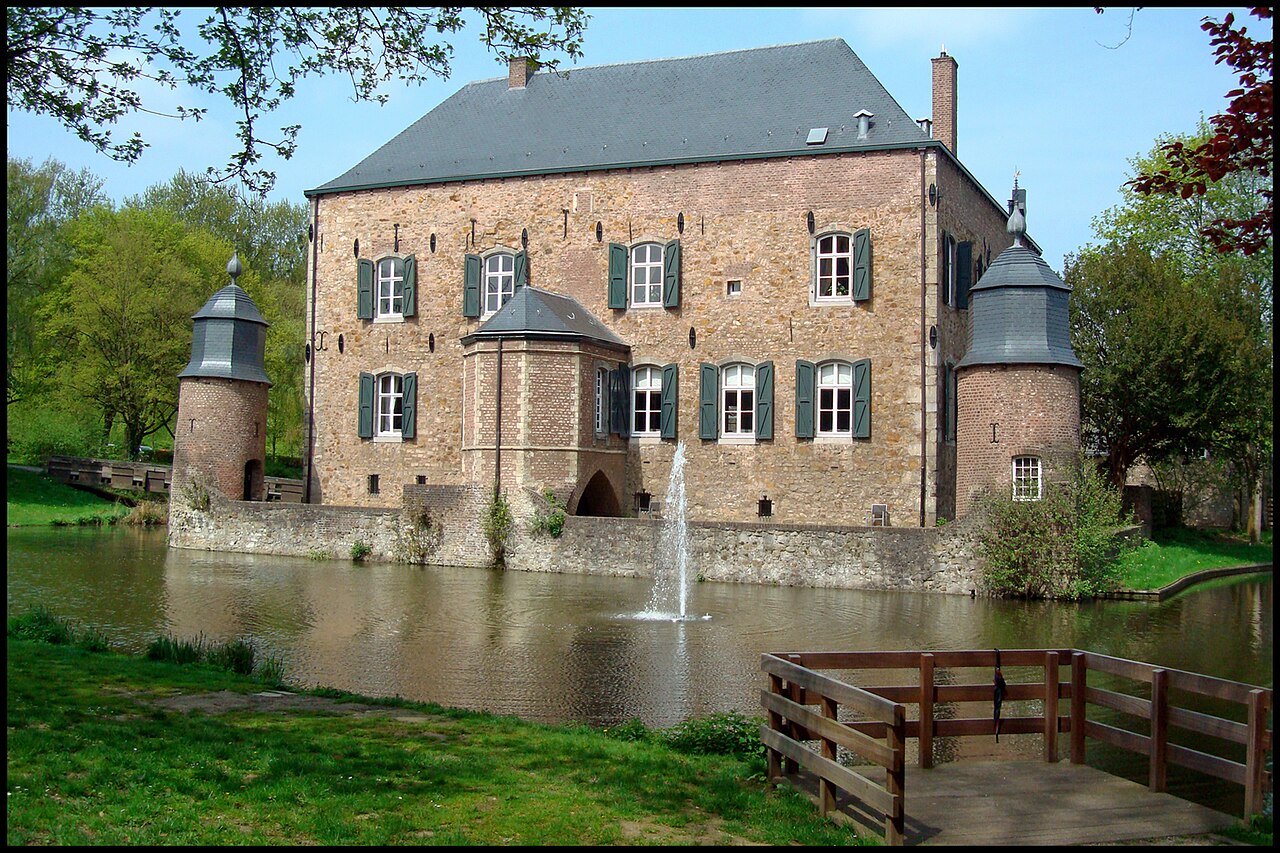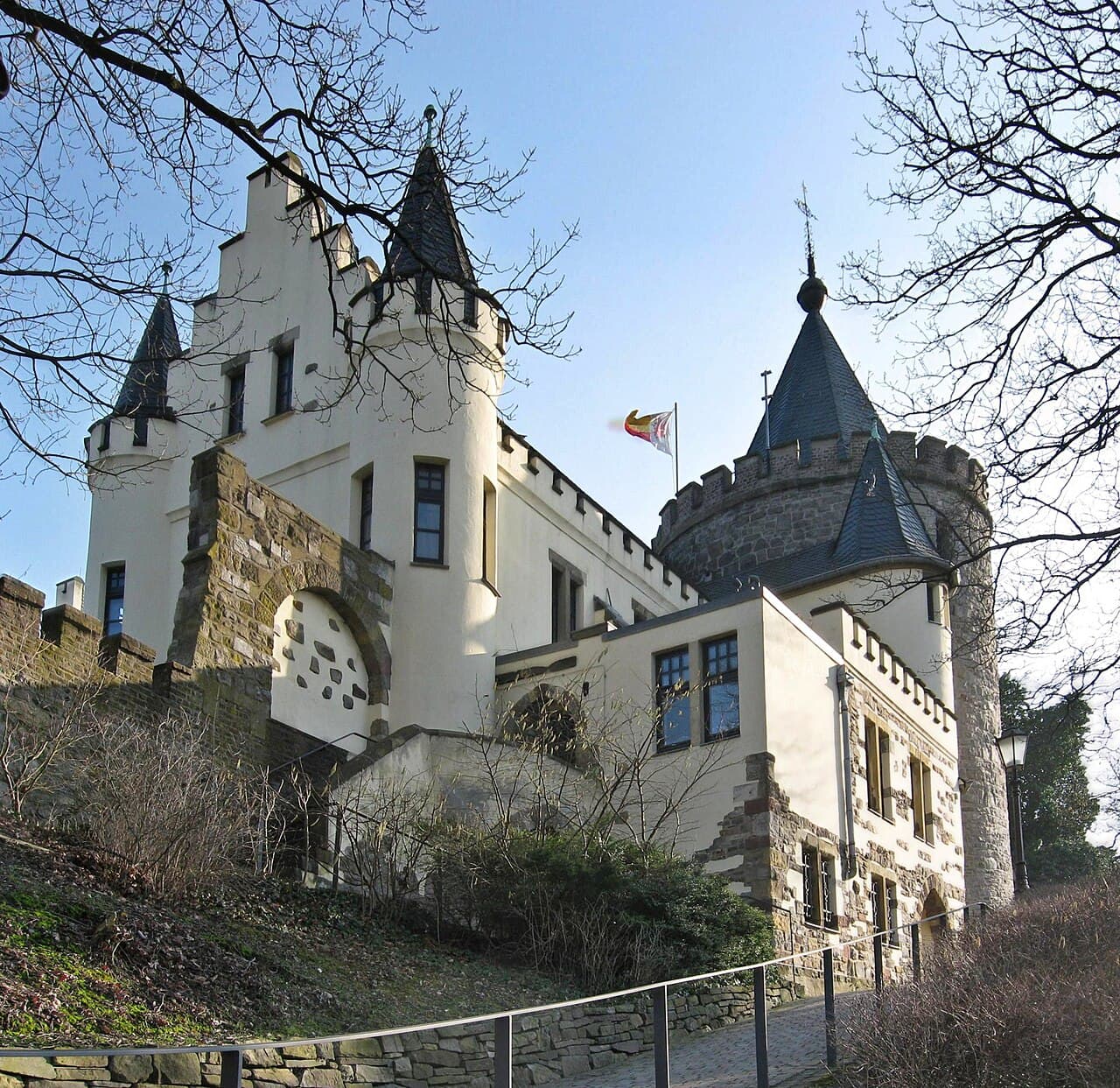
Burg Rode
Burg Rode is a historic hill castle prominently situated in the town of Herzogenrath, near the German-Dutch border, close to the city of Kerkrade in the Netherlands. This castle stands as a significant monument reflecting centuries of political, military, and economic history in the region. Originally constructed during the High Middle Ages, Burg Rode served as a strategic stronghold and toll collection point, controlling vital trade routes and borderlands.
Early history and strategic importance
The first documented mention of Burg Rode dates to 1104, recorded in the annals of the nearby Rolduc Abbey, where it was referred to as “Castrensis Viculis.” The castle was initially built by the Counts of Saffenberg to assert control over the surrounding border region and to regulate commerce along the ancient Via Belgica, a major Roman road that connected important cities such as Cologne, Heerlen, Maastricht, and Tongeren, extending to the coast at Boulogne-sur-Mer.
The castle's location near the Wurm River was crucial, as the river formed a political and ecclesiastical boundary between the Diocese of Liège and the Archdiocese of Cologne. This positioning enabled Burg Rode to exert influence over both secular and religious territories. By the early medieval period, the Via Belgica route was redirected near Herzogenrath, further enhancing the castle's role in monitoring and taxing trade. Surviving records from the neighboring Duchy of Brabant indicate that toll revenues collected at Burg Rode were exceptionally high, exceeding 3,300 gold guilders annually, far surpassing other toll stations in the region.
Medieval conflicts and ownership changes
Throughout the 13th century, Burg Rode was embroiled in regional conflicts, most notably the Limburg succession war. In 1283, the Duchy of Brabant attempted to seize the castle due to its strategic value but failed to capture it at that time. After the decisive Battle of Worringen in 1288, Brabant emerged victorious, and the castle eventually came under Brabant control following the dissolution of the Duchy of Limburg. The town of Herzogenrath itself was first recorded in 1282 as “s’Hertogenrode,” meaning “the duke’s clearing,” reflecting its association with ducal authority.
Ownership of Burg Rode passed through various noble families, including the Droste von Herzogenrath, who also held the nearby Alsdorf Castle. The earliest known knight linked to Burg Rode was Gottfried von Laufenberg in 1150. His successor, Harper von Laufenberg, served as castellan and steward during the early 13th and again in the early 14th centuries, highlighting the castle's continued importance as a noble residence and administrative center.
Early modern period and political transitions
In later centuries, Burg Rode's ownership shifted due to broader political changes in the region. It was temporarily leased to the Duchy of Jülich and later came under the control of the Habsburg Netherlands from 1544 until the French Revolutionary occupation in 1794. Following the Congress of Vienna in 1815, the castle was incorporated into the Kingdom of Prussia, which administratively separated it from nearby Kerkrade and the ecclesiastical estates of Rolduc Abbey. The modern border between Germany and the Netherlands runs close to the castle grounds, underscoring its longstanding role as a frontier fortress.
Architectural evolution and restoration
Burg Rode developed from a modest fortified settlement into a formidable castle through successive expansions beginning in the 12th century. These enhancements strengthened its defenses to meet the demands of military engagements and its function as a toll station. While detailed records of construction materials and techniques are limited, the castle's hilltop position and surviving structural elements reflect typical medieval fortification strategies, including defensive walls, gates, and battlements.
In the 20th century, Burg Rode underwent significant restoration efforts aimed at preserving its medieval character while incorporating elements characteristic of early 20th-century historical revival architecture. Between 1913 and 1978, the castle served as the town hall for Herzogenrath, a role that helped maintain its structural integrity and public accessibility.
Today, Burg Rode stands as a well-preserved example of a medieval hill castle that has adapted through centuries of political and social change. Its proximity to Rolduc Abbey highlights a historic connection between secular and ecclesiastical powers in the region. The castle's grounds and restored structures continue to host cultural events and community activities, maintaining its relevance in contemporary Herzogenrath.
Cultural significance and visitor experience
Burg Rode remains a site of considerable cultural heritage, embodying the layered history of the border region between Germany and the Netherlands. Visitors can appreciate the castle's strategic hilltop location, which offers views of the surrounding landscape and insights into medieval defensive architecture. The castle's restoration allows for exploration of its historic courtyards, gates, and walls, providing a tangible connection to its past roles in trade control and regional governance.
Its ongoing use for community events and cultural activities ensures that Burg Rode is not only a monument to history but also a living part of Herzogenrath's identity. The castle's story reflects broader themes in European medieval history, including feudal power dynamics, border conflicts, and the economic importance of toll castles along key trade routes.
Frequently asked questions (FAQ)
- What is the historical significance of Burg Rode?
- Burg Rode was a strategic hill castle controlling trade routes and borders in the High Middle Ages, serving as a toll collection point and military stronghold.
- When was Burg Rode built?
- The castle was first mentioned in 1104, indicating its construction likely dates to the early 12th century during the High Middle Ages.
- Can I visit Burg Rode today?
- Yes, Burg Rode is restored and open for cultural events and community activities, offering visitors a chance to explore its historic architecture and grounds.
- How did Burg Rode influence regional trade?
- Located near the Via Belgica, Burg Rode controlled and taxed a major trade route connecting Cologne and other important cities, generating significant toll revenues.
- What architectural features does Burg Rode have?
- The castle features typical medieval defensive elements such as fortified walls, gates, and battlements, restored to reflect its historical appearance.
Photo gallery

Information
Website
Visit websiteSources & official resources
Verify the information above using these authoritative references.
Loading map...
Visitor reviews
No reviews yet. Been here? Write the first review and help other travelers!
Write the first reviewVisited this castle? Share your experience
Your review helps other travelers and adds first-hand knowledge to our encyclopedia.