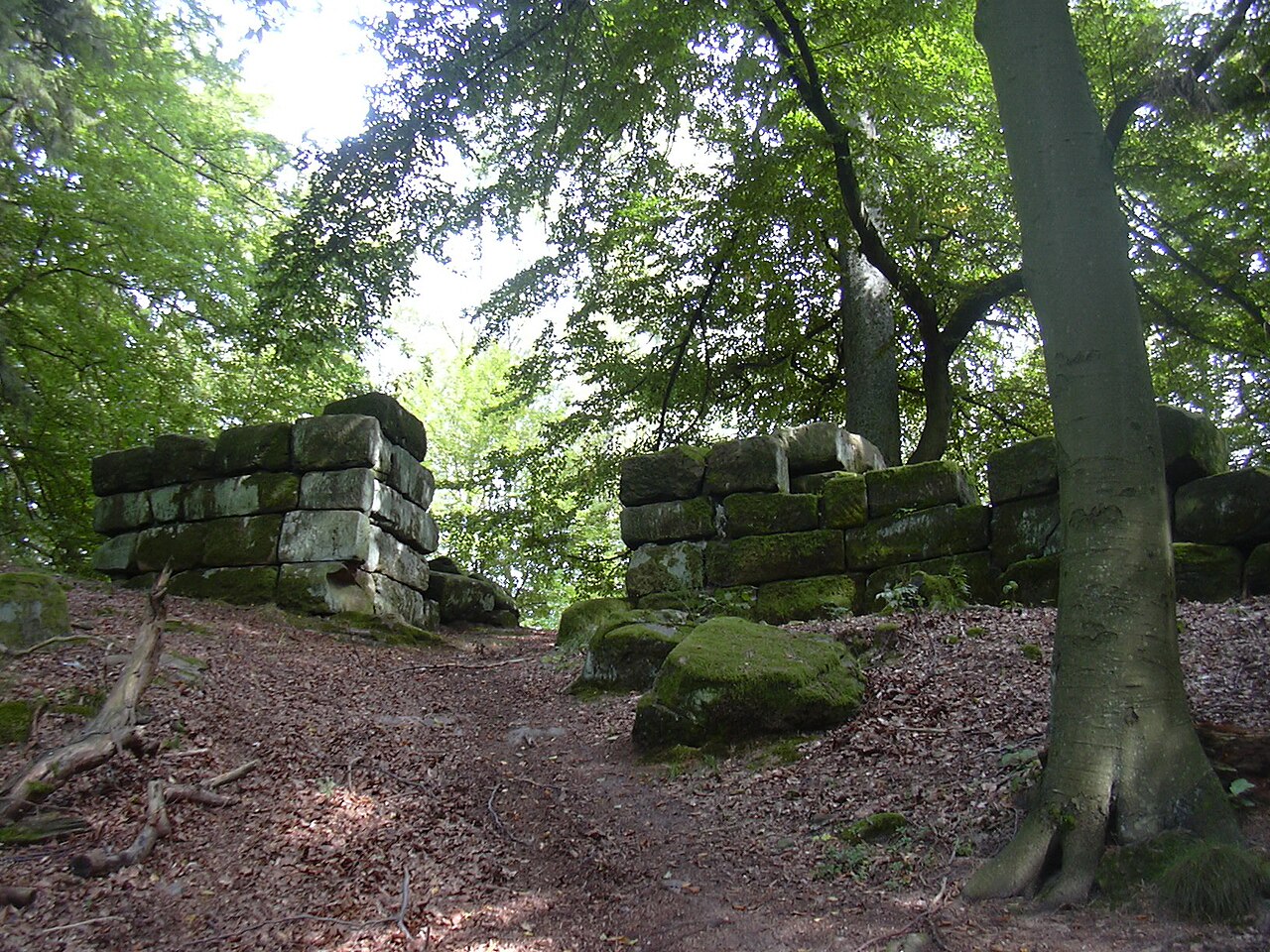
Wilenstein Castle

Wilenstein Castle in Trippstadt, Germany
Trippstadt, Germany
High Medieval (11th–13th c.)

Wilenstein Castle stands as one of the oldest fortresses in the historic region of the Pfalz in Germany. Its origins trace back to the 12th century, making it a significant example of High Medieval military architecture. The castle's early history is closely tied to the sovereigns of Wilenstein, who are documented from the middle of the 12th century. This early reference highlights the castle's role as a local power center during the medieval period.

Historical significance and early history

The castle was originally constructed as a stronghold to control the surrounding territory and protect trade routes in the region. Its strategic location in Trippstadt allowed it to serve both defensive and administrative functions. Throughout the High Medieval period, Wilenstein Castle was a symbol of feudal authority and regional governance.

Records indicate that the castle's lords played notable roles in local politics and conflicts, although detailed accounts of specific events remain limited. The castle's ownership and influence fluctuated over the centuries, reflecting the broader political dynamics of the Pfalz region.

Architectural features and layout

Wilenstein Castle originally featured typical medieval defensive elements, including stone walls, towers, and a keep or donjon. The castle's design was adapted to the natural terrain, utilizing the hilltop location to enhance its defensive capabilities. The upper castle area, which remains the most prominent section today, was the core fortified zone housing the main residential and administrative buildings.

The castle's fortifications would have included battlements and possibly a moat or ditch to impede attackers. The construction techniques and materials reflect the architectural practices of the High Medieval era, with thick masonry walls and narrow windows designed for defense.

Damage during the Thirty Years' War

Wilenstein Castle suffered significant damage during the Thirty Years' War (1618–1648), a devastating conflict that affected much of Central Europe. The castle was targeted and partially destroyed, leading to its decline as a military stronghold. By 1664, the damage was so extensive that the castle was declared uninhabitable.

This destruction marked a turning point in the castle's history, as it ceased to function as a noble residence or fortress. The ruins remained largely abandoned for centuries, reflecting the widespread impact of the war on the region's architectural heritage.

Restoration and modern use

In the 1950s, extensive restoration and conservation efforts were undertaken to stabilize the remaining structures of Wilenstein Castle. These works aimed to preserve the castle's historical fabric while adapting parts of it for contemporary use. However, the reconstruction of the upper castle has been subject to criticism for not fully respecting the original medieval character.

Today, the upper castle serves as a school vacation centre, providing educational and recreational facilities. This adaptive reuse has allowed the castle to remain active and accessible, contributing to local cultural life while preserving its historical significance.

Visitor information and cultural importance

Wilenstein Castle is an important cultural landmark in the Pfalz region. Visitors can explore the castle grounds, appreciate the medieval architecture, and learn about the site's history through local heritage programs. The castle's setting in Trippstadt offers scenic views and opportunities for hiking and outdoor activities.

While the castle is partially restored, it retains much of its medieval character, making it a valuable site for understanding the region's feudal past and architectural evolution.

Frequently asked questions (FAQ)

How do I get to Wilenstein Castle?
Wilenstein Castle is located in Trippstadt, Germany, and is accessible by car or public transport. If you’re driving, there is parking available nearby. For those using public transport, check local bus routes for the best access to the castle.
What is the historical significance of Wilenstein Castle?
Wilenstein Castle dates back to the 12th century and played a crucial role in the regional defense during the Middle Ages. Its strategic location allowed it to oversee important trade routes. Today, it stands as a testament to the architectural and cultural history of the region.
When was Wilenstein Castle built?
Construction of Wilenstein Castle began in the early 12th century, with its first documented mention occurring in 1189. Over the centuries, the castle underwent several renovations and expansions, reflecting the architectural styles of different periods. This rich history adds to its charm and significance today.
Can I take guided tours of Wilenstein Castle?
Yes, guided tours of Wilenstein Castle are available and provide visitors with in-depth insights into its history and architecture. These tours are typically conducted by knowledgeable guides who share fascinating stories and details about the castle's past. Be sure to check the schedule for tour availability.
Why is Wilenstein Castle a popular tourist destination?
Wilenstein Castle attracts visitors due to its stunning architecture and breathtaking views of the surrounding countryside. The castle’s rich history, coupled with its well-preserved structures, offers a unique glimpse into medieval life. Additionally, its picturesque setting makes it a great spot for photography and exploration.
Is it possible to host events at Wilenstein Castle?
Yes, Wilenstein Castle offers facilities for hosting various events, including weddings and corporate gatherings. The scenic backdrop and historical ambiance make it a unique venue choice. Interested parties should contact the castle management for specific details and booking procedures.
What are the opening hours of Wilenstein Castle?
Wilenstein Castle is open to visitors from April to October, with opening hours varying by season. Typically, the castle opens from 10 AM to 6 PM on weekdays and from 10 AM to 7 PM on weekends. It is advisable to check the official website for any seasonal changes or special events.
Are there any ticket prices for visiting Wilenstein Castle?
Yes, there is an admission fee to enter Wilenstein Castle, with discounts available for students and seniors. Tickets can be purchased at the entrance or online through the castle's official website. Special rates may apply for group visits or guided tours.
What are some nearby attractions to visit after Wilenstein Castle?
After visiting Wilenstein Castle, consider exploring the beautiful Palatinate Forest, which offers numerous hiking trails and natural scenery. Additionally, the charming village of Trippstadt has quaint shops and local eateries worth checking out. Other historical sites in the area can enrich your visit further.

Loading map...

Visitor reviews

No reviews yet. Been here? Write the first review and help other travelers!

Write the first review

Visited this castle? Share your experience

Your review helps other travelers and adds first-hand knowledge to our encyclopedia.

Write a review

(5/5)

0/2000 characters

Your review will be visible after admin approval

Nearby castles

7.7 km

Hohenecken Castle Ruins

Kaiserslautern, Germany

Hohenecken Castle Ruins stand as a remarkable example of High Medieval fortress architecture in Kaiserslautern, Germany. Though the exact date of its foundation remains uncertain, the castle's construction is generally dated to the late 12th century or around the year 1200, based on architectural features such as its distinctive pentagonal bergfried and a massive shield wall. These elements reflect the military and defensive innovations typical of the Hohenstaufen period, a time when castle-building was closely tied to asserting imperial authority in the region. Historical background and ownership The castle's origins are linked to the aftermath of the construction of the Barbarossaburg in Kaiserslautern in 1156. While early sources suggested that Hohenecken was built shortly thereafter, modern research favors a construction date approximately fifty years later. In the first half of the 13th century, the castle was enfeoffed to a local family of ministeriales, descendants of the knight Reinhard of Lautern. This family adopted the name von Hohenecken after acquiring the castle. In 1214, the von Hohenecken family was granted the right of patronage of Ramstein by King Frederick II, who later became Holy Roman Emperor. The castle and its associated barony, which encompassed several villages, remained an imperial fief for centuries, symbolizing its importance within the feudal structure of the Holy Roman Empire. Architectural features and layout Hohenecken Castle is notable for its pentagonal bergfried, a rare tower shape that provided a strategic vantage point for defense and surveillance. The massive shield wall, measuring approximately 25 meters wide and 11 meters high, was designed to protect the castle's most vulnerable side from attack. The castle complex includes an outer ward, a moat, and distinct upper and lower wards, stretching about 50 by 9 meters in total area. The robust construction and layout reflect the military architectural principles of the Hohenstaufen dynasty, emphasizing strong defensive structures capable of withstanding sieges and assaults common during the turbulent medieval period. Decline and destruction During the early modern period, Hohenecken Castle began to decline in strategic importance and physical condition. It was captured by rebellious peasants during the German Peasants' War of 1525, indicating its involvement in the social upheavals of the time. Later, in 1668, the castle endured a lengthy siege by Prince-Elector Charles Louis of the Palatinate, which resulted in partial destruction. The final blow came in 1689 during the War of the Palatine Succession when French troops deliberately blew up the castle, leaving it in ruins. Present condition and cultural significance Today, the Hohenecken Castle Ruins are partially preserved and remain a significant historical site in Kaiserslautern. The ruins still showcase the impressive shield wall and the distinctive bergfried, attracting visitors interested in medieval architecture and history. The castle offers extensive views over the surrounding landscape, providing insight into its strategic placement. It is regarded by experts as one of the best-preserved examples of Hohenstaufen-era castles in the region, illustrating the military and feudal history of the Holy Roman Empire. Visitor experience and access While the castle is a ruin, it is accessible to the public and serves as a popular attraction for both tourists and locals. Visitors can explore the remains of the outer ward, moat, and castle walls, gaining a tangible connection to the medieval past. The site also provides educational opportunities through its historical context and architectural features, making it an important cultural heritage site in the Rhineland-Palatinate region.

High Medieval (11th–13th c.)
Details
9.2 km

Burg Perlenberg

Bann, Germany

Burg Perlenberg is a notable hill castle ruin located near the municipality of Bann in the German state of Rhineland-Palatinate. Constructed in the 12th century during the reign of the Staufer dynasty, this castle played a significant role in the defensive network protecting the nearby imperial palace at Lautern. Its strategic position allowed control over the vital road connecting Kaiserslautern and Landstuhl, two important regional centers during the High Medieval period. Historical context and significance The castle was built as part of the broader efforts by the Staufer rulers to consolidate their power in the Holy Roman Empire. Burg Perlenberg's location atop the Kleiner Berg at an elevation of 371 meters provided commanding views of the surrounding landscape, which was crucial for early warning and defense. The castle's role was primarily military, serving as a watchpoint and stronghold to secure the imperial road and nearby territories. By the 16th century, Burg Perlenberg had fallen into disuse and was recorded in a 1542 document under the name "Birleberg," reflecting territorial disputes between the Electoral Palatinate and the noble Sickingen family. The name "Perleburg" emerged later in historical references, indicating the evolution of the castle's identity over time. Architectural features and remains The bergfried The most prominent surviving feature of Burg Perlenberg is the square bergfried, a defensive tower typical of medieval German castles. This main tower was constructed using finely cut rusticated ashlar masonry, characterized by large rectangular stone blocks with rough faces and smooth edges, showcasing the high-quality craftsmanship of the Staufer era. The bergfried measures approximately nine meters on each side, with walls about 1.5 meters thick, providing formidable defense. The tower's base features a carefully shaped profile similar to the shield wall design found at other Staufer castles such as Landeck and Wildenberg. This architectural detail reflects a common construction approach during the High Medieval period, emphasizing both strength and aesthetic precision. Other structural elements No other substantial structural remains have been identified at the site, suggesting that either the castle was never fully developed beyond the bergfried or that other buildings have not survived the centuries. The ruin stands on a small plateau surrounded by steep slopes and dense forest, which today forms part of a protected nature reserve. Archaeological investigations and preservation Interest in Burg Perlenberg's ruins was revived in the early 20th century when archaeologist Christian Mehlis conducted the first systematic excavation in 1901. His work uncovered important details about the castle's construction and historical context. However, some of the castle's stones were quarried after his investigation, continuing until around 1913, which likely contributed to the loss of additional structural elements. Further archaeological excavations and preservation efforts were undertaken between 1959 and 1963, enhancing understanding of the site and stabilizing the remaining ruins. Today, Burg Perlenberg is owned and maintained by the state of Rhineland-Palatinate, ensuring its protection as a cultural heritage site. Local legends and cultural significance Local tradition holds that an underground passage once connected Burg Perlenberg to the Deutschherrenkomturei Einsiedeln, a nearby commandery in Kaiserslautern. Although this story has become part of the castle's lore, no archaeological evidence has been found to confirm the existence of such a tunnel. This legend contributes to the mysterious allure surrounding the castle ruins. Access and environment The ruins of Burg Perlenberg are accessible via an unmarked steep path starting near Einsiedlerhof and passing by the Kolbenwoog pond. The ascent leads to the castle's hilltop, which was once prized for its expansive views. Today, the summit plateau is largely enclosed by tall trees, limiting the panoramic vistas but preserving the secluded and natural character of the site. The surrounding forest reserve and steep slopes enhance the castle's isolated setting, reflecting its original strategic purpose of controlling and monitoring the surrounding region from a defensible position.

High Medieval (11th–13th c.)
Details
10.6 km
Heidelsburg — Germany castle

Heidelsburg

, Germany

The Heidelsburg, also historically known as the Bunenstein, is a notable hill castle ruin located in the western Palatine Forest of Rhineland-Palatinate, Germany. Its origins trace back to at least the Roman Empire period, making it an important archaeological and historical site that reflects the region's strategic significance over centuries. Historical background and significance The Heidelsburg was originally constructed as a fortification during the Roman era, serving as a military stronghold or watchpost in this heavily forested and rugged terrain. Its location on a hill provided commanding views of the surrounding landscape, which was crucial for surveillance and defense. While the exact date of its initial construction remains uncertain, archaeological evidence supports its use during the Roman occupation of the region, roughly between the 1st and 3rd centuries AD. Following the Roman period, the site likely continued to be used or adapted through the early medieval period, although detailed records are scarce. The castle's later medieval name, Bunenstein, suggests its ongoing regional importance. Over time, the fortification fell into ruin, but key structural elements have survived, offering insight into ancient military architecture and settlement patterns in the Palatine Forest. Architectural features and remains Today, the Heidelsburg is primarily recognized for the remains of its two gates, which include their original stone steps, portions of the castle walls, and an ancient cistern. These features illustrate the castle's defensive design and the practical needs of its occupants. The surviving gates would have controlled access to the fortified area, reflecting typical Roman military engineering with robust construction aimed at repelling attackers. The stone steps leading to these gates remain visible, highlighting the craftsmanship and durability of the masonry work. The castle walls that remain are constructed from local stone, arranged to form a protective barrier around the hilltop enclosure. The walls' thickness and height, though partially eroded, indicate a design focused on defense against both siege and natural elements. The cistern is a critical feature for sustaining inhabitants during sieges or extended occupation. It collected and stored rainwater, ensuring a reliable water supply in a location where natural sources might have been limited or seasonal. Location and natural environment Situated in the Palatine Forest, the Heidelsburg occupies a strategic hilltop position that leverages the natural topography for defense. The forested surroundings would have provided both concealment and resources, while the elevated site offered expansive views for early warning of approaching threats. The castle's location within this rugged landscape reflects common Roman and medieval practices of fortifying high ground to control travel routes and territorial boundaries. The area's geology, with abundant stone, also influenced the construction techniques and materials used. Archaeological importance and preservation As a site with Roman-era origins, the Heidelsburg holds significant archaeological value. Excavations and studies have helped clarify aspects of Roman military architecture and settlement in this part of Germany. Despite the ruinous condition, the surviving structures provide valuable information about construction methods, defensive strategies, and daily life in a hilltop fortification. Preservation efforts focus on maintaining the integrity of the remaining gates, walls, and cistern to allow continued study and public education. Visiting the Heidelsburg The Heidelsburg is accessible to visitors interested in history, archaeology, and nature. While only ruins remain, the site offers a tangible connection to the Roman past and the medieval period. Visitors can explore the remains of the gates and walls, and appreciate the strategic setting within the Palatine Forest. Interpretive signage and local guides may provide additional context about the castle's history and significance. The natural surroundings also make the site attractive for hiking and outdoor activities, combining cultural heritage with scenic beauty.

Early Medieval (5th–10th c.)
Details