Heidelsburg
The Heidelsburg, also historically known as the Bunenstein, is a notable hill castle ruin located in the western Palatine Forest of Rhineland-Palatinate, Germany. Its origins trace back to at least the Roman Empire period, making it an important archaeological and historical site that reflects the region's strategic significance over centuries.
Historical background and significance
The Heidelsburg was originally constructed as a fortification during the Roman era, serving as a military stronghold or watchpost in this heavily forested and rugged terrain. Its location on a hill provided commanding views of the surrounding landscape, which was crucial for surveillance and defense. While the exact date of its initial construction remains uncertain, archaeological evidence supports its use during the Roman occupation of the region, roughly between the 1st and 3rd centuries AD.
Following the Roman period, the site likely continued to be used or adapted through the early medieval period, although detailed records are scarce. The castle's later medieval name, Bunenstein, suggests its ongoing regional importance. Over time, the fortification fell into ruin, but key structural elements have survived, offering insight into ancient military architecture and settlement patterns in the Palatine Forest.
Architectural features and remains
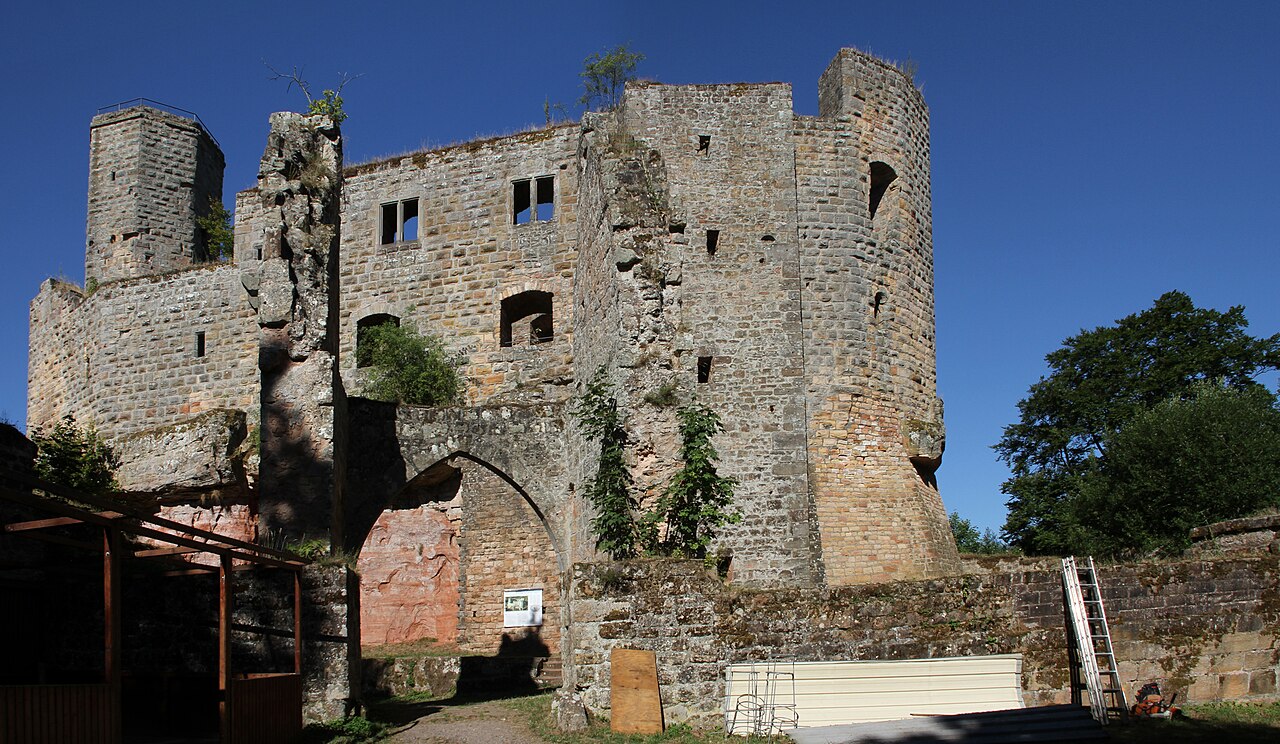
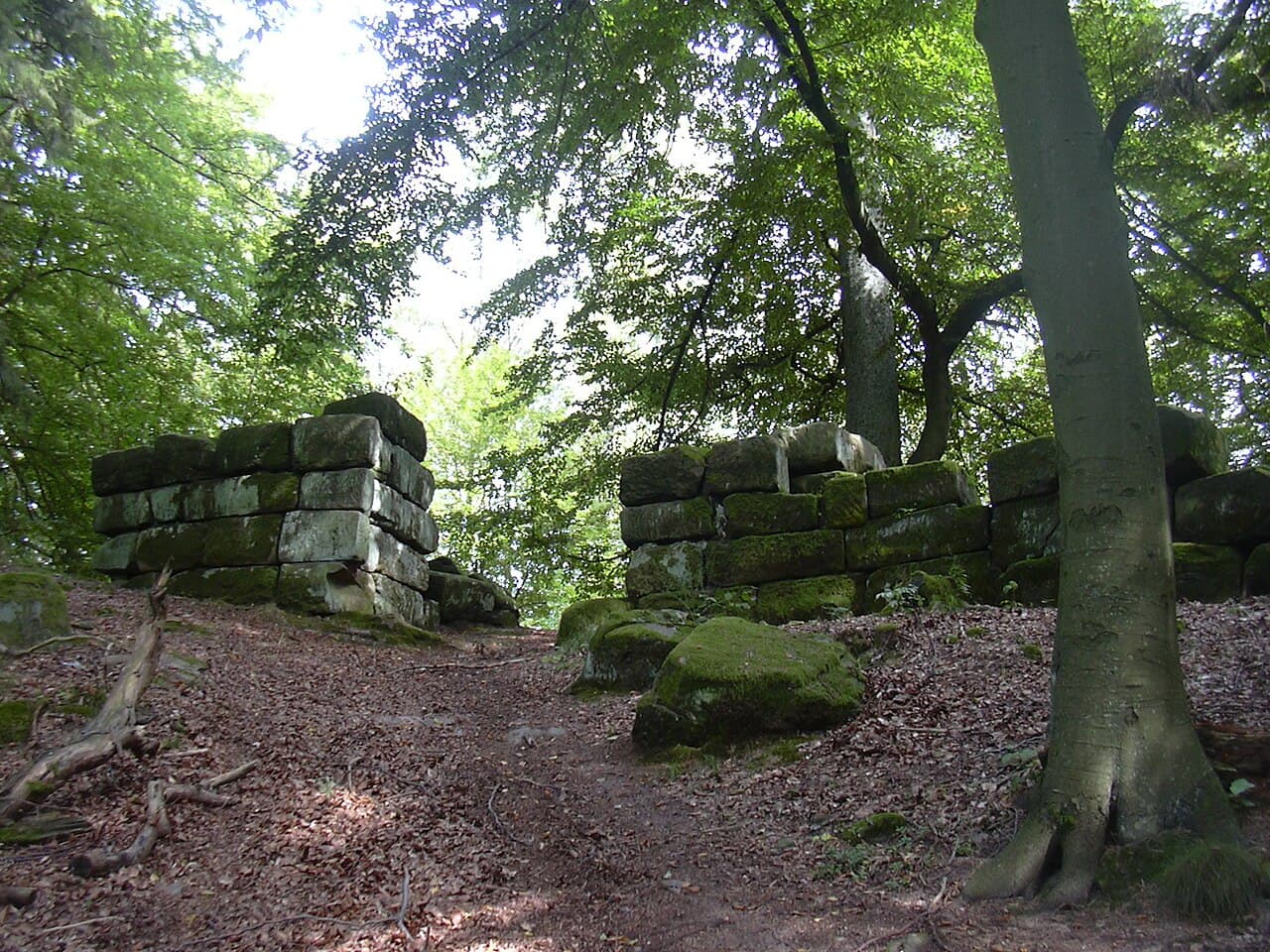
Today, the Heidelsburg is primarily recognized for the remains of its two gates, which include their original stone steps, portions of the castle walls, and an ancient cistern. These features illustrate the castle's defensive design and the practical needs of its occupants.
The surviving gates would have controlled access to the fortified area, reflecting typical Roman military engineering with robust construction aimed at repelling attackers. The stone steps leading to these gates remain visible, highlighting the craftsmanship and durability of the masonry work.
The castle walls that remain are constructed from local stone, arranged to form a protective barrier around the hilltop enclosure. The walls' thickness and height, though partially eroded, indicate a design focused on defense against both siege and natural elements.
The cistern is a critical feature for sustaining inhabitants during sieges or extended occupation. It collected and stored rainwater, ensuring a reliable water supply in a location where natural sources might have been limited or seasonal.
Location and natural environment
Situated in the Palatine Forest, the Heidelsburg occupies a strategic hilltop position that leverages the natural topography for defense. The forested surroundings would have provided both concealment and resources, while the elevated site offered expansive views for early warning of approaching threats.
The castle's location within this rugged landscape reflects common Roman and medieval practices of fortifying high ground to control travel routes and territorial boundaries. The area's geology, with abundant stone, also influenced the construction techniques and materials used.
Archaeological importance and preservation
As a site with Roman-era origins, the Heidelsburg holds significant archaeological value. Excavations and studies have helped clarify aspects of Roman military architecture and settlement in this part of Germany.
Despite the ruinous condition, the surviving structures provide valuable information about construction methods, defensive strategies, and daily life in a hilltop fortification. Preservation efforts focus on maintaining the integrity of the remaining gates, walls, and cistern to allow continued study and public education.
Visiting the Heidelsburg
The Heidelsburg is accessible to visitors interested in history, archaeology, and nature. While only ruins remain, the site offers a tangible connection to the Roman past and the medieval period. Visitors can explore the remains of the gates and walls, and appreciate the strategic setting within the Palatine Forest.
Interpretive signage and local guides may provide additional context about the castle's history and significance. The natural surroundings also make the site attractive for hiking and outdoor activities, combining cultural heritage with scenic beauty.
Frequently asked questions (FAQ)
- What is the historical significance of Heidelsburg?
- Heidelsburg is a hill castle ruin with origins dating back to the Roman Empire, serving as a strategic military fortification in the Palatine Forest region.
- Can I visit the Heidelsburg ruins?
- Yes, the Heidelsburg ruins are accessible to the public and offer a glimpse into Roman and medieval fortification architecture within a natural forest setting.
- What remains can be seen at Heidelsburg today?
- Visitors can see the remains of two gates with stone steps, castle walls, and an ancient cistern that highlight the site's defensive features.
- Where is Heidelsburg located?
- Heidelsburg is located in the western Palatine Forest in the German state of Rhineland-Palatinate.
Photo gallery

Information
Loading map...
Visitor reviews
No reviews yet. Been here? Write the first review and help other travelers!
Write the first reviewVisited this castle? Share your experience
Your review helps other travelers and adds first-hand knowledge to our encyclopedia.