Wild Castle
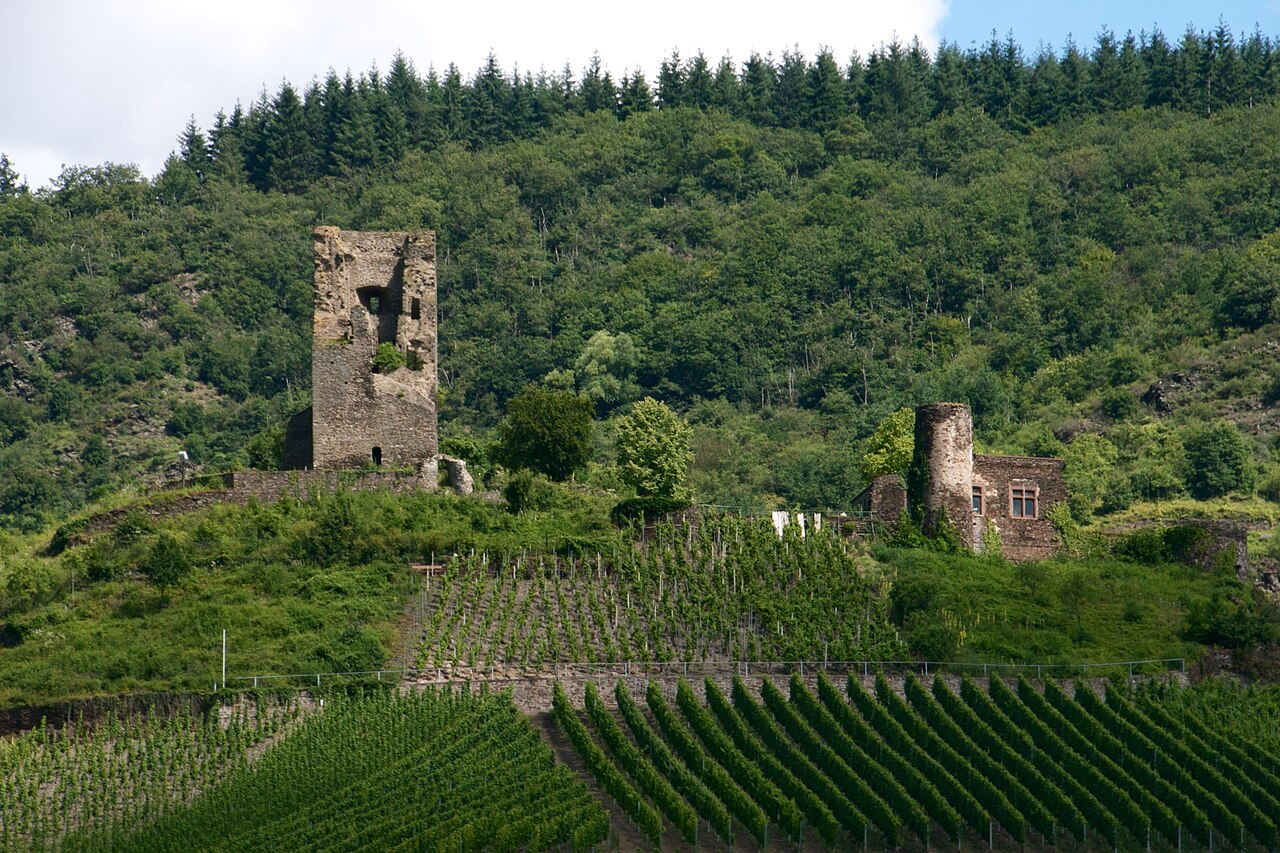
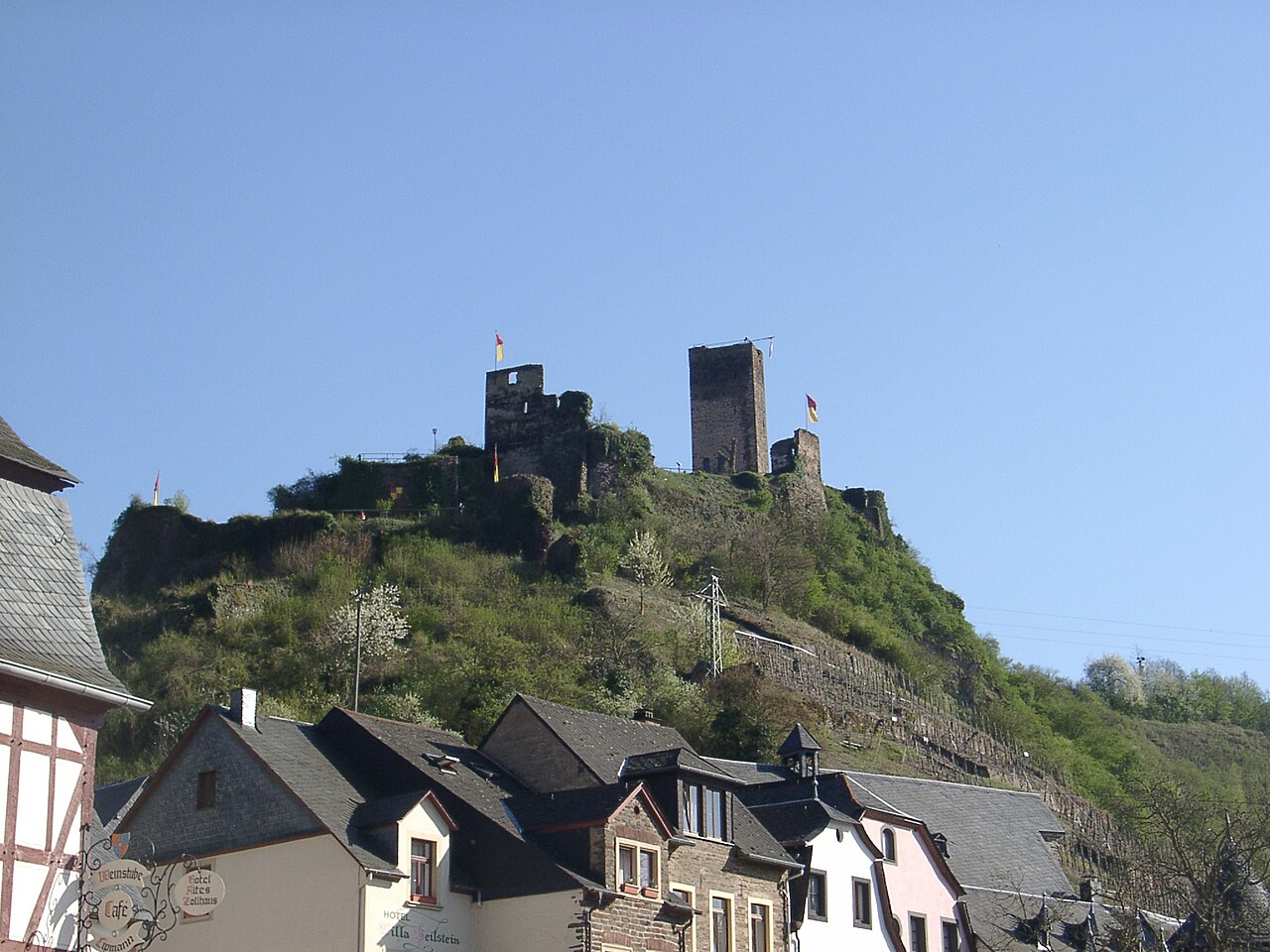
Wild Castle (Wildburg) is a historic hill castle located just south of Treis Castle in the municipality of Treis-Karden, Germany. Built in the 13th century, it was originally constructed by the noble Lords of Wildenberg, descendants of the Braunshorn family, to oversee their estates and protect the southern approaches to Treis Castle. The castle's strategic position on a steep wooded spur near the confluence of the Flaumbach and Dünnbach streams highlights its military importance during the High Medieval period.
Historical background and ownership
The earliest written record of the Wildenberg family dates to 1358, though the castle itself likely dates from around 1235. The Wildenberg lineage became extinct around 1400, after which the castle passed to the Electorate of Trier as a vacant fief. Over the centuries, Wildburg changed hands several times, held by notable families such as the Lords of Miehlen, the Lords of Burgtor, and the Lords of Eltz. Despite these changes, the castle remained under the overarching authority of the Electorate of Trier.
Wildburg lost much of its military significance by the late 17th century. During the Palatine Succession War in 1689, French troops destroyed the castle along with neighboring fortifications including Treis Castle. The destruction was so extensive that Wildburg was never rebuilt as a military stronghold.
Architectural features and restoration
Wildburg Castle is a classic example of a hill fortress with its prominent placement on a steep spur approximately 165 meters above sea level. The most significant surviving structure is the northern keep or bergfried, which is almost square in plan. This tower underwent partial reconstruction in the early 1970s, when it was raised by about one-third of its original height and fitted with a new roof. These modifications were made to stabilize the structure but altered its medieval appearance.
Next to the keep stands the Romanesque palas, the main residential building of the castle. This building retains nearly all of its outer walls and was restored between the late 1950s and mid-1960s. Restoration work included repairing the exterior walls, adding a roof, and refurbishing the interior. Later additions, such as a transverse building with ornamental false biforia (twin-arched windows) and a winter garden added in the 1990s, diverge from the original medieval design.
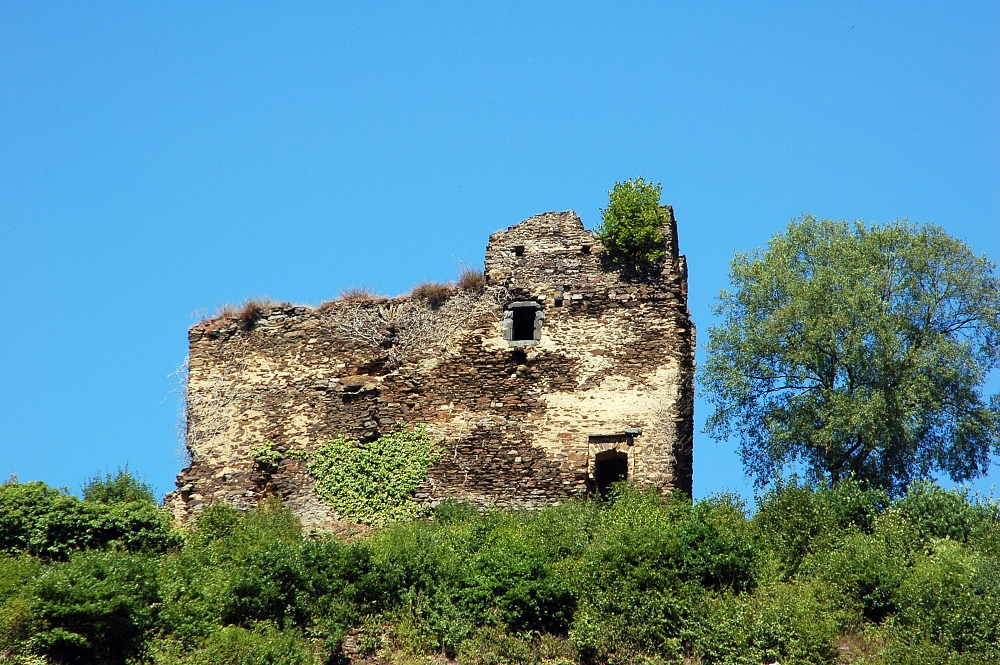
Other parts of the castle, including fragments of additional buildings and sections of the curtain wall, survive in varying states of ruin. These ruins are now part of a landscaped garden within the private property. The castle is currently used as a residence and is not open to the public inside, but visitors can view the exterior and appreciate the layered history reflected in the surviving medieval structures.
Relationship with treis castle
Wildburg Castle lies just south of the ruins of Treis Castle, separated by a narrow depression. Treis Castle itself dates back to possibly the late 11th century, with the first reliable record from 1121. It was a significant stronghold controlled by various noble and ecclesiastical authorities, including the Count Palatine of the Rhine and the Archbishop of Trier. Treis Castle was destroyed by French troops in 1689 during the same conflict that devastated Wildburg.
The proximity of Wildburg to Treis Castle suggests a complementary defensive role, with Wildburg protecting the southern approaches and reinforcing the strategic position overlooking the confluence of the Flaumbach and Dünnbach streams. Together, these castles formed part of a defensive network in the Hunsrück region.
Current status and visitor information
Today, Wildburg Castle is privately owned and serves as a residence. It was acquired by the municipality of Treis-Karden in 2021 to preserve its cultural heritage. Visitors cannot enter the castle but may view the exterior structures and ruins from outside the property. The site offers insight into medieval castle architecture and the historical landscape of the Moselle valley region.
The castle's restoration in the mid-20th century stabilized key structures, allowing for the preservation of important architectural elements such as the bergfried and palas. Despite some modern additions that alter the medieval character, Wildburg remains a valuable example of a 13th-century hill castle with a rich history tied to the noble families and ecclesiastical powers of the Rhineland.
Frequently asked questions (FAQ)
- How do I visit Wild Castle in Treis-Karden?
- Wild Castle is privately owned and not open for interior visits. Visitors can view the castle's exterior and ruins from public areas nearby.
- What is the historical significance of Wild Castle?
- Wild Castle was built in the 13th century by the Lords of Wildenberg and played a role in regional defense alongside Treis Castle. It was destroyed during the Palatine Succession War in 1689.
- When was Wild Castle built and by whom?
- Wild Castle was likely constructed around 1235 by the noble Lords of Wildenberg, descendants of the Braunshorn family.
- What architectural features remain at Wild Castle?
- The castle retains a nearly square bergfried (keep), a Romanesque palas with restored outer walls, fragments of curtain walls, and ruins of additional buildings.
- Is Wild Castle accessible to the public?
- While the castle's interior is private and closed to visitors, the exterior and surrounding ruins can be viewed from outside the property.
Information
Sources & official resources
Verify the information above using these authoritative references.
Loading map...
Visitor reviews
No reviews yet. Been here? Write the first review and help other travelers!
Write the first reviewVisited this castle? Share your experience
Your review helps other travelers and adds first-hand knowledge to our encyclopedia.