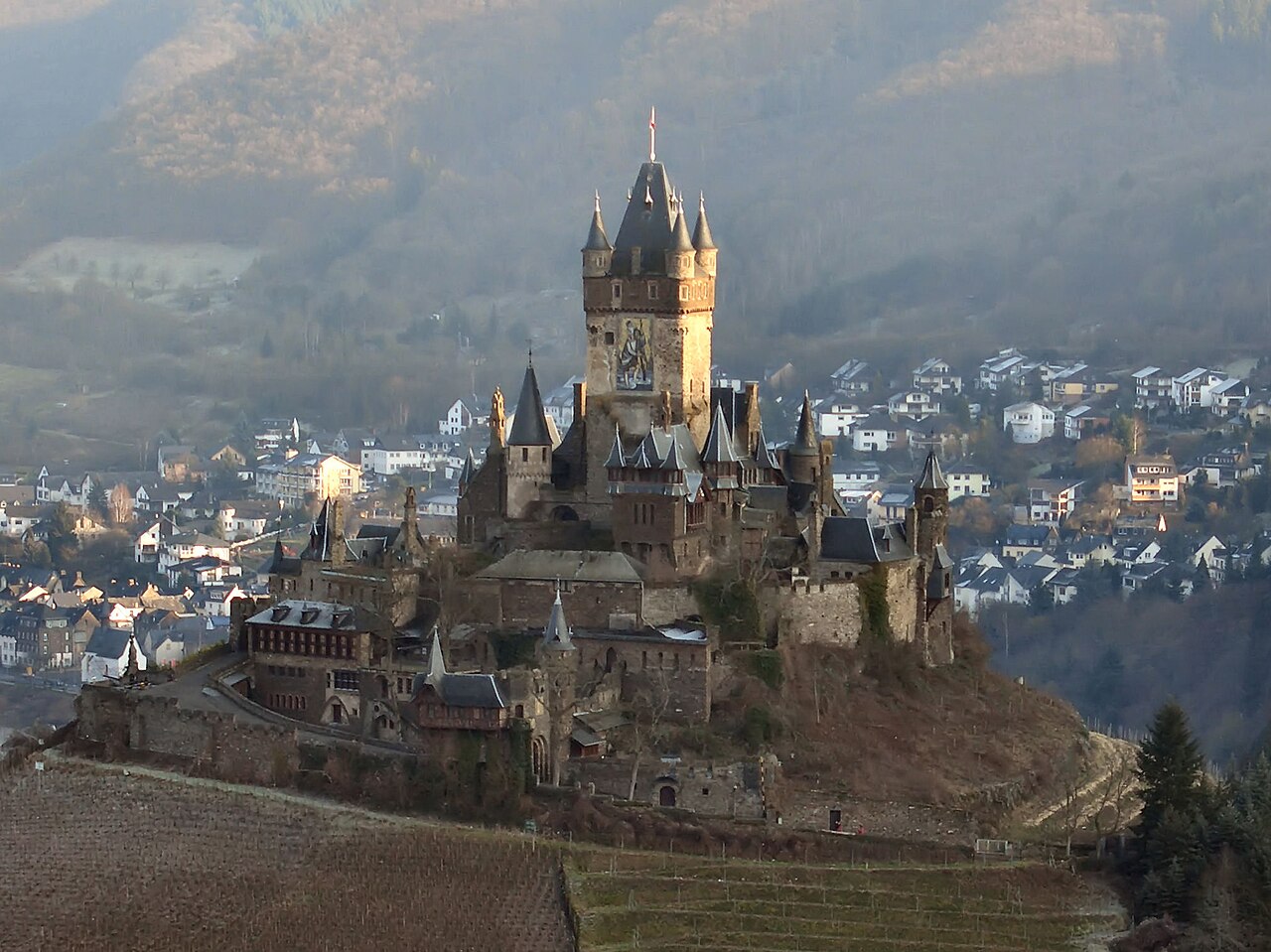
Coraidelstein Castle
Coraidelstein Castle is a notable example of an early medieval hilltop fortress located in Klotten, Germany. According to local tradition, the castle was founded around 960 AD by Count Palatine Hermann I, although the first definitive documentary mention of the site, then known as Reichsburg Klotten, dates to 1294. This castle played a significant role in the regional power dynamics of the Rhineland and was closely tied to the ecclesiastical authority of the Archbishopric of Trier, which took ownership of the castle during the late 13th and early 14th centuries.
Historical background and ownership
The castle's origins are intertwined with the medieval nobility of the region, including a knightly family bearing the same name as the castle, which is documented even before the first written record. After coming under the control of the Archbishop of Trier in 1294, the castle's ownership was formally confirmed to the Electorate of Trier (Kurtrier) in 1346. From 1410 to 1542, the castle was held as a fief by the Lords of Winneburg, a prominent noble family in the area.
Following this period, the castle's ownership became fragmented. In 1545, Heinrich von Hagen received a portion of the castle, while other shares were held by the heirs of Winneburg, the Hausts of Ulmen, the Höins of Hartenfels, and the brothers Hugo and Gerlach Zandt von Merl. From 1654, the castle was held as a Kurtrier fief by Johann Eberhard von Kesselstatt, and it remained in the possession of the Reichsfreiherren von Kesselstatt family until 1917.
Architectural features and condition
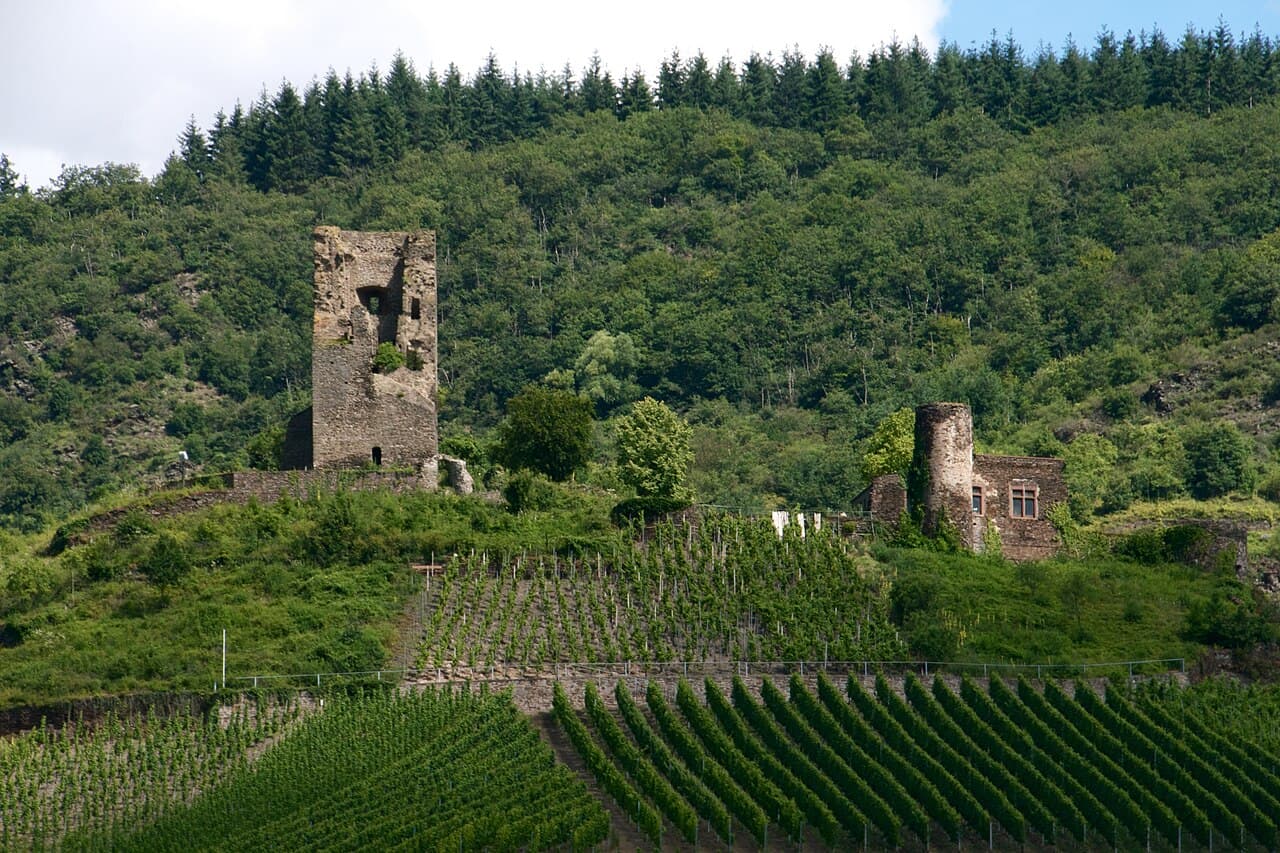
The castle stands on a hilltop, characteristic of many early medieval fortifications designed for defensive advantage. The most ancient surviving structure is the Romanesque keep, a central tower that served as the last line of defense and residence. This keep is now a ruin and cannot be safely ascended due to a significant gap in the masonry, reflecting the castle's long period of decline and partial collapse.
The residential buildings of the castle were constructed in the 16th century and later expanded, demonstrating the castle's adaptation to changing residential needs and architectural styles over time. These later additions reflect Renaissance influences, though the castle primarily retains its medieval character.
Despite its ruinous state, the castle's remains provide valuable insight into early medieval fortification design and the evolution of noble residences in the Rhineland region.
Later history and modern use
The castle was inhabited until approximately 1830, after which it gradually fell into disuse and ruin. In 1917, the property was purchased by Hans Harney (1877–1954), a former consul and director at Deutsche Bank in Düsseldorf. Harney undertook the construction of two residential buildings on the site, breathing new life into the historic location.
In 1952, Harney's daughter, Else Harney, and her partner Wendelin Stahl established a pottery workshop at the castle. This workshop became a cultural site, continuing under Stahl's management until his death in 2000, alongside his former student Ayca Riedinger. This modern use highlights the castle's ongoing role as a place of artisanal creativity despite its ruinous condition.
Access and preservation status
Coraidelstein Castle is currently privately owned and is not open to the public, limiting direct visitor access. The site remains classified as archaeological ruins, with preservation efforts focused on maintaining the remaining structures without extensive reconstruction. The castle's ruins, including the Romanesque keep and later residential buildings, offer a tangible connection to the region's medieval past and noble heritage.
Frequently asked questions (FAQ)
- How do I get to Coraidelstein Castle?
- Coraidelstein Castle is located in Klotten, Germany, easily accessible by car or public transport. If you are traveling by train, the nearest station is in Cochem, from which you can take a short bus or taxi ride to the castle.
- What is the historical significance of Coraidelstein Castle?
- Coraidelstein Castle dates back to the 12th century and played a crucial role in the defense of the region during various conflicts. It is an important example of medieval architecture and offers insights into the feudal system of the time.
- When was Coraidelstein Castle built?
- Coraidelstein Castle was originally constructed around the year 1200. Over the centuries, it has undergone several modifications, reflecting the architectural styles of different eras.
- Can I visit Coraidelstein Castle year-round?
- Yes, Coraidelstein Castle is open to visitors throughout the year, although hours may vary by season. It is advisable to check the official website for the most current visiting hours before planning your trip.
- Why is Coraidelstein Castle popular with tourists?
- Coraidelstein Castle is popular due to its stunning views of the Moselle River and surrounding vineyards, as well as its rich history and well-preserved architecture. Visitors enjoy guided tours that provide a fascinating glimpse into the castle's past.
- Is it possible to enter the castle grounds with a wheelchair?
- Coraidelstein Castle has made efforts to enhance accessibility, but some areas may be challenging to navigate due to uneven terrain. It is recommended to contact the castle staff in advance to inquire about specific accessibility options available during your visit.
- What are the ticket prices for Coraidelstein Castle?
- Ticket prices for visiting Coraidelstein Castle are generally very reasonable, with discounts available for children, students, and seniors. Check the official website for the most up-to-date pricing and any special offers that might be available.
- What is the best time to visit Coraidelstein Castle?
- The best time to visit Coraidelstein Castle is during the spring and early autumn when the weather is mild and the surrounding landscapes are particularly beautiful. Additionally, these seasons tend to have fewer crowds, allowing for a more enjoyable experience.
- Are there any nearby attractions to Coraidelstein Castle?
- Yes, nearby attractions include the charming town of Cochem, known for its picturesque streets and the iconic Reichsburg Cochem castle. The Moselle Valley is also famous for its wine tours and scenic river cruises, making it an ideal region for exploration.
Photo gallery

Information
Loading map...
Visitor reviews
No reviews yet. Been here? Write the first review and help other travelers!
Write the first reviewVisited this castle? Share your experience
Your review helps other travelers and adds first-hand knowledge to our encyclopedia.