Metternich Castle Ruins
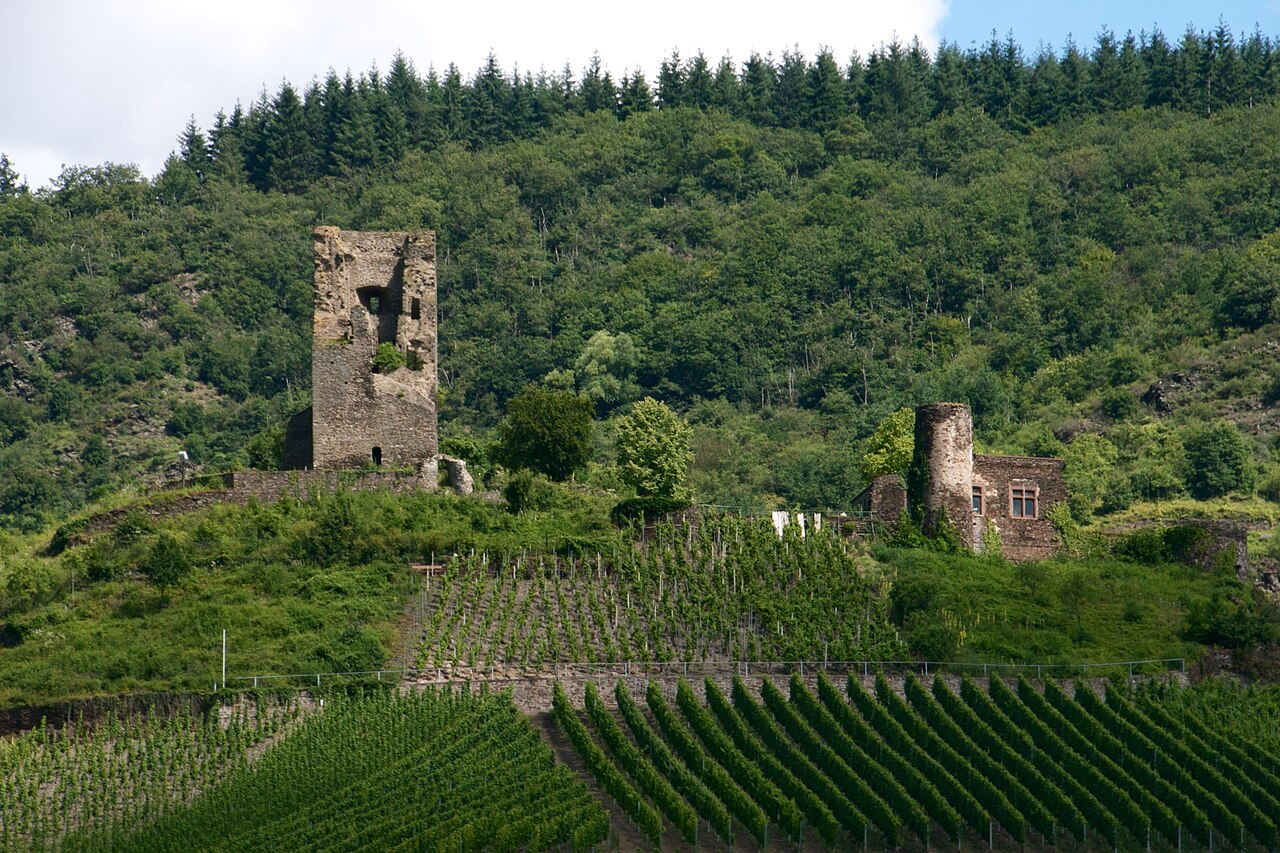
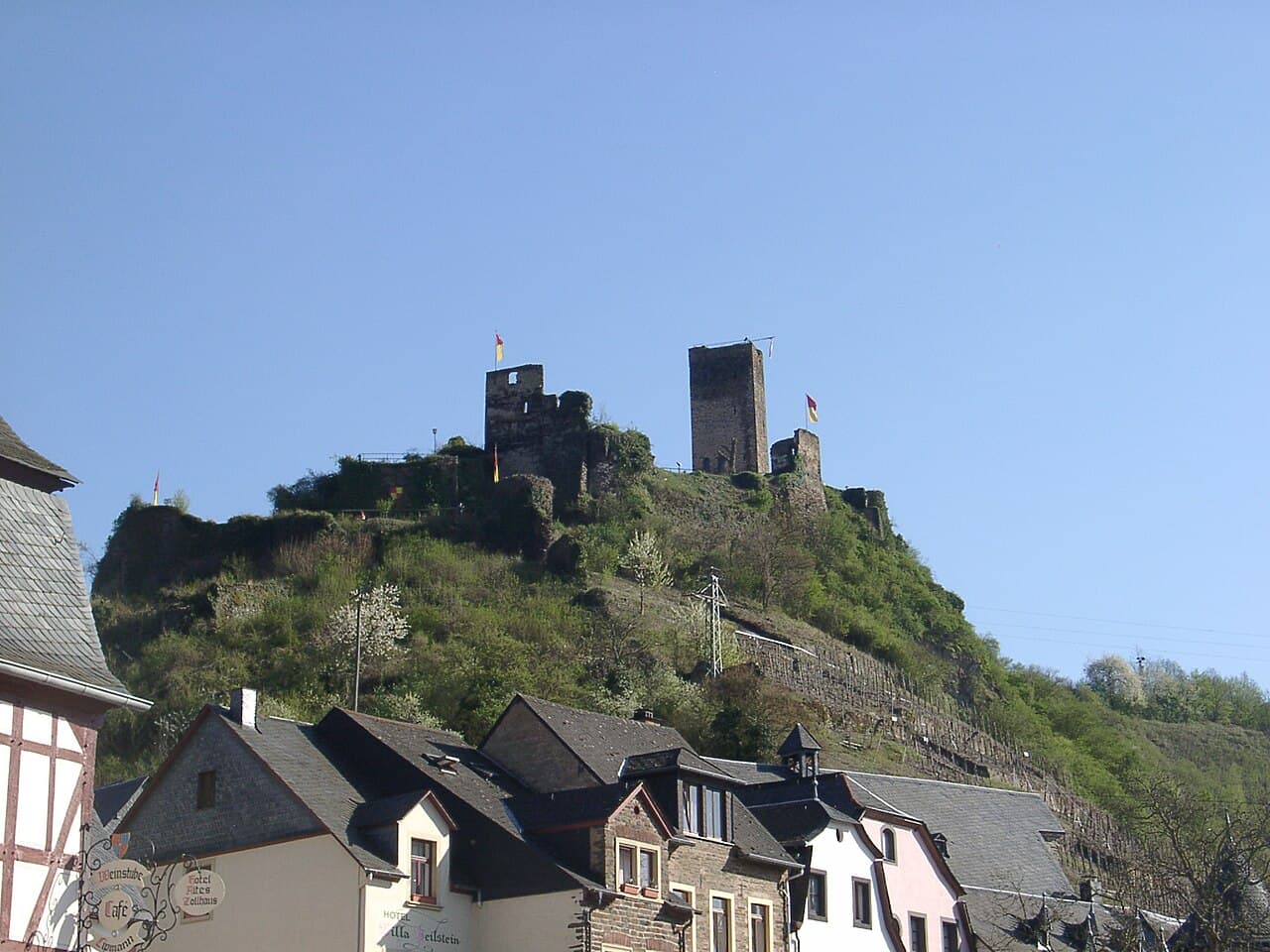
Metternich Castle Ruins stand as a remarkable testament to the turbulent history and architectural ingenuity of the high medieval period in the Moselle valley near Beilstein, Germany. Perched on a steep rocky spur approximately 150 meters above sea level, the castle commands stunning views of the surrounding landscape, reflecting its strategic importance since its construction in the 13th century. First documented in 1268 under the ownership of Johann von Braunshorn, the fortress's origins possibly trace back to the early 13th century, although archaeological evidence supports a mid-13th century establishment, aligning it firmly within the high medieval era.
The castle's location on a rocky promontory rising about 60 meters above the Moselle river provided a natural defensive advantage, making it a formidable stronghold. The fortress was designed with a complex system of defensive walls and gates, accessible only from the northern side, which was heavily fortified with multiple successive walls, including a substantial outer courtyard known as the vorburg. This arrangement exemplifies the typical defensive architecture of hill castles of the period, emphasizing protection against sieges and assaults.
Historical ownership and significance
Originally called Beilstein Castle, it first appears in historical records in 1268, owned by Johann von Braunshorn, a vassal linked to the Archbishopric of Cologne. The Braunshorn family maintained control until the male line ended in 1361. Subsequently, the castle passed to the von Winneburg family, who combined their name with the castle's, becoming von Winneburg und Beilstein. This period saw the castle partially sold to the Archbishopric of Trier, underscoring its ecclesiastical and feudal importance.
Throughout the Thirty Years’ War in the early 17th century, the castle was occupied by both Swedish and Spanish forces but survived without significant damage. In 1637, the Metternich family acquired the castle, renaming it after themselves. The castle's military role diminished after its near destruction in 1689 by French troops during the Nine Years’ War, also known as the War of the Grand Alliance. Financial constraints prevented its full restoration, and it gradually fell into ruin.
The castle is notably linked to Klemens von Metternich, the influential Austrian Empire diplomat and foreign minister from 1809 to 1848. Although he considered restoring the castle, plans were abandoned due to the upheaval caused by the French Revolutionary armies in the region. The ruins eventually passed into private ownership, with the Sprenger-Herzer family holding the property since 1962.
Architectural features and layout
The castle ruins encompass an area approximately 80 by 50 meters, featuring a pentagonal stone citadel at its core. This citadel is surrounded by high enclosing walls and controlled access through a single gate, focusing defenses on the southern ridge, the most vulnerable approach. The pentagonal bergfried stands as the castle’s dominant feature, a 25-meter-high tower originally serving as the central keep. Its strategic placement allowed for surveillance and defense of the southern approach and remains a prominent landmark visible from the Moselle valley below.
The fortress includes remains of several residential buildings within the outer and inner wards, indicative of a Ganerbenburg arrangement—shared ownership by multiple noble families simultaneously. The castle’s stone construction reflects the masonry techniques of the period, with robust walls designed to withstand sieges. Although decorative elements are scarce, the structural remains provide valuable insight into the castle's functional design and scale.
Defensive structures
The northern approach was heavily fortified with multiple defensive walls and a substantial outer courtyard or vorburg, serving as the first line of defense. The castle’s design prioritized protection against attacks, particularly from the south, where the bergfried and thick walls guarded the most exposed side. The layout typifies high medieval hill castles, combining natural topography with man-made fortifications to create a stronghold capable of withstanding prolonged conflict.
Residential and communal spaces
Within the castle grounds, the remains of residential buildings suggest a complex social structure, with multiple noble families residing simultaneously. This shared occupancy necessitated distinct living quarters and communal areas within the castle, reflecting the feudal practice of Ganerbenburg. The presence of these buildings highlights the castle’s role not only as a military fortress but also as a noble residence and administrative center.
Destruction, decline, and modern use
Metternich Castle suffered significant damage during the Nine Years’ War in 1689 when French forces deliberately destroyed the fortress to prevent its military use. The extensive damage led to its abandonment as a defensive site, and it was never fully rebuilt. Over the centuries, the ruins became a historical monument, attracting visitors interested in medieval architecture and history.
Today, the site includes a restaurant and hosts cultural events such as beer festivals, integrating the castle ruins into the local community's social life. At the base of the rocky spur, a hotel complements the historical ambiance, providing accommodation for visitors exploring the Moselle valley and its rich heritage. The castle ruins remain a popular destination for tourists seeking to experience the dramatic landscape and medieval history of the region.
Cultural and heritage importance
Metternich Castle Ruins are an important cultural landmark in the Moselle region, representing the architectural and feudal history of medieval Germany. The castle’s association with prominent historical figures like Klemens von Metternich adds to its significance. Its preservation as a ruin allows for ongoing archaeological study and public education about medieval fortifications and noble life.
The site’s integration into modern tourism, with facilities such as a restaurant and hotel, demonstrates a successful balance between heritage conservation and contemporary use. Visitors can explore the castle’s defensive structures, enjoy panoramic views from the bergfried, and participate in cultural events that celebrate the region’s history.
Frequently asked questions (FAQ)
- What is the best time to visit Metternich Castle Ruins?
- The best time to visit Metternich Castle Ruins is during the warmer months from spring to early autumn when the weather is pleasant for exploring the outdoor ruins and enjoying panoramic views of the Moselle valley.
- Is it possible to climb the bergfried tower at Metternich Castle?
- Yes, visitors can climb the pentagonal bergfried tower, which serves as a viewing platform offering stunning vistas of the surrounding Moselle valley and the village of Beilstein.
- Are there facilities available at the castle site?
- The castle site includes a restaurant and hosts cultural events such as beer festivals. Additionally, a hotel is located at the base of the castle’s rocky spur, providing accommodation for visitors.
- How do I get to Metternich Castle Ruins?
- Metternich Castle Ruins are located near the town of Beilstein in Rhineland-Palatinate, Germany. They are accessible by road, with parking available nearby for visitors traveling by car.
- What is the historical significance of Metternich Castle?
- Metternich Castle played a strategic defensive role during the high medieval period and was associated with notable noble families, including the von Braunshorn, von Winneburg und Beilstein, and Metternich families. It is also linked to Klemens von Metternich, a prominent Austrian diplomat.
Photo gallery

Information
Opening hours
Daily, daylight hours
Ticket prices
Free
Current owner
Sprenger-Herzer family
Website
Visit websiteSources & official resources
Verify the information above using these authoritative references.
Loading map...
Visitor reviews
No reviews yet. Been here? Write the first review and help other travelers!
Write the first reviewVisited this castle? Share your experience
Your review helps other travelers and adds first-hand knowledge to our encyclopedia.