Wigmore Castle
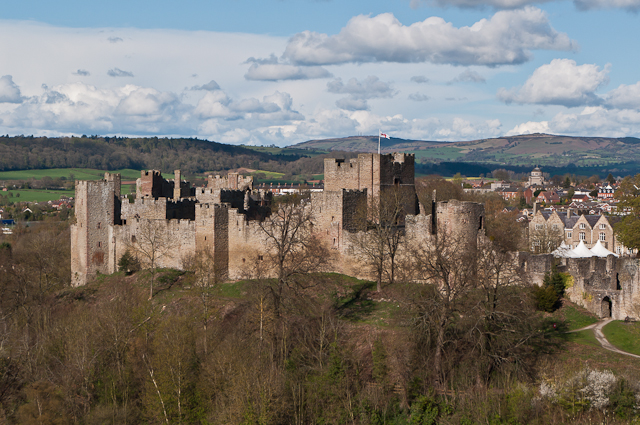
Wigmore Castle stands as a remarkable example of a Norman hill castle with a rich history deeply intertwined with the powerful Mortimer family and the turbulent politics of medieval England. Located in the village of Wigmore in Herefordshire, England, this castle was established shortly after the Norman Conquest, around 1070, by William FitzOsbern, a close ally of William the Conqueror and the first Earl of Hereford. Its strategic siting on a narrow ridge between the rivers Teme and Lugg allowed it to control the surrounding landscape, particularly the marshy ground to the north which served as a natural defensive barrier.
The castle's origins as a timber fortification typical of early Norman military architecture evolved significantly over the centuries. Initially constructed as a wooden motte and bailey, Wigmore Castle was transformed into a formidable stone fortress by the late 12th or early 13th century. This transition reflected broader trends in castle construction during the High Medieval period, where the need for durable and imposing defenses drove the replacement of timber with stone curtain walls and keeps. The surviving stone curtain walls along the east and south sides remain to their original height, showcasing the strength and craftsmanship of medieval masons.
Early history and mortimer family dominance
Following FitzOsbern's death in 1071, his son Roger de Breteuil inherited the castle but lost it after participating in the failed Revolt of the Earls in 1075. King William I then granted Wigmore Castle to Ranulph de Mortimer, initiating the Mortimer family's long-standing association with the site. Over the next centuries, Wigmore became the political and military heart of the Mortimer barony, which was elevated to the Earldom of March in 1328.
The castle played a significant role in the power struggles of the 12th and 13th centuries. In 1155, King Henry II laid siege to Wigmore after Hugh de Mortimer defied royal authority by refusing to surrender Bridgnorth Castle. The siege left visible earthworks that survive to this day, indicating the intensity of medieval warfare in the Welsh Marches. The Mortimers responded by reinforcing the castle's defenses, including the construction and enhancement of stone curtain walls and gatehouses during the late 13th and early 14th centuries.
Architectural evolution and military significance
The castle's architecture reflects successive phases of development under the Mortimers, particularly under Roger Mortimer (1231–1282), his son Edmund (1282–1304), and the influential Roger Mortimer, 1st Earl of March (1287–1330). These lords undertook extensive remodeling, including raising the curtain walls, redesigning the gatehouse, and adding substantial domestic buildings within the inner ward. The large lodging block provided more comfortable living quarters, signaling the castle's dual role as a military fortress and noble residence.
The castle's political importance peaked during Roger Mortimer, 1st Earl of March's lifetime, particularly after he became the de facto ruler of England alongside Queen Isabella following the deposition of King Edward II. In 1328, Wigmore hosted a grand tournament attended by King Edward III and prominent nobles, underscoring its status as a center of power and culture.
Decline and later history
After Roger Mortimer's execution in 1330, Wigmore briefly reverted to royal ownership before returning to the Mortimers in 1342. The family maintained control through the 14th century, but by the 15th century, the male Mortimer line ended, and the castle passed to Richard Plantagenet, Duke of York. Although records from 1425 describe the castle as derelict, archaeological evidence suggests continued building activity in the mid-15th century, possibly linked to Edward, Earl of March, later King Edward IV, who used Wigmore as a base during the Wars of the Roses.
By the 16th century, Wigmore Castle was managed by the Council of the Marches and served partly as a prison. However, it was already in decline, with records noting a ruined chapel containing documents from nearby Wigmore Abbey. Ownership changed hands several times, and during the English Civil War, Lady Brilliana Harley deliberately dismantled the castle's defenses to prevent Royalist use. Post-war, the castle fell into ruin and overgrowth.
Preservation and current status
Unlike many castles restored in the 19th and 20th centuries, Wigmore remained largely untouched due to continuous private ownership until English Heritage assumed guardianship in 1995. Conservation efforts have stabilized the ruins and improved public access, including interpretive panels installed in 2008 to enhance visitor understanding.
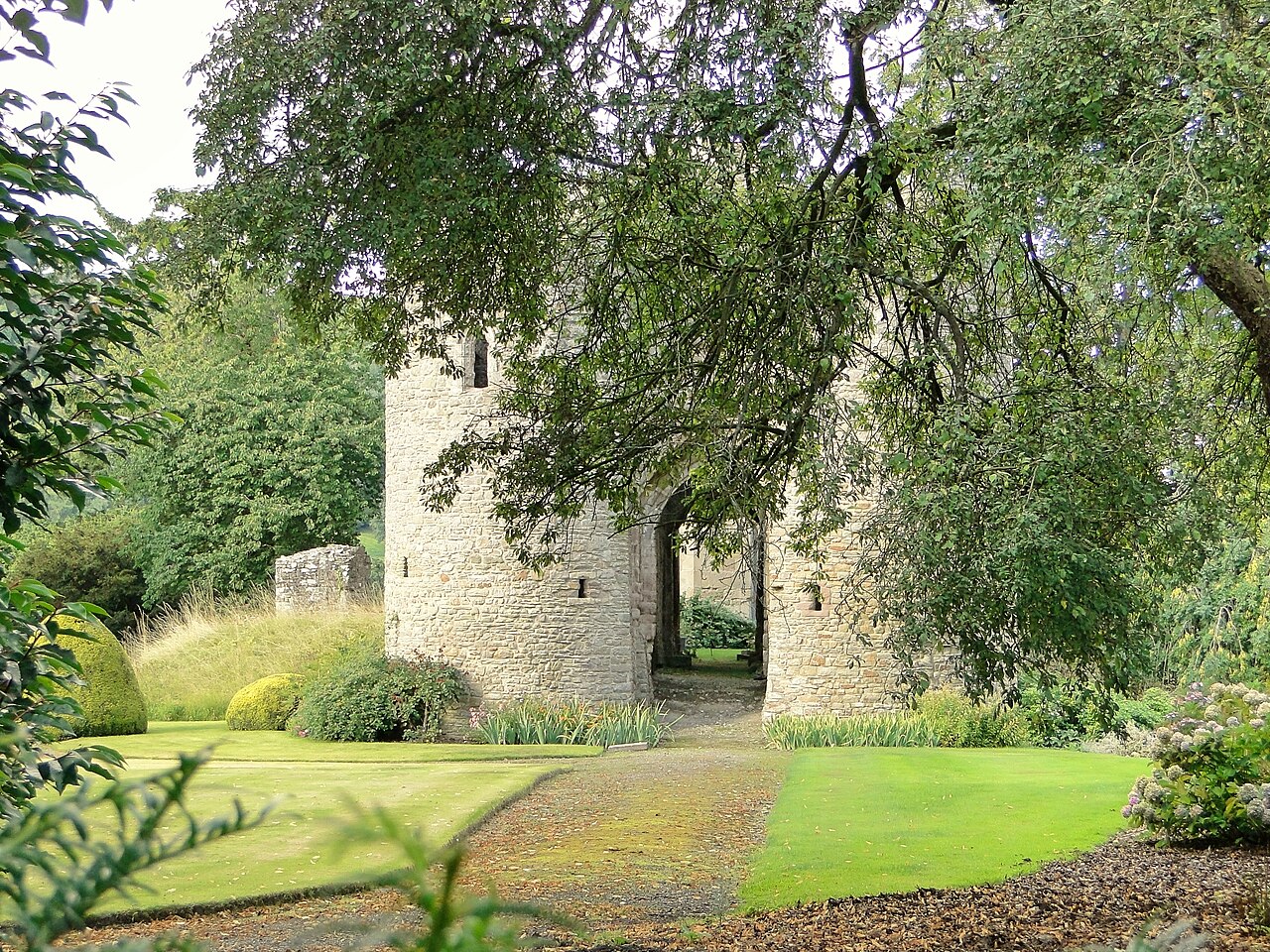
The castle's remains include deep defensive ditches acting as moats, a fortified mound originally topped by a wooden palisade later replaced by a stone keep, and extensive curtain walls that reflect its evolution from a timber fortification to a stone stronghold. Despite the overgrowth and scattered ruins, Wigmore Castle offers a tangible connection to the Norman conquest, medieval military architecture, and the complex history of the Welsh Marches.
Architectural features and layout
Wigmore Castle's layout is characteristic of a hill castle with natural defenses enhanced by man-made earthworks. The deep ditches cut across the ridge restricted attacker access, while the marshy terrain to the north provided additional protection. The curtain walls, particularly on the east and south sides, remain impressive examples of medieval military architecture, standing to their original height and demonstrating the castle's formidable defensive capabilities.
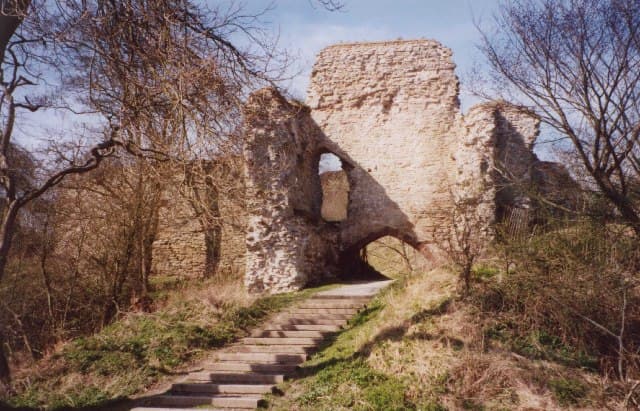
The gatehouse, remodeled in the late 13th and early 14th centuries, was a key defensive and ceremonial structure. It controlled access to the inner bailey and was fortified with strong walls and possibly portcullises and murder holes, typical of the period's military architecture. Inside the inner ward, the large lodging block and other domestic buildings provided accommodation and administrative functions, reflecting the castle's role as both a military fortress and noble residence.
Historical significance in the welsh marches
Wigmore Castle was more than a military stronghold; it was a political and administrative center in the volatile Welsh Marches. The Mortimers wielded significant power here, acting as border lords with quasi-regal authority. The castle's history is closely linked to major national events, including the Norman consolidation of England, the struggles between monarchy and nobility, and the dynastic conflicts of the Wars of the Roses.
Its continuous occupation and adaptation over several centuries illustrate the changing nature of castle architecture and feudal power. Today, Wigmore Castle remains an important heritage site, offering insights into medieval life, warfare, and governance in one of England's most historically contested regions.
Frequently asked questions (FAQ)
- How do I get to Wigmore Castle?
- Wigmore Castle is located in the village of Wigmore, Herefordshire, England. It is accessible by local roads and is best reached by car or taxi from nearby towns such as Leominster or Ludlow.
- What is the historical significance of Wigmore Castle?
- Wigmore Castle was a key stronghold for the Mortimer family and played a significant role in the politics of medieval England, especially during the Norman conquest and the Wars of the Roses.
- Can I visit the ruins of Wigmore Castle?
- Yes, the castle is open to the public. While it remains a ruin, conservation efforts by English Heritage have made the site accessible with interpretive panels to help visitors understand its history.
- When was Wigmore Castle built?
- Wigmore Castle was built around 1070 by William FitzOsbern, shortly after the Norman Conquest of England in 1066.
- What architectural features can I see at Wigmore Castle?
- Visitors can see the impressive stone curtain walls, deep defensive ditches, the gatehouse remains, and earthworks from medieval siege defenses, reflecting its evolution from timber to stone fortifications.
- Why is Wigmore Castle important in the Welsh Marches?
- Wigmore Castle served as the political and military center for the Mortimer family, who were powerful Marcher Lords controlling the border region between England and Wales.
Photo gallery

Information
Sources & official resources
Verify the information above using these authoritative references.
Loading map...
Visitor reviews
No reviews yet. Been here? Write the first review and help other travelers!
Write the first reviewVisited this castle? Share your experience
Your review helps other travelers and adds first-hand knowledge to our encyclopedia.