Werenwag Castle

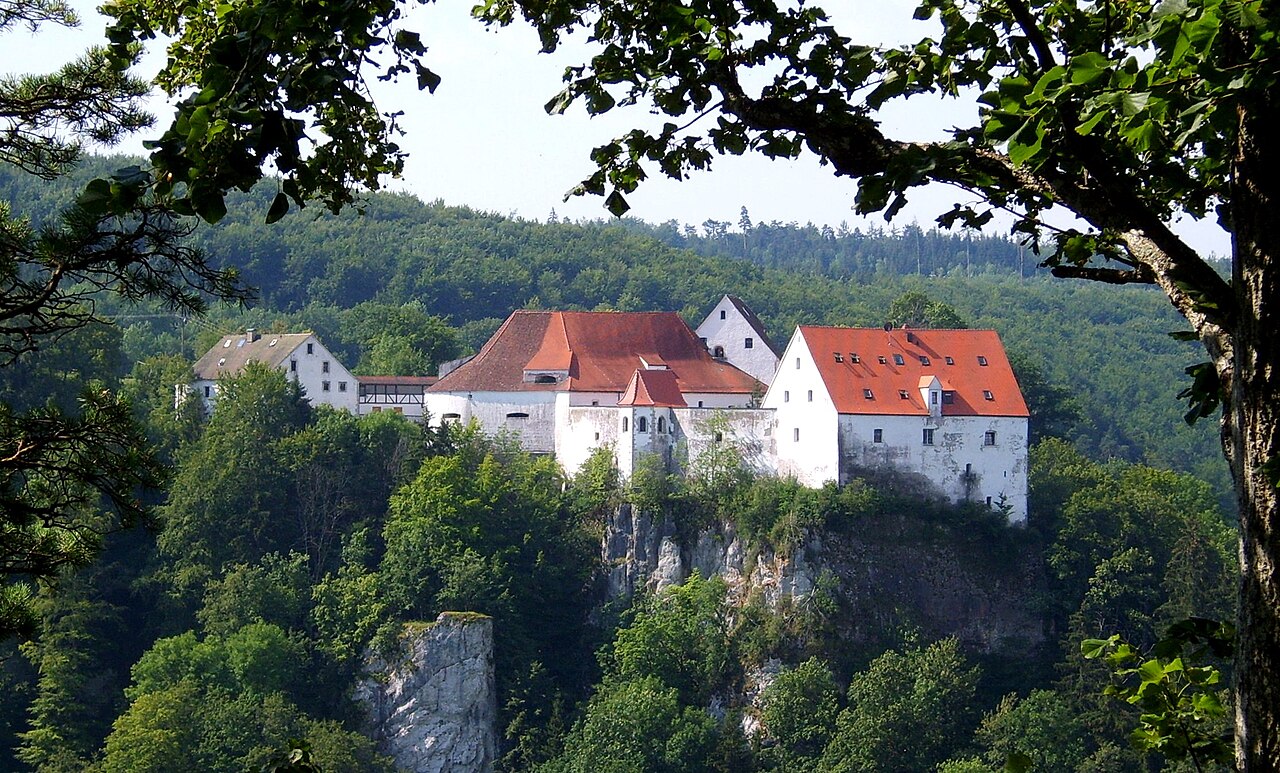
Werenwag Castle in Beuron, Germany
Beuron, Germany
High Medieval (11th–13th c.)
Well Preserved

Werenwag Castle stands as a significant medieval fortress located in Beuron, Germany. Constructed around the year 1100, it represents the architectural and historical developments of the high medieval period. The castle is situated on a strategic hilltop overlooking the surrounding landscape, a common feature of hill castles designed for defense and surveillance.

Historical background and ownership

The origins of Werenwag Castle trace back to the early 12th century, a time when the Holy Roman Empire saw the proliferation of fortified structures to secure territories and assert noble power. Throughout its history, the castle has been closely associated with the Fürstenberg family, one of the prominent noble families in the region. The family owned the castle from 1629 to 1721 and regained possession in 1830, maintaining ownership to the present day. This continuity of ownership has contributed to the castle's preservation and private use.

Architectural features and style

As a hill castle constructed in the high medieval period, Werenwag Castle exhibits typical defensive elements such as thick stone walls and elevated positioning. Although detailed architectural records are limited, the castle likely included a central keep or donjon, curtain walls, and possibly a moat or natural defensive barriers provided by the terrain. The castle's style predominantly reflects the functional and robust characteristics of medieval fortifications rather than elaborate decorative elements.

Structural layout

The castle's layout would have been designed to maximize defense and control over the surrounding area. The elevated location provided vantage points for early warning against approaching enemies. Internal structures such as living quarters, storage rooms, and halls would have been arranged within the protective walls, ensuring both security and habitation needs.

Role in regional history

Werenwag Castle played a role in the local power dynamics of southwestern Germany. Its ownership by the Fürstenberg family linked it to the broader political and social developments in the region. The castle served as a residence, administrative center, and military stronghold through various historical periods, adapting to the changing needs of its occupants.

Current condition and use

Today, Werenwag Castle remains in private use under the ownership of the Fürstenberg family. The castle is not generally open to the public, which has helped preserve its condition. While specific restoration efforts are not widely documented, the castle is considered well preserved given its age and continuous maintenance by its owners.

Visiting and accessibility

As a privately owned property, Werenwag Castle does not typically offer public tours or regular visiting hours. Visitors interested in the castle can view it from nearby vantage points in Beuron, appreciating its historical significance and picturesque setting within the Swabian Jura region. The area around the castle is known for natural beauty and hiking opportunities, making it a point of interest for history enthusiasts and nature lovers alike.

Frequently asked questions (FAQ)

How do I get to Werenwag Castle?
Werenwag Castle is located in Beuron, Germany, easily accessible by car or public transportation. If traveling by train, the nearest station is in Beuron, from where you can take a short taxi ride or enjoy a scenic walk to the castle.
What is the historical significance of Werenwag Castle?
Werenwag Castle dates back to the 13th century and has played a crucial role in the region's history, serving as a strategic fortress during various conflicts. Its well-preserved architecture and rich history make it a significant landmark for those interested in medieval history.
When was Werenwag Castle built?
Werenwag Castle was constructed in the early 1200s, primarily to serve as a defensive stronghold. Over the centuries, it has undergone several renovations, reflecting the architectural styles of different periods.
Can I visit Werenwag Castle year-round?
Yes, Werenwag Castle is open to visitors throughout the year, though certain areas may be restricted during the winter months. It’s advisable to check the official website for any seasonal changes or special events that may affect visiting hours.
Why is Werenwag Castle popular among tourists?
Werenwag Castle is popular for its stunning views of the Danube Valley and its impressive medieval architecture. Visitors are drawn to its historical ambiance and the chance to explore the beautiful surrounding nature.
Is it possible to take guided tours of Werenwag Castle?
Yes, guided tours are available for visitors who wish to learn more about the castle’s history and architecture. These tours provide in-depth insights and are often led by knowledgeable guides who share fascinating stories about the castle's past.
What are the opening hours for Werenwag Castle?
Werenwag Castle is typically open from 9 AM to 6 PM during the summer months and may have reduced hours in the winter. It's best to check the official website for the most current opening hours before your visit.
Are there any nearby attractions to Werenwag Castle?
Yes, nearby attractions include the picturesque Beuron Abbey and the scenic trails along the Danube River. These sites offer additional opportunities for exploration and enjoying the natural beauty of the area.
What are the ticket prices for Werenwag Castle?
Ticket prices for Werenwag Castle are generally affordable, with discounts available for students and seniors. It’s recommended to check the official website for the latest pricing information and any special offers or family packages.

Information

Hill Castle

Loading map...

Visitor reviews

No reviews yet. Been here? Write the first review and help other travelers!

Write the first review

Visited this castle? Share your experience

Your review helps other travelers and adds first-hand knowledge to our encyclopedia.
Write a review

(5/5)

0/2000 characters

Your review will be visible after admin approval

Nearby castles

2.4 km
Burg Altwildenstein — Germany castle

Burg Altwildenstein

Leibertingen, Germany

Burg Altwildenstein, also known as Vorderwilderstein, stands as a remarkable example of a high medieval spur castle constructed in the 12th century by the German nobility. Located near Leibertingen in the modern German state of Baden-Württemberg, this castle exemplifies the strategic use of natural topography in medieval fortification design. Perched atop a narrow rock pinnacle approximately 780 meters above sea level, the castle commands sweeping views over the Danube valley, underscoring its military and territorial significance during the Middle Ages. The origins of Burg Altwildenstein are closely associated with the free noble family von Wildenstein, who likely established it as their initial seat of power. While no contemporary documents precisely date the castle's founding, archaeological evidence such as pottery shards and masonry styles firmly place its construction in the early to mid-12th century. Historical records from between 1168 and 1174 mention two brothers from the Wildenstein lineage as lords of the area, suggesting their role in erecting this and other nearby cliff castles designed to control the rugged landscape. Architectural design and fortifications Burg Altwildenstein was ingeniously built on a 10-meter-high rocky spur at the end of a ridge, with natural defenses on its south and east sides formed by steep cliffs that functioned as a shield wall. The castle's compact layout was confined to a buildable area roughly 18 by 9 meters, reflecting the constraints imposed by the rugged terrain. Its primary structure was a substantial main residential tower, possibly serving as a keep, measuring approximately 14 meters in length and 8 meters in width, with an attached southern annex. The masonry exhibits a sophisticated combination of bossed ashlar blocks—stones intricately dressed with raised rectangular decorations—and rubble stone walls. Notably, seven courses of corner stones remain intact, including a prominently bossed corner stone facing south, highlighting the craftsmanship invested in the castle's construction. Evidence of a later remodeling phase is visible in the southern corner, where a newer stone facing overlays older masonry, indicating ongoing maintenance and adaptation during its occupation. Access to the castle was carefully controlled by a hollowed-out defensive ditch carved into the rock, separating it from the spur leading to the nearby Wildenstein fortress. A narrow rock ledge on the western edge provided the sole entrance, opening onto a terrace overlooking the steep valley drop to the northwest. This terrace likely hosted a lower or outer bailey, where supporting economic buildings and a small forecourt were situated. Although only fragments of retaining walls and a finely constructed ashlar wall remain today, these ruins hint at the castle's once-functional ancillary structures. Additional architectural features include a beam socket carved into the rock at the northeastern edge of the outer bailey, suggesting structural connections to the core castle. On the east side of the main tower, a coarse rubble-stone retaining wall approximately four meters tall and eight meters long provides essential support on the sloping terrain. The northwest corner of the keep reveals three courses of larger bossed stones with shallow bosses and finely cut edges, demonstrating the builders' attention to detail and defensive strength. Near the tower, a shallow elongated hollow carved into the rock may have housed a cellar or cistern. Traces of mortar mixed with brick dust found in the surrounding debris suggest the presence of waterproof masonry, likely intended for water storage, a critical feature for sustaining the castle during sieges or dry periods. These remains collectively illustrate a small but well-fortified medieval castle, expertly adapted to its steep and commanding landscape. Historical context and ownership changes Throughout the 13th century, Burg Altwildenstein underwent significant modifications, including an update to its main residential tower to enhance its defensive and residential qualities. Concurrently, a new fortress called Wildenstein was constructed nearby, eventually becoming the dominant stronghold in the region. This development shifted the strategic importance away from Burg Altwildenstein. In 1263, ownership of Burg Altwildenstein and its surrounding estates passed through marriage to Anselm IV of Justingen. Following this transfer, the castle was gradually abandoned as a residence. Archaeological evidence indicates that the castle fell out of use by around 1300 or possibly earlier, marking the end of its active role in regional defense and administration. Location and strategic significance Situated near the town of Leibertingen in the Swabian Jura region of southern Germany, Burg Altwildenstein occupies a commanding position on the edge of the Danube valley. The castle's location atop a high spur allowed it to control important medieval trade routes and monitor movement through the valley. Its proximity to other castles on steep cliffs in the area reflects a network of fortifications designed to secure territorial claims and provide mutual defense. The castle's natural defenses, including the steep cliffs on multiple sides and the hollowed defensive ditch, exemplify the medieval strategic use of terrain to compensate for limited manpower and resources. This approach was typical of hill castles in the region during the high medieval period, emphasizing strongholds that leveraged elevation and rugged landscapes for protection. Preservation and archaeological significance Today, Burg Altwildenstein remains a partially preserved ruin, with key structural elements such as the main tower's masonry, retaining walls, and defensive ditch still visible. The site offers valuable insights into 12th-century castle construction techniques, noble residence layouts, and medieval defensive strategies. Archaeological investigations have uncovered pottery fragments and masonry details that help date the castle and understand its phases of use and abandonment. The presence of waterproof mortar in the cistern area highlights the builders' technical knowledge, while the combination of bossed ashlar and rubble stonework reflects regional architectural styles of the period. As a cultural heritage site, Burg Altwildenstein attracts historians, archaeologists, and castle enthusiasts interested in the evolution of medieval fortifications in Germany. Its dramatic cliffside setting and well-preserved masonry make it a compelling example of a high medieval hill castle adapted to challenging terrain.

High Medieval (11th–13th c.)
Details
6.2 km

Bronnen Castle

Buchheim, Germany

Bronnen Castle stands prominently on a steep rock overlooking the Danube River in Buchheim, Germany. This high medieval hill castle was originally constructed in the 12th century, approximately between 1100 and 1150. Its strategic location on the rocky outcrop provided natural defenses and commanding views of the surrounding landscape, which was typical of castles built during this period to establish territorial control and surveillance. Medieval origins and strategic importance The castle's initial purpose was likely defensive, serving as a stronghold for local lords overseeing the Danube trade routes and regional power dynamics. The steep rock foundation made it difficult for invaders to mount successful assaults, enhancing its military value. Its construction during the high medieval period situates it among many fortifications built to secure territories amid the fragmented political landscape of the Holy Roman Empire. Architectural features and transformation While much of the original medieval structure has decayed over the centuries, significant remnants of the castle's stonework remain visible, indicating robust stone walls and defensive elements typical of the era. In the 18th century, the castle underwent a notable transformation when it was converted into a hunting lodge. This adaptation reflects changing uses of such fortifications as military threats diminished and aristocratic leisure pursuits became more prominent. The 1755 chapel As part of the 18th-century conversion, a new chapel was constructed in 1755, adding a religious and residential function to the site. This chapel represents the Baroque period influence on the castle complex, contrasting with the original medieval architecture. The addition of the chapel signifies the castle's shift from a purely defensive structure to a multifunctional estate. Current condition and accessibility Today, Bronnen Castle is in a partially preserved state, with visible ruins that hint at its former grandeur. The site is not open to the public, limiting direct access for visitors and researchers. Its preservation status reflects the challenges of maintaining such historic structures, especially those situated in difficult terrain. Historical context and significance Bronnen Castle's history encapsulates the evolution of medieval fortifications in southern Germany. Its initial role as a hill castle guarding the Danube corridor illustrates the military and economic importance of river routes during the Middle Ages. The later adaptation into a hunting lodge with a chapel highlights shifts in aristocratic lifestyle and architectural trends from the medieval to the early modern period. Despite its limited accessibility, Bronnen Castle remains a notable example of high medieval defensive architecture and the adaptive reuse of historic castles in Germany. Its commanding position over the Danube continues to mark it as a landmark in the region's cultural landscape.

High Medieval (11th–13th c.)
Details
8.9 km

Kallenberg Castle

Buchheim, Germany

Kallenberg Castle, located near Buchheim, Germany, is a notable example of a high medieval fortress dating back to around 1200 AD. This castle, now in a state of ruins, was originally constructed during the High Middle Ages, a period characterized by the widespread development of stone fortifications across Europe. Its strategic position overlooking the Danube valley highlights its historical role in controlling and monitoring the important trade and military routes along this major river.The castle's remains today primarily consist of a well-preserved tower, which stands as the most intact part of the structure. This tower would have served as a stronghold and lookout point, providing expansive views over the surrounding landscape. The elevated position of Kallenberg Castle allowed its occupants to observe approaching visitors or potential threats from a considerable distance, a typical defensive feature of hill castles from this era.Historical context and constructionThe exact origins of Kallenberg Castle are somewhat obscured by time, but archaeological and historical evidence places its construction around the early 13th century, circa 1200. This timeframe situates it firmly within the High Medieval period, a time when castles were evolving from wooden motte-and-bailey designs to more durable stone fortifications. The castle likely served as a local seat of power and defense for regional nobility or knights tasked with securing the Danube corridor.Interestingly, the site near Kallenberg Castle also includes the remains of a cave castle approximately 100 meters to the east. Cave castles are rare and typically integrate natural rock formations into their defensive structures. The presence of this cave castle suggests a longer history of fortification at this location, potentially even predating the medieval castle. Some archaeological indications point to Celtic foundations beneath the site, which would date human activity here back to the Iron Age, well before the medieval period.Architectural featuresThe surviving tower of Kallenberg Castle is the most significant architectural feature visible today. Constructed of local stone, it exemplifies typical medieval military architecture with thick walls designed to withstand sieges and attacks. The tower's height and narrow windows would have made it difficult for attackers to breach, while enabling defenders to use archery and other projectile weapons effectively.While much of the rest of the castle has fallen into ruin, the layout likely included a courtyard surrounded by defensive walls, battlements, and possibly additional towers or living quarters. The castle's elevated hilltop location classifies it as a hill castle, a common strategic choice in medieval fortification to maximize natural defenses.The cave castle remainsThe nearby cave castle remains are a fascinating feature of the site. Cave castles are built into natural rock formations, utilizing caves as integral parts of their defensive and living spaces. These structures are rare and often difficult to date precisely, but their existence near Kallenberg Castle adds a layer of historical depth, suggesting continuous or repeated use of this strategic location over many centuries.Decline and current conditionKallenberg Castle was abandoned and left to decay in the 19th century. Over time, natural weathering and lack of maintenance led to the deterioration of most of the castle's structures. Today, it stands as a ruined fortress, with only the tower remaining substantially intact.Despite its ruined state, the castle remains a popular destination for visitors interested in medieval history and architecture. The site offers impressive views over the Danube valley, making it a scenic spot for hikers and history enthusiasts alike. The ruins provide a tangible connection to the medieval past of the region and the strategic importance of river valleys in European history.Visiting Kallenberg CastleVisitors to Kallenberg Castle can explore the remains of the tower and enjoy panoramic views of the surrounding landscape. The proximity of the cave castle remains offers an additional point of interest, inviting exploration of this unique form of medieval fortification.While the castle is in ruins, it is accessible to the public, and its location near Buchheim makes it a convenient destination for those exploring the historical sites of the Danube region. The site is an excellent example of medieval military architecture adapted to the natural terrain and offers insight into the defensive strategies employed during the High Middle Ages.

High Medieval (11th–13th c.)
Details

