Wenecja
Wenecja Castle is a historically significant late medieval hill castle located on an isthmus between the lakes Weneckie and Biskupińskie in Poland. Constructed around 1380 by Mikołaj Nałęcz of Chomiąża, a notable castellan and judge known as the "Devil of Wenecja," the castle was strategically positioned on a small elevation amid marshy meadows. Its location between three lakes gave it a natural defensive advantage, inspiring its name, which references the famous city of Venice due to the watery surroundings.
Architectural design and defensive features
The castle was built on a square plan measuring 33 meters per side, surrounded by a brick curtain wall resting on sturdy stone foundations reinforced with buttresses. A prominent feature was the rectangular defensive tower at the northeast corner, approximately 10 meters wide, which served both residential and military functions. Along the western wall ran the main residential building, providing living quarters within the fortified perimeter. The southern side housed the main gate leading into the courtyard, preceded by a fortified barbican projecting beyond the main wall line.
Surrounding the entire complex was a moat reinforced with timber, enhancing the castle's defensive capabilities against siege warfare. The castle's design reflects typical Gothic military architecture of the period, combining robust masonry with strategic placement of towers and fortified entrances.
Historical context and ownership transitions
Wenecja Castle's first major test of fortification occurred in 1395 during a violent feud between the powerful Nałęcz and Grzymalit families, resulting in partial destruction. In the early 15th century, ownership passed to Mikołaj of Warzymowo, who sold it in 1420 to Archbishop Mikołaj Trąba of Gniezno. Under ecclesiastical control, the castle underwent significant expansion and modernization to serve as the primary residence of the archbishops of the Pałuki region.
New buildings were constructed along the northern wall, and the entrance defenses were substantially enhanced with an expanded barbican. A second, outer defensive wall was added, featuring cylindrical bastions designed for artillery use, reflecting advancements in military technology and the increasing importance of gunpowder weapons. The castle reportedly functioned as a prison for opponents of the Church, particularly those sympathetic to the Hussite movement.
Decline and archaeological significance
Despite its strategic enhancements, Wenecja Castle's military importance waned following the Second Peace of Thorn in 1466, which altered regional power dynamics. By the late 15th century, the castle was abandoned and dismantled, with its building materials repurposed for the construction of a new archiepiscopal residence in nearby Żnin.
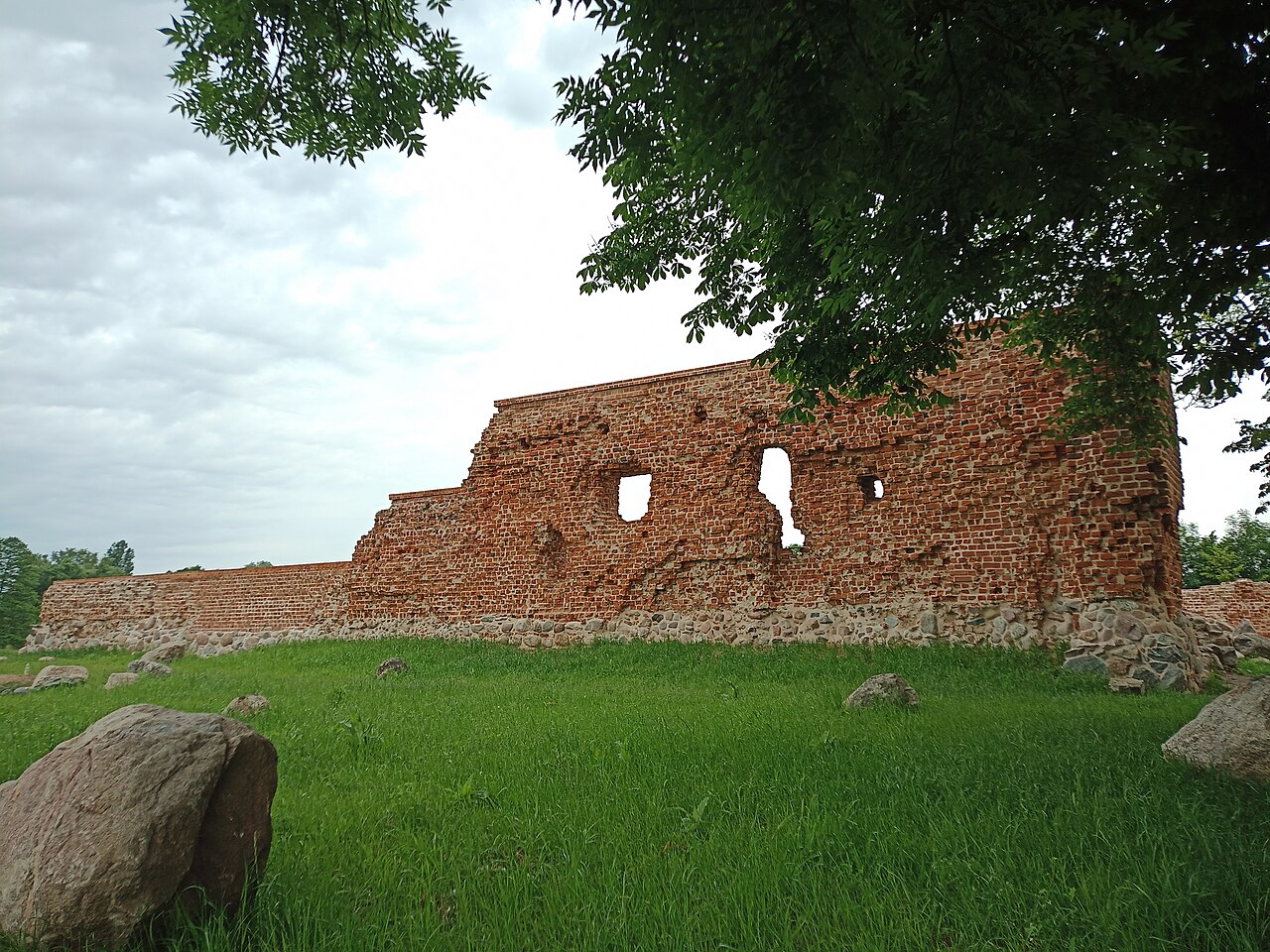
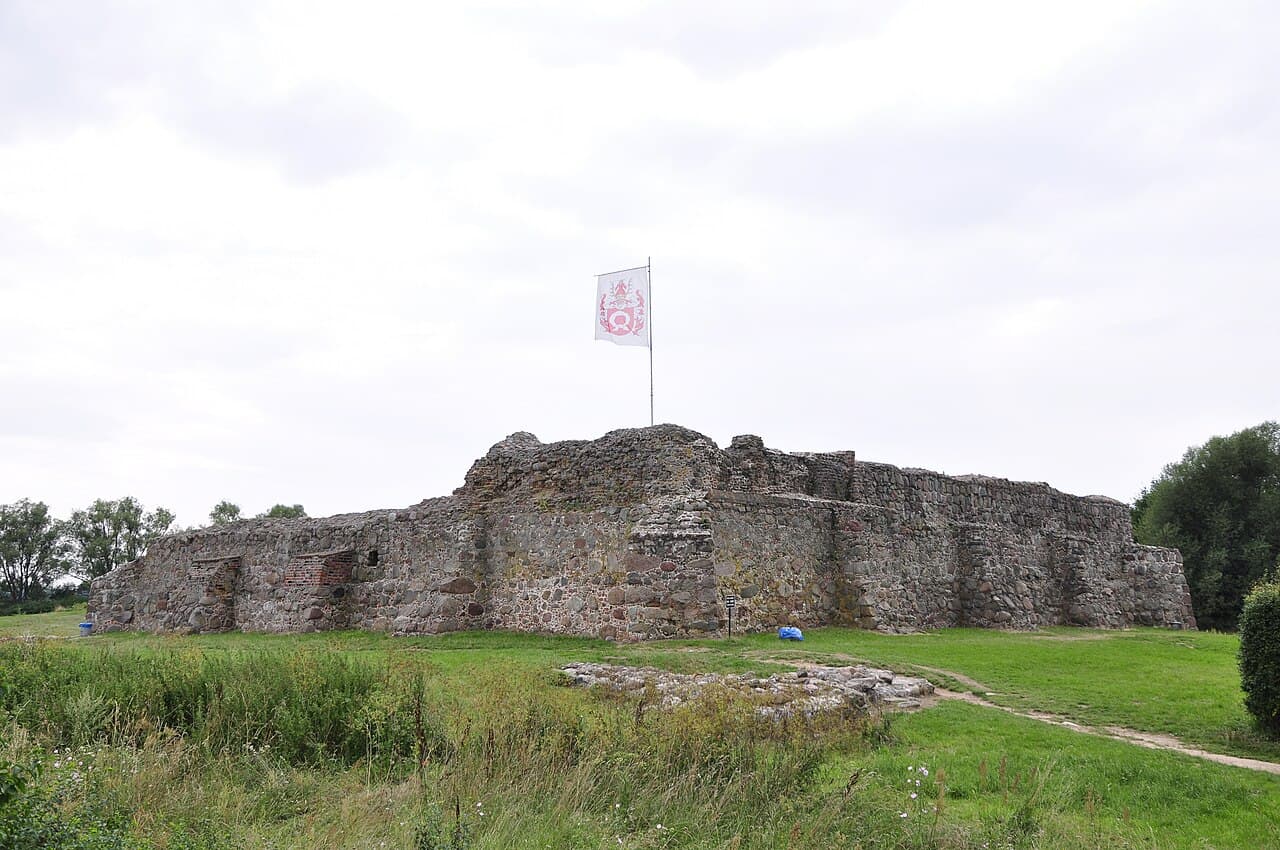
Interest in the ruins revived in the 19th century, but it was only after World War II that archaeological excavations thoroughly documented the site's layout and developmental phases. Today, Wenecja Castle is preserved as a permanent ruin, with surviving elements including the high brick walls of the barbican, remains of the tower, and fragments of the outer defensive wall with its round bastions.
Architectural remnants and visitor experience
The ruins offer a clear glimpse into Gothic military architecture, with the combination of stone and brick construction typical of the era. The northeastern tower remains a focal point, demonstrating the dual role of towers as lookout posts and living quarters. Visitors can explore the fortified entrance and the outlines of the courtyard buildings, gaining insight into the castle's functional layout.
Wenecja Castle's scenic location among lakes and marshland enhances its appeal, complemented by nearby attractions such as the Narrow-Gauge Railway Museum and the reconstructed Iron Age settlement at Biskupin. Artifacts recovered during excavations are housed in the Jan Kasprowicz Museum's Archaeological Department in Inowrocław, preserving the cultural heritage of this medieval stronghold.
Historical figures and cultural legacy
Mikołaj Nałęcz of Chomiąża, the castle's founder, remains a controversial figure remembered for his harsh judicial rulings and military actions, which earned him the nickname "Devil of Wenecja." His legacy is intertwined with the castle's turbulent history, including its role during the civil conflicts of the late 14th century.
The castle's later use by the archbishops of Gniezno reflects the shifting political and religious landscape of medieval Poland, where fortresses served not only military but also administrative and ecclesiastical functions. Wenecja Castle thus embodies the complex interplay of nobility, church authority, and regional power struggles in the region.
Frequently asked questions (FAQ)
- How do I get to Wenecja Castle?
- Wenecja Castle is located in the picturesque town of Wenecja, Poland. You can reach it by car or public transport from nearby cities such as Bydgoszcz or Toruń. There are local bus services that connect Wenecja to these major hubs, making it accessible for visitors.
- What is the historical significance of Wenecja Castle?
- Wenecja Castle dates back to the 14th century and played a crucial role in the defense strategies of the region. It was originally built by the Teutonic Knights and has witnessed numerous historical events, contributing to its rich historical tapestry. Today, it stands as a symbol of local heritage and attracts history enthusiasts.
- When was Wenecja Castle built?
- Construction of Wenecja Castle began in the early 14th century, specifically around 1330, and it was completed in the latter part of that century. The castle was designed to fortify the area against invasions and has undergone various renovations throughout its history. This long-standing structure showcases the medieval architecture of the time.
- Can I visit Wenecja Castle year-round?
- Yes, Wenecja Castle is open to visitors throughout the year, although specific opening hours may vary by season. It's advisable to check the official website or contact the visitor center for the most current information regarding hours and any potential closures. This ensures a smooth visit and helps you plan your trip effectively.
- Why is Wenecja Castle considered an architectural gem?
- Wenecja Castle is renowned for its impressive Gothic architecture, characterized by robust stone walls and intricate detailing. The castle's design reflects the medieval military architecture of the period, with strategic features that highlight its defensive purpose. Visitors admire not only its historical importance but also its aesthetic appeal.
- Is it possible to take guided tours of Wenecja Castle?
- Yes, guided tours of Wenecja Castle are available, offering visitors in-depth insights into its history and architecture. These tours are typically led by knowledgeable guides who provide engaging narratives and interesting anecdotes. It's recommended to book in advance, especially during peak tourist seasons.
- What are the ticket prices for Wenecja Castle?
- Ticket prices for Wenecja Castle are quite reasonable, usually ranging from 10 to 20 PLN for adults, with discounts available for students and seniors. Children under a certain age may enter for free, making it an affordable outing for families. Always check the official site for the latest pricing details before your visit.
- What is the best time to visit Wenecja Castle?
- The best time to visit Wenecja Castle is during the spring and early autumn months when the weather is mild and pleasant for exploring. This period often sees fewer crowds compared to the peak summer season, allowing for a more relaxed experience. Additionally, the beautiful surrounding landscape is particularly stunning during these seasons.
- Are there nearby attractions to visit when at Wenecja Castle?
- Yes, there are several nearby attractions, including the charming town of Wenecja itself, with its quaint shops and local eateries. Additionally, visitors can explore the scenic landscapes of the surrounding countryside, which are perfect for hiking and nature walks. Other historical sites in the region are also worth a visit for those interested in local heritage.
Photo gallery

Information
Loading map...
Visitor reviews
No reviews yet. Been here? Write the first review and help other travelers!
Write the first reviewVisited this castle? Share your experience
Your review helps other travelers and adds first-hand knowledge to our encyclopedia.