Weissenau Castle
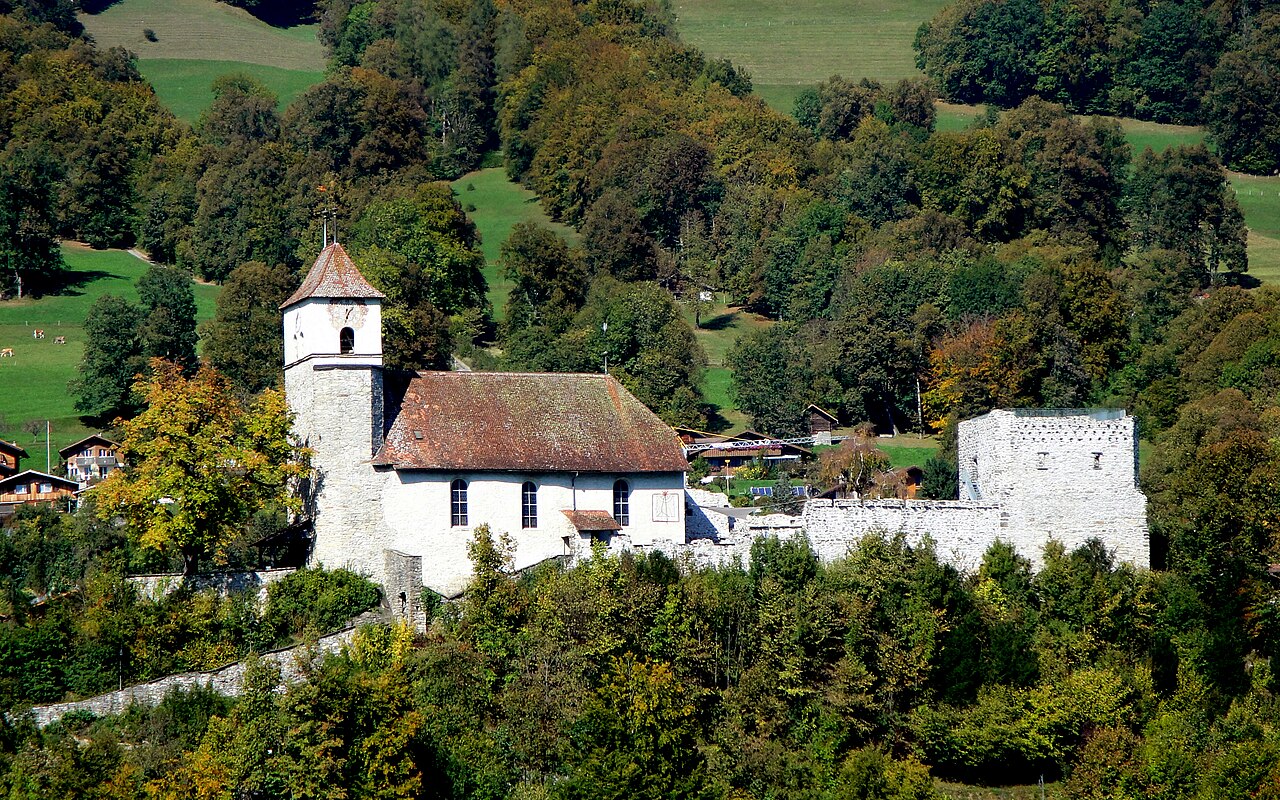
Weissenau Castle, located in Unterseen, Switzerland, is a significant medieval fortress with origins dating back to the 13th century. First mentioned in historic records as castrum Wissenowe in 1298, the castle stands on what was originally an island at the confluence of the Aare River and Lake Thun. Over centuries, natural silting connected the island to the mainland, altering the castle's strategic setting but not diminishing its historical importance.
The castle's origins are somewhat debated, with possibilities including construction by the Lords of Rotenfluh (Unspunnen) or the Freiherr of Weissenau family, who may have established it as the center of their estates. Its location was strategically chosen to control vital trade routes through the Alpine region, leveraging its position at a key waterway junction.
Historic significance and ownership changes
Weissenau Castle played a notable role during the High Medieval period as a noble residence and regional stronghold. By the early 14th century, the castle was closely tied to the local power struggles involving the rising influence of the city of Bern. Around 1334, the Freiherr of Weissenau joined other local nobles in opposition to Bern's territorial expansion. Following their defeat, the Weissenau family was compelled to sell the castle and the nearby market town of Widen to Interlaken Abbey to settle debts.
Under the Abbey's control, the economic landscape shifted when the weekly markets and annual fairs were moved from Widen to the village of Aarmühle (modern-day Interlaken) in 1365. This relocation led to Widen's decline, diminishing the castle's immediate economic influence.
The Protestant Reformation brought further change in 1528 when the city of Bern adopted the new faith and imposed it on the Bernese Oberland. The Abbey and its territories, including Weissenau Castle and Widen, rebelled unsuccessfully. Subsequently, Bern secularized the Abbey's lands and annexed them, incorporating the castle into the Bernese bailiwick of Interlaken.
Architectural features and castle layout
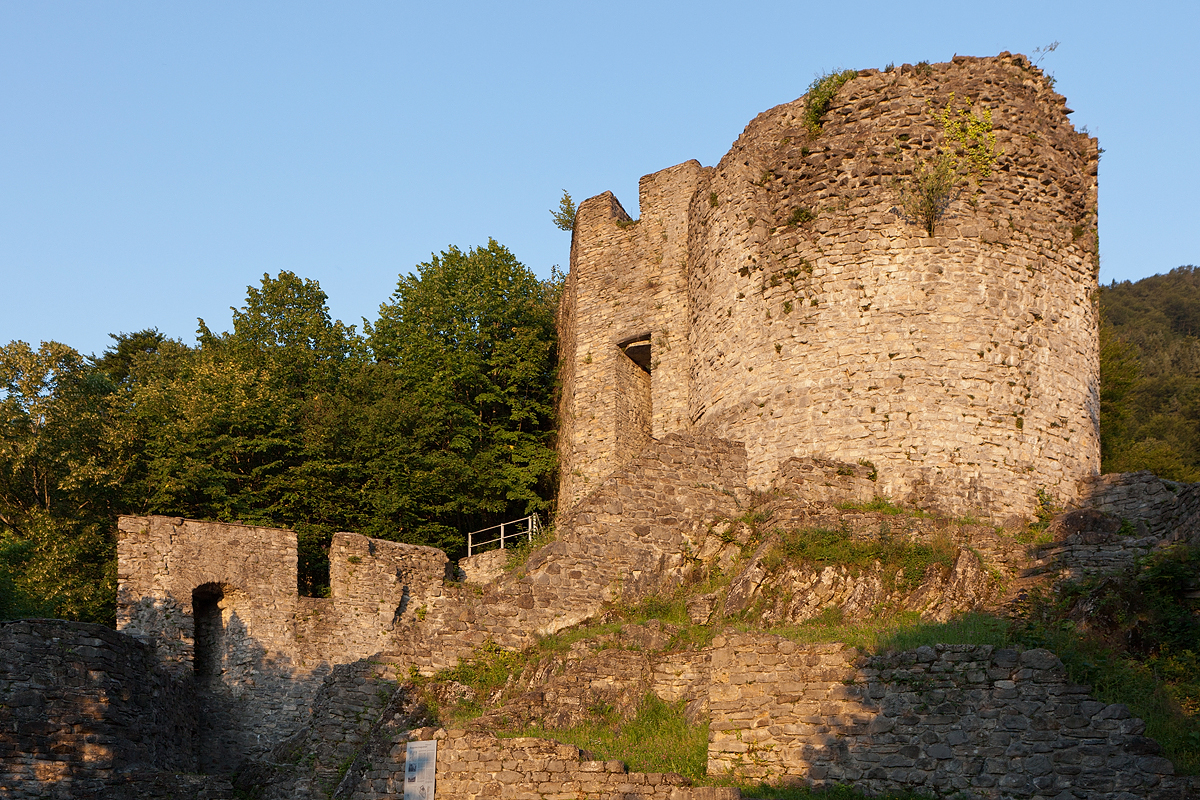
The castle exemplifies a hill castle adapted to a lowland, water-bound setting. Its ruins include remnants of the castle residence, a defensive tower, portions of the main building, and fragments of the curtain wall. These structures reflect the typical medieval fortress design, combining residential comfort with defensive capabilities.
The surviving tower served as both a lookout and a defensive stronghold. Built with local stone and traditional masonry techniques, it remains partially standing and has been incorporated into modern conservation efforts. Visitors can climb 71 steps to reach an observation platform 14.5 meters above ground, offering panoramic views over the Aare River, Lake Thun, and the nearby Niesen mountain.
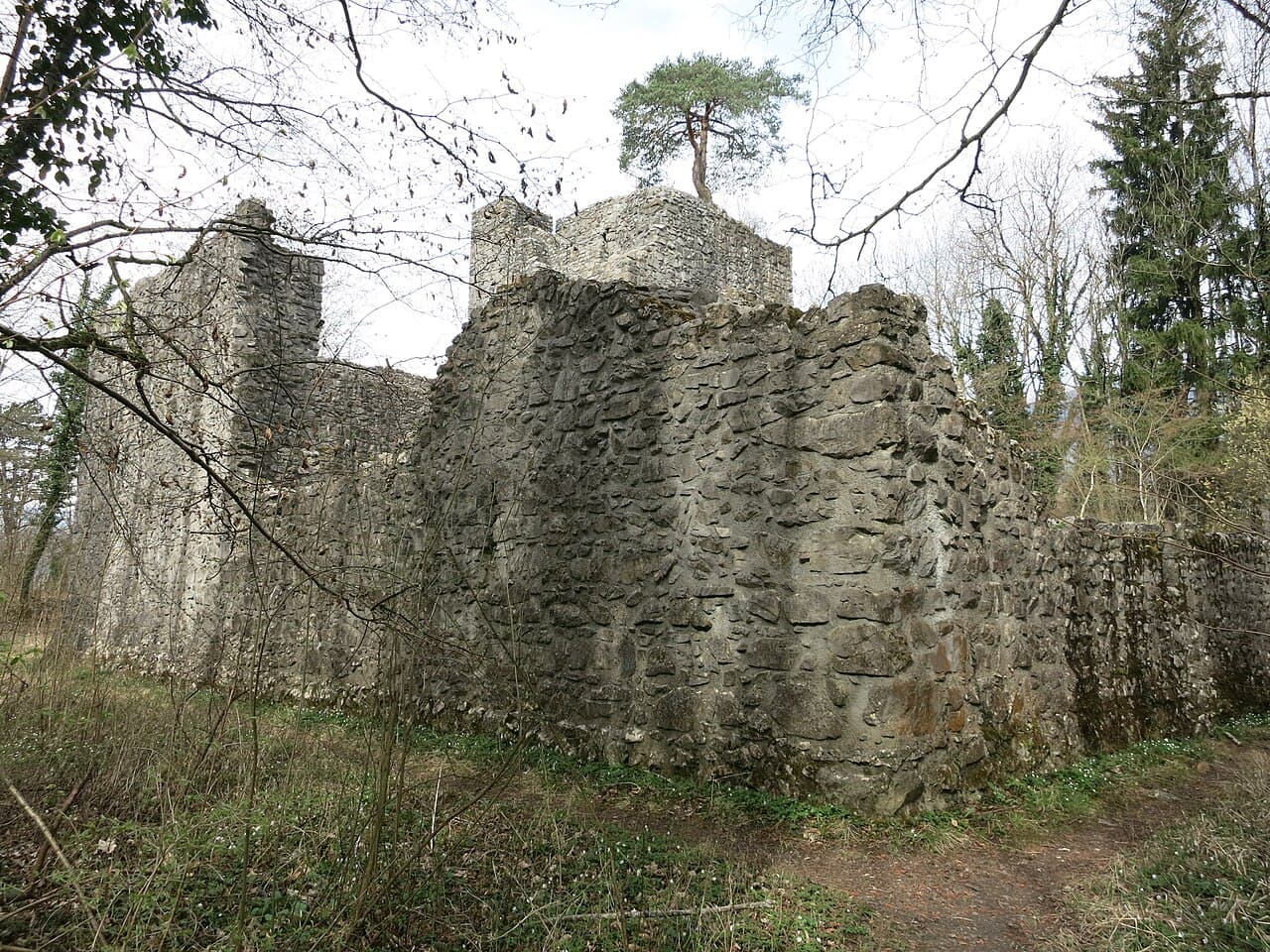
Archaeological investigations have revealed the layout of the residential quarters connected to the defensive structures. The curtain walls that once enclosed the castle survive in fragments, outlining the perimeter and defensive strategies employed during the late medieval period.
Decline, preservation, and current status
After serving as a prison into the 16th century, Weissenau Castle gradually fell into disrepair and eventual collapse. Although plans to restore the castle were proposed in 1655 and again in 1700, these were never realized. The ruins today stand as a testament to the castle's historical and architectural significance.
The site is now part of the Neuhaus-Weissenau nature reserve, which preserves both its natural environment and cultural heritage. Conservation efforts in the late 20th century, notably between 1988 and 1989, stabilized the remaining structures to prevent further deterioration. The castle is recognized as one of the largest and best-preserved lowland castles in the Bernese Oberland.
Visitors to Weissenau Castle can explore the ruins, appreciate the medieval architecture, and enjoy the scenic views that highlight the castle's strategic position controlling trade and transportation routes in the region. The preserved elements provide valuable insight into the design and function of a High Medieval hill castle adapted to a waterway setting.
Weissenau castle in the context of bernese history
The castle's history is deeply intertwined with the political and religious shifts in the Bernese Oberland. Its transfer from noble hands to ecclesiastical ownership and eventually to the secular authority of Bern reflects broader regional transformations during the Middle Ages and Reformation.
The castle's decline mirrors the changing economic and political landscape, where fortified noble residences gave way to centralized urban powers and religious upheaval. Despite its ruinous state, Weissenau Castle remains a key cultural monument, illustrating the complex history of feudal power, trade control, and religious conflict in Switzerland.
Access and visitor information
Today, Weissenau Castle is accessible to the public as a historic ruin within a protected nature reserve. Visitors can climb the tower for expansive views and explore the remaining castle structures. The site offers a unique opportunity to connect with medieval history amid the scenic beauty of the Bernese Oberland.
Frequently asked questions (FAQ)
- How do I get to Weissenau Castle in Unterseen?
- Weissenau Castle is located in Unterseen, near Interlaken, Switzerland. It is accessible by local roads and walking paths from the town center. Visitors can reach the castle ruins on foot, enjoying scenic views along the way.
- What is the historical significance of Weissenau Castle?
- Weissenau Castle was a strategic medieval fortress controlling trade routes at the confluence of the Aare River and Lake Thun. It played a key role in regional power struggles and was associated with noble families and Interlaken Abbey.
- Can I climb the tower at Weissenau Castle?
- Yes, visitors can climb 71 steps to an observation platform 14.5 meters above ground. The tower offers panoramic views of the Aare River, Lake Thun, and the surrounding mountains.
- When was Weissenau Castle built?
- The castle was built in the 13th century and first mentioned in records in 1298. Its construction reflects typical High Medieval hill castle architecture.
- Is Weissenau Castle suitable for families and casual visitors?
- Yes, the castle ruins are accessible and provide an engaging historical experience for visitors of all ages. The site is safe for families, though some areas may require careful walking due to uneven terrain.
Photo gallery

Information
Sources & official resources
Verify the information above using these authoritative references.
Loading map...
Visitor reviews
No reviews yet. Been here? Write the first review and help other travelers!
Write the first reviewVisited this castle? Share your experience
Your review helps other travelers and adds first-hand knowledge to our encyclopedia.