Unspunnen Castle
Unspunnen Castle stands as a significant historical monument in the municipality of Wilderswil, overlooking the picturesque town of Interlaken in Switzerland. Constructed likely in the early 12th century, this hill castle played a crucial role as a fortified seat of power throughout the High Medieval period, particularly during the 13th and 14th centuries. Though now in ruins, the castle's strategic location and rich history make it a notable landmark in the Bernese Oberland region.
The castle's origins remain somewhat obscure, as the identity of its original builders or baronial family is not definitively recorded. However, historical records first mention the castle in 1232 under the name Uspunnun. It served as the administrative center of a fiefdom governed by various noble families, including the Barons of Wädenswil, Eschenbach, and Weissenburg, who controlled the surrounding villages and lands. Alongside the nearby Rotenfluh cave castle at Tschingelsatz, Unspunnen Castle was strategically positioned to guard the crucial Lütschinenbrücke bridge near Gsteig, a vital passage through the northern Alpine valleys.
Early history and feudal significance
By the early 13th century, Unspunnen had become a focal point of regional power. In 1224, control passed to Burkart of Thun through marriage to the family of the Baron of Wädenswil, illustrating the castle's role in dynastic alliances. Around 1280, the estate was divided, with the Baron of Eschenbach receiving Unspunnen and its villages, while the Baron of Weissenburg took possession of Rotenfluh and other territories. This division reflected the complex feudal landscape of the Bernese Oberland during the High Medieval era.
Habsburg claims and local conflicts
The political landscape shifted dramatically after the assassination of King Albert I of Germany in 1308 by his nephew John. The powerful Habsburg dynasty of Austria claimed the Eschenbach lands, including Unspunnen Castle. In 1318, these lands were pledged to the Baron of Weissenburg as collateral. This period was marked by social unrest, exemplified by the 1332 peasant uprising against Johann of Weissenburg. The revolt was suppressed, and the captured leaders were imprisoned within Unspunnen Castle, underscoring the castle's function as a center of authority and control.
Bernese conquest and shifting ownership
In 1334, the expanding city-state of Bern invaded the Oberhasli region and laid siege to Unspunnen Castle. The successful siege resulted in the freeing of imprisoned peasants, although the barons retained nominal ownership. The castle's strategic importance was further highlighted in the aftermath of the Battle of Laupen in 1339, when Bern forced the barons to pledge Unspunnen and Rotenfluh castles as part of the peace settlement.
The Habsburgs redeemed this pledge in 1342 and subsequently granted the castle and lands to their followers, including the lords of Interlaken, Hallwyl, and Kyburg. The political tug-of-war continued during the Battle of Sempach in 1386, when Bernese forces occupied the area and, by 1397, paid off the mortgage on the castle. In 1398, ownership transferred to prominent Bernese families, the von Seftigen and von Scharnachtal, marking a shift from feudal lords to urban patricians.
Bernese administration and decline
Bern reacquired the castle and lands from the heirs of these families in 1418 and again in 1515, eventually placing Unspunnen directly under the city's authority in 1529. This transition reflected the growing centralization of power by Bern in the region. By 1762, administrative control shifted to the town of Interlaken, and the castle was no longer maintained, leading to its gradual deterioration into ruins.
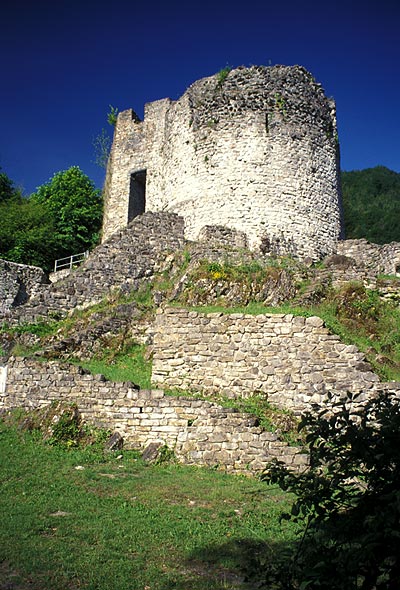
Photo by Roland Zumbühl • CC BY-SA 3.0
Architectural features and current remains
Unspunnen Castle was built as a hilltop fortress, typical of medieval defensive architecture in the Alpine region. Its elevated position provided commanding views over the surrounding valleys and the key Lütschinenbrücke bridge, enabling control over important trade and travel routes. Although detailed architectural plans or descriptions are scarce, the castle likely featured typical elements such as stone curtain walls, battlements, and possibly a keep or donjon serving as the lord's residence and last line of defense.
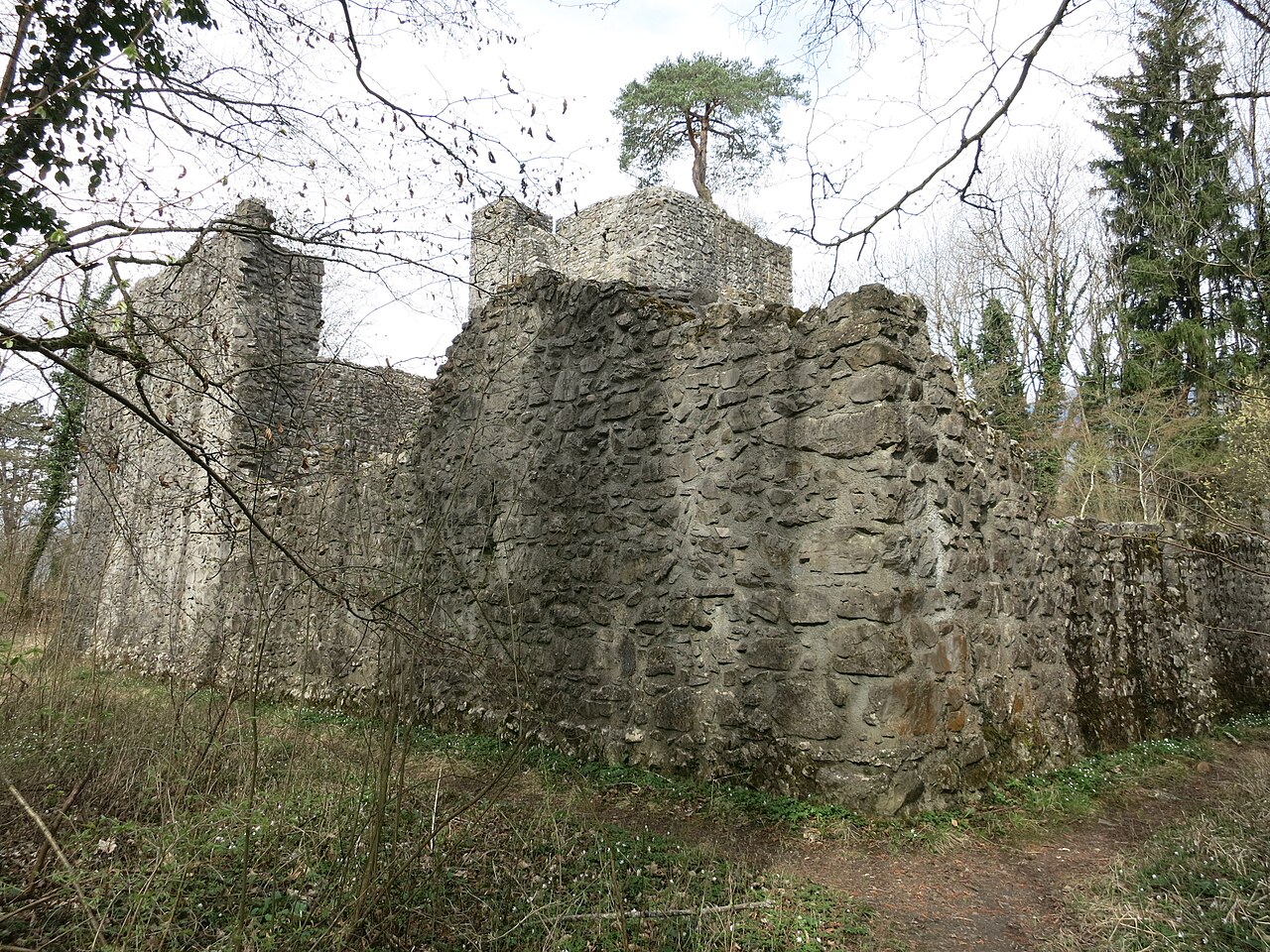
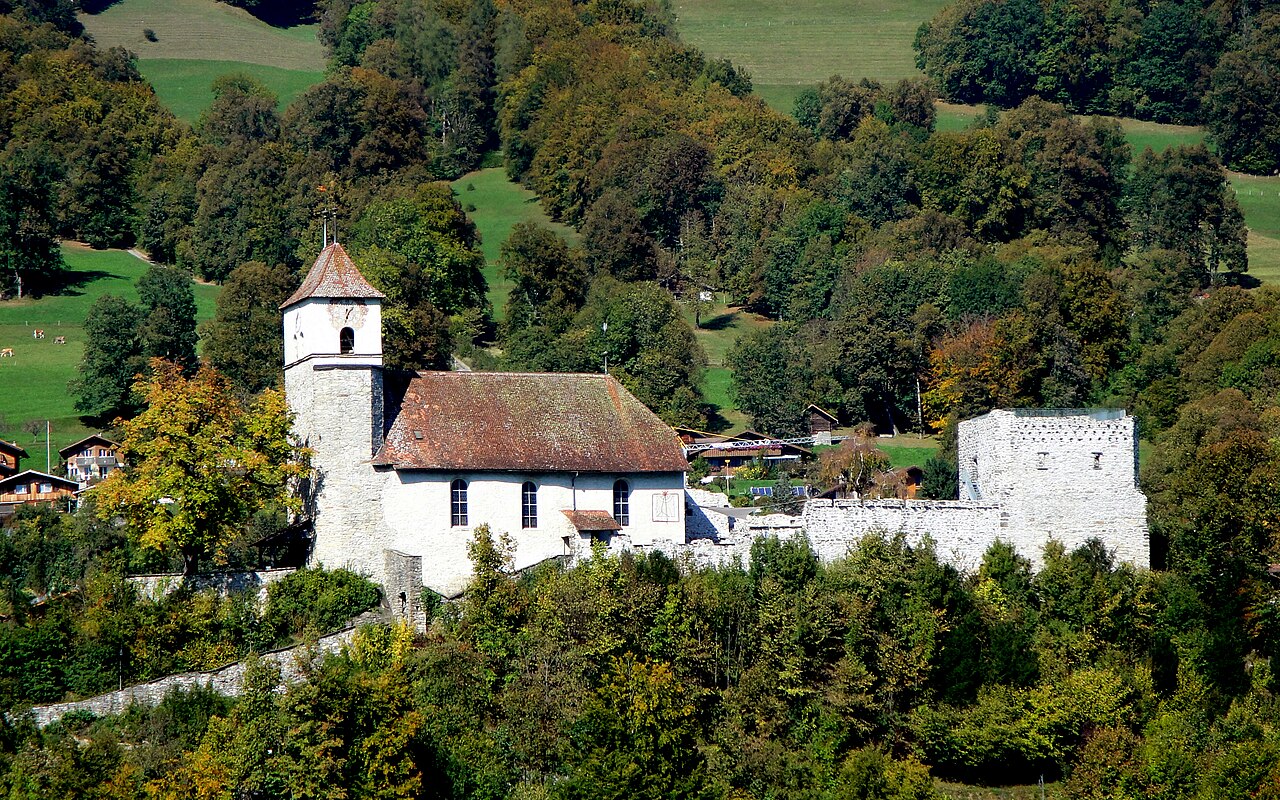
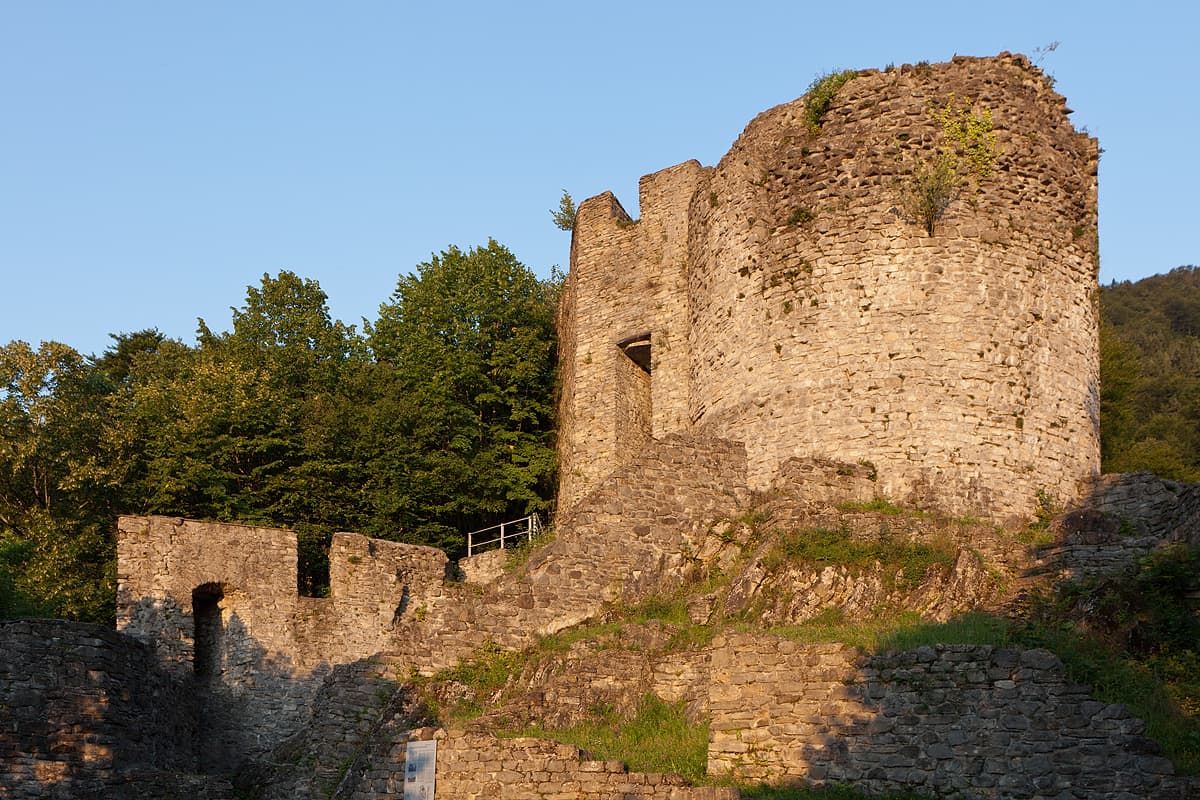
Today, only fragments of the original structure remain, with no intact towers, gates, or stairways visible. Archaeological surveys have not uncovered inscriptions or detailed construction records, leaving the ruins as a subtle but evocative reminder of the site's medieval past. The castle's stone remnants blend into the landscape, evoking the strategic importance it once held.
Cultural legacy and the unspunnenfest
Despite its ruinous state, Unspunnen Castle has maintained cultural significance, particularly through the Unspunnenfest, a traditional Swiss festival first held in 1805 on the fields beneath the castle ruins. This festival celebrates Swiss heritage and folklore, including traditional wrestling, yodeling, and alpine horn music. The event has helped ensure periodic clearing and minor preservation efforts at the castle site, contributing to its ongoing recognition as a symbol of regional identity.
The festival and the castle ruins together attract visitors interested in Swiss history, medieval architecture, and alpine culture. The site offers a tangible connection to the turbulent feudal past of the Bernese Oberland and the evolving political landscape of medieval Switzerland.
Visiting unspunnen castle
Visitors to Unspunnen Castle can explore the ruins while enjoying panoramic views of Interlaken and the surrounding mountains. The site is accessible via hiking trails from Wilderswil and nearby Interlaken, making it a favored destination for those interested in combining outdoor activities with historical exploration. While the castle itself is in ruins, interpretive signage and local guides provide context about its historical importance and architectural features.
Overall, Unspunnen Castle offers a compelling glimpse into medieval Swiss fortifications, feudal conflicts, and cultural traditions that continue to resonate in the Bernese Oberland today.
Photo gallery


Information
Website
Visit websiteSources & official resources
Verify the information above using these authoritative references.
Loading map...
Visitor reviews
No reviews yet. Been here? Write the first review and help other travelers!
Write the first reviewVisited this castle? Share your experience
Your review helps other travelers and adds first-hand knowledge to our encyclopedia.